Most car repairs that hurt the budget start as small maintenance items that slipped. The good news: you don't need to be a mechanic to stay on top of it. You need to know where your car's schedule lives, do a few quick checks each month, and keep a record.
This guide gives you a practical schedule. One important note up front: your owner's manual is the authority for your specific vehicle. Intervals for oil changes, filters, fluids and tire rotation vary a lot between makes, models and driving conditions. Use this guide to build habits, and the manual for exact numbers.
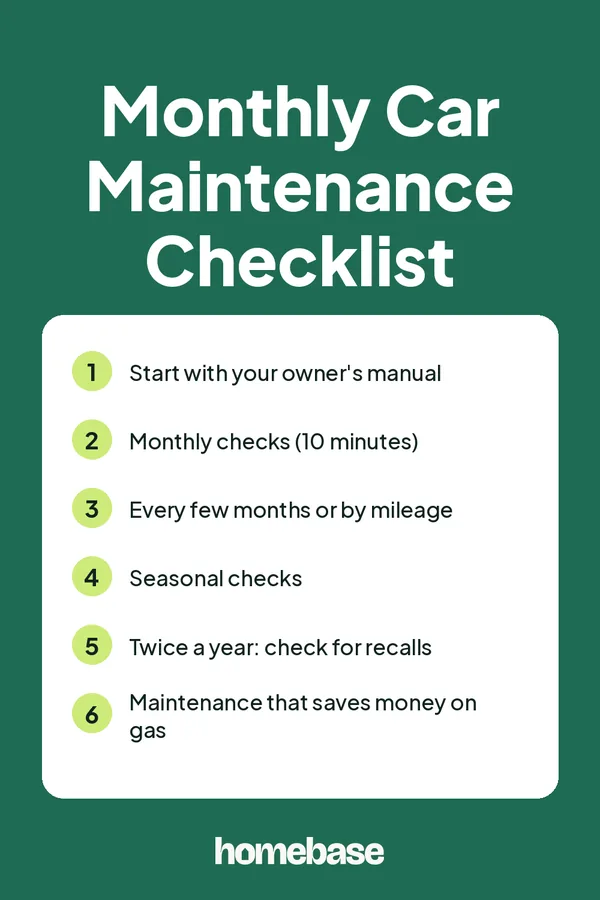
Start with your owner's manual
The FTC's auto repair basics guide recommends following the manufacturer's maintenance schedule in your owner's manual for your type of driving. It also notes that some repair shops use their own schedules that call for more frequent service, and suggests comparing those against the manual and asking the shop to explain any extra recommendations.
If you don't have a paper manual, most manufacturers post them online for free, and many vehicles show maintenance reminders on the dashboard.
Look for:
- The maintenance schedule (often split into "normal" and "severe" driving conditions, such as frequent short trips, towing, extreme heat or dusty roads)
- Recommended oil type and grade
- Tire pressure and rotation guidance
- Fluid specifications
Monthly checks (10 minutes)
Tire pressure. NHTSA recommends checking the pressure of all tires, including the spare, at least once a month when the tires are cold. The correct pressure is on the label on the driver's side door edge or in the owner's manual, not the number on the tire itself. Keeping a digital tire pressure gauge in the glovebox makes this quick.
Tire tread. NHTSA also recommends checking tread monthly. Tires should be replaced when tread is worn to 2/32 of an inch. You can use the built-in treadwear indicators or the penny test: put a penny in the tread with Lincoln's head upside down and facing you; if you can see the top of his head, it's time for new tires.
Lights. Walk around the car with someone pressing the brakes and switching signals: headlights, brake lights, turn signals, hazard lights.
Fluids (if you're comfortable). Check the engine oil level with the dipstick and look at the windshield washer fluid. Your manual shows where each reservoir is.
Look underneath. The FTC guide notes that wet spots deserve attention and explains how to identify common fluid leaks by color: for example, dark brown or black oily fluid suggests an oil leak, and a red oily spot may indicate a transmission or power-steering fluid leak. Clear water is often just air conditioning condensation.
Every few months or by mileage
These items are typically on a mileage or time schedule in your owner's manual:
- Oil and oil filter changes. Intervals vary widely; follow the manual or your car's oil-life monitor.
- Tire rotation. NHTSA notes that if the manufacturer recommends it, tires are commonly rotated every 5,000 to 8,000 miles, or sooner if you see uneven wear. Some vehicles shouldn't be rotated, so check the manual.
- Wiper blades. Replace when they streak or chatter.
- Engine air filter and cabin air filter. Check at the intervals in your manual.
- Battery check. Many auto parts stores and shops can test a battery. Corroded terminals can make a battery appear dead, according to the FTC.
Seasonal checks
Before winter
- Test the battery, since cold weather is hard on weak batteries
- Check antifreeze/coolant level per your manual
- Consider winter tires if you drive in deep snow; NHTSA notes they're more effective than all-season tires in deep snow
- Pack a winter emergency kit: blanket, ice scraper, flashlight, jumper cables, snacks and water
Before summer or road trips
- Check the air conditioning
- Check coolant, tires (including the spare) and wipers
- Make sure your roadside emergency kit is stocked
Twice a year: check for recalls
NHTSA recommends that owners check for recalls twice a year using their VIN. Recall repairs are done for free. It takes a minute, and it's an easy habit to pair with changing the clocks.
Maintenance that saves money on gas
FuelEconomy.gov's tips on keeping your car in shape point to a few maintenance items that affect fuel economy:
- Keeping tires properly inflated can improve gas mileage by about 0.6 percent on average, and up to 3 percent in some cases.
- Using the manufacturer's recommended grade of motor oil can improve gas mileage by 1 to 2 percent.
- On modern fuel-injected cars, replacing a clogged engine air filter improves performance but not fuel economy, so you don't need to replace it early hoping to save gas.
Small numbers, but they add up over a year of driving, and the same habits make the car safer.
Choosing a repair shop
Find a shop before you need one, so you're not choosing in a panic. The FTC suggests:
- Ask friends and family for recommendations.
- Compare prices and warranty policies.
- Check that the shop honors your vehicle's warranty.
- Look for current technician certifications (while remembering certification alone doesn't guarantee good work).
- Ask for a written estimate before work begins, and ask the shop to contact you for approval before doing work beyond a set amount.
- Get a completed repair order afterward listing each repair, parts, labor and the odometer reading.
For expensive or complicated repairs, the FTC suggests getting a second opinion.
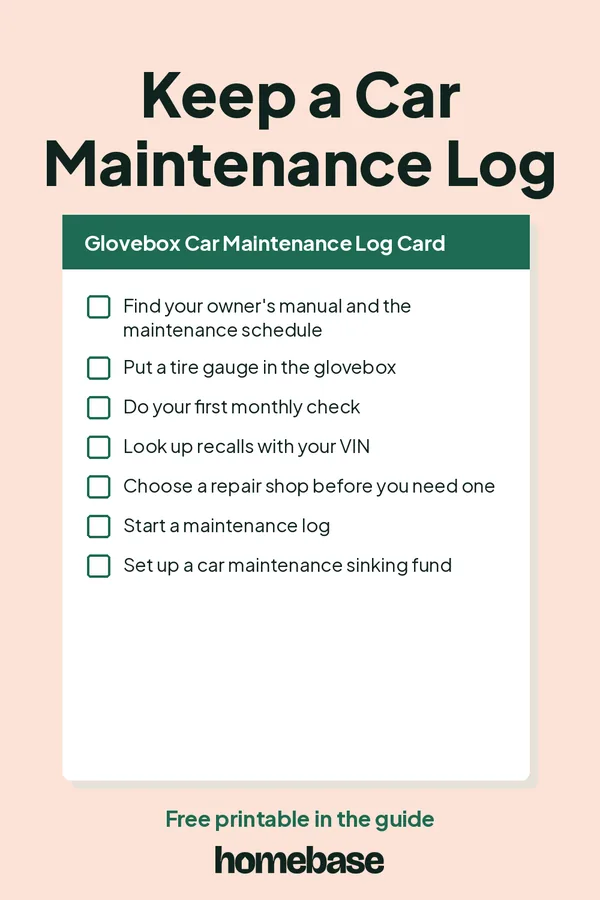
Keep a maintenance log
A maintenance log is the single most useful car habit. It tells you:
- When you last changed the oil and at what mileage
- When tires were rotated or replaced
- What each repair cost and which shop did it
- Warranty details on parts and repairs
It's also valuable if you sell the car, because a documented history can reassure buyers.
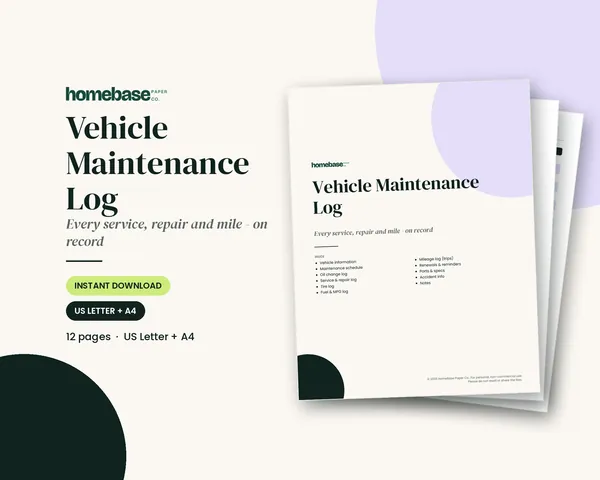
Our Vehicle Maintenance Log has a service record, a fuel and mileage log, a tire record and a repair-shop contact page. Keep it in the glovebox or in your household binder.
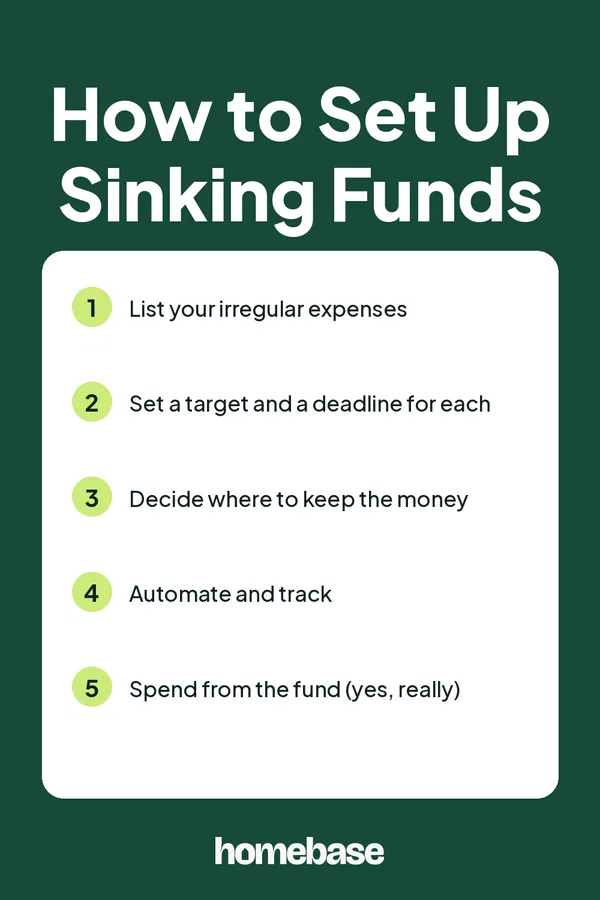
Budget for car costs with a sinking fund
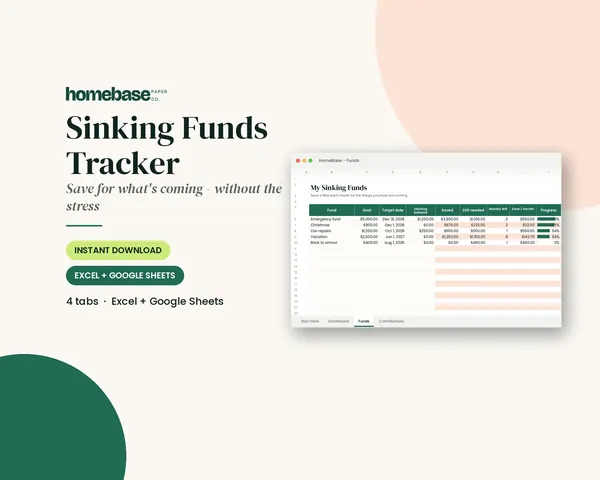
Car maintenance and repairs are classic irregular expenses. Tires, brakes and batteries don't wear out on a monthly schedule, but they do wear out. A car maintenance sinking fund, where you save a set amount each month, means you can pay for these without reaching for a credit card. See our sinking funds guide to set it up, and use a Sinking Funds Tracker to watch it grow.
Quick reference
| How often | What to do |
|---|---|
| Monthly | Tire pressure (including spare), tread, lights, look for leaks |
| Per manual / mileage | Oil and filter, tire rotation, air filters, fluids |
| Twice a year | Check for recalls with your VIN |
| Seasonally | Battery, coolant, wipers, emergency kit |
| Every service | Write it in your maintenance log |
Quick-start checklist
- Find your owner's manual and the maintenance schedule
- Put a tire gauge in the glovebox
- Do your first monthly check
- Look up recalls with your VIN
- Choose a repair shop before you need one
- Start a maintenance log
- Set up a car maintenance sinking fund
This guide is general information. Always follow your vehicle manufacturer's recommendations and consult a qualified technician for repairs.
From our shop
Tools from our shop that go with this guide
Printables
Vehicle Maintenance Log
Oil changes, repairs, tires, fuel and MPG, trip mileage and renewal dates - so resale and warranty records are easy.
Printables
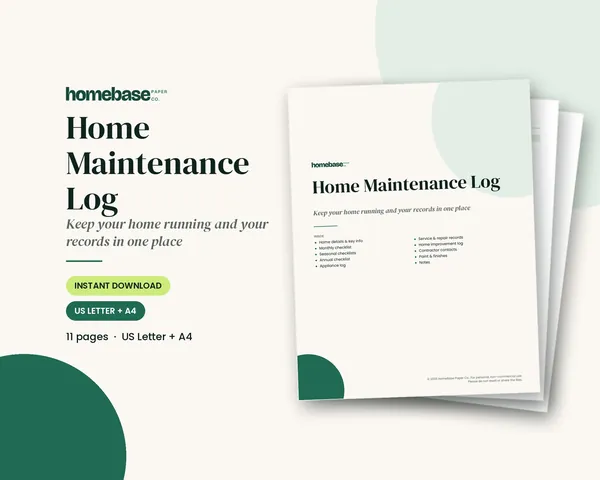
Home Maintenance Log
Monthly, seasonal and annual checklists plus a record of every appliance and repair.
Spreadsheets
Sinking Funds Tracker
It does the math: how much to set aside each month to hit every goal on time.
Free download
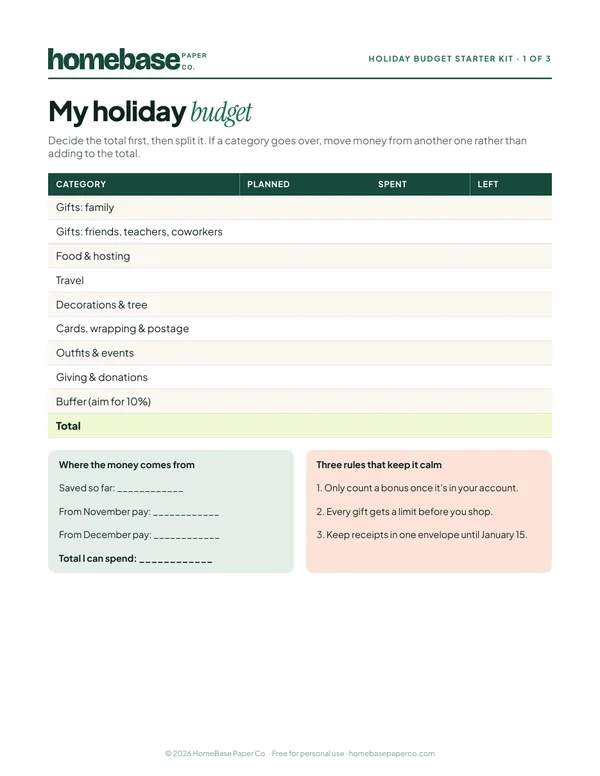
The Holiday Budget Starter Kit
A one-page holiday budget, a gift list with a spending limit for every person, and a 6-week countdown so December stays calm and paid for.
Free, no sign-up needed.
Save this guide for later