Groceries are one of the biggest flexible line items in most household budgets, and one of the easiest places to save without feeling deprived. The single most effective habit is simple: decide what you're going to eat before you go to the store.
This guide walks through a weekly meal planning system that takes about 30 minutes, works for picky eaters, and helps you waste less food.
Why meal planning saves money
Meal planning helps in three ways:
- Fewer impulse purchases. You shop with a list built from a plan, so you buy what you'll use.
- Less food waste. You buy ingredients for specific meals and plan to use leftovers. The USDA's FoodKeeper app can help you understand how long foods stay good.
- Less takeout. When dinner is already decided and the ingredients are in the fridge, it's much easier to say no to delivery on a tired Tuesday.
For a sense of what "budget" means, the USDA publishes monthly food plan cost reports showing the estimated cost of a nutritious diet at different spending levels for different household types. It's a useful benchmark when setting your grocery budget.
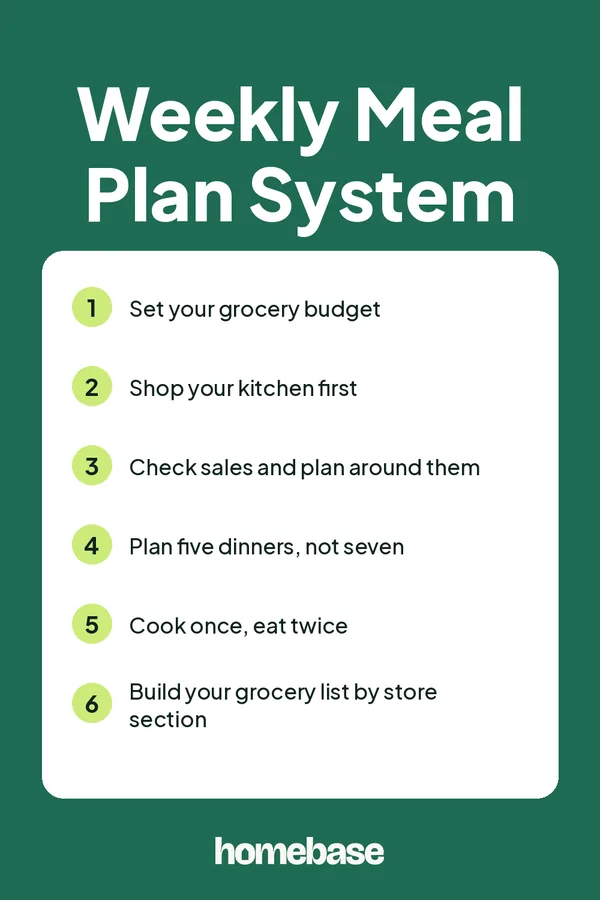
Step 1: Set your grocery budget
Look at what you've spent on groceries over the last two or three months. Use that as your starting number, then decide if you want to lower it gradually. Cutting too hard too fast usually leads to frustration and takeout.
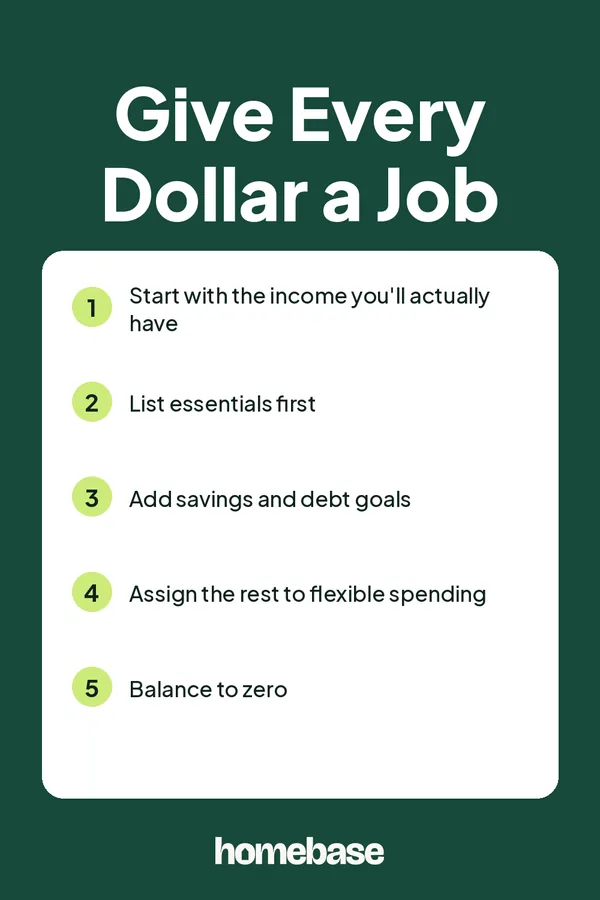
If you use a zero-based budget, groceries get their own line, and household supplies can have a separate one so you can see each clearly.
Step 2: Shop your kitchen first
Before planning anything, check your fridge, freezer and pantry. Write down:
- Proteins in the freezer
- Produce that needs to be used soon
- Pantry staples you have plenty of (rice, pasta, beans, canned tomatoes)
Plan the first two or three meals of the week around what you already have. This is the fastest way to lower your grocery bill.
Step 3: Check sales and plan around them
Look at your store's weekly ad or app. Proteins and produce on sale are good anchors for meals. If chicken thighs are on sale, plan two chicken meals; if a vegetable is in season and cheap, build around it.
Step 4: Plan five dinners, not seven
Planning every single meal is a recipe for burnout. A simpler approach:
- Plan five dinners. Leave the other two nights for leftovers, a "fridge clean-out" night, or a planned treat.
- Keep breakfasts and lunches simple and repetitive. Most families rotate a handful of options.
- Plan snacks if your family snacks a lot. They can add up quickly.
Use a theme to make it easier to decide:
| Night | Theme | Example |
|---|---|---|
| Monday | Meatless | Black bean tacos |
| Tuesday | Sheet pan | Sausage and roasted vegetables |
| Wednesday | Leftovers | Use it up |
| Thursday | Pasta | Baked ziti (make extra) |
| Friday | Homemade "takeout" | Fried rice with leftover vegetables |
| Saturday | Slow cooker or soup | Chili |
| Sunday | Leftovers or family favorite | Your choice |
Step 5: Cook once, eat twice
Some of the best budget meals are the ones you get two meals out of:
- Roast a whole chicken on Sunday; use leftovers in quesadillas, soup or salads.
- Make a big pot of chili or soup, eat it once, and freeze half for a busy night.
- Cook a double batch of rice or grains to use in two or three meals.
- Brown extra ground meat for tacos one night and pasta sauce another.
Follow food safety guidance for leftovers. The USDA's leftovers and food safety page says to refrigerate leftovers within 2 hours of cooking (1 hour if it's above 90°F), and that leftovers keep 3 to 4 days in the refrigerator or 3 to 4 months in the freezer for best quality.
Step 6: Build your grocery list by store section
Turn your meal plan into a grocery list, organized the way your store is laid out: produce, meat, dairy, pantry, frozen, household. This saves time and keeps you from wandering into aisles where impulse buys live.
Before you leave, double-check your list against the pantry so you don't buy duplicates.
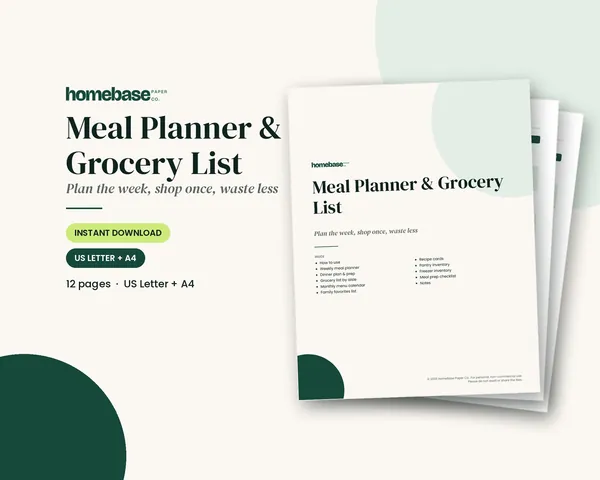
Our Meal Planner & Grocery List has a weekly plan on one side and a categorized list on the other, so the plan becomes the list in a couple of minutes.
Step 7: Prep a little on shopping day
You don't need a full Sunday meal prep marathon. Even 30 minutes helps:
- Wash and chop vegetables for the first few days
- Cook a batch of grains
- Portion snacks into grab-and-go containers
- Marinate proteins for the first dinner
A set of glass meal prep containers with lids makes prepped food easier to see and use, which means less of it gets forgotten in the back of the fridge.
Budget-friendly staples to keep on hand
These ingredients are typically affordable and flexible:
- Dry or canned beans and lentils
- Rice, oats, and pasta
- Eggs
- Frozen vegetables and fruit (they keep for months, so less goes to waste)
- Canned tomatoes
- Potatoes, onions, carrots and cabbage
- Peanut butter
- Whole chickens or bone-in chicken pieces
Nutrition.gov, run by the USDA, collects free food shopping and meal planning resources, including budget-friendly recipes and shopping tips.
Keep a list of family favorites
One of the most useful pages in any meal planning system is a running list of meals your family actually likes. When you're stuck, you pick from the list instead of starting from scratch. Over time, you'll have 20 to 30 reliable meals you can rotate through.
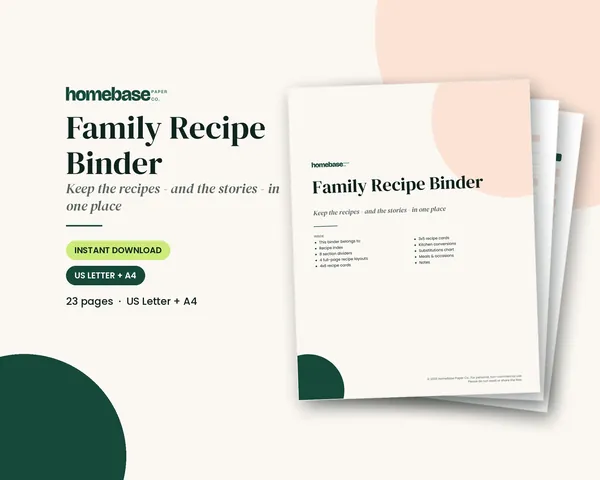
Family recipes are worth saving, too. Our Family Recipe Binder is a place to write down the recipes that matter, from weeknight staples to grandma's holiday dishes.
Common meal planning problems
"My family won't eat what I plan." Let each person choose one dinner a week. People are more likely to eat a meal they picked.
"Plans fall apart midweek." Keep two or three emergency meals in the pantry and freezer (pasta and sauce, frozen soup, breakfast-for-dinner). Swap them in without guilt.
"I don't have time to plan." Reuse your plans. After four weeks, you'll have a month of menus you can rotate.
"Food still goes bad." Put a "use it up" list on the fridge and plan a clean-out night each week.
Frequently asked questions
How long does meal planning take each week? Expect 30 to 45 minutes the first few times, including the grocery list. Once you have a list of family favorites and a few reusable weekly plans, it often drops to 15 minutes.
Should I plan meals for the whole month? Monthly planning works well for some families, especially if you shop in bulk or get paid monthly. For most beginners, weekly planning is easier because it adjusts to sales, leftovers and changing schedules.
Is buying in bulk always cheaper? Not always. Compare the unit price on the shelf tag, and only buy in bulk if you have storage space and will use it before it goes bad. Wasted food erases the savings.
How do I plan for picky eaters? Build "assemble your own" meals like tacos, rice bowls, baked potatoes or homemade pizza. Everyone shares the same base ingredients, and each person picks their toppings.
Quick-start checklist
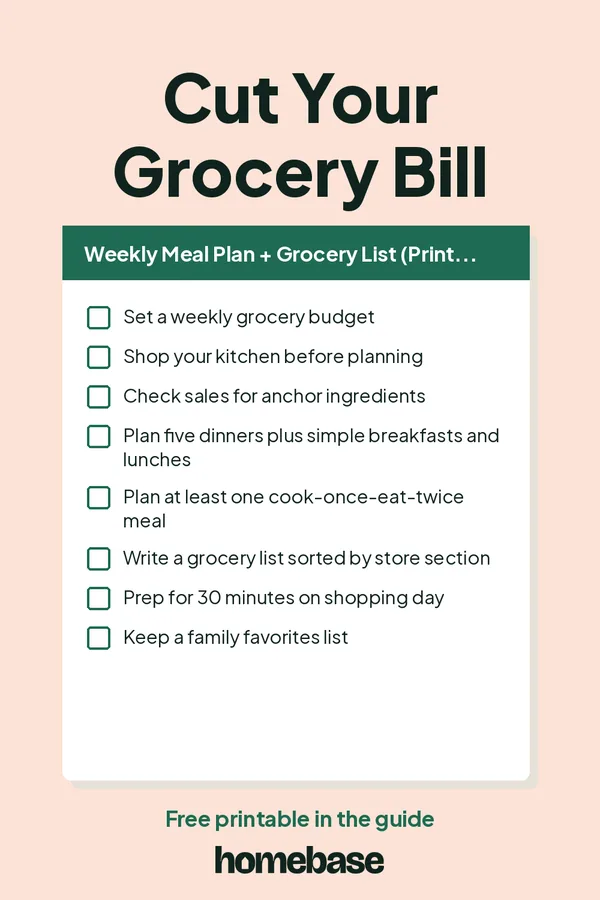
- Set a weekly grocery budget
- Shop your kitchen before planning
- Check sales for anchor ingredients
- Plan five dinners plus simple breakfasts and lunches
- Plan at least one cook-once-eat-twice meal
- Write a grocery list sorted by store section
- Prep for 30 minutes on shopping day
- Keep a family favorites list
From our shop
Tools from our shop that go with this guide
 Starter pick
Printables
Meal Planner & Grocery List
Weekly meals, a grocery list sorted by aisle, and pantry and freezer inventories so you shop once and waste less.

Printables
Household Binder
Family info, emergency plan, calendars, meals, groceries, cleaning, bills and sitter notes.
Printables
Family Recipe Binder
Section dividers, four recipe page layouts with room for the family story, 4x6 and 3x5 cards and a conversion chart - print it or type into the fillable version.
Free download
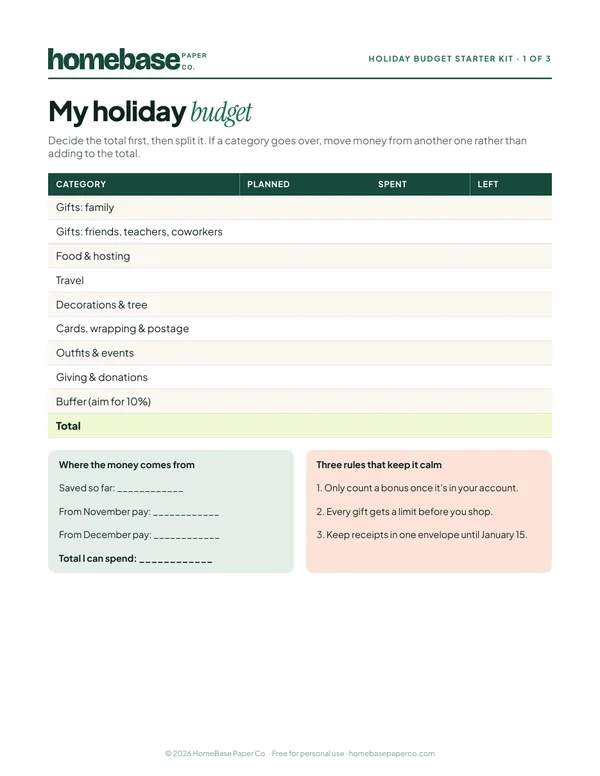
The Holiday Budget Starter Kit
A one-page holiday budget, a gift list with a spending limit for every person, and a 6-week countdown so December stays calm and paid for.
Free, no sign-up needed.
Save this guide for later