Chores aren't just about getting the dishes done (although that helps). Pitching in at home teaches kids real-life skills, builds confidence and makes them part of the family team. The American Academy of Pediatrics' parenting site, HealthyChildren.org, notes in its guide to age-appropriate chores that helping keep the home running smoothly boosts a child's self-esteem, and that most preschool-age kids can start with simple tasks.
The hard part is knowing what's realistic at each age, and building a system that doesn't require you to nag. This guide covers both.
Before you start: a few ground rules
- Expect learning, not perfection. The AAP guidance recommends praising effort rather than the outcome. A 5-year-old's made bed won't look like yours, and that's fine.
- Introduce one new task at a time. The same AAP page suggests adding chores gradually, especially for school-age kids who haven't had responsibilities before, because a long list can be overwhelming.
- Teach, then supervise, then step back. Show how to do the task, do it together a few times, then let them try it alone.
- Keep it consistent. Chores done at the same time each day become routine faster.
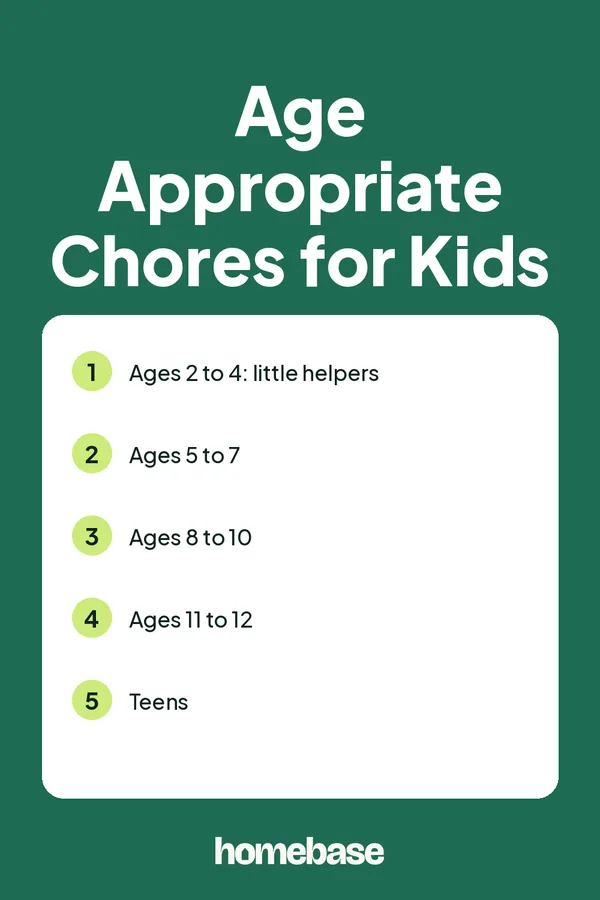
Ages 2 to 4: little helpers
Toddlers and preschoolers often want to help. Lean into it with simple, safe tasks done alongside you:
- Put toys in a bin
- Put dirty clothes in the hamper
- Wipe up small spills with a cloth
- Help feed pets (you measure, they pour)
- Put books back on a low shelf
- Carry their plate or cup to the counter
- Match socks from the laundry
- Water plants with a small watering can
At this age, the chore is the time together. Use songs, timers and lots of encouragement. Picture-based charts work well because they don't require reading.
Ages 5 to 7
HealthyChildren.org lists chores like these as appropriate for kids ages 5 to 7:
- Make their own bed
- Set and clear the table
- Put toys away and neaten bookshelves
- Put dirty clothes in the hamper and sort laundry
- Fill the pet's food dish
- Empty wastebaskets
- Dust and sweep floors
- Help make and pack school lunches
- Bring in the mail
- Water flowers, weed and rake leaves
- Wash plastic dishes in the sink
Kids this age love checking things off. A chart with a sticker or checkmark for each completed task is very motivating.
Ages 8 to 10
Building on the earlier list, the AAP suggests 8- to 10-year-olds can add:
- Vacuum
- Help make dinner
- Make their own snacks
- Take a pet for a walk
- Put away their own laundry
- Put away groceries
This is a great age to give kids ownership of a "zone," like keeping their bedroom tidy or being responsible for the family room before bed.
Ages 11 to 12
Preteens can handle real household jobs. The AAP's list for this age includes:
- Clean the kitchen
- Change bedsheets
- Unload the dishwasher
- Do and fold laundry
- Scrub toilets and clean the bathroom
- Wash the car
- Cook a simple meal with supervision
- Watch younger siblings with an adult present at home
Teens
Chores remain important through the teenage years. HealthyChildren.org has a separate guide on household chores for teens. Beyond the earlier lists, teens can take on:
- Planning and cooking a family meal each week
- Grocery shopping from a list
- Doing all of their own laundry
- Yard work and basic home maintenance (changing a light bulb, replacing an HVAC filter)
- Cleaning out the car
- Helping with meal planning and budgeting for a week of groceries
These are the life skills they'll need when they move out. If you'd like to tie in money skills, have them help plan a week of meals within a set grocery budget. Our meal planning on a budget guide is a good starting point.
How to set up a chore chart that works
A chore chart turns "Did you do your chores?" into "Go check the chart." The AAP guidance specifically mentions that a chore chart or checklist acts as a visual reminder and gives kids a sense of accomplishment.
1. Pick a format by age.
- Pre-readers: pictures or icons for each task
- Early readers: simple words and checkboxes
- Older kids and teens: a weekly list or shared digital checklist
2. Separate daily and weekly chores. Daily: make bed, clear plate, put away backpack, feed pet. Weekly: vacuum room, help with laundry, take out recycling.
3. Keep it short. Three to five daily items is plenty for younger kids.
4. Post it where they'll see it. The fridge, the inside of a pantry door, or the family command center. A magnetic dry erase chore chart board or a printed chart in a dry erase sheet protector lets you reuse it every week.
5. Review weekly. A quick family meeting on Sunday to check the chart, celebrate progress and adjust the plan works well. The AAP also recommends regular family meetings to review progress and ask kids for their ideas.
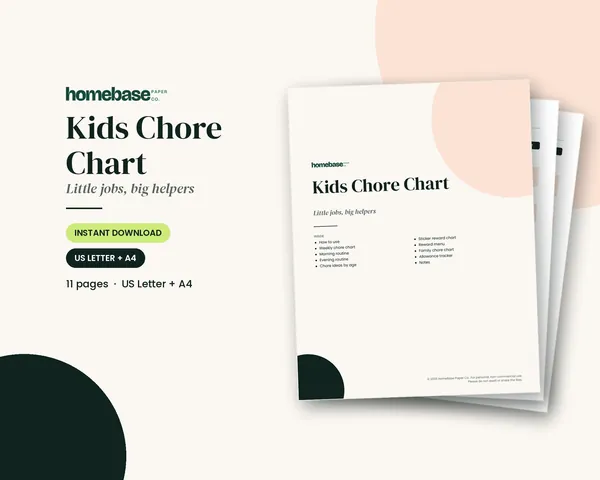
Our Kids Chore Chart includes picture-friendly versions for little ones, checklist versions for older kids, and a reward tracker.
Should you pay allowance for chores?
There's no single right answer, and families do it differently. Common approaches:
- No pay for "family" chores, paid "extra" jobs. Everyday chores are part of being in the family; bigger jobs (washing the car, yard work) earn money.
- Allowance tied to chores. Kids earn a set amount for completing their weekly chart.
- Allowance separate from chores. Kids get a set amount to learn money management, and chores are expected regardless.
The AAP page mentions that tangible rewards like allowances and stickers tied to completed chores are an option. If you do pay, it's a great opportunity to teach saving and budgeting. The CFPB's Money as You Grow resources have age-based activities for talking about money with kids.
Avoiding chore battles
- Be specific. "Clean your room" is vague. "Put clothes in the hamper, books on the shelf, and toys in the bin" is clear.
- Use praise more than consequences. The AAP notes that rewarding success and encouraging is more effective than badgering or scolding.
- Offer limited choices. "Do you want to unload the dishwasher or fold towels?"
- Make it a team effort. Everyone cleans at the same time for 15 minutes with music on.
- Factor in your child's personality. Some kids drift mid-task; some struggle to switch activities. Adjust expectations and break tasks down.
- Don't redo their work in front of them. It sends the message that their effort doesn't count.
Frequently asked questions
At what age should kids start doing chores? Many families start with simple "helper" tasks in the toddler and preschool years, like putting toys in a bin. HealthyChildren.org notes that most preschool-age kids can start pitching in with some simple household tasks, and its detailed chore list begins at ages 5 to 7.
How many chores should a child have? Start small: two or three daily tasks for younger kids, plus one weekly job. Add more as each chore becomes routine. A short list that gets done beats a long list that gets ignored.
What if my kids are too busy with school and activities? The AAP guide argues that being too busy is a reason to keep chores, not drop them, because children need obligations within the family to learn responsibility. Choose quick daily chores that fit around their schedule, and save bigger jobs for weekends.
Should siblings have the same chores? Not necessarily. Match chores to each child's age and skills, and rotate shared jobs (like loading the dishwasher) weekly so nobody feels stuck with the worst task.
Quick-start checklist
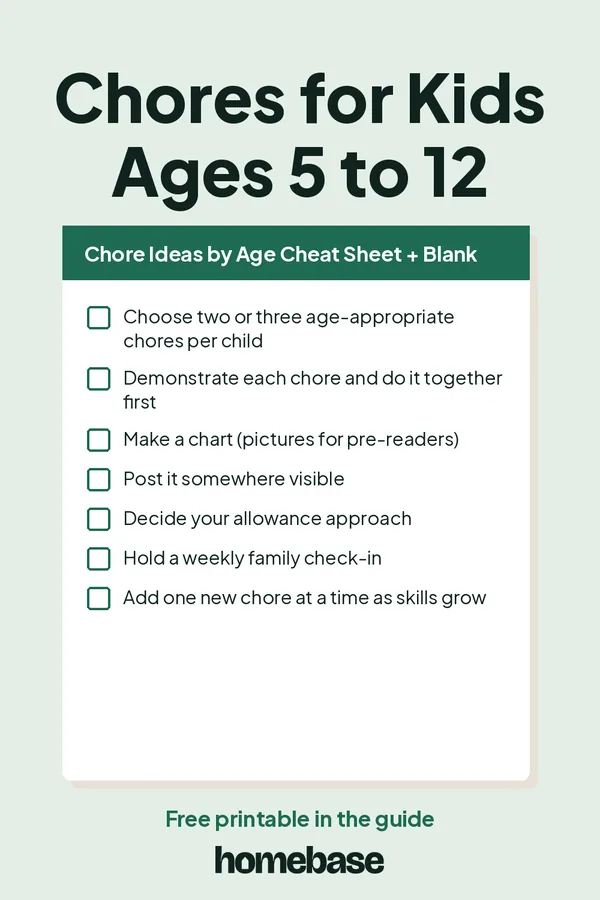
- Choose two or three age-appropriate chores per child
- Demonstrate each chore and do it together first
- Make a chart (pictures for pre-readers)
- Post it somewhere visible
- Decide your allowance approach
- Hold a weekly family check-in
- Add one new chore at a time as skills grow
From our shop
Tools from our shop that go with this guide
 Starter pick
Printables
Kids Chore Chart
Weekly chore chart, morning and evening routines, chore ideas by age, a sticker reward chart and an allowance tracker.

Printables
Household Binder
Family info, emergency plan, calendars, meals, groceries, cleaning, bills and sitter notes.
Printables
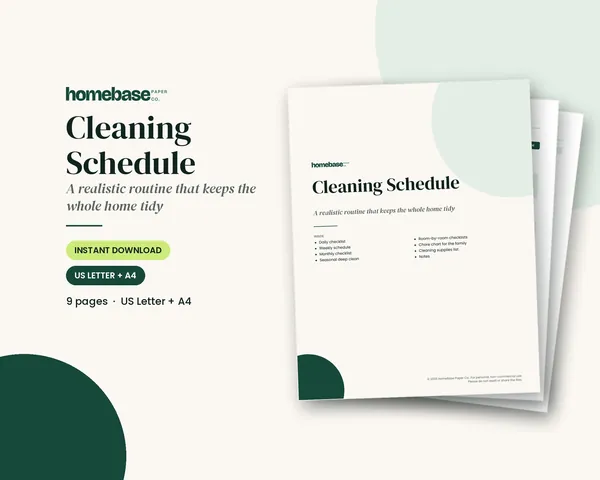
Cleaning Schedule
Daily, weekly, monthly and seasonal lists - plus a family chore chart.
Free download
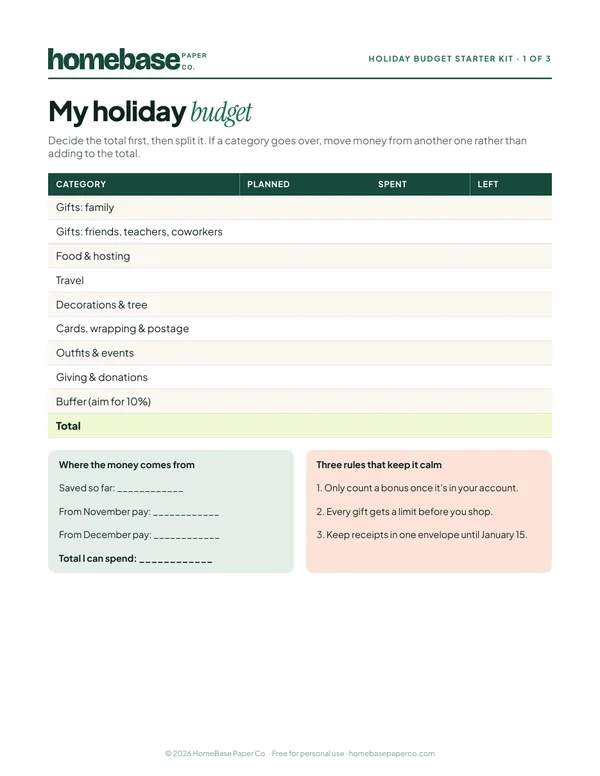
The Holiday Budget Starter Kit
A one-page holiday budget, a gift list with a spending limit for every person, and a 6-week countdown so December stays calm and paid for.
Free, no sign-up needed.
Save this guide for later