Grocery shopping once a month means one big planned trip for pantry, freezer and long-lasting foods, plus a short weekly top-up for milk, fruit and vegetables. Done well, it cuts impulse buys and trips to the store, and makes weeknight dinners easier because the ingredients are already in the house.
It takes more planning than weekly shopping. Here's the system, step by step.
Is monthly shopping right for you?
It works best when you have:
- Freezer space, ideally a chest or upright freezer in addition to the kitchen one.
- Pantry room for a month of staples.
- A predictable schedule, so the meal plan actually gets cooked.
- Enough cash flow for one larger grocery bill, or a plan to set money aside each week before the trip.
If you have a small apartment freezer, a two-week cycle with the same steps may suit you better.
Step 1: Take inventory
Before planning, write down what you already have in the pantry, fridge and freezer. Many families find a surprising amount of food this way: frozen meat, half-used pasta, canned beans. Plan the first week's meals around those to use them up, which also frees space for the big trip.
Step 2: Plan 30 days of dinners
Don't plan 30 unique recipes. Plan a rotation:
| Night | Theme | Examples |
|---|---|---|
| Monday | Pasta | Baked ziti, spaghetti and meatballs |
| Tuesday | Tacos or bowls | Ground beef tacos, chicken burrito bowls |
| Wednesday | Slow cooker or sheet pan | Pot roast, sausage and vegetables |
| Thursday | Soup or chili | Chili, chicken noodle soup |
| Friday | Pizza or fun night | Homemade pizza, breakfast for dinner |
| Saturday | Grill or roast | Chicken thighs, pork tenderloin |
| Sunday | Big batch | Lasagna, roast chicken, then leftovers Monday |
Four rotations of seven nights, with a couple of swaps, gives you a month. Plan for two or three leftover nights and one "flex" night a week, because plans change.
Step 3: Build the stock-up list by category
Turn the meal plan into quantities, then group the list the way the store is laid out:
| Category | Buy monthly | Buy weekly |
|---|---|---|
| Meat and fish | Bulk packs to portion and freeze | |
| Pantry | Pasta, rice, canned tomatoes, beans, broth, flour, oil | |
| Frozen | Vegetables, fruit, bread | |
| Dairy | Hard cheese, butter (freezes well) | Milk, yogurt |
| Produce | Potatoes, onions, carrots, apples, cabbage | Berries, salad greens, bananas, herbs |
| Breakfast and snacks | Oats, cereal, crackers | |
| Household | Paper goods, cleaning supplies |
Long-lasting produce such as potatoes, onions, carrots, apples, citrus, cabbage and winter squash can last weeks when stored properly, which is what makes a monthly trip realistic.
Step 4: Shop with a plan
- Eat first. Hungry monthly shopping is expensive monthly shopping.
- Shop the list in store order to save time and avoid wandering.
- Compare unit prices, not package prices, on bulk items.
- Check dates on dairy and meat and pick the latest.
- Bring coolers for the drive home if it's a long trip.
Step 5: Prep the freezer the same day
The day of the trip is prep day. Portion meat into meal-sized bags, label each with the contents and date, and freeze flat so it stacks. Brown ground beef for tacos and chili in one batch. Wash and chop sturdy vegetables for the first week. An hour or two of prep makes the next 30 days much easier.
Keep a freezer inventory on the freezer door and cross items off as you use them. It's the single best way to stop food from getting lost and wasted at the back.
Step 6: Do a 20-minute weekly top-up
Once a week, buy only fresh items: milk, bread if you don't freeze it, salad greens, soft fruit, and anything the week's meals need fresh. Bring a short list and stick to it; the top-up trip is where impulse spending creeps back in.
A simple monthly grocery budget
Decide the monthly total, then split it so the weekly top-ups have their own budget:
| Part | Share | Example for $800/month |
|---|---|---|
| Big monthly trip | 70% | $560 |
| Four weekly top-ups | 30% | $240 ($60 each) |
If the big trip is too large for one paycheck, set aside a portion of each paycheck in a grocery sinking fund ahead of time. Our meal planning on a budget guide has more ways to lower the total.
Breakfast and lunch count too
Dinner plans get the attention, but breakfasts, school lunches and snacks often cost as much over a month. Pick three or four breakfasts and lunches on repeat and add their ingredients to the stock-up list. Bake a batch of muffins or burritos on prep day and freeze them for busy mornings.
Tools that make it easier
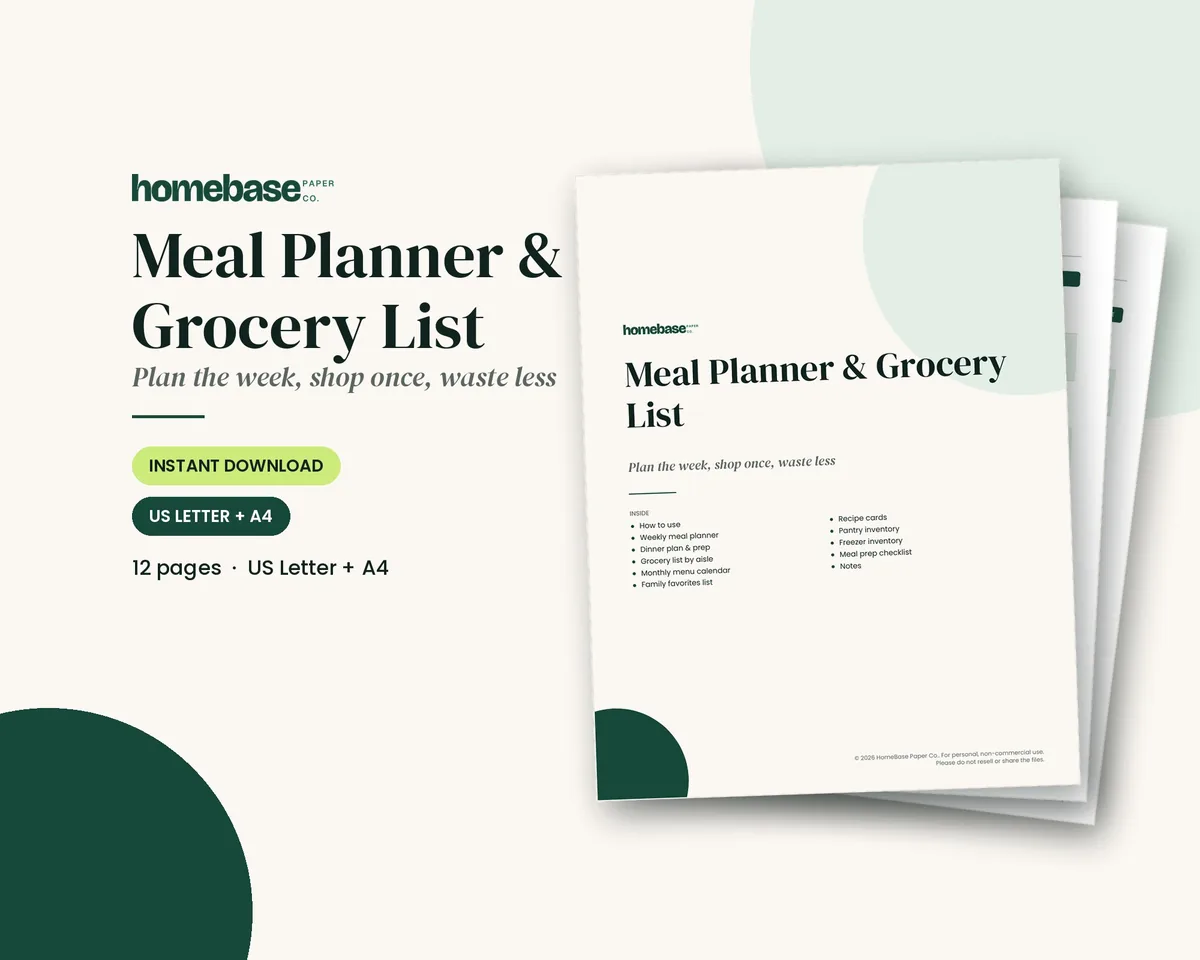
Our Meal Planner & Grocery List ($3.99) is built for this method. It includes a weekly meal planner, a dinner plan and prep page, a grocery list sorted by aisle, a monthly menu, family favorites, recipe cards, pantry and freezer inventories and a meal prep checklist. It's a 12-page PDF in US Letter and A4.
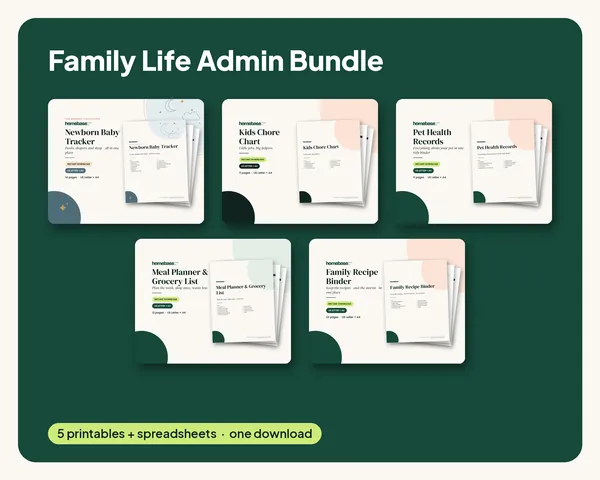
The Household Binder ($6.99) puts the meal plan and grocery list in one place with the family calendar, cleaning schedule and bills, which is handy if one person does the planning and another does the shopping. The meal planner is also part of the Family Life Admin Bundle ($15.99).
Common mistakes
- Overbuying perishables on the big trip. Fresh food belongs on the weekly list.
- No freezer inventory, so food gets forgotten.
- Planning meals no one likes to save money. Stick to family favorites.
- Skipping prep day, which makes the rest of the month feel harder than weekly shopping.
Make it easier
Tools for this
 Starter pick
Printables
Meal Planner & Grocery List
Weekly meals, a grocery list sorted by aisle, and pantry and freezer inventories so you shop once and waste less.

Printables
Household Binder
Family info, emergency plan, calendars, meals, groceries, cleaning, bills and sitter notes.
 Save 33%
Bundles
Family Life Admin Bundle
Baby logs, chore charts, pet records, meal plans and family recipes in one tidy set.
Frequently asked questions
How do you grocery shop for a whole month?
Take inventory of what you have, plan about 30 days of dinners using a weekly theme rotation, turn the plan into a stock-up list grouped by store section, and buy pantry, freezer and long-lasting produce in one trip. Then do a short weekly top-up for milk, greens and soft fruit.
Does shopping once a month save money?
It often does, because fewer trips mean fewer impulse buys and bulk staples are usually cheaper per unit. The savings depend on planning: a meal plan, a freezer inventory and a strict weekly top-up list prevent waste and keep the extra trips from adding up.
How do you keep produce fresh for a month?
Buy long-lasting produce such as potatoes, onions, carrots, apples, citrus, cabbage and winter squash on the monthly trip, and freeze fruit and vegetables you'll use later. Buy delicate items like berries, salad greens and herbs on a short weekly top-up instead.
What should a monthly grocery list include?
Include bulk meat to portion and freeze, pantry staples like pasta, rice, canned goods and broth, frozen vegetables and fruit, hard cheese and butter, long-lasting produce, breakfast and snack staples and household supplies. Group the list by store section to shop faster.
Free download
The Holiday Budget Starter Kit
A one-page holiday budget, a gift list with a spending limit for every person, and a 6-week countdown so December stays calm and paid for.
Free, no sign-up needed.