

The short answer: how to clean windows without streaks is mostly technique and timing, not expensive products.
- Pick a cloudy day
- Clean the frames first, then the glass from the top down
- Squeegee across the glass and polish off any moisture
- Reach high windows safely from the ground
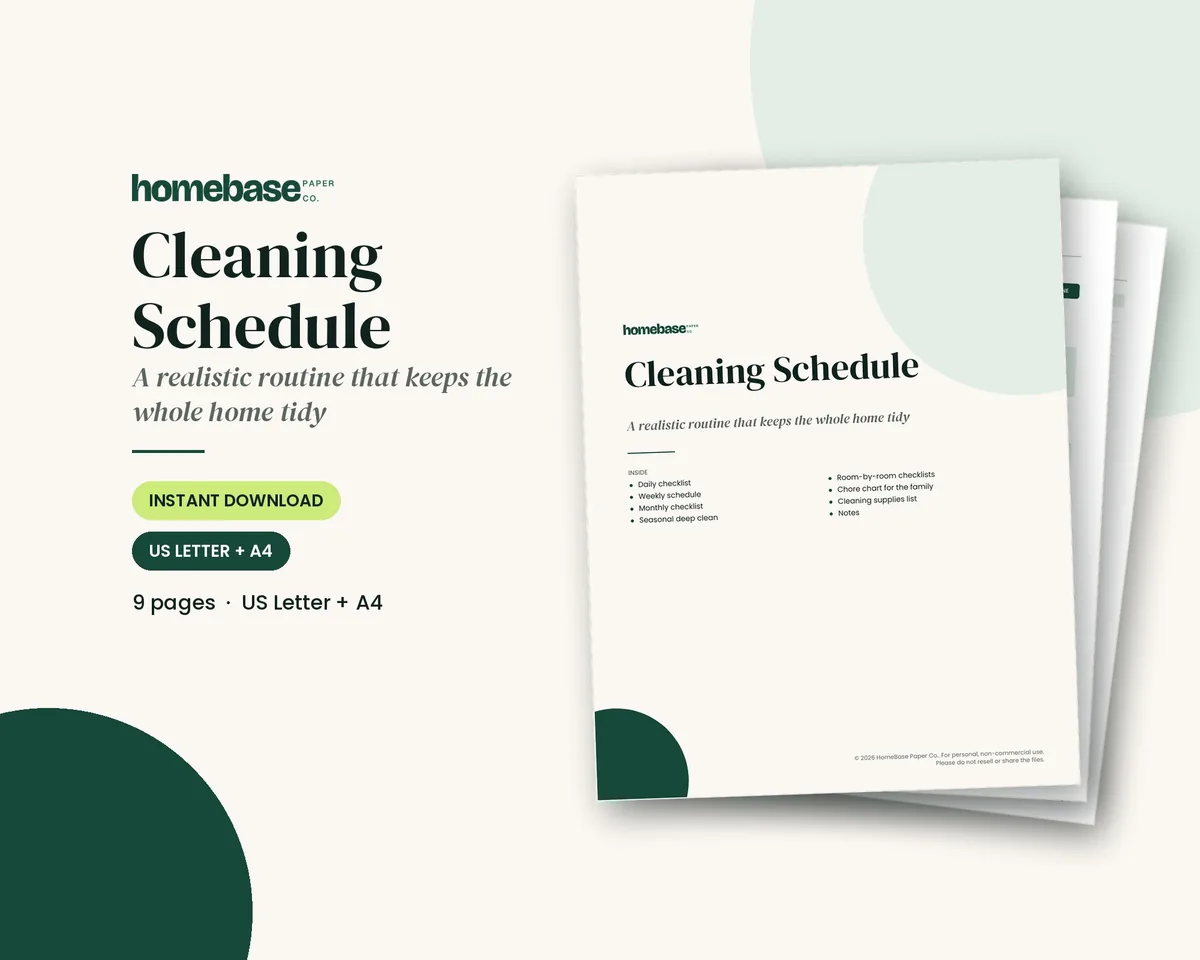
- Next step: Plan it with the Cleaning Schedule ($4.49).
Knowing how to clean windows the right way saves you from the most frustrating part of the job: finishing, stepping back and seeing streaks. The fix is mostly technique and timing, not expensive products. This guide walks through the supplies, a simple homemade cleaner, the squeegee method Consumer Reports recommends, frames and tracks, paint spots and how to reach high windows safely from the ground.

How to clean windows: the quick version
- Pick a cloudy day, or work on windows that are in shade.
- Take down or tie back curtains and clean the frames first.
- Start at the top and apply cleaner with a slightly damp sponge.
- Squeegee across the glass and wipe the blade after every pass.
- Rinse with a chamois and clean water.
- Polish off any moisture with a dry, lint-free cloth.
What you need
Consumer Reports' window cleaning guide lists a short set of supplies:
| Supply | What it's for |
|---|---|
| Two buckets | One for cleaning solution, one for rinse water |
| A sponge | Applying the cleaner |
| A good-quality rubber squeegee | Pulling cleaner and dirt off the glass |
| A chamois cloth | Rinsing with clean water |
| A clean, lint-free cloth | Polishing off the last moisture |
| A cleaning solution | A commercial cleaner or a homemade mix |
A couple of microfiber cloths are handy too. For high outside windows, you'll also want a telescoping pole, covered below.
Choose the right cleaner
The cleaner matters more than you might expect. In Consumer Reports' past window tests, CR found it's easy to stain some brands of windows with the wrong cleaner. Ammonia-based formulas, including some Windex products, can cause streaks or film. Before you start, check your window manufacturer's website for its cleaning instructions.
Two simple options that avoid ammonia:
- Vinegar spray for inside windows. Consumer Reports' guide to cleaning with vinegar cites window maker Pella, which advises mixing one part distilled white vinegar with 10 parts warm water in a spray bottle.
- Bucket mix for outside windows. CR's guide to high windows suggests a large bucket of water with several generous squirts of liquid dish detergent and vinegar, or a store-bought ammonia-free window cleaner.
Keep vinegar solutions off wood, fiberglass and vinyl frames. CR warns the vinegar may discolor the finish.
Step 1: Pick the right time
Wash windows on a cloudy day or when the windows are in shade. Consumer Reports explains that direct sun makes the cleaning solution evaporate before you finish, and that's what causes streaking. If you have a lot of windows, CR suggests splitting the job into segments rather than trying to clean them all in one day. One side of the house each weekend works well.
Step 2: Prepare the room
Take down your curtains or loop them over a hanger, out of the way. CR notes it's a good time to clean them, too. Move furniture back from the window, and lay an old towel on the sill to catch drips.
Step 3: Clean the frames first
Clean very dirty frames before the glass, so grime doesn't run onto clean panes.
- Aluminum frames and doors: vacuum the runners, then polish the frames with silicone car polish. CR says the polish can also be used in the channels to help windows slide smoothly, or you can lightly oil the channels.
- Painted or vinyl frames: wash with a sponge dipped in warm water and detergent, rinse with warm, clean water and towel dry if needed.
Step 4: Wash the glass from the top down
This is the method Consumer Reports recommends:
- Dip a sponge in your cleaning solution and squeeze it so it's only slightly damp.
- Wash the glass starting at the top.
- Wipe across the window with a dampened squeegee blade.
- Wipe the blade on a cloth after each swipe.
- Rinse with clean water applied with a chamois.
- Polish off remaining moisture with a dry, lint-free cloth.
Working from the top down keeps dirty drips from running over glass you've already cleaned.
If you're using the vinegar spray instead, CR suggests wiping the window with a clean microfiber cloth to remove dust first, then spraying the whole surface, wiping it clean and drying it as thoroughly as you can with a second clean microfiber cloth.
Step 5: Use tilting sashes for the outside
Most newer double-hung windows have tilting sashes, which let you pivot the window inward so you can clean the outside from inside the house. On most, you just flip a lever to tilt the sash in. On some, you have to pull the sash out of the track. Check your window's instructions if it doesn't move easily.
How to clean high windows from the ground
Upstairs windows that don't tilt in are the trickiest. Consumer Reports says one of the most effective ways is a telescoping pole fitted with cleaning heads like brushes, sponges and squeegees, and that a pole is much safer than standing on a ladder.
| Option | What CR says |
|---|---|
| Telescoping pole kit | Kits that reach a second floor typically start around $100 at home improvement stores |
| Water-fed system | Attaches to a garden hose, starting at about $140 |
| Pressure washer | Can be hard to control; use the lowest psi, a wide nozzle, spray at an angle and keep windows tightly closed |
| Magnetic window cleaner | Cleans both sides from inside; most start around $45, and pros are split on how well they work |
Before you start, CR suggests:
- Look for wires. Make sure the pole won't touch any electrical wiring.
- Check the windows. Use binoculars to make sure panes and frames are intact, and look for putty, paint or cracks that need repair.
- Clear the ground. Remove brush, stones and anything else you could trip over.
- Test the pole. If it's too unwieldy, hire a professional window cleaner instead.
To clean, dip the sponge or microfiber head in your bucket and scrub the window, rinsing and squeezing it out as you go. Then attach the squeegee, start at a top corner and drag it down to the bottom of the pane, wiping it after each swipe.
How to get paint off window glass
If you've been painting, Consumer Reports suggests:
- Fresh water-based paint: a cloth dipped in water or glass cleaner.
- Fresh oil-based paint: a cloth dipped in turpentine.
- Old, dried paint: a single-edged razor held at an angle so it doesn't scratch the glass.
Leave about 1/16 inch of paint along the edge of the glass. CR says it protects the frame from condensation inside and rain outside.
Special windows
- Stained glass and small windows: wipe with a damp sponge, then a clean damp chamois, and polish with a clean cloth. Treat delicate stained glass gently, and clean painted glass only with a damp chamois.
- Skylights: some can be reached with extension tools, but CR says it may be more practical to hire a professional for out-of-reach windows.
How often to clean windows
| Job | How often |
|---|---|
| Inside glass | About twice a year |
| Outside glass | Depends on where you live, often spring and fall |
| Frames and tracks | When you wash the glass |
| Curtains | When you wash the windows |
| Fingerprints on doors and low windows | As needed |
CR says the insides of windows usually need cleaning twice a year, while the outside depends on your location.
Common streak causes
- Sun on the glass dries the cleaner too fast.
- A dirty squeegee blade drags grime back across the pane.
- Ammonia-based cleaners can leave streaks or film on some windows.
- Linty towels leave fibers behind. Use lint-free or microfiber cloths.
- Starting at the bottom lets drips run down over clean glass.
A window cleaning plan for the whole house
If you're cleaning every window at once, a simple plan keeps it from taking over a weekend:
- Make a list of rooms and count the windows in each.
- Gather the supplies in one caddy: two buckets, a sponge, a squeegee, a chamois, lint-free cloths and your cleaner.
- Group the windows by side of the house, so you can work on the shaded side and follow the shade.
- Do the frames and tracks first in each group, then the glass.
- Do the insides on one day and the outsides on another, or tilt the sashes and do both together.
- Wash curtains while the windows are bare.
- Note any repairs you spot, like cracked glass, loose putty or peeling paint.
Consumer Reports' advice to divide the job into segments is the key. Two or three windows done well are better than a whole house done in a rush with streaks.
Window cleaning checklist
- Curtains down or tied back
- Frames and tracks vacuumed and wiped
- Glass washed top to bottom
- Squeegee wiped after every pass
- Glass rinsed and polished dry
- Sills wiped
- Repairs noted
Put window washing on your seasonal list
Windows are a twice-a-year job, which makes them easy to forget. Our Cleaning Schedule ($4.49) is a 9-page printable with daily, weekly and monthly checklists, a seasonal deep clean list, room-by-room checklists, a family chore chart and a cleaning supplies list. Put "wash inside windows" and "clean curtains" on the spring and fall lists, and add a squeegee and vinegar to the supplies page.
Doing a whole room? See how to clean blinds for the slats while the windows dry.
If you'd like to get the whole home organized at once, the Home Management Bundle ($16.99) includes the Cleaning Schedule along with the Household Binder, Home Maintenance Log, Home Inventory, Moving Planner and Password & Accounts Log. Bought separately, those six come to $32.94.
For the rest of your seasonal cleaning, see our deep cleaning checklist and our cleaning schedule template.
Your next step
Pick one room and wash its windows on the next cloudy day: frames first, then the glass from the top down with a squeegee and a dry cloth to finish. Once you see how quickly one room goes, plan the rest of the house in segments over the next few weekends.
Make it easier
Tools for this
Printables
Cleaning Schedule
Daily, weekly, monthly and seasonal lists - plus a family chore chart.
 Save 48%
Bundles
Home Management Bundle
Household binder, maintenance log, moving planner, cleaning schedule, home inventory and password log.
Frequently asked questions
What is the best way to clean windows? The best way to clean windows is from the top down on a cloudy day. Apply cleaner with a slightly damp sponge, pull a dampened squeegee across the glass and wipe the blade after each pass, rinse with a chamois and polish off any moisture with a dry lint-free cloth. Clean dirty frames first so grime doesn't drip onto clean glass.
How do you clean windows without streaks? To clean windows without streaks, wash them on a cloudy day or when they are in shade, because direct sun dries the cleaner before you finish. Work from the top down, wipe your squeegee blade after every swipe and dry any remaining moisture with a clean microfiber or lint-free cloth. Consumer Reports also notes ammonia-based cleaners can leave streaks or film.
What is a good homemade window cleaner? A good homemade window cleaner is one part distilled white vinegar to 10 parts warm water in a spray bottle, a mix Consumer Reports cites from window maker Pella. For outside windows, CR also suggests a large bucket of water with several generous squirts of liquid dish detergent and vinegar. Keep vinegar mixes off wood, fiberglass and vinyl frames.
Is vinegar or Windex better for windows? Vinegar is the safer choice for many windows. Consumer Reports found in past window tests that ammonia-based formulas, including some Windex products, can cause streaks or film and even stain some brands of windows. Check your window maker's website for its cleaning instructions, and use an ammonia-free cleaner or a vinegar and water mix.
How often should you clean windows? Clean the insides of your windows about twice a year, which Consumer Reports says is usually enough. How often the outsides need cleaning depends on where you live. Many households wash windows in spring and fall as part of a seasonal deep clean.
How do you clean window frames and tracks? Clean very dirty frames before the glass. Consumer Reports suggests vacuuming the runners of aluminum frames, then polishing them with silicone car polish, which can also help windows slide smoothly, or lightly oiling the channels. Wash painted or vinyl frames with a sponge, warm water and detergent, then rinse and towel dry.
How do you clean the outside of high windows? Clean the outside of high windows from the ground with a telescoping pole fitted with a brush, sponge or squeegee. Consumer Reports says a pole is much safer than a ladder. Kits that reach a second floor start around $100, and water-fed systems that attach to a hose start at about $140. If the pole is too unwieldy, hire a professional.
What do you need to clean windows? To clean windows you need two buckets, a sponge, a good rubber squeegee, a clean lint-free cloth, a chamois and a cleaning solution, according to Consumer Reports. A microfiber cloth works well for drying. For high outside windows, add a telescoping pole with cleaning heads.
Should you clean windows in the sun? No, you shouldn't clean windows in the sun. Wash windows on a cloudy day or when they are in shade. Consumer Reports explains that direct sunlight makes the cleaning solution evaporate before you finish, which leaves streaks and residue on the glass.
How do you get paint off window glass? Remove fresh paint spatters with a cloth dipped in water or glass cleaner for water-based paint, or turpentine for oil-based paint. For old paint, Consumer Reports suggests a single-edged razor held at an angle so it does not scratch the glass, leaving about 1/16 inch of paint at the edge to protect the frame.
Are magnetic window cleaners worth it? Often, yes: magnetic window cleaners are worth trying for windows that are hard to reach or don't open all the way. They clean both sides of the glass from inside, and most models start at about $45. Professional cleaners Consumer Reports contacted were split: one said the magnet can be strong enough to damage glass, another called them the best option for hard-to-reach windows.
How do I keep track of when to wash windows? Put window washing on a written seasonal cleaning list with the month you plan to do it. The Cleaning Schedule ($4.49) includes a seasonal deep clean list next to daily, weekly and monthly checklists, so washing windows, curtains and screens has a set place in your year and doesn't get forgotten.
More from HomeBase
You may also like

Printables
Household Binder
Family info, emergency plan, calendars, meals, groceries, cleaning, bills and sitter notes.

Printables
Home Maintenance Log
Monthly, seasonal and annual checklists plus a record of every appliance and repair.

Printables
Home Inventory
Printable pages and a spreadsheet that totals the value of every room.

Printables
Vehicle Maintenance Log
Oil changes, repairs, tires, fuel and MPG, trip mileage and renewal dates - so resale and warranty records are easy.
 Club
Monthly club
Planner & Calendar Club
Anyone who wants a monthly calendar, bill calendar and meal plan ready to print.
Free printable
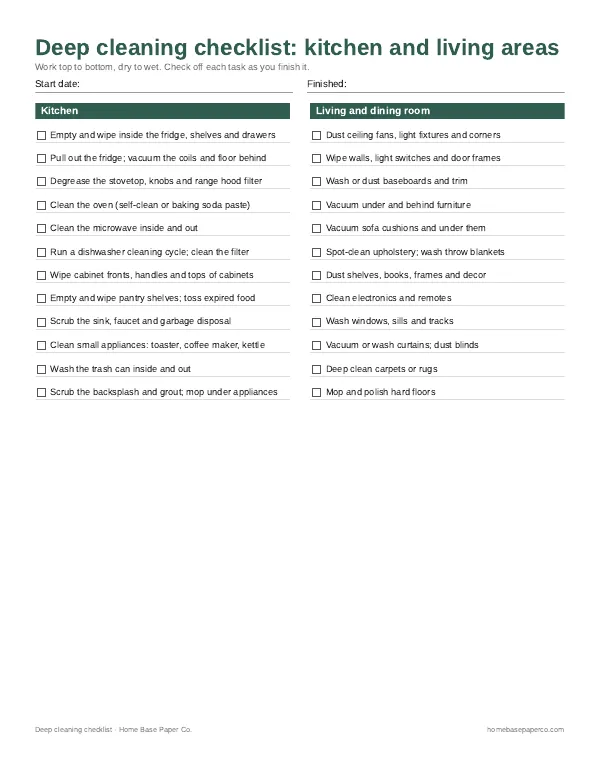
Clean the whole house in order: get the free deep cleaning checklist
A printable room-by-room deep cleaning checklist that tells you what to do first, so nothing gets cleaned twice. You'll also get our weekly HomeBase email with simple cleaning routines and chore ideas the whole family can help with.
Sources
- Consumer Reports: Take the Pain Out of Window Cleaning consumerreports.org
- Consumer Reports: What's the Best Way to Clean High Windows? consumerreports.org
- Consumer Reports: Things You Can Clean With Vinegar consumerreports.org