
 Thanksgiving hosting

The short answer: how to brine a turkey: salt it ahead of time, either in salt water (a wet brine) or with salt rubbed on the skin (a dry brine), for juicy, well-seasoned meat.
- Wet brine: 6 to 24 hours, by strength
- Dry brine: 1 to 3 days, with crisp, brown skin
- Start with a fully thawed turkey and keep it cold
- A Thanksgiving 2026 brining timeline below
- Next step: Plan it with the Holiday Season Bundle ($15.99).
Learning how to brine a turkey is the simplest way to get juicy, well-seasoned meat, even if the bird cooks a few minutes too long. Brining means salting the turkey ahead of time, either in salt water (a wet brine) or with salt rubbed on the skin (a dry brine). This guide covers both methods, the salt ratios, how long to brine by size, and how to keep the turkey safe while it sits.

Why brining works
Salt breaks down some of the proteins in the meat. That lets the muscle hold on to more water as it cooks, so the turkey loses less juice in the oven. Salt also seasons the meat all the way through, not just the skin. The result is a turkey that tastes better on its own and forgives small timing mistakes.
Brining is not required for a good turkey. But if you've had dry breast meat before, it's the easiest fix.
Wet brine vs. dry brine
| Wet brine | Dry brine | |
|---|---|---|
| What it is | Turkey soaks in salt water. | Salt is rubbed on the skin. |
| Time | 6 to 24 hours, by strength. | 1 to 3 days. |
| Space | A big container or bag in the fridge or a cooler. | A pan on a fridge shelf. |
| Skin | Softer unless dried well. | Crisp and brown. |
| Mess | More: lots of liquid to handle. | Less. |
Most busy hosts choose a dry brine, because it takes almost no space. A wet brine works well if you have a spare fridge or a big cooler.
How to wet brine a turkey, step by step
- Start with a fully thawed turkey. Remove the neck and giblets.
- Mix the brine. USDA's guide to basting, brining and marinating gives about 3/4 cup of table salt per gallon of water. Stir until the salt dissolves. Add sugar, herbs or citrus if you like.
- Cool it. If you heated the brine to dissolve the salt, chill it fully before adding the turkey.
- Submerge the turkey. Use a food-grade container, a stainless steel pot or a brining bag, never a trash bag. Place the bird breast down and make sure it is fully covered.
- Keep it cold. Cover it and keep it in the fridge at 40°F or below. USDA says not to brine longer than 2 days.
- Remove and dry. Lift the turkey out, discard the brine and pat it dry.
- Air-dry if you can. Leave it uncovered on a rack in the fridge overnight for crisper skin.
Stronger brines work faster. Illinois Extension's brine method uses a much saltier mix and brines for just 6 to 8 hours, or overnight with half the salt. Whichever recipe you use, keep its salt amount and timing together.
A simple turkey brine recipe
This basic turkey brine recipe makes 2 gallons, enough for most 12 to 18 pound turkeys in a brining bag or 5 gallon container. It follows USDA's ratio of about ¾ cup of table salt per gallon of water.
| Ingredient | Amount |
|---|---|
| Cold water | 2 gallons, divided |
| Table salt | 1½ cups |
| Brown sugar (optional) | ½ cup |
| Orange peel (optional) | Peel of 2 oranges |
| Fresh thyme or rosemary (optional) | 4 to 6 sprigs |
| Bay leaves (optional) | 2 |
| Black peppercorns (optional) | 1 tablespoon |
- Dissolve. Warm 1 quart of the water with the salt and sugar, stirring until clear.
- Flavor. Take it off the heat and add the peel, herbs, bay leaves and peppercorns.
- Cool. Pour in the rest of the cold water. The brine must be fully cold, 40°F or below, before the turkey goes in.
- Brine. Submerge the turkey and refrigerate it, following the timing guide below.
This recipe uses table salt. Kosher salt crystals are larger, so a cup of kosher salt holds less salt than a cup of table salt, and brands differ. If you use kosher salt, go by the conversion on the box or weigh it instead.
How to dry brine a turkey
A dry brine is just salt, and sometimes herbs or pepper, rubbed over the turkey.
A dry brine works especially well on a spatchcock turkey, since the flat bird has more skin exposed to the salt and the air.
- Pat the thawed turkey dry.
- Measure the salt. A common rule is 1 tablespoon of kosher salt per 4 to 5 pounds of turkey.
- Rub it on. Season the skin, inside the cavity and under the breast skin.
- Refrigerate uncovered on a rack set in a rimmed pan for 1 to 3 days.
- Don't rinse. The salt will have soaked in. Roast as usual.
The skin looks dry and a little tight after a day or two. That's what you want: it browns beautifully.
How long to brine a turkey by size
| Turkey size | Wet brine (standard) | Dry brine |
|---|---|---|
| 10 to 12 pounds | 10 to 14 hours. | 1 to 2 days. |
| 12 to 16 pounds | 12 to 18 hours. | 2 days. |
| 16 to 20 pounds | 16 to 24 hours. | 2 to 3 days. |
| Turkey breast | 4 to 8 hours. | 12 to 24 hours. |
These are typical ranges for a standard-strength wet brine. Very salty brines need much less time, so follow your recipe. Never go past 2 days in a wet brine.
Keeping a brining turkey safe
Raw turkey must stay at 40°F or below the entire time it brines. If your fridge is full, a cooler works. Add plenty of ice or ice packs, and check the temperature with a thermometer every few hours. Keep the cooler in a cool spot, like a garage in late November, but not where it could freeze solid or warm in the sun.
Wash your hands and clean the counter after handling raw turkey. Don't reuse brine. And cook the turkey to a safe temperature: USDA's "Let's Talk Turkey" guide says the bird is done at 165°F in the thickest part of the thigh, wing and breast.
What not to brine
Skip brining if your turkey is labeled kosher, self-basting or enhanced. These are already salted or injected with a salt solution. Brining again makes them too salty. Read the label before you buy if you plan to brine. A plain fresh or frozen turkey is the best choice.
A Thanksgiving 2026 brining timeline
Thanksgiving is Thursday, November 26, 2026. Here's a timeline for a 16 pound frozen turkey:
- Friday, November 20: move the frozen turkey to the fridge to thaw (see how long to thaw a turkey for times by weight).
- Monday, November 23: check the turkey. Most of it should be thawed.
- Tuesday, November 24: start a dry brine, or clear fridge space for a wet brine.
- Wednesday, November 25: start a standard wet brine in the morning.
- Thursday morning: remove the turkey, pat it dry and let it sit while the oven heats.
Write these dates on your calendar so the thaw doesn't sneak up on you. Our Thanksgiving checklist lays out the rest of the week.
Brine add-ins that work
Salt is the only must. These add a gentle flavor:
- Citrus: orange or lemon peel, sliced.
- Herbs: thyme, rosemary, sage or bay leaves.
- Spices: black peppercorns, garlic and a little brown sugar.
- Apple cider: use it for part of the water in a wet brine.
Most add-ins flavor the skin more than the meat. Keep them simple and spend the effort on drying the skin well.
Brining a turkey breast or parts
A bone-in turkey breast or a pack of thighs brines just like a whole bird, only faster. A bone-in breast of 6 to 8 pounds needs 4 to 8 hours in a standard wet brine, or 12 to 24 hours with a dry brine. Thighs and drumsticks need about the same. Boneless breasts are thinner, so 2 to 4 hours in a wet brine is plenty. If you're cooking for a small group, a brined breast roasts in about 2 hours and fits in a regular gallon bag, so there's no need for a bucket.
Common brining problems and fixes
- The turkey tastes too salty. The brine was too strong, it sat too long, or the bird was already enhanced. Next time, cut the time or the salt. This year, skip salt in the gravy and serve it with unsalted sides.
- The skin is pale and rubbery. The skin was still wet. Pat it very dry and leave it uncovered in the fridge for a few hours or overnight before roasting.
- The turkey won't stay under the brine. Weigh it down with a sealed bag of ice or a heavy plate.
- The fridge is full. Use a brining bag inside a cooler with ice, or switch to a dry brine on a sheet pan.
- The drippings are too salty for gravy. Use half drippings and half low-sodium broth, and taste before adding salt.
How much brine you need
Most 14 to 18 pound turkeys need 1 1/2 to 2 gallons of brine to cover them in a 5 gallon container. A brining bag uses less, since it hugs the bird. To check, place the turkey in the empty container, add water until it's covered, then lift the turkey out and measure the water. Mix that much brine.
Plan the whole Thanksgiving meal
The turkey is one dish of many. The Meal Planner & Grocery List: Thanksgiving Edition ($4.99) has a Thanksgiving menu planner, a cooking timeline and a grocery list sorted by aisle, so the brine, sides and desserts all fit together. If you're hosting more than one holiday this year, the Holiday Season Bundle ($15.99) adds the Christmas Budget & Gift Planner, a Cleaning Schedule, a Sinking Funds Tracker and more. Our Thanksgiving menu template has three sample menus you can copy.
When the brining's done, see how long to cook a turkey for roasting times, and how much turkey per person to buy the right size. Our guide on how to carve a turkey covers the final step.
Skipping the brine this year? A homemade turkey seasoning rub with herbs, garlic and paprika still gives you flavorful meat and well-seasoned skin.

Plan the feast on paper
Your Thanksgiving timeline, guest list and grocery list in one place
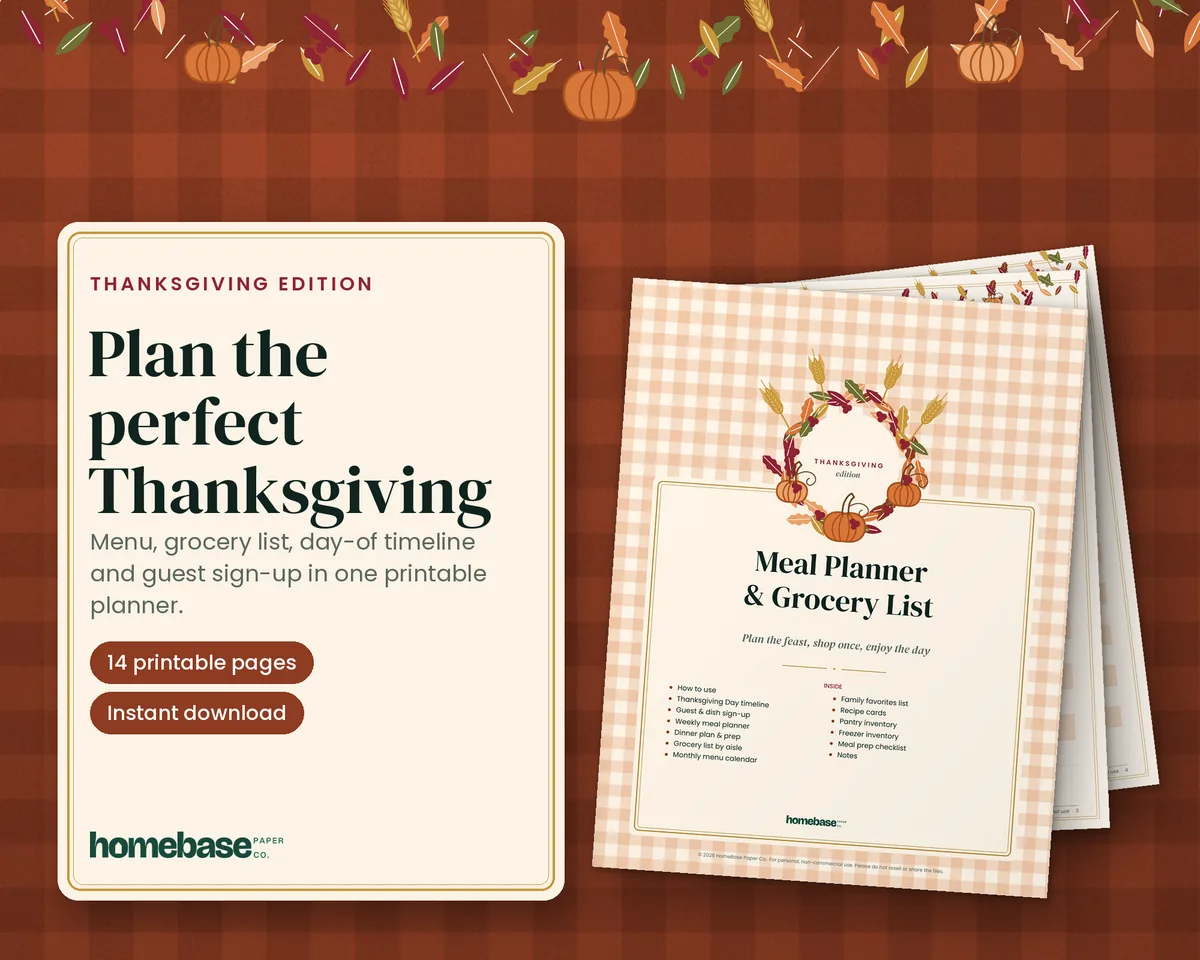
The Thanksgiving Edition of our Meal Planner & Grocery List, in a warm harvest design: map the day on the Thanksgiving Day timeline, track who brings what on the guest & dish sign-up, and shop once with the aisle-sorted grocery list. Print it at home tonight.
- Thanksgiving Day timeline that works backwards from dinner
- Guest & dish sign-up
- Grocery list sorted by aisle, plus pantry and freezer pages

Thanksgiving and Christmas planners together: the Holiday Quick-Start Pack, $7
Make it easier
Tools for this
 Thanksgiving Edition
Printables
Meal Planner & Grocery List: Thanksgiving Edition
Plan the perfect Thanksgiving: our meal planner in a warm harvest design, with a Thanksgiving Day timeline, a guest & dish sign-up, an aisle-sorted grocery list and pantry and freezer trackers.
 Save 38%
Bundles
Holiday Season Bundle
Plan Christmas, save for it all year, and host without the January money hangover.
Frequently asked questions
How do you brine a turkey? To brine a turkey, dissolve salt in cold water, submerge a fully thawed turkey in it, cover it and keep it at 40°F or below for the time your recipe gives. USDA suggests about 3/4 cup of table salt per gallon of water. Then remove the bird, pat it dry and roast it to 165°F.
How long should you brine a turkey? Most wet brines take 12 to 24 hours for a 12 to 16 pound turkey, while very salty brines need only 6 to 8 hours. USDA says not to brine longer than 2 days. Dry brines usually run 1 to 3 days in the fridge. Follow one recipe's salt amount and timing together.
Is it better to wet brine or dry brine a turkey? Most home cooks find a dry brine easier, because it needs no bucket, no extra fridge space and gives crisper skin. A wet brine adds a little more moisture, but it can make the meat taste watery and the skin softer. Both make a turkey juicier and better seasoned than no brine.
What is the salt ratio for a turkey brine? USDA gives about 3/4 cup of table salt per gallon of water, or 3 tablespoons per quart, for a wet brine. Kosher salt is less dense, so you need more of it by volume: Diamond Crystal is roughly twice table salt by volume. For a dry brine, a common rule is 1 tablespoon of kosher salt per 4 to 5 pounds.
Do you rinse a turkey after brining? You usually shouldn't rinse a turkey after brining. USDA advises against washing raw poultry because splashing spreads bacteria around the sink. Pat a wet-brined turkey dry with paper towels instead. If a recipe says to rinse off a very salty brine, clear the sink area first and clean it well afterward.
Can you brine a frozen turkey? No, the turkey should be fully thawed before brining, because salt can't reach frozen meat evenly. A partly frozen bird also takes longer to cook through. Thaw the turkey in the fridge first, allowing about one day for every 4 to 5 pounds, then start the brine.
Can you brine a turkey in a cooler? Yes, if the brine stays at 40°F or below the whole time. Use a clean cooler, add ice or frozen ice packs, and check the temperature with a thermometer every few hours. Add more ice as it melts. Don't use a garbage bag; use a food-grade brining bag or container.
Should you brine a kosher or self-basting turkey? No, you shouldn't brine a kosher or self-basting turkey. Kosher, self-basting and "enhanced" turkeys are already salted or injected with a salt solution. Brining them again can make the meat too salty. Check the label for words like "contains up to 8% of a solution" before you buy if you plan to brine.
Do you need sugar in a turkey brine? No, you don't need sugar in a turkey brine, because sugar is optional. Salt does the work of seasoning and holding moisture, and sugar adds a little flavor and browning. If you add sugar, honey or maple syrup, watch the skin in the oven, since it can darken faster. Tent with foil if it browns too early.
How long do you cook a brined turkey? A brined turkey cooks in about the same time as an unbrined one, roughly 3 to 3 3/4 hours for a 12 to 14 pound unstuffed bird at 325°F. It may brown faster, so start checking early. It is done when a thermometer reads 165°F in the thickest part of the thigh, wing and breast.
Can you make gravy from a brined turkey? Yes, but taste before adding salt, because brined drippings can be salty. Use low-sodium broth or unsalted stock to stretch the gravy. Skim the fat, whisk in a flour or cornstarch slurry, and season at the very end.
When should I start brining for Thanksgiving? For Thanksgiving on Thursday, November 26, 2026, start a dry brine on Monday or Tuesday, and a wet brine on Wednesday morning. A frozen 16 pound turkey needs to go into the fridge to thaw by about Friday, November 20, so it is ready to brine in time.
What is a basic turkey brine recipe? A basic turkey brine recipe is about ¾ cup of table salt per gallon of cold water, which is USDA's ratio. For most 12 to 18 pound turkeys, mix 2 gallons of water with 1½ cups of table salt, plus optional brown sugar, citrus peel and herbs, and keep the turkey in it in the refrigerator at 40°F or below.
Can you reuse turkey brine? Turkey brine should never be reused. Once raw poultry has soaked in it, the brine can carry bacteria from the bird, so pour it down the drain, then wash and sanitize the container, the sink and anything it splashed.
More from HomeBase
You may also like

Printables
Christmas Budget & Gift Planner
Set a budget for every person, log each purchase, and watch what's left - plus printable gift, card, menu and to-do pages.

Spreadsheets
Sinking Funds Tracker
It does the math: how much to set aside each month to hit every goal on time.
 Starter pick
Printables
100 Envelope Savings Challenge
Classic, half and 52-week challenges to print, plus a spreadsheet that tracks every envelope and tells you how much to save each week.

Printables
Budget Planner Printable
Twelve undated pages you can print every month: budget, bills, spending, savings and debt.
 Club
Monthly club
Money Club
Anyone who wants a clear plan for the month's bills, holiday spending and savings.
Free printable
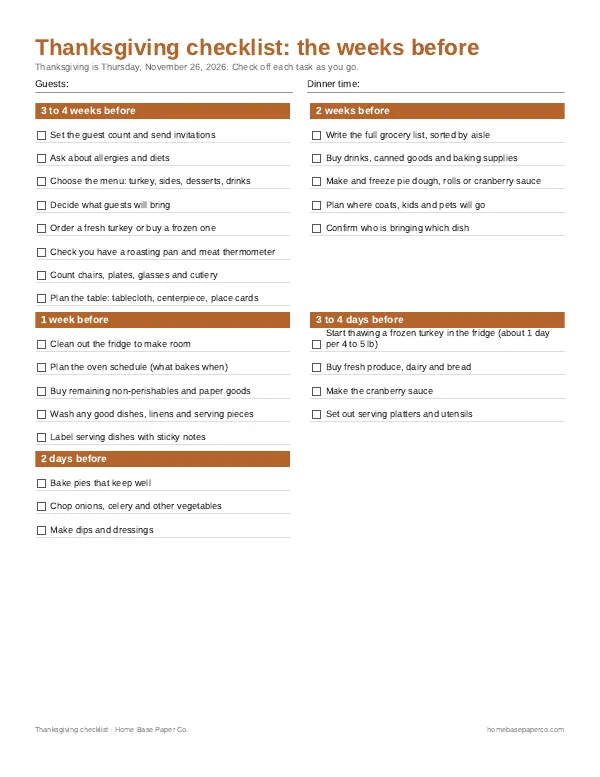
Host without the scramble: get the free Thanksgiving checklist
A printable week-by-week Thanksgiving countdown, from the guest list and menu to the day-of timeline. You'll also get our weekly HomeBase email with simple holiday planning, budgeting and hosting tips.
Sources
- USDA FSIS: Poultry basting, brining and marinating fsis.usda.gov
- Illinois Extension: Turkey brine method extension.illinois.edu
- USDA FSIS: Let's Talk Turkey fsis.usda.gov