
 Thanksgiving hosting

The short answer: how to carve a turkey: take the bird apart at its joints first, then slice each piece on a cutting board.
- Rest the turkey before you start
- Tools: a sharp knife, a carving fork and a board with a groove
- Remove the legs, wings and breast, then slice the breast
- Store leftovers safely
- Next step: Plan it with the Family Recipe Binder ($6.99).
Knowing how to carve a turkey turns a beautiful bird into neat slices that look as good as they taste. It's easier than it looks. The trick is to take the turkey apart at its joints first, then slice each piece on a cutting board. This guide walks through each step, the tools you need, how long to rest the bird, and how to store the leftovers safely.
Before you start: is it done?
Carving starts with a safely cooked turkey. USDA's "Let's Talk Turkey" guide says to check three spots with a food thermometer: the thickest part of the thigh, the wing and the thickest part of the breast. All three should read 165°F. If the turkey was stuffed, the center of the stuffing must also hit 165°F. Take the stuffing out before carving.
Rest the turkey
Move the turkey to a cutting board or platter and tent it loosely with foil. Illinois Extension's carving guide recommends letting it stand for about 20 minutes. Big birds can rest up to 40 minutes. Resting lets the juices settle, so the meat stays moist and is easier to slice. It also gives you time to make gravy and warm the sides.
Tools you need
| Tool | Why |
|---|---|
| Sharp carving or chef's knife. | Clean cuts through skin and meat. |
| Carving fork or tongs. | Holds the bird steady. |
| Large cutting board with a groove. | Catches the juices. |
| Paper towels. | Keeps the board and your hands dry. |
| Warm serving platter. | Keeps slices hot. |
| Small bowl. | For bones and scraps for broth. |
Sharpen the knife the day before. A dull knife tears the skin and slips, which is how most carving cuts happen.
How to carve a turkey in 9 steps
- Set up. Place the rested turkey on the board, breast side up, with the legs facing you.
- Remove the legs. Pull one leg away from the body. Cut through the skin between the thigh and breast. Press the leg down until the hip joint pops, then cut through the joint. Repeat on the other side.
- Separate drumstick and thigh. Lay the leg skin side down. Find the line of fat at the knee joint and cut straight through it.
- Slice the thigh. Cut the thigh meat off the bone in large pieces, then slice it.
- Remove the wings. Pull each wing away from the body and cut through the shoulder joint.
- Remove the breast. Find the breastbone in the center. Make a long cut down one side of it, then follow the rib cage with your knife, pulling the breast away as you go, until the whole half comes off in one piece.
- Repeat with the other breast half.
- Slice the breast. Lay each half skin side up and cut crosswise, against the grain, into slices about 1/4 to 1/2 inch thick.
- Arrange the platter. Put the breast slices in the center with the dark meat, drumsticks and wings around the edges.
Removing each breast half whole, then slicing it, is easier than the old way of slicing thin pieces off the bird. Every slice gets a strip of crisp skin, and the meat stays juicier.
Carving a turkey breast only
A bone-in turkey breast is even simpler. Rest it for 15 to 20 minutes. Cut down along one side of the breastbone, follow the rib cage to remove the meat in one piece, and repeat on the other side. Then slice each half crosswise. A boneless roast just needs slicing across the grain after resting; remove the netting first.
Carving a spatchcocked, smoked or fried turkey
Not every turkey is roasted whole. A spatchcocked turkey has had its backbone removed and lies flat, so it's even easier to carve. Cut the legs off where the thigh meets the body, then split the bird down the breastbone and lift each breast half off the ribs. A smoked turkey carves the same way as a roasted one, but its skin is often softer, so use a very sharp knife and slice a little thicker so the slices hold together. A deep-fried turkey cooks fast and stays very juicy. Let it rest at least 20 minutes, because the meat right near the bone stays hot for a long time.
How much meat to expect
Expect to get about half the raw weight of the turkey as carved meat. A 14 pound bird gives roughly 6 to 7 pounds of meat: about 60 percent white and 40 percent dark. If most of your guests prefer white meat, consider adding a bone-in breast to the menu. Our guide on how much turkey per person has a size chart by guest count.
Carving for a big crowd
For 15 or more guests, two people carving makes the job go faster. One person removes the legs, wings and breast halves, while the other slices and arranges the platter. If you're cooking two turkeys, carve the first one while the second rests, and keep the first platter warm in a low oven. Ask a guest to refill the platter during dinner, so you can sit down and eat too.
Carving ahead and reheating
If you'd rather not carve while guests wait, carve the turkey up to an hour early. Arrange the slices in an oven-safe dish, spoon over a little warm broth or pan juices, cover tightly with foil and hold it in a 200°F oven. Keep the drumsticks and wings whole and tuck them around the edges. The broth keeps the meat moist, and you're free to finish the gravy and sides. Serve within an hour or so for the best texture.
Making the platter look good
A good-looking platter makes a simple meal feel like a feast:
- Group the meat. White slices in one area, dark meat in another, so guests can choose.
- Fan the slices. Overlap them slightly in a row.
- Garnish simply. Fresh rosemary, sage, orange slices or cranberries are plenty.
- Keep it warm. Warm the platter in a low oven first, and spoon a little broth over the slices.
Common carving mistakes
- Carving right away. Juices run all over the board and the meat dries out.
- Using a dull knife. It tears the skin and is more likely to slip.
- Cutting through bone. If you meet resistance, wiggle the joint to find the gap instead of forcing the knife.
- Slicing with the grain. It makes slices stringy and chewy.
- Leaving it out too long. Carved meat should go back in the fridge within 2 hours.
Storing leftovers safely
USDA's leftovers guide says to refrigerate leftovers within 2 hours of cooking. Pull the remaining meat off the bones, divide it into shallow containers so it cools quickly, and refrigerate at 40°F or below. Use it within 3 to 4 days, or freeze it in portions. Reheat leftovers to 165°F. Our Thanksgiving leftovers meal plan has four days of ideas, and the freezer inventory list helps you track frozen portions.
Turn the carcass into broth
Don't toss the bones. Put the carcass in a large pot, cover it with cold water, and add an onion, two carrots, two celery stalks, a bay leaf and peppercorns. Simmer for 3 to 4 hours, then strain. Chill it overnight and lift off the fat. Use the broth for turkey soup, gravy or rice over the next 3 to 4 days, or freeze it in 2 cup containers.
Who should carve?
Many families have one person who always carves. It's a nice tradition, but it helps to teach the next generation. Pass the knife to a teen or adult child this year and walk them through the steps above. If your family has a special carving method, a gravy recipe or a stuffing that's been passed down, write it down so it isn't lost. The Family Recipe Binder ($6.99) has recipe pages with room for the family story behind each dish.
Plan the day around the carving
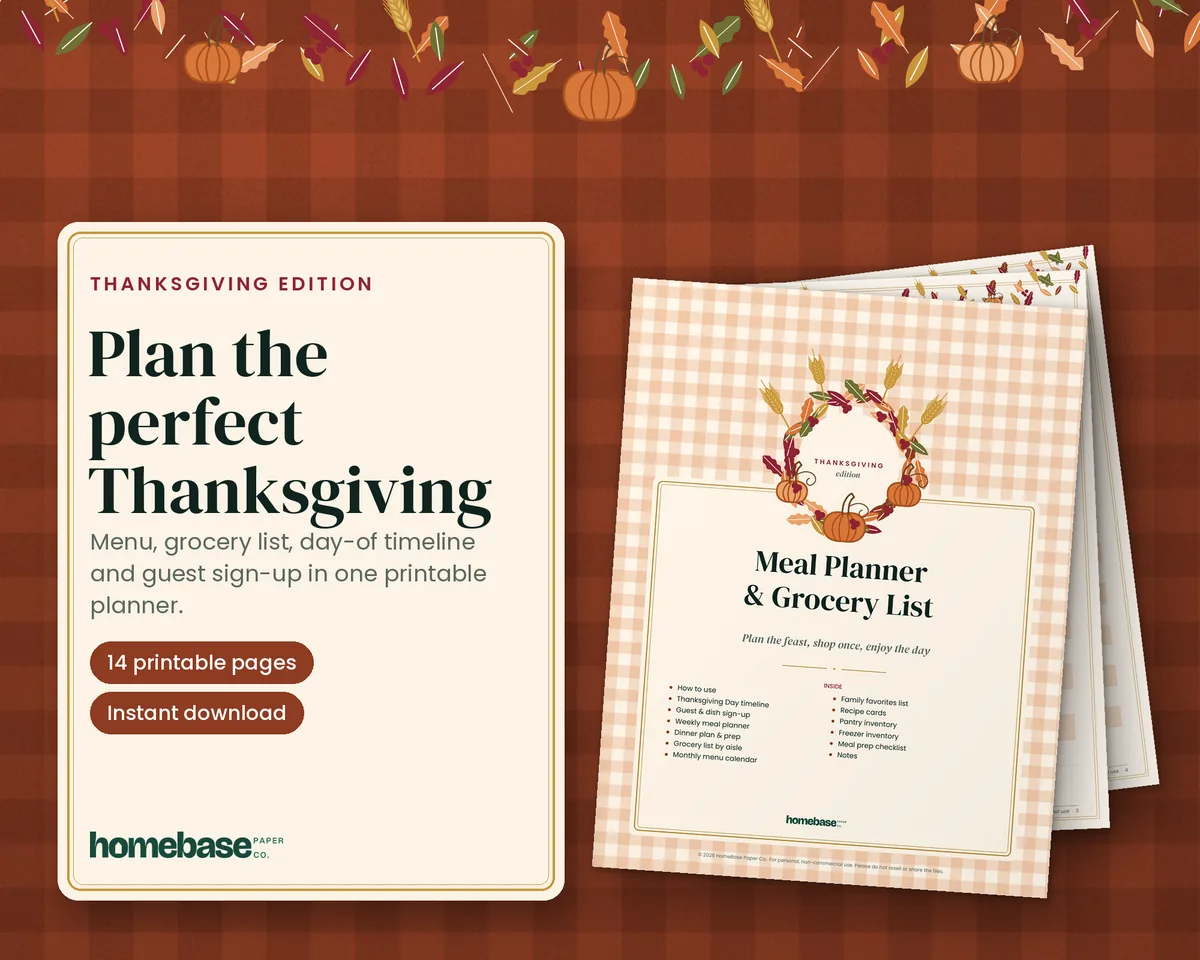
Carving happens at the busiest moment of the day: the turkey's out, the sides need the oven, and guests are hungry. A written timeline helps. The Meal Planner & Grocery List: Thanksgiving Edition ($4.99) includes a Thanksgiving Day timeline, a guest and dish sign-up sheet and an aisle-sorted grocery list, so you know exactly when the turkey comes out and what goes into the oven next.
Before the big day, see how much turkey per person to buy, how to brine a turkey for juicier meat, and how long to cook a turkey for timing.
After carving, put the extra meat to work with these leftover turkey recipes.
Plan the feast on paper
Your Thanksgiving timeline, guest list and grocery list in one place
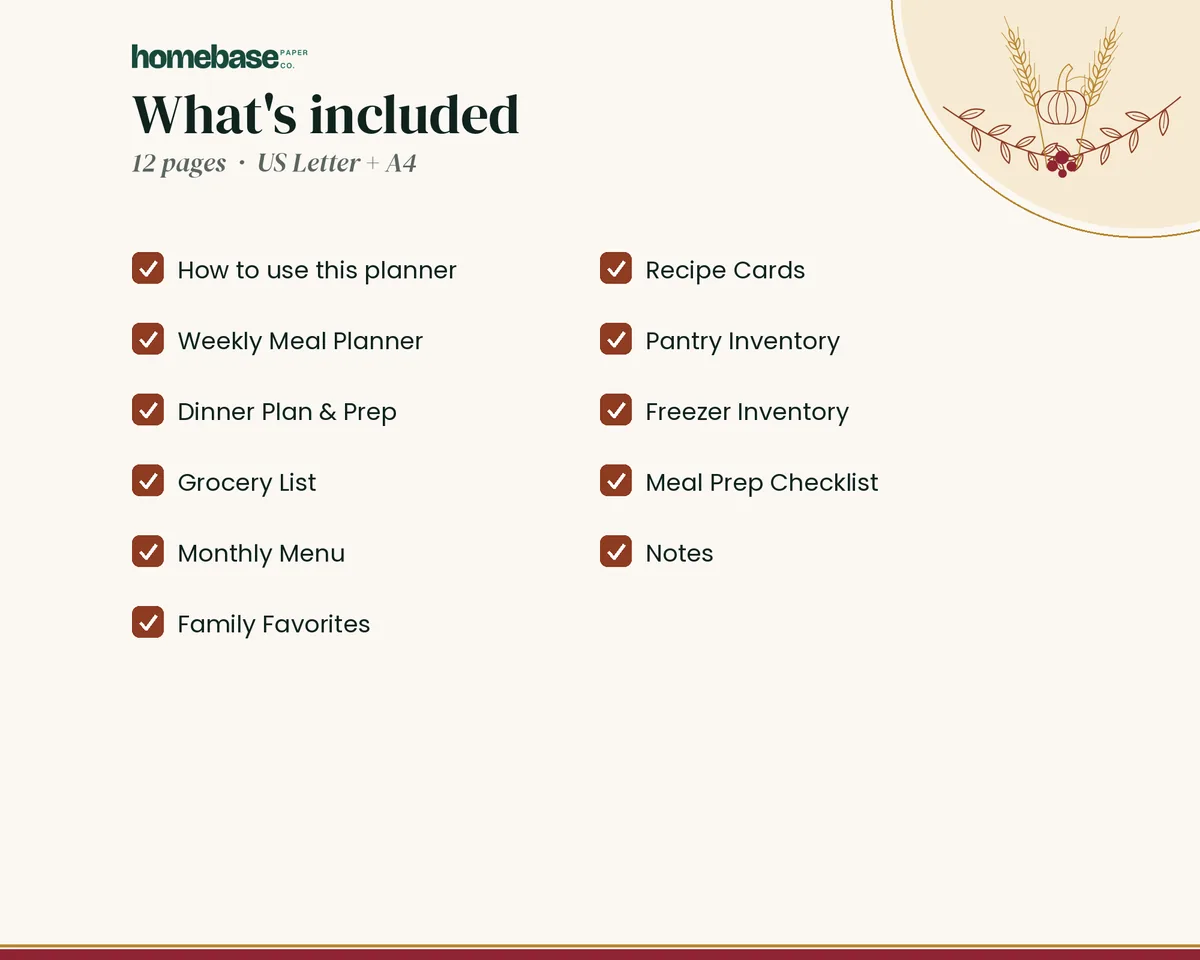
The Thanksgiving Edition of our Meal Planner & Grocery List, in a warm harvest design: map the day on the Thanksgiving Day timeline, track who brings what on the guest & dish sign-up, and shop once with the aisle-sorted grocery list. Print it at home tonight.
- Thanksgiving Day timeline that works backwards from dinner
- Guest & dish sign-up
- Grocery list sorted by aisle, plus pantry and freezer pages

Thanksgiving and Christmas planners together: the Holiday Quick-Start Pack, $7
Make it easier
Tools for this
 Thanksgiving Edition
Printables
Meal Planner & Grocery List: Thanksgiving Edition
Plan the perfect Thanksgiving: our meal planner in a warm harvest design, with a Thanksgiving Day timeline, a guest & dish sign-up, an aisle-sorted grocery list and pantry and freezer trackers.

Printables
Family Recipe Binder
Section dividers, four recipe page layouts with room for the family story, 4x6 and 3x5 cards and a conversion chart - print it or type into the fillable version.
Frequently asked questions
How do you carve a turkey for beginners? To carve a turkey, rest it for 20 to 30 minutes, then cut off the legs and thighs at the joint, separate the drumsticks, remove the wings, and cut each breast half off the bone in one piece. Slice the breast across the grain on a cutting board. Working on the board, not the platter, is the easiest way to learn how to carve a turkey.
How long should a turkey rest before carving? Let a whole turkey rest for at least 20 minutes, and up to 40 minutes for a large bird. Resting lets the juices settle so they stay in the meat instead of running onto the board. Tent it loosely with foil to keep it warm.
What knife is best for carving a turkey? A long, sharp carving knife of 8 to 10 inches is best, with a carving fork to hold the bird steady. A sharp chef's knife works well too. An electric knife is fine for slicing the breast, but a regular knife is better for finding the joints.
Should you carve a turkey at the table? You usually shouldn't carve a turkey at the table. Carving in the kitchen on a large cutting board is easier, cleaner and faster. Bring a whole bird to the table to show it off, then carve it in the kitchen and arrange the slices on a warm platter.
Do you carve turkey breast with or against the grain? Carve turkey breast against the grain, which means across the muscle fibers. Removing the whole breast half first and then slicing it crosswise into 1/4 to 1/2 inch slices gives every slice skin and keeps the meat tender.
How do you carve a turkey leg and thigh? Pull the leg away from the body and cut through the skin, then press down until the hip joint pops and cut through it. Find the knee joint between the drumstick and thigh and cut through it. Serve the drumstick whole, and slice the thigh meat off the bone.
How do you know a turkey is done before carving? A turkey is done when a food thermometer reads 165°F in the thickest part of the thigh, the wing and the thickest part of the breast. If you stuffed it, the center of the stuffing must also reach 165°F. Juices running clear is not a reliable sign.
Can you carve a turkey ahead of time? Yes, you can carve a turkey up to an hour before dinner. Arrange the slices on an oven-safe platter, add a few spoonfuls of warm broth, cover with foil and hold in a 200°F oven. Serve within an hour or so for the best texture.
How long can carved turkey sit out? No more than 2 hours at room temperature, or 1 hour if the room is above 90°F. After that, bacteria can grow quickly. Refrigerate leftovers in shallow containers within 2 hours of taking the turkey out of the oven.
How long do turkey leftovers last? Cooked turkey keeps 3 to 4 days in the fridge at 40°F or below, and 2 to 6 months in the freezer for best quality. Reheat leftovers to 165°F. Label containers with the date so you know when to use them.
What do you do with the turkey carcass? You can use the turkey carcass to make broth. Put the carcass in a large pot, cover it with water, add an onion, carrots, celery and herbs, and simmer for 3 to 4 hours. Strain it, chill it and skim the fat. Broth keeps 3 to 4 days in the fridge or 2 to 3 months frozen.
More from HomeBase
You may also like

Printables
Christmas Budget & Gift Planner
Set a budget for every person, log each purchase, and watch what's left - plus printable gift, card, menu and to-do pages.

Spreadsheets
Sinking Funds Tracker
It does the math: how much to set aside each month to hit every goal on time.
 Starter pick
Printables
100 Envelope Savings Challenge
Classic, half and 52-week challenges to print, plus a spreadsheet that tracks every envelope and tells you how much to save each week.
 Save 38%
Bundles
Holiday Season Bundle
Plan Christmas, save for it all year, and host without the January money hangover.
 Club
Monthly club
Money Club
Anyone who wants a clear plan for the month's bills, holiday spending and savings.
Free printable
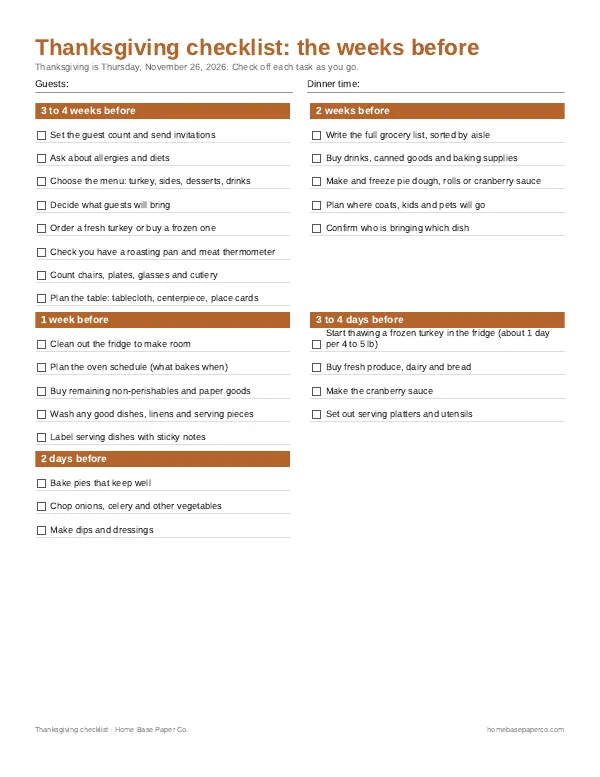
Host without the scramble: get the free Thanksgiving checklist
A printable week-by-week Thanksgiving countdown, from the guest list and menu to the day-of timeline. You'll also get our weekly HomeBase email with simple holiday planning, budgeting and hosting tips.
Sources
- Illinois Extension: Carving a turkey extension.illinois.edu
- USDA FSIS: Let's Talk Turkey fsis.usda.gov
- USDA FSIS: Leftovers and food safety fsis.usda.gov