
 Thanksgiving hosting

The short answer: great mashed potatoes come down to a few choices: the right potato, cold water to start, warm butter and dairy, and a gentle hand when mashing.
- Yukon Gold: creamy and hard to overwork
- Russet: light and fluffy, especially with a ricer
- Make-ahead and slow-cooker methods
- 12 flavor ideas and fixes for gluey potatoes
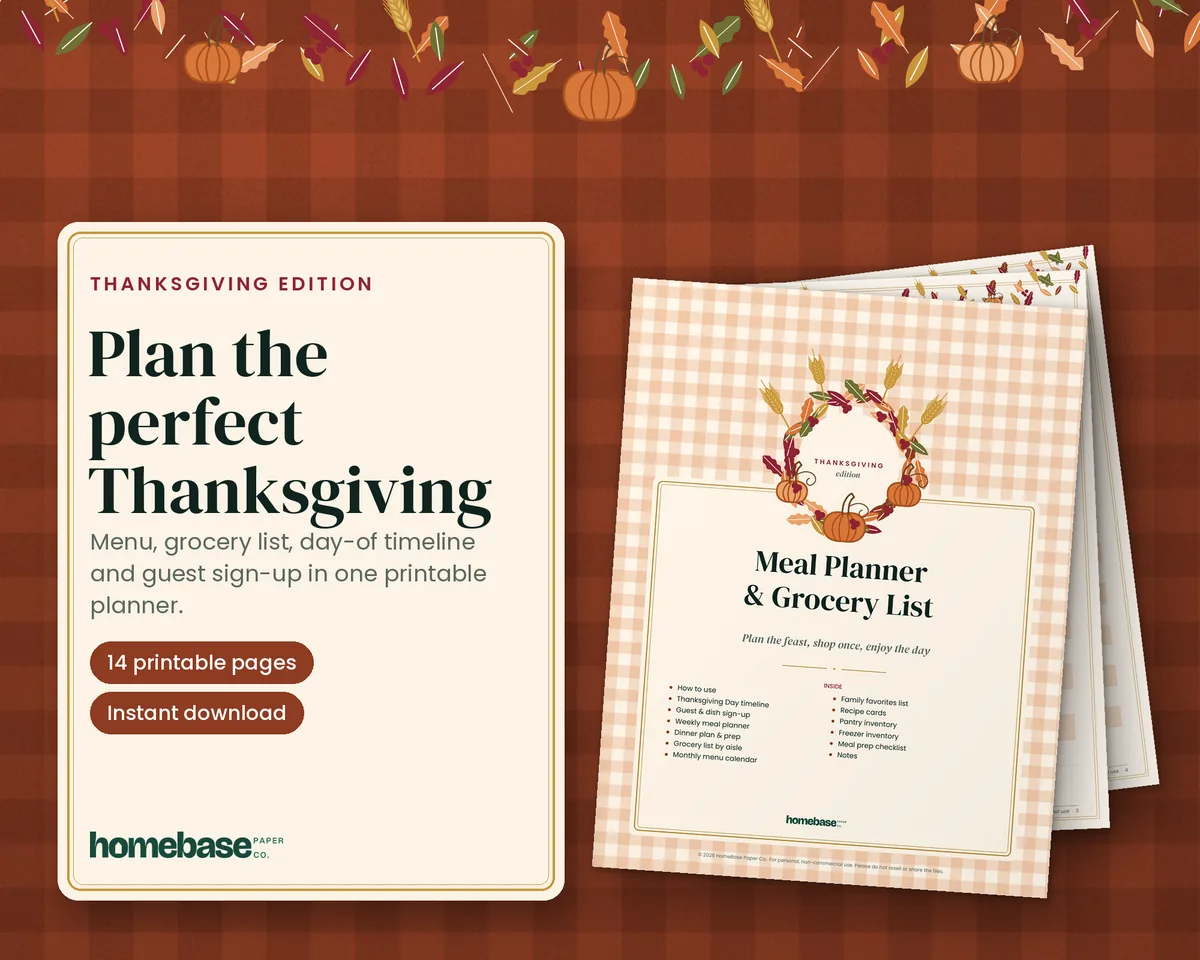
- Next step: Plan it with the Meal Planner & Grocery List ($3.99).
Mashed potatoes are the side dish everyone counts on, at Thanksgiving, at Christmas and on any Tuesday night. They're simple, but the difference between good and great comes down to a few choices: the right potato, cold water to start, warm butter and dairy, and a gentle hand when mashing. This guide covers a basic recipe, how many potatoes to buy, make-ahead and slow-cooker methods, 12 flavor ideas and how to fix mashed potatoes that went wrong. Want a baked potato side instead? Try our scalloped potatoes.
The best potatoes for mashed potatoes
Potatoes vary by how much starch they contain, and that changes the texture of the mash.
| Potato | Texture when mashed | Best for |
|---|---|---|
| Yukon Gold | Creamy, buttery, dense | Smooth, rich mashed potatoes that are hard to overwork |
| Russet | Light, fluffy, absorbs butter | Fluffy mashed potatoes, especially with a ricer |
| Red or other waxy potatoes | Firm, waxy | Skin-on smashed potatoes |
| Half Yukon Gold, half russet | Fluffy and creamy | The best of both |
Britannica explains that the potato is native to the Peruvian-Bolivian Andes, where it was grown more than 7,000 years ago, and that the Spanish brought it to Europe in the second half of the 1500s. It is now one of the world's main food crops. Andean farmers still grow hundreds of varieties, but most U.S. grocery stores carry the three types above.
Classic mashed potatoes recipe (serves 6 to 8)
Ingredients
- 3 pounds Yukon Gold or russet potatoes (or a mix)
- 1 tablespoon kosher salt for the water, plus more to taste
- 1/2 cup (1 stick) butter
- 1 cup whole milk, half-and-half or cream
- Black or white pepper
- Chives for garnish (optional)
Steps
- Prep. Peel the potatoes, or leave thin skins on, and cut into even 1 1/2- to 2-inch chunks so they cook at the same rate.
- Start cold. Put the potatoes in a large pot, cover with cold water by an inch and add the salt.
- Simmer. Bring to a boil, then lower to a steady simmer. Cook 15 to 20 minutes, until a knife slides into the biggest piece with no resistance.
- Warm the dairy. While the potatoes cook, warm the butter and milk in a small pan or the microwave.
- Drain and dry. Drain well and return the potatoes to the hot pot for a minute to steam off extra water.
- Mash. Use a potato masher or press the potatoes through a ricer. Stir in the warm butter and milk a little at a time.
- Season. Add salt and pepper to taste. Top with more butter and chives.
How many potatoes per person
| Guests | Raw potatoes | About how many |
|---|---|---|
| 4 | 2 pounds | 4 medium russets |
| 6 to 8 | 3 pounds | 6 medium russets |
| 10 to 12 | 5 to 6 pounds | A 5-pound bag plus a few |
| 16 to 20 | 8 to 10 pounds | Two 5-pound bags |
Plan about 1/2 pound per person, since mashed potatoes are usually the most popular side on a holiday table. With lots of sides, 1/3 pound is enough. For the butter and milk, scale up from the recipe above: about 2 1/2 tablespoons of butter and 1/3 cup of milk per pound of potatoes.
Masher, ricer or mixer?
- Hand masher: classic, a little rustic, almost impossible to overwork.
- Ricer or food mill: the smoothest, fluffiest mash. Press the potatoes while hot.
- Hand mixer: quick for big batches, but stop as soon as they're smooth.
- Blender or food processor: avoid. The blades break the starch and make the potatoes gluey.
Make-ahead mashed potatoes
Holiday mornings are busy, so make the potatoes ahead:
- Make them up to 2 days ahead, a little looser than usual, with an extra splash of milk.
- Spread in a buttered baking dish and dot with butter.
- Cool quickly and refrigerate within 2 hours. Shallow dishes cool faster.
- Reheat covered at 350°F for 30 to 40 minutes, stirring once, or in a slow cooker on low for 2 to 3 hours.
- Stir in warm milk if they look stiff, and heat until they reach 165°F.
Slow-cooker mashed potatoes
The slow cooker is the secret weapon of holiday cooking, because it frees up the stove and oven. Two ways to use it:
- Cook in it: Put 3 pounds of cubed potatoes in the slow cooker with 1 cup of broth, 2 cloves of garlic and salt. Cook on high for 3 to 4 hours, until tender. Mash right in the pot with warm butter and milk.
- Hold in it: Make the potatoes on the stove, then transfer them to a buttered slow cooker on the warm setting. Add a splash of milk and a few pats of butter on top. They'll hold for 2 to 4 hours. Stir every 30 minutes.
Instant Pot mashed potatoes
An electric pressure cooker cooks the potatoes without a big pot of boiling water on the stove, which helps on a crowded holiday cooktop.
- Load the pot. Add 3 pounds of peeled potatoes cut into 1 1/2- to 2-inch chunks, 1 cup of water or broth and 1 teaspoon of salt. Check your model's manual for its minimum liquid.
- Pressure cook. Lock the lid, set the valve to sealing and cook on high pressure for 8 to 10 minutes.
- Release and test. Quick-release the pressure. A knife should slide into the biggest piece with no resistance; if not, cook 2 minutes more.
- Mash in the pot. Drain any liquid left (save a little for thinning), then mash with warm butter and milk as in the classic recipe. Use the keep-warm setting while the rest of dinner finishes, stirring in a splash of milk if they stiffen.
12 ways to flavor mashed potatoes
- Garlic: simmer 4 to 6 peeled cloves with the potatoes and mash them in.
- Roasted garlic: squeeze a whole roasted head into the butter.
- Brown butter: cook the butter until golden and nutty before adding.
- Sour cream and chive: swap 1/2 cup of the milk for sour cream.
- Cream cheese: add 4 ounces for an extra-creamy, tangy mash.
- Loaded: cheddar, bacon, sour cream and green onions.
- Parmesan and black pepper: a cup of grated parmesan and lots of pepper.
- Herb: fresh thyme, rosemary and parsley.
- Horseradish: 2 to 3 tablespoons, perfect with prime rib or beef tenderloin.
- Buttermilk: a light, tangy version.
- Olive oil: a dairy-free version with good olive oil and warm broth.
- Half and half cauliflower: half potatoes, half cauliflower for a lighter side.
How to fix mashed potato problems
| Problem | Fix |
|---|---|
| Gluey or gummy | Fold in a little more potato or turn it into a baked casserole with cheese and crumbs. Next time, mash by hand. |
| Too thin | Stir over low heat to cook off moisture, or add instant potato flakes a spoonful at a time. |
| Too thick | Stir in warm milk a tablespoon at a time. |
| Lumpy | Press through a ricer or sieve, or mash a little longer by hand. |
| Bland | Add salt in small pinches, plus butter. Under-salted cooking water is the usual cause. |
| Cold | Reheat covered in the oven or in a slow cooker with a splash of milk. |
Mashed potatoes on a budget
Potatoes are one of the cheapest ways to feed a crowd, which makes mashed potatoes a smart side when you're hosting on a budget. A few ways to keep the cost down:
- Buy the 5- or 10-pound bag instead of loose potatoes. It usually costs less per pound.
- Use whole milk and butter instead of cream for a big batch, and save the cream for a small bowl on the table.
- Skip the peeling with thin-skinned potatoes. You save time and waste less.
- Make a double batch and freeze half for an easy weeknight side or a shepherd's pie.
- Write potatoes, butter and milk on your grocery list early, since stores often run low the week of a holiday.
Mashed potatoes for Thanksgiving and Christmas
On a holiday table, mashed potatoes need a partner: gravy. Our guide to how to make gravy covers turkey, beef and make-ahead gravy. For the rest of the meal, see our Thanksgiving menu template, our list of Thanksgiving side dishes and, for December, our Christmas side dishes.
Our Meal Planner and Grocery List: Thanksgiving Edition ($4.99) helps you plan it all, with a Thanksgiving Day timeline that works backward from dinnertime so the oven never double-books, a guest and dish sign-up and an aisle-sorted grocery list. For everyday meals the rest of the year, our Meal Planner and Grocery List ($3.99) has a weekly meal planner and grocery list.
Storing leftover mashed potatoes
Follow FoodSafety.gov's four steps, clean, separate, cook and chill, from peeling to storing. Refrigerate leftovers within 2 hours of cooking, in shallow covered containers. USDA says cooked leftovers keep 3 to 4 days in the fridge. Reheat them to 165°F with a splash of milk. You can freeze mashed potatoes for about 2 months; ones made with plenty of butter and cream freeze best.
Leftovers make great potato pancakes: mix 2 cups of cold mashed potatoes with an egg, 1/4 cup of flour and some cheese or green onions, shape into patties and fry until golden. They also make a quick shepherd's pie topping. Our easy shepherd's pie uses about 4 cups of mashed potatoes.
Save your family's version
Everyone's family has "the" mashed potatoes: with skins or without, extra garlic, a spoonful of cream cheese. Write yours down this year. Our Family Recipe Binder ($6.99) has four recipe page layouts with room for the story behind each dish, plus a conversion chart.
Short on stove space? Our Instant Pot mashed potatoes cook in 8 minutes on high pressure with no draining. Want them whole instead? Our guide to how to bake a potato covers oven times and toppings. They are the classic side under a bowl of coq au vin. More potato mains and sides live in our potato recipes roundup.
Plan the feast on paper
Your Thanksgiving timeline, guest list and grocery list in one place
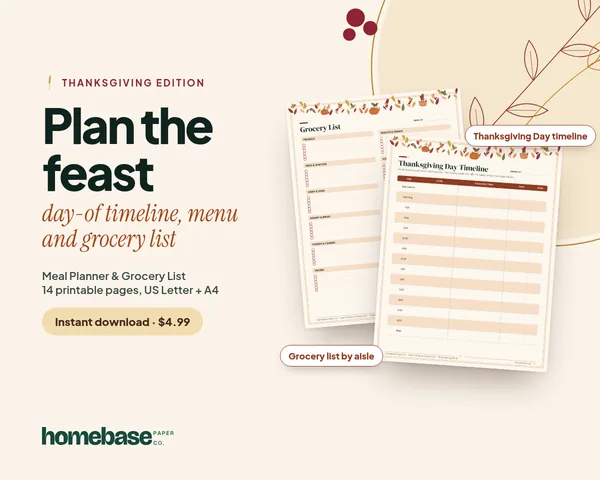
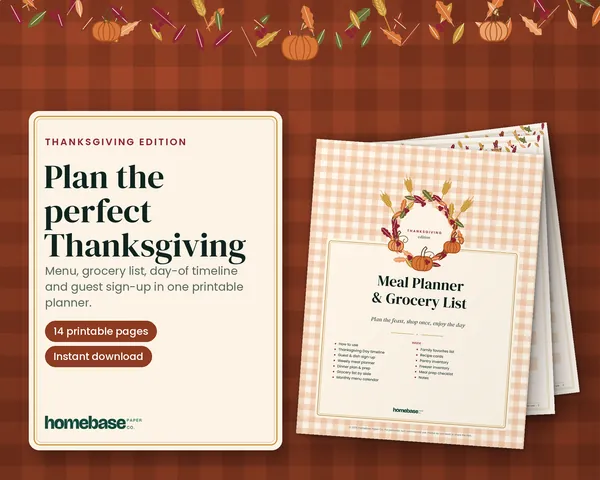
The Thanksgiving Edition of our Meal Planner & Grocery List, in a warm harvest design: map the day on the Thanksgiving Day timeline, track who brings what on the guest & dish sign-up, and shop once with the aisle-sorted grocery list. Print it at home tonight.
- Thanksgiving Day timeline that works backwards from dinner
- Guest & dish sign-up
- Grocery list sorted by aisle, plus pantry and freezer pages
Thanksgiving and Christmas planners together: the Holiday Quick-Start Pack, $7
Make it easier
Tools for this
 Thanksgiving Edition
Printables
Meal Planner & Grocery List: Thanksgiving Edition
Plan the perfect Thanksgiving: our meal planner in a warm harvest design, with a Thanksgiving Day timeline, a guest & dish sign-up, an aisle-sorted grocery list and pantry and freezer trackers.
Printables
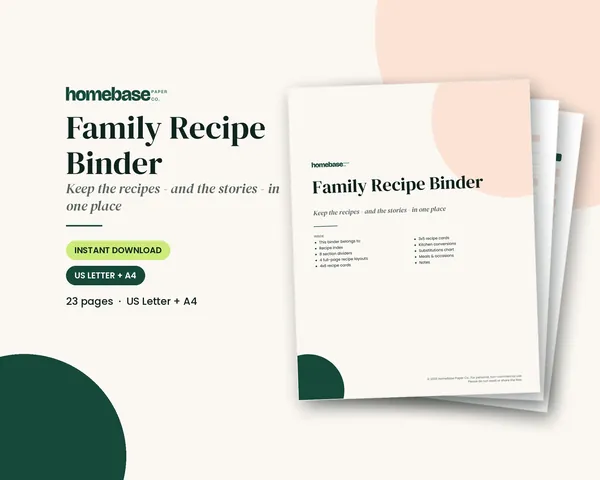
Family Recipe Binder
Section dividers, four recipe page layouts with room for the family story, 4x6 and 3x5 cards and a conversion chart - print it or type into the fillable version.
 Starter pick
Printables
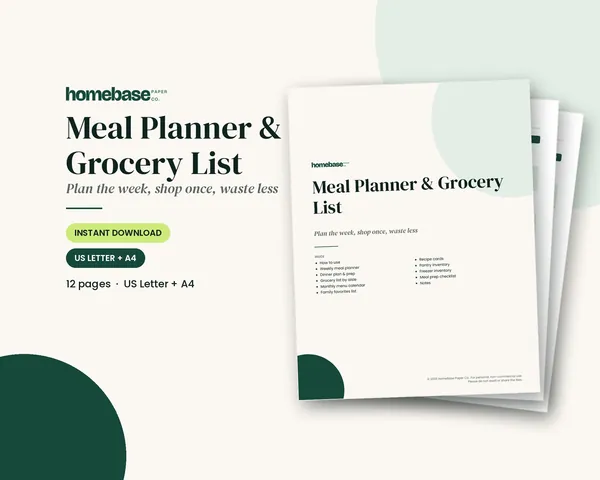
Meal Planner & Grocery List
Weekly meals, a grocery list sorted by aisle, and pantry and freezer inventories so you shop once and waste less.
Frequently asked questions
How do you make mashed potatoes? To make mashed potatoes, peel and cut 3 pounds of potatoes into even chunks, cover with cold salted water, bring to a boil and simmer 15 to 20 minutes until fork-tender. Drain, let them steam dry for a minute, mash with 1 stick of butter and 1 cup of warm milk or cream and season with salt and pepper.
What are the best potatoes for mashed potatoes? The best potatoes for mashed potatoes are Yukon Golds, which are creamy, buttery and hard to make gluey, and russets, which are starchy and make the fluffiest mash. Many cooks use half of each. Waxy red potatoes work for skin-on smashed potatoes but turn dense when mashed smooth.
How many potatoes do I need per person? Plan about 1/2 pound of raw potatoes per person for mashed potatoes, or about 1/3 pound if you are serving many sides. That is roughly one medium russet or two small Yukon Golds per person. Three pounds of potatoes serve 6 to 8, and 5 pounds serve 10 to 12.
Should you start potatoes in cold or boiling water? Start potatoes in cold water for mashed potatoes. Cold water lets the outside and the center cook at the same rate, so you do not end up with mushy edges and hard middles. Salt the water well, about 1 tablespoon per 4 quarts, so the potatoes are seasoned all the way through.
How long do you boil potatoes for mashed potatoes? Boil potatoes cut into 1 1/2- to 2-inch chunks for 15 to 20 minutes once the water reaches a steady simmer, until a knife slides into the biggest piece with no resistance. Smaller pieces cook faster, and whole medium potatoes take noticeably longer, so test with a knife rather than the clock.
Can you make mashed potatoes in an Instant Pot? Yes, you can make mashed potatoes in an Instant Pot by pressure cooking 1 1/2- to 2-inch chunks with 1 cup of water or broth on high pressure for 8 to 10 minutes, then quick-releasing. Drain any leftover liquid, then mash right in the pot with warm butter and milk, and check your model's manual for its minimum liquid.
Why are my mashed potatoes gluey? Mashed potatoes turn gluey when they are overworked, which breaks the starch cells and releases too much starch. Blenders, food processors and long beating with a mixer cause it most. Use a hand masher or a ricer, add warm dairy and stop as soon as they are smooth.
Can I make mashed potatoes ahead of time? Yes, you can make mashed potatoes up to 2 days ahead. Make them a little looser than usual, spread them in a buttered baking dish, cool quickly and refrigerate. Reheat covered at 350°F for 30 to 40 minutes or in a slow cooker, stirring in warm milk, until they reach 165°F.
How do I keep mashed potatoes warm? To keep mashed potatoes warm, hold them in a slow cooker on the warm setting with a splash of milk and a pat of butter on top, stirring every 30 minutes. They hold well for 2 to 4 hours. You can also keep them covered in a 200°F oven or over a pot of barely simmering water.
Should I peel potatoes for mashed potatoes? You do not have to peel potatoes for mashed potatoes. Peeled potatoes make the smoothest mash. Thin-skinned Yukon Golds and red potatoes can be left unpeeled for rustic, skin-on mashed potatoes with more texture. Scrub them well either way.
Milk or cream for mashed potatoes? Use whole milk for everyday mashed potatoes and cream or half-and-half for a richer holiday version. Warm the dairy with the butter before adding it, so the potatoes stay hot and absorb it evenly. Sour cream, cream cheese or buttermilk add tang.
Can you freeze mashed potatoes? Yes, you can freeze mashed potatoes, especially ones made with plenty of butter and cream, which help them stay smooth. Freeze in airtight containers or freezer bags for up to 2 months, thaw in the fridge overnight and reheat with a splash of milk, stirring well.
How long do mashed potatoes last in the fridge? Mashed potatoes last 3 to 4 days in the fridge, in line with USDA guidance for cooked leftovers. Refrigerate them within 2 hours of cooking, in shallow covered containers, and reheat to 165°F. Freeze them if you will not use them within 4 days.
How much mashed potatoes should I make for Thanksgiving? For Thanksgiving, make about 1/2 pound of raw potatoes per guest, since mashed potatoes are often the most popular side. That is 6 pounds for 12 people. Our Meal Planner and Grocery List: Thanksgiving Edition ($4.99) includes a dinner timeline and an aisle-sorted grocery list to plan every side.
More from HomeBase
You may also like
Printables
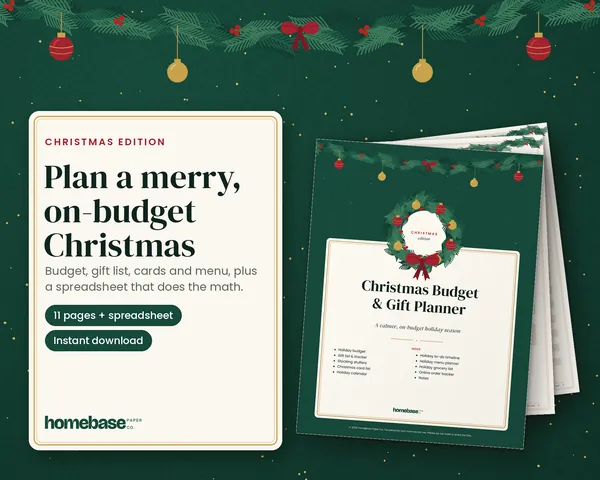
Christmas Budget & Gift Planner
Set a budget for every person, log each purchase, and watch what's left - plus printable gift, card, menu and to-do pages.
Spreadsheets
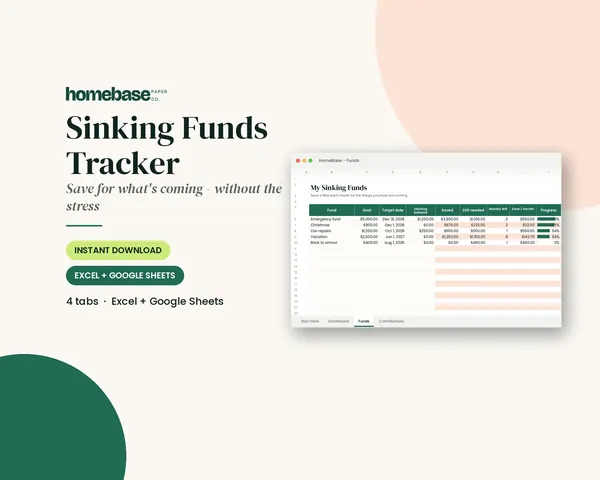
Sinking Funds Tracker
It does the math: how much to set aside each month to hit every goal on time.
 Starter pick
Printables
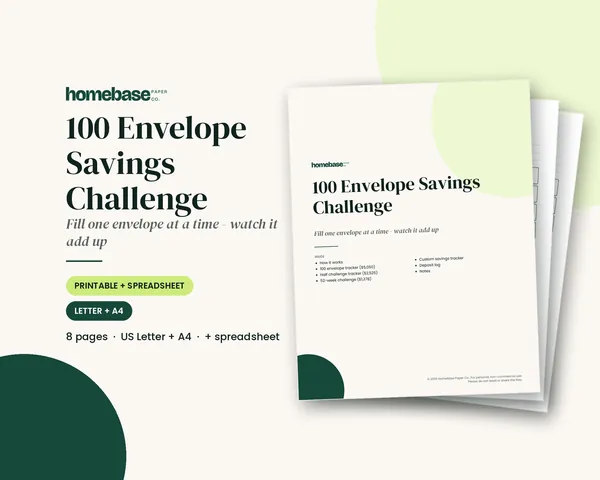
100 Envelope Savings Challenge
Classic, half and 52-week challenges to print, plus a spreadsheet that tracks every envelope and tells you how much to save each week.
 Save 38%
Bundles
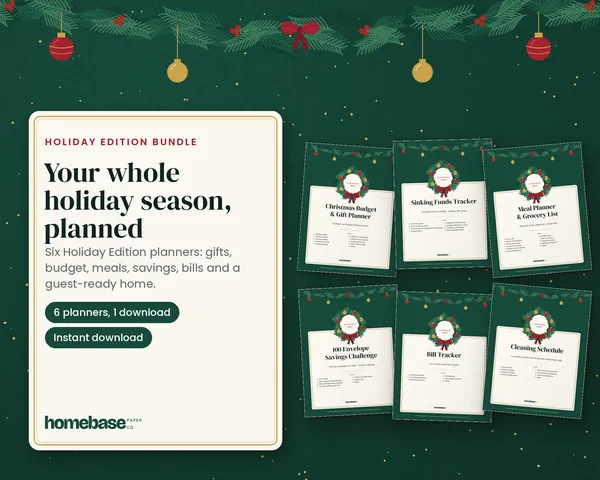
Holiday Season Bundle
Plan Christmas, save for it all year, and host without the January money hangover.
 Club
Monthly club
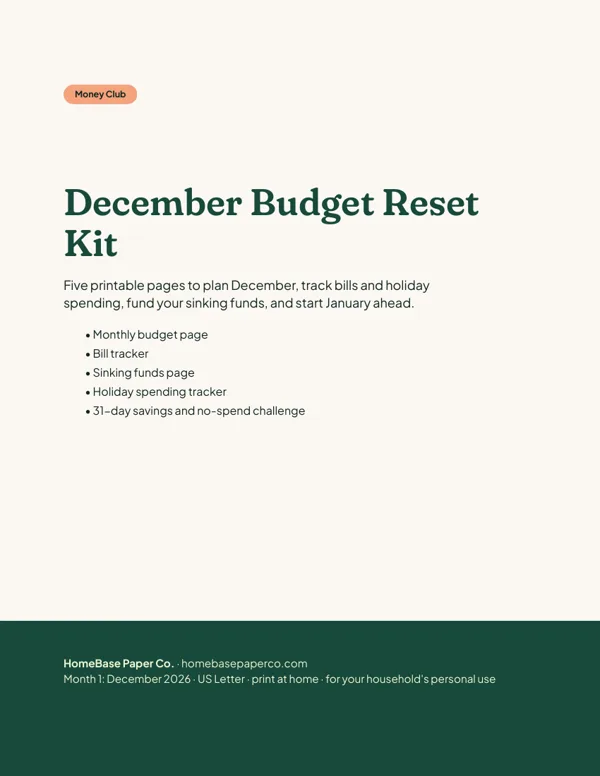
Money Club
Anyone who wants a clear plan for the month's bills, holiday spending and savings.
Free printable
Save the family favorites: get the free recipe book pages
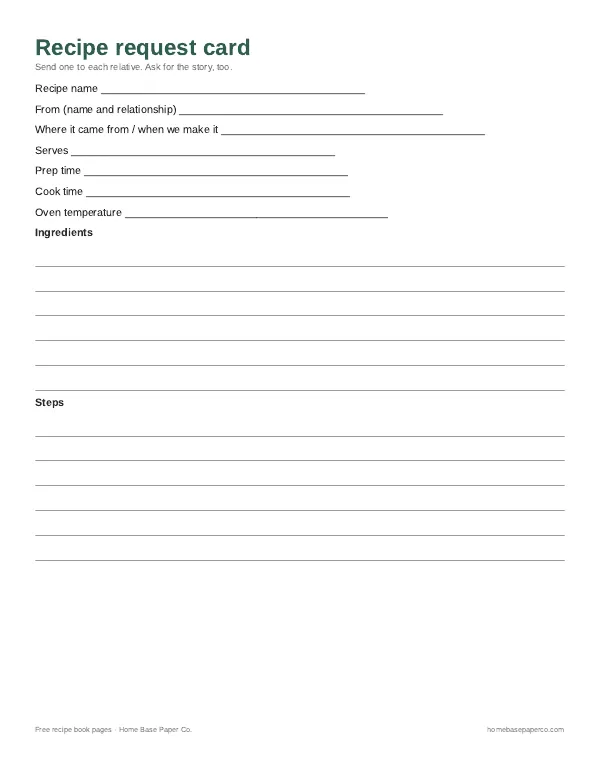
Printable recipe pages and a recipe request card to send to relatives, so the dishes everyone loves end up in one book. You'll also get our weekly HomeBase email with easy meal planning ideas and family recipe tips.
Sources
- Britannica: Potato britannica.com
- USDA FSIS: Leftovers and food safety fsis.usda.gov
- FoodSafety.gov: 4 steps to food safety foodsafety.gov