

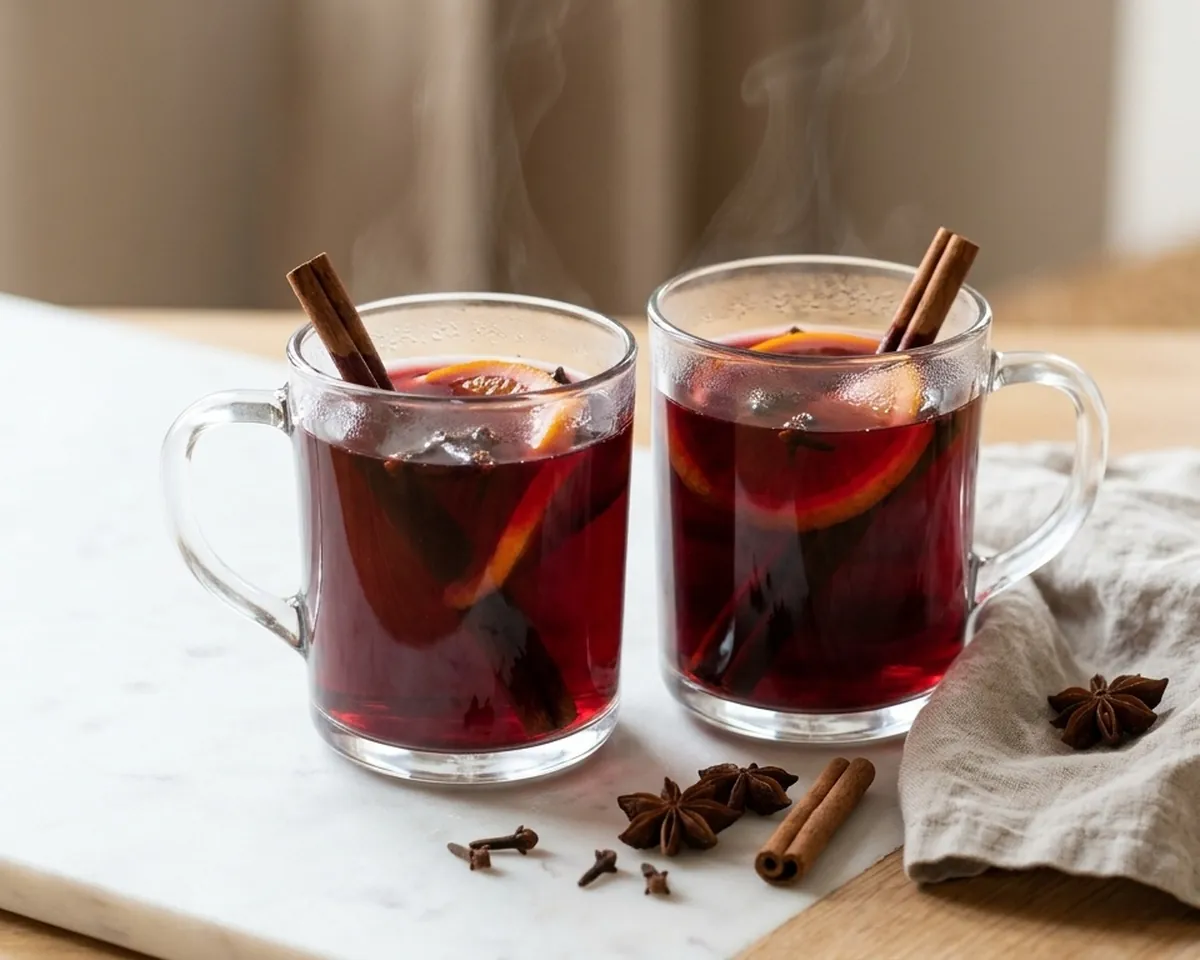
The short answer: this mulled wine recipe gently heats one 750 ml bottle of dry red wine with sliced orange, 2 cinnamon sticks, whole cloves, star anise and 2 to 3 tablespoons of sugar or honey. Hold it just under a simmer so the spices open up without driving off the alcohol.
- Key numbers: 1 bottle red wine · 1 orange · 2 cinnamon sticks · 6 whole cloves · 2 star anise · 15 to 20 minutes on the stove · about 4 to 5 mugs · roughly 1 standard drink per 5-ounce mug
- Top moves: bloom spices in a little water first, never hard-boil the wine, strain before you pour
Prep time: 15 minCook time: 20 minTotal time: 40 minServings: about 4 to 5 heatproof mugsTotal includes 5 min of resting, chilling or rising.
Spice amounts and wine ratios in this mulled wine recipe were checked November 5, 2026 and reviewed again November 16, 2026. Below you will find what mulled wine is, the shopping list, stovetop steps, a slow cooker method, the best wines to use, 7 mistakes that ruin a pot, wine and spice swaps, crowd math, a cider version and 21+ serving notes.
What is mulled wine, and what do other countries call it?
Mulled wine is red wine warmed with citrus, whole spices and a little sweetener, then served hot in a mug. Well Plated describes it as a hot wine drink with roots in ancient Rome that is now popular across Europe, especially at Christmas markets. The same idea has local names, and the recipes differ mainly in spices and added spirits.
| Name | Where you will hear it | What to know |
|---|---|---|
| Mulled wine | US, UK | The general English name for the drink |
| Glühwein | Germany, Austria | Red wine, citrus and spices, sweetened to taste |
| Vin chaud | France | "Hot wine"; same warm-spiced idea |
| Glögg | Sweden, Norway and the Nordic countries | Nordic version of the same warm spiced wine |
| Spiced wine | General | Used interchangeably online with mulled wine |
Wine Folly notes that mulled wine is a Northern and Central European tradition with several variations, including German Glühwein, French Vin Chaud and Norwegian Gløgg.
Mulled wine ingredients
| Ingredient | Amount | Notes |
|---|---|---|
| Dry red wine | 1 bottle (750 ml) | Merlot, Grenache, Zinfandel or everyday Cabernet |
| Orange | 1, cut into rounds | Use the peel; organic is nicer for zest oils |
| Cinnamon sticks | 2 | Break one if you want stronger spice |
| Whole cloves | 6 | Whole only; ground cloves turn the pot cloudy |
| Star anise | 2 pods | Skip if you dislike licorice notes |
| Sugar or honey | 2 to 3 tablespoons | Taste after 10 minutes |
| Water or orange juice | ¼ cup | Starts the spice bloom before wine goes in |
| Brandy or orange liqueur | 2 ounces | Optional finish, stirred in off the heat |
Yield: about 4 to 5 heatproof mugs of mulled wine.
How to make mulled wine on the stove
- Start the spice base. Set orange rounds, cinnamon, cloves, star anise, sugar and the ¼ cup water in a medium pot. Let them bubble gently for 5 minutes.
- Pour in the wine. Add the full bottle. Drop the heat so the surface only shivers. A rolling boil strips aroma and alcohol.
- Steep and taste. Hold that low heat 15 to 20 minutes, until the wine steams and smells of orange and spice. Check sweetness at the 10-minute mark and add a spoon of sugar if needed.
- Strain and serve. Pour through a fine strainer into a warm pitcher. Add brandy now if you want it. Garnish each mug with a fresh orange wheel.
Nutrition (per serving, estimated)
Serving size: 1 mug.
| Calories | 200 |
|---|---|
| Total fat | 0 g |
| Saturated fat | 0 g |
| Cholesterol | 0 mg |
| Sodium | 10 mg |
| Total carbohydrate | 15 g |
| Dietary fiber | 1 g |
| Total sugars | 10 g |
| Protein | 0 g |
Excludes optional ingredients and garnishes.
This is an estimate calculated from USDA FoodData Central data for the listed ingredients and amounts. Actual values vary with brands, portions and substitutions.
Temperature check. Wine Folly's party-size method heats the wine and spices gently until steaming, about 150 to 170°F (65 to 75°C), never boiling. If you have a thermometer, that is the window to aim for.
Rate this recipe
Slow cooker mulled wine
Combine wine, orange, spices, sweetener and water in the crock. Run low for 1 to 2 hours, then flip to warm. Crack the lid so the liquid does not boil. Strain once guests are due, or ladle carefully around the whole spices. A slow cooker keeps mulled wine ready for the whole open-house window.
Two slow cooker tips: take the spices and orange out after the first 2 hours if the pot will sit on warm for the whole evening, because long contact with peel and cloves turns the wine bitter; and keep a ladle and strainer next to the crock so nobody scoops up a clove.
Best wine for mulled wine
The wine only has to be dry, fruity and not heavily oaked. Wine Folly says any red will do but advises avoiding heavily oaked or very tannic styles, and prefers Zinfandel for its ripe fruit and moderate tannins; if you cannot find Zinfandel it suggests Italian Primitivo, Sangiovese or Garnacha. Well Plated says a dry, full-bodied red such as Cabernet Sauvignon, Grenache, Zinfandel or Syrah stands up to the spices, and to skip both the cheapest and the priciest bottle.
| Wine | Why it works | Watch out for |
|---|---|---|
| Zinfandel | Ripe fruit, moderate tannins | Wine Folly's top pick; Primitivo is the same grape |
| Grenache (Garnacha) | Red-fruit flavor that pairs with spice | Wine Folly's substitute when Zinfandel is unavailable |
| Merlot | Soft, fruity everyday red | Pick a dry bottle, not a sweet blend |
| Cabernet Sauvignon | Full body holds up to spice | Choose an inexpensive, not heavily oaked bottle |
| Syrah / Shiraz | Full-bodied red that holds up to spice | Taste before adding extra cloves |
7 mulled wine mistakes that ruin the pot
- Boiling it. Boiling cooks off aroma and some alcohol. Keep it at a steam, around 150 to 170°F.
- Using ground spices. Ground cinnamon and cloves float and turn the drink gritty. Use sticks, whole cloves and star anise.
- Buying a heavily oaked or very tannic wine. Oak and tannin get harsher once heated. Pick a fruity, dry red.
- Spending big on the bottle. Spices and orange cover subtle notes, so save the good wine to drink on its own.
- Sweetening up front. Add sugar at the end and taste. Wine Folly suggests sugar to taste at the end, and that the drink is better without extra.
- Leaving spices in all night. Long contact with peel and cloves turns the drink bitter. Strain after the steep.
- Serving it without a zero-proof option. The warm spice hides how much wine is in the mug. Put a cider pot next to it and keep water out.
Wine and spice swaps
- Cider instead of sugar. Well Plated sweetens with apple cider instead of sugar, using it alongside the orange juice and spices. Wine Folly's classic mug is 4 oz red wine and 2 oz unfiltered apple juice or cider.
- White mulled wine. Well Plated notes that white wine works if you prefer it. Keep the orange and spices.
- Spirits. Brandy or orange liqueur gives a stronger drink; Well Plated suggests ¼ to ½ cup in a full batch, and Wine Folly offers 1 oz in a single mug. Add it off the heat.
- Spice swaps. Allspice berries, cardamom pods, fresh ginger or a strip of lemon peel can stand in or add to the cinnamon, clove and star anise.
- Garnish. Orange wheels, cinnamon sticks, fresh rosemary and cranberries make the mugs look finished.
Mulled wine for a crowd
| Guests | Wine bottles | Oranges | Cinnamon sticks | Cloves | Star anise | Sweetener |
|---|---|---|---|---|---|---|
| 4 to 5 | 1 | 1 | 2 | 6 | 2 | 2 to 3 Tbsp |
| 8 to 10 | 2 | 2 | 3 | 10 | 3 | ¼ to ⅓ cup |
| 12 to 15 | 3 | 2 to 3 | 4 | 12 | 4 | ⅓ to ½ cup |
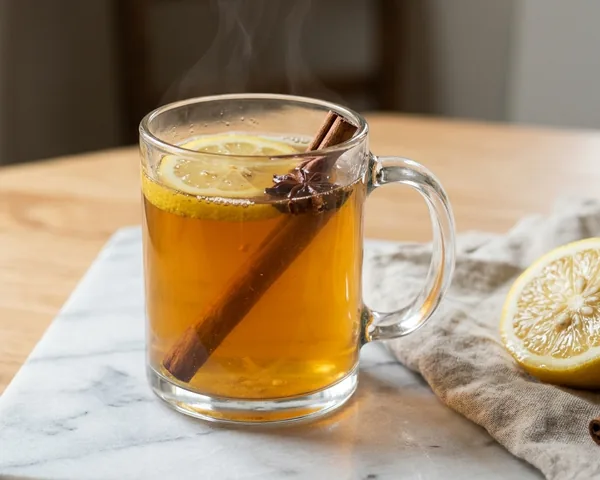
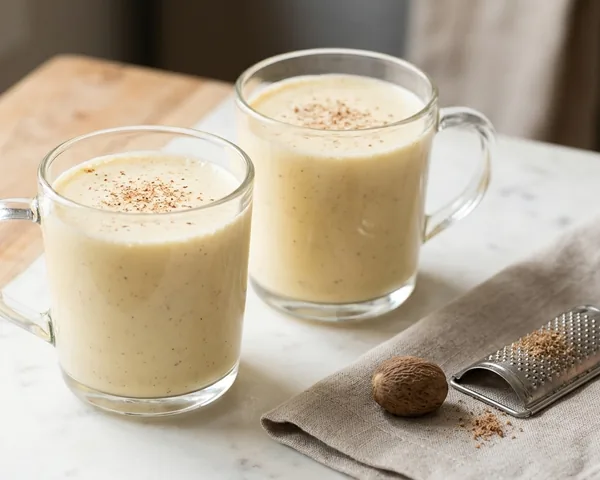
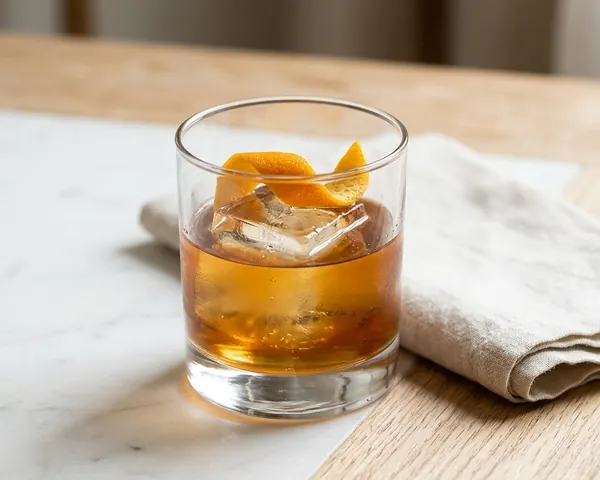
Run a matching cider pot on a second burner so non-drinkers get the same orange-and-spice mood. Round out the bar with our hot toddy guide, Christmas cocktails, homemade eggnog, old fashioned and Christmas appetizers.
What to serve with mulled wine
Warm, sweet spice goes with salty, rich and buttery food. Good partners from this site: a cheese ball, a Christmas charcuterie board, a plate of spritz cookies and the rest of our Christmas appetizers. For the guests who skip alcohol, set out Christmas mocktails or the wassail pot.
Storing and reheating leftover mulled wine
Mulled wine is best the day it is made, but leftovers are fine if you handle them gently.
- Strain first. Take out the orange, cloves and cinnamon before storing so the wine does not turn bitter or overly spiced as it sits.
- Cool, then refrigerate. Let the pot cool, pour it into an airtight jar or bottle and refrigerate. Well Plated says up to 2 days; other recipe sites commonly give about 3 days as the practical limit, with flavor fading after the first day or two. Plan to finish it within 2 days.
- Reheat low and slow. Warm single portions in a saucepan over low heat until steaming. Do not let it boil, which dulls the aroma. If it tastes flat, add a fresh orange slice or a pinch of ground cinnamon while it warms.
- Freezing: Some sources suggest freezing in an ice cube tray for single servings. Thaw in the fridge and reheat gently.
- Serving a crowd later? Make the spiced base ahead, but add the wine and warm it shortly before guests arrive for the best flavor.
Zero-proof mulled wine
Warm 4 cups of apple cider (or dealcoholized red wine) with the same orange, cinnamon, cloves and star anise for 15 to 20 minutes. Sweeten with honey or brown sugar. A few slices of fresh ginger add gentle heat. Pour it into the same style of mug so the alcohol-free tray looks just as intentional.
21+ responsible serving for mulled wine
Serve mulled wine only to guests age 21 and older. The warm spices can hide how much wine is in the mug. Per the CDC, 5 ounces of wine equals one standard drink. CDC moderate drinking guidance is up to 2 drinks a day for men and up to 1 for women. This is a festive pour, not a treatment for a cold or flu, and alcohol can clash with medicines, so read the label or ask a pharmacist. Keep cider mugs, snacks and water on the table, and arrange safe rides before the night winds down. For a cider-based holiday drink alongside the wine, compare our wassail recipe.
Shop the wine, fruit and spices in one trip
List the bottles, oranges, cinnamon sticks and cloves beside the appetizers so the grocery run stays to one stop.
- Family Recipe Binder, $6.99. Park your house mulled wine card with the rest of the holiday recipes.
See the full printables shop, and walk the night with our holiday party planning checklist.
More cocktails you'll love
Frequently asked questions
What is mulled wine? Mulled wine is red wine gently warmed with orange, cinnamon, cloves, star anise and a little sugar or honey. It is a classic winter and Christmas drink, often called glühwein in Germany.
What is the best wine for a mulled wine recipe? Use a dry, fruity red wine such as Merlot, Grenache, Zinfandel or an inexpensive Cabernet Sauvignon. Skip oaky, expensive bottles; the spices and citrus do the heavy lifting.
How do you make mulled wine on the stove? Simmer orange slices, cinnamon sticks, cloves, star anise and sugar with a splash of water or juice for 5 minutes, then add a 750 ml bottle of red wine and keep it just below a simmer for 15 to 20 minutes. Do not boil it hard or the alcohol and aroma cook off.
Can you make mulled wine in a slow cooker? Yes, you can make mulled wine in a slow cooker. Add the wine, orange, spices and sweetener to a slow cooker on the warm or low setting for 1 to 2 hours, then switch to warm for serving. Keep the lid slightly ajar so it does not boil.
How much mulled wine do I need for a party? Plan about 1 cup (8 ounces) per guest for the first round, then a little extra. One 750 ml bottle makes about 4 to 5 mugs. For 12 guests, start with 3 bottles and keep a zero-proof pot next to it.
Can I make mulled wine ahead of time? Yes, you can make mulled wine ahead of time. Mulled wine can sit on warm for a couple of hours. You can also make the spice-and-citrus base ahead, then add the wine 20 minutes before guests arrive so the alcohol does not cook off.
Does mulled wine have a lot of alcohol? A 5-ounce pour of wine is 1 standard drink by CDC's definition. Mulling does not remove most of the alcohol unless you boil it hard for a long time. Count each mug as about 1 drink.
How do I make alcohol-free mulled wine? To make alcohol-free mulled wine, warm apple cider or alcohol-free red wine with the same spices. Sweeten to taste with honey or brown sugar. It smells just as festive.
Should I strain mulled wine before serving? Yes, you should strain mulled wine before serving. Leave a cinnamon stick and an orange slice in each mug for garnish if you like.
What can I add to mulled wine? You can add a splash of brandy, orange liqueur or dark rum to mulled wine. Fresh ginger, cardamom pods or a strip of lemon peel are good spice swaps. Add spirits to individual mugs so guests can choose.
Where can I save my favorite mulled wine recipe? The Family Recipe Binder ($6.99) from HomeBase Paper Co. has fillable recipe cards, so your preferred wine, sweetener and spice mix stay with your other holiday recipes. It prints at home on US Letter paper.
Why should you not boil mulled wine? Boiling drives off aroma and some of the alcohol, and it can leave the wine tasting flat and bitter from the spices. Hold it where it steams and only shivers at the surface. Wine Folly puts the target at about 150 to 170°F, which is a gentle steam rather than bubbles.
What temperature should mulled wine be heated to? Heat it until it steams, about 150 to 170°F (65 to 75°C) according to Wine Folly, and never to a boil. A kitchen thermometer takes the guesswork out, but a steaming surface with no bubbles is the practical cue.
Can I use white wine or rosé for mulled wine? Yes. Red is the traditional choice, but Well Plated notes that white wine works too. Use a dry white, keep the same orange and spice base; add sweetener a spoon at a time and taste.
Can I use ground spices instead of whole? Whole spices are better. Ground cinnamon and cloves float on top and leave the drink gritty and cloudy, which is why recipe writers such as Well Plated and Feast & West steer you to whole spices. If ground is all you have, use a small pinch and strain through a coffee filter.
How long does mulled wine last in the fridge? Plan on 2 to 3 days. Well Plated says up to 2 days, and other recipe sites say about 3, so treat 2 days as the safe, tastiest window. Strain out the spices, cool it, store it airtight and reheat gently without boiling.
Can you freeze mulled wine? Yes, strained mulled wine can be frozen, and some cooks freeze it in an ice cube tray so single servings reheat quickly. Thaw it in the fridge and warm it on low heat.
What do you serve with mulled wine? Serve it with salty, rich or buttery foods that handle warm spice: cheese balls, charcuterie, spritz cookies and simple appetizers. The Christmas appetizers and Christmas charcuterie board pages on this site have ready-made ideas.
Is mulled wine the same as glühwein, vin chaud and glögg? They are close cousins, not exact copies. Glühwein is the German version, vin chaud is French and glögg is the Nordic one. Spices and added spirits vary by country, but the method is the same: warm wine with spices and sweetener, and never boil it.
How many calories are in mulled wine? It depends on the wine and how much sugar and brandy you add, so this page does not print a number. Wine itself carries the calories from alcohol and sugar, and every spoon of sugar, honey or splash of brandy adds more. Check your own bottle's label and measure the sweetener.
Newsletter
Get the HomeBase email
Fresh tips three times a week, Mon/Wed/Fri, with our deals and new products, from printables, spreadsheets and bundles to paperback planners and apparel, plus simple home, money and planning tips.
Sources
- CDC: Standard drink sizes cdc.gov
- CDC: Moderate alcohol use cdc.gov
Made this? Tell us how it went
Your notes help the next cook: what you changed, how long it took, how it turned out.