
 The Holiday Collection

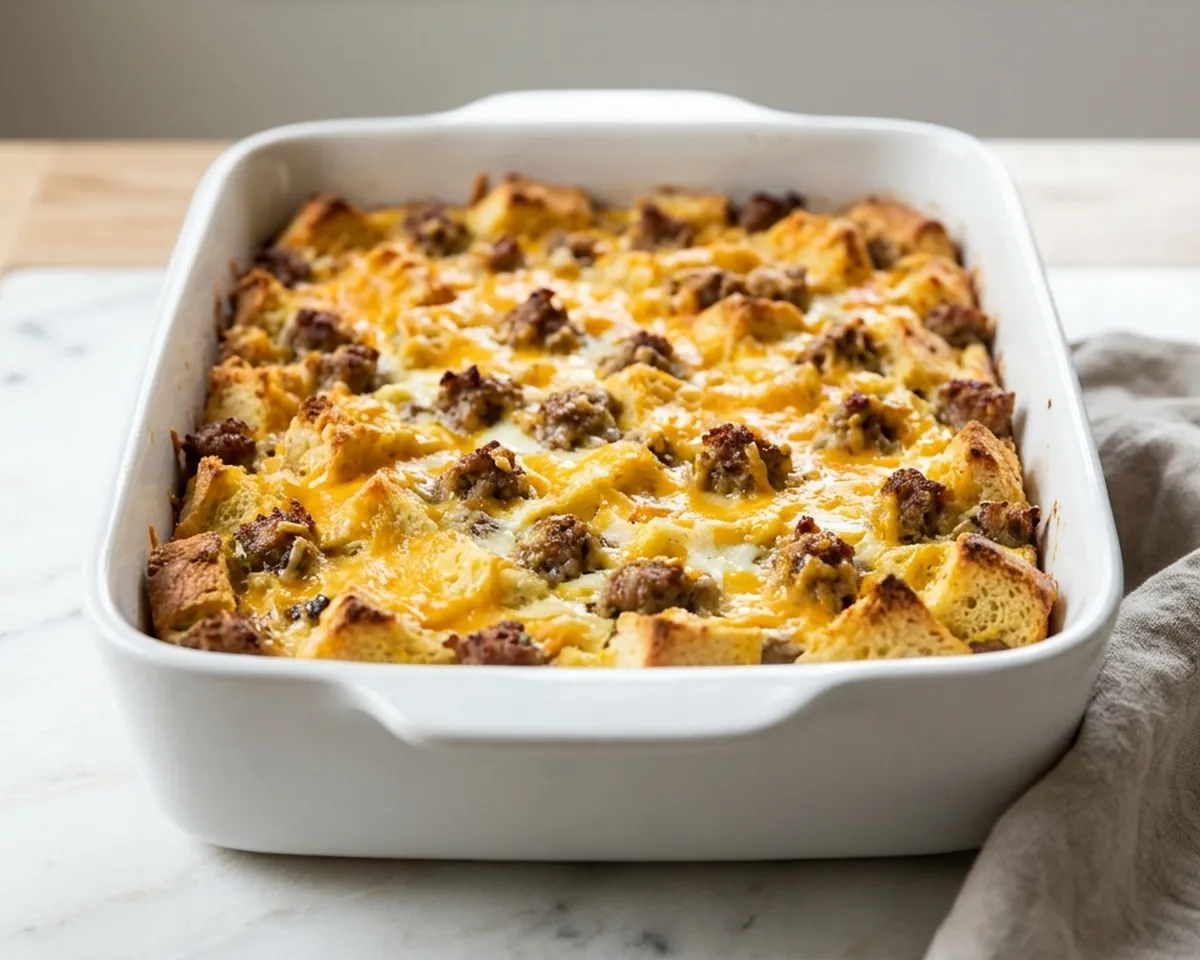
The short answer: Here's the plan. On Christmas Eve, brown 1 pound of breakfast sausage. Layer it in a buttered 9x13-inch dish with 6 cups of cubed day-old bread and 2 cups shredded sharp cheddar.
Our picks for christmas breakfast casserole

Printables
Family Recipe Binder
Section dividers, four recipe page layouts with room for the family story, 4x6 and 3x5 cards and a conversion chart - print it or type into the fillable version.
 Save 38%
Bundles
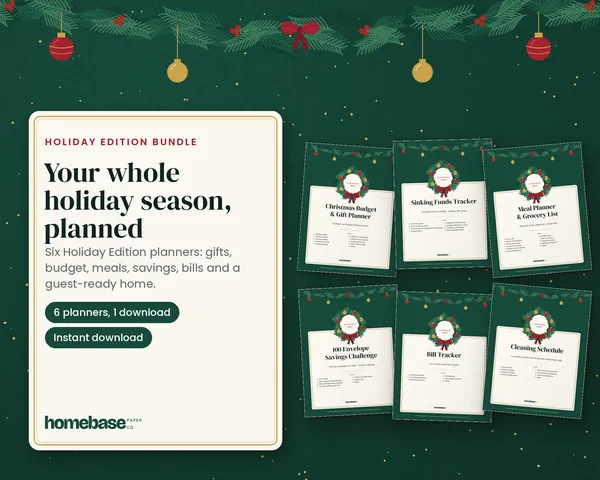
Holiday Season Bundle
Plan Christmas, save for it all year, and host without the January money hangover.
Prep time: 15 minCook time: 1 hrTotal time: 9 hr 25 minServings: 8 to 10 servingsTotal includes 8 hr 10 min of resting, chilling or rising.
Whisk 10 eggs with 2 cups milk, 1 teaspoon dry mustard, 1 teaspoon salt and 1/2 teaspoon pepper, pour it over, cover and refrigerate. On Christmas morning, bake at 350°F for 50 to 60 minutes, until the center is set and reaches 160°F. It feeds 8 to 10.
Christmas morning can be slow on purpose: stockings, pajamas, coffee and a warm breakfast nobody has to rush. A breakfast casserole makes that possible because the work happens the night before. Below you'll find the recipe, a timeline, easy swaps and storage tips.
Christmas breakfast casserole ingredients
| Ingredient | Amount | Notes |
|---|---|---|
| Breakfast sausage | 1 pound | Mild, sage or hot; swap for bacon or ham |
| Day-old bread | 6 cups cubed (about 1 loaf) | French bread, sourdough or brioche |
| Sharp cheddar | 2 cups shredded | Or half cheddar, half Monterey Jack |
| Eggs | 10 large | The custard that holds it together |
| Whole milk | 2 cups | Half-and-half makes it richer |
| Dry mustard | 1 teaspoon | Sharpens the cheese |
| Salt | 1 teaspoon | Less if the sausage is salty |
| Black pepper | 1/2 teaspoon | |
| Green onions | 3, sliced | Color for the top |
How to make it, step by step
- Cook the sausage. Brown the sausage in a skillet over medium heat, breaking it up, until no pink remains. Drain well.
- Butter the dish. Butter a 9x13-inch baking dish.
- Layer. Spread half the bread cubes in the dish. Top with half the sausage and half the cheese. Repeat.
- Whisk the custard. Whisk the eggs, milk, dry mustard, salt and pepper until smooth.
- Pour and press. Pour the egg mixture evenly over the top. Press the bread down gently so every cube gets wet.
- Refrigerate overnight. Cover and refrigerate 8 to 12 hours.
- Bake. In the morning, let it sit out while the oven heats to 350°F. Bake 50 to 60 minutes, covering loosely with foil if the top browns early.
- Check and rest. It's done when a knife in the center comes out clean. Rest 10 minutes, scatter green onions and slice.
Christmas Eve to Christmas morning timeline
| When | Task | Time |
|---|---|---|
| Dec 23 | Buy sausage, eggs, bread and cheese; leave the bread out to dry | 5 min |
| Christmas Eve, afternoon | Brown sausage, shred cheese, cube bread | 20 min |
| Christmas Eve, evening | Layer, pour, cover and refrigerate | 10 min |
| Christmas morning, 1 hour before eating | Heat the oven, bake | 60 min |
| While it bakes | Open stockings, make coffee, cut fruit |
Keep the timing in mind. USDA FSIS egg guidance says to cook dishes containing raw eggs right away or refrigerate them and cook within 24 hours, and to cook casseroles with eggs to 160°F. Assembling it the evening before keeps you well inside that window.
Easy variations
| Version | Swap | Add |
|---|---|---|
| Ham and Swiss | 2 cups diced ham for sausage | Swiss cheese, a pinch of nutmeg |
| Bacon and hash brown | 4 cups thawed hash browns for bread | 12 oz cooked bacon |
| Vegetarian | Skip the meat | 3 cups sautéed spinach, mushrooms and peppers |
| Southwest | Pepper Jack for cheddar | Chopped green chiles, salsa on the side |
| Sausage and apple | Sage sausage | 1 diced apple, sautéed |
Bake times and pan sizes
| Pan | Eggs | Bake at 350°F (from the fridge) | Serves |
|---|---|---|---|
| 8x8-inch dish | 5 | 40 to 50 min | 4 to 5 |
| 9x13-inch dish | 10 | 50 to 60 min | 8 to 10 |
| Two 9x13-inch dishes | 20 | 55 to 65 min, rotate halfway | 16 to 20 |
| Muffin tin, 12 cups | 6 | 20 to 25 min | 12 cups |
A thermometer is the surest test. The USDA safe temperature chart lists 160°F for egg dishes and 165°F when you reheat leftovers.
Leftovers and freezing
- Fridge: Cover and refrigerate leftovers within 2 hours. They keep 3 to 4 days.
- Freezer: Freeze baked portions for 2 to 3 months. Thaw overnight in the fridge.
- Reheat: Microwave single slices 1 to 2 minutes or reheat the pan covered at 350°F until hot in the center.
Want more ideas for the morning? Our Christmas breakfast ideas list has 30 more, and overnight cinnamon rolls bake in the same oven while you open gifts. For a sweet pull-apart option, try monkey bread. For a second make-ahead pan, an overnight French toast casserole soaks in the fridge the same way.
Plan Christmas morning on paper
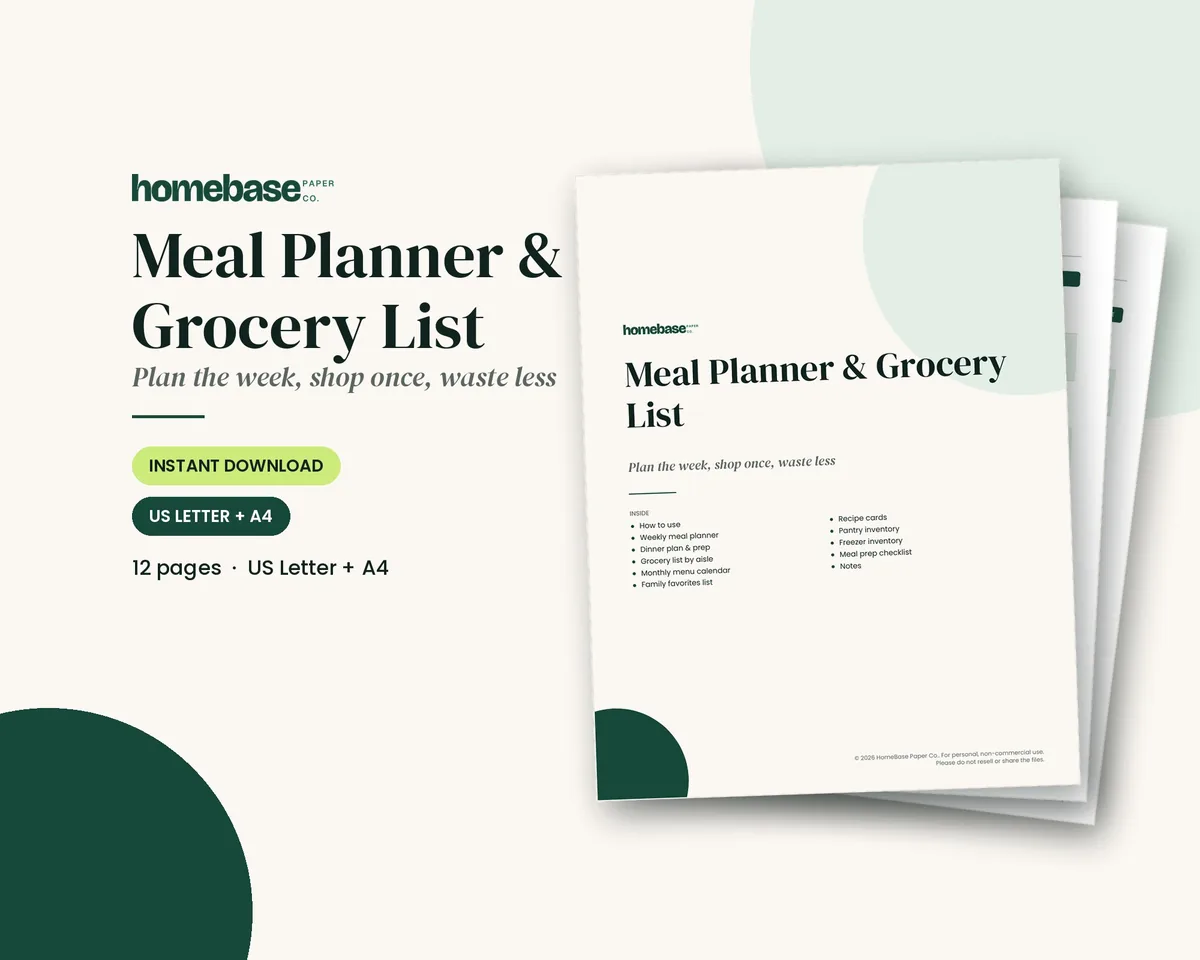
Christmas morning runs on a short list: what to buy, what to prep Christmas Eve and what goes in the oven first.
- Meal Planner & Grocery List, $3.99. Plan the whole Christmas week of meals and build one shopping list.
- Family Recipe Binder, $6.99. Save your casserole version, mix-ins and bake time.
- Holiday Season Bundle, $15.99 (was $25.94). Six holiday printables in one download, including the Christmas Budget & Gift Planner.
Shop the full holiday collection or browse every printable in Printables. Want a freebie? Join our list and we'll email the Holiday Budget Starter Kit, three US Letter pages.
More Christmas food
- Christmas breakfast ideas
- Christmas dinner menu planner
- Christmas Eve dinner ideas
- Homemade eggnog
- Christmas baking list
Want bacon on the side without splatter? Our air fryer bacon guide has a time chart by thickness. For grab-and-go mornings, try our freezer-friendly breakfast sandwich ideas. If bacon is part of your breakfast spread, use our guide to oven-baked bacon to plan a batch without crowding the stovetop.
Prefer something you can slice by hand? A sheet-pan breakfast pizza uses the same eggs, sausage and cheese on a crust.
Prefer a slice-and-serve egg dish? Try our easy quiche, which works with a store-bought crust or no crust at all.
Feeding houseguests over several mornings? Freeze a batch of our breakfast burritos alongside this casserole.

The Holiday Collection
Give every person a limit and watch what's left
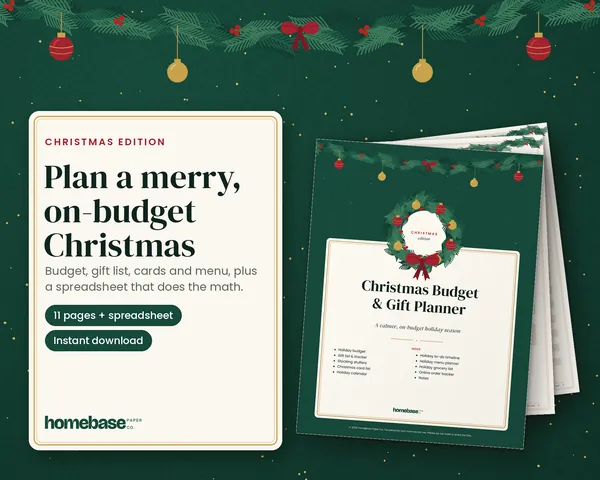
The Christmas Budget & Gift Planner adds up every list for you: a budget for each person, a log of each purchase and the amount left to spend, plus printable gift, card, menu and to-do pages.
- Spreadsheet for Excel and Google Sheets
- 11 printable pages, US Letter + A4
- Instant download, 14-day fix-or-refund promise
Planning the whole season? See the holiday sets from $7, with early prices through Cyber Monday
Frequently asked questions
How do you make a Christmas breakfast casserole? To make a Christmas breakfast casserole, brown 1 pound of breakfast sausage, layer it in a buttered 9x13-inch dish with 6 cups of cubed day-old bread and 2 cups shredded cheddar, pour over 10 eggs whisked with 2 cups milk, then cover and refrigerate overnight. Bake at 350°F for 50 to 60 minutes, until the center reaches 160°F.
Can you make breakfast casserole the night before? Yes, that's the point of an overnight breakfast casserole. USDA FSIS says dishes with raw eggs should be cooked right away or refrigerated and cooked within 24 hours, so assemble it on Christmas Eve and bake it Christmas morning.
How long do you bake an overnight breakfast casserole? Bake a cold, overnight breakfast casserole at 350°F for 50 to 60 minutes. Cover it with foil for the first 30 minutes if the top browns too fast, and check that the center reaches 160°F.
How do you know when breakfast casserole is done? A breakfast casserole is done when the center is set, a knife comes out clean and a food thermometer in the middle reads 160°F, the USDA number for dishes containing eggs.
Why is my breakfast casserole soggy? A soggy casserole usually means the bread was too fresh, there was too much milk, or it came out too early. Use day-old or lightly toasted bread, stick to 2 cups milk for 10 eggs, and bake until the center is set.
What bread is best for breakfast casserole? Day-old French bread, sourdough or brioche works best. Sturdy bread soaks up the eggs overnight without turning to mush. Sandwich bread works too if you toast the cubes first.
Can I make breakfast casserole without bread? Yes, you can make breakfast casserole without bread. Swap the bread for 4 cups of frozen hash browns or diced potatoes, thawed and patted dry. Bake it about the same time and check that the center is set.
Can I use bacon or ham instead of sausage? Yes, you can use bacon or ham instead of sausage. Use 12 ounces of cooked, crumbled bacon or 2 cups of diced ham. Both work well, and ham is a good way to use holiday leftovers.
How many people does a breakfast casserole feed? A 9x13-inch breakfast casserole with 10 eggs feeds about 8 to 10 people, or 12 if you also serve cinnamon rolls and fruit.
Can you freeze breakfast casserole? Yes, freeze it after baking. USDA FSIS lists 2 to 3 months in the freezer for baked casseroles made with eggs. Thaw it in the refrigerator overnight and reheat to 165°F.
How long does breakfast casserole last in the fridge? A baked breakfast casserole keeps 3 to 4 days in the refrigerator. Reheat slices in the microwave or a 350°F oven until hot.
Can I make a vegetarian Christmas breakfast casserole? Yes, you can make a vegetarian Christmas breakfast casserole. Skip the sausage and use 3 cups of sautéed vegetables, such as spinach, mushrooms, peppers and onions. Squeeze greens dry so the casserole doesn't get watery.
What do you serve with breakfast casserole on Christmas morning? Serve it with fruit, overnight cinnamon rolls, coffee or hot chocolate, and a simple green salad if it's a late brunch.
Where should I keep our family Christmas casserole recipe? Keep it in the Family Recipe Binder from HomeBase Paper Co., with your mix-ins and bake time, so whoever makes it next year has the family version.
Free printable
Get the free Holiday Budget Starter Kit
A one-page holiday budget, a gift list with a spending limit for every person, and a 6-week countdown so December stays calm and paid for. You'll also get our weekly HomeBase email with simple holiday planning, budgeting and hosting tips.

Sources
- USDA FSIS: Shell eggs from farm to table fsis.usda.gov
- USDA FSIS: Safe minimum internal temperature chart fsis.usda.gov
