
 The Holiday Collection

The short answer: how to cook prime rib: salt it early, roast it to temperature rather than time, and rest it before carving.
- How much: a 4 lb bone-in roast for 4 guests
- Two methods: sear first, or reverse sear
- Don't skip the thermometer or carve right away
- A Christmas Day timeline below
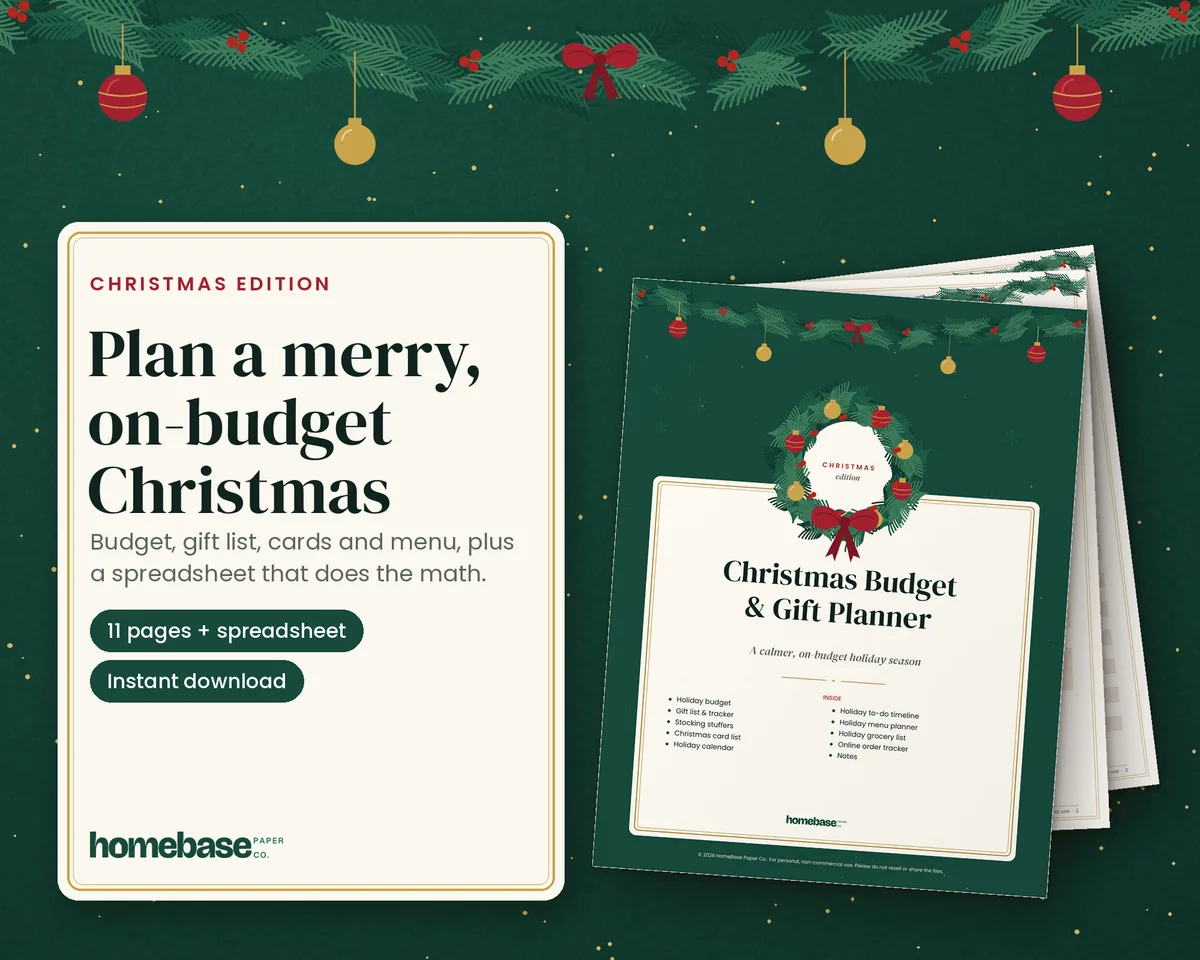
- Next step: Plan it with the Christmas Budget & Gift Planner ($4.99).
Prime rib is the showpiece of many Christmas dinners, and it's easier to cook than its price suggests. The keys are simple: salt it early, roast it to temperature rather than time, and rest it before carving. This guide covers how to cook prime rib two ways, a prime rib cooking time chart by size, doneness temperatures, how much to buy and how to plan the day.
What is prime rib?
Prime rib is a beef roast cut from the rib section, also called a standing rib roast. It's the same cut that ribeye steaks come from, but left in one large piece. The fat marbling melts as it roasts, which makes it tender and rich.
For a smaller, leaner roast, see our guide to beef tenderloin, with a temperature chart, cooking times and a reverse sear method.
The word "prime" can mean two things. It often just names the cut. It can also mean the USDA Prime grade, the highest grade, with the most marbling. USDA FSIS's guide to beef explains that Prime, Choice and Select are the main quality grades. FSIS says Prime is only about 2% of graded beef, and most graded beef in supermarkets is Choice or Select. Choice prime rib still roasts beautifully.
How much prime rib to buy
| Guests | Bone-in roast | Ribs | Boneless roast |
|---|---|---|---|
| 4 | 4 lb | 2 | 2 to 3 lb |
| 6 | 6 lb | 3 | 3 to 4 1/2 lb |
| 8 | 8 lb | 4 | 4 to 6 lb |
| 10 to 12 | 10 to 12 lb | 5 to 6 | 6 to 8 lb |
A good rule is 1 rib for every 2 people, or about 1 pound of bone-in roast per person. If you want leftovers, add a rib. Order early in December, since butchers and stores sell out close to Christmas. Ask for the "first cut" or "small end," which is leaner and more tender.
Prime rib doneness temperatures
Always cook prime rib to temperature, not time. Take it out early, because it keeps cooking as it rests.
| Doneness | Take it out at | After resting |
|---|---|---|
| Rare | 115 to 120°F | 120 to 125°F |
| Medium-rare | 120 to 125°F | 130 to 135°F |
| Medium | 130 to 135°F | 140 to 145°F |
| Medium-well | 140 to 145°F | 150 to 155°F |
A note on safety: the FSIS safe temperature chart recommends cooking beef roasts to at least 145°F, then resting them 3 minutes. That is medium. Many families prefer prime rib rarer, which is a personal choice. If you are serving young children, older adults, pregnant guests or anyone with a weak immune system, cook their slices to 145°F.
Method 1: Sear first, then roast
This is the classic method. It's simple and works for any size roast.
- Salt it early. One or two days ahead, season the roast all over with about 1 teaspoon of kosher salt per pound. Set it on a rack in a pan and refrigerate it, uncovered.
- Bring it out. Take it out of the fridge about 1 hour before cooking so the center isn't ice-cold. Keep it well inside the FSIS 2-hour limit for perishable food.
- Season. Rub it with oil or softened butter, black pepper, garlic and chopped rosemary or thyme.
- Sear. Heat the oven to 450°F. Roast it bone side down for 15 to 20 minutes.
- Roast. Lower the oven to 325°F. Keep roasting until the thermometer reads 5 to 10°F below your target.
- Rest. Move it to a board, tent it loosely with foil and rest it for 20 to 30 minutes.
Method 2: Reverse sear
Reverse sear gives the most even pink from edge to center, with a thin brown crust. It takes longer but is very forgiving.
- Salt the roast 1 to 2 days ahead, as above.
- Heat the oven to 225 to 250°F.
- Roast until the center is about 10°F below your target. This can take 3 to 4 hours for a large roast.
- Take it out and rest it, tented, for 30 minutes to an hour.
- Heat the oven as hot as it goes, usually 500°F.
- Return the roast for 8 to 10 minutes, until the outside is deep brown.
- Carve right away. It has already rested.
Prime rib cooking time chart
These times are for a bone-in roast out of the fridge for about 1 hour, seared at 450°F for 15 to 20 minutes, then roasted at 325°F to medium-rare. They're estimates. Start checking with a thermometer 30 minutes early.
| Roast weight | Ribs | Total time (approx.) |
|---|---|---|
| 4 lb | 2 | 1 1/4 to 1 1/2 hours |
| 6 lb | 3 | 1 3/4 to 2 hours |
| 8 lb | 4 | 2 to 2 1/2 hours |
| 10 lb | 5 | 2 1/2 to 3 hours |
| 12 lb | 6 | 3 to 3 1/2 hours |
That works out to about 13 to 15 minutes per pound. For medium, add about 10 to 15 minutes. Boneless roasts cook a little faster.
The FSIS beef chart gives longer times because it assumes a roast straight from the fridge cooked all the way to 145°F. It lists a 4- to 6-pound bone-in rib roast at 325°F as about 23 to 25 minutes per pound. If you want medium or are cooking from cold, plan closer to those times.
Buying, storing and thawing the roast
FSIS says to refrigerate a fresh beef roast at 40°F and cook it within 3 to 5 days, or freeze it. If you buy early in December, freeze the roast and move it to the fridge to thaw about 2 to 3 days before Christmas, since large roasts can take 2 days or longer to thaw. Never thaw it on the counter. Don't brown or partly cook the roast and then refrigerate it to finish later. FSIS warns against that because bacteria aren't destroyed.
Common prime rib mistakes
- Skipping the thermometer. Time charts are a guide. A leave-in probe thermometer is the single best tool for prime rib.
- Carving right away. Cut too soon and the juices run onto the board. Rest it.
- Roasting it straight from the fridge. A cold center cooks unevenly. Give it about 1 hour out of the fridge before roasting, well inside the 2-hour limit.
- Covering it. A lid or foil steams the crust. Roast it uncovered.
- Buying too late. Order your roast early in December.
How to carve prime rib
- Remove the bones. Stand the roast on its side and run a long knife along the bones to cut them away in one piece. Save them to gnaw on or for soup.
- Turn it fat side up.
- Slice across the grain. Cut 1/2- to 1-inch slices for serving.
- Serve on a warm platter. Pour any juices from the board over the top.
What to serve with prime rib
Prime rib is rich, so pair it with simple, bright sides.
For more ideas, our list of Christmas side dishes matches sides to each main and has make-ahead picks.
- Horseradish sauce: 1/2 cup sour cream, 3 tablespoons prepared horseradish, 1 teaspoon lemon juice, salt
- Au jus made from the pan drippings and beef broth
- Yorkshire pudding or popovers baked in the drippings
- Mashed or roasted potatoes
- Roasted green beans, carrots or Brussels sprouts
- A crisp green salad
For a full menu, see our Christmas dinner menu planner. If you're serving ham instead, our guide to how to cook a ham has the times.
A Christmas Day prime rib timeline
Here's a plan for a 6-pound roast and dinner at 5 p.m. using the sear-first method.
- December 23: Salt the roast and set it uncovered in the fridge.
- Christmas, 1:45 p.m.: Take the roast out of the fridge.
- 2:30 p.m.: Heat the oven to 450°F.
- 2:45 p.m.: Roast goes in to sear.
- 3:05 p.m.: Lower the oven to 325°F.
- 4:00 p.m.: Start checking the temperature.
- 4:15 to 4:30 p.m.: Roast comes out to rest. Turn the oven up for Yorkshire pudding or potatoes.
- 5:00 p.m.: Carve and serve.
Leftover prime rib
Leftover prime rib is a treat. USDA FSIS's leftovers guide says to refrigerate leftovers within 2 hours and use them in 3 to 4 days. FSIS's beef guide suggests using frozen home-cooked beef within 2 to 3 months for best quality. Reheat slices gently in a covered pan with a splash of beef broth so they don't overcook. Or skip the heat and slice it thin for sandwiches with horseradish sauce.
Plan and budget your Christmas dinner
Prime rib is often the biggest grocery cost of the holiday, so plan it with the rest of the season. Our Christmas Budget & Gift Planner ($4.99) has a per-person budget, a purchase log and gift, card, menu and to-do pages, so the roast, sides and gifts fit one plan. Our Meal Planner & Grocery List ($3.99) turns the menu into a grocery list. When your prime rib turns out just right, save the method in our Family Recipe Binder ($6.99).
The Holiday Collection
Give every person a limit and watch what's left
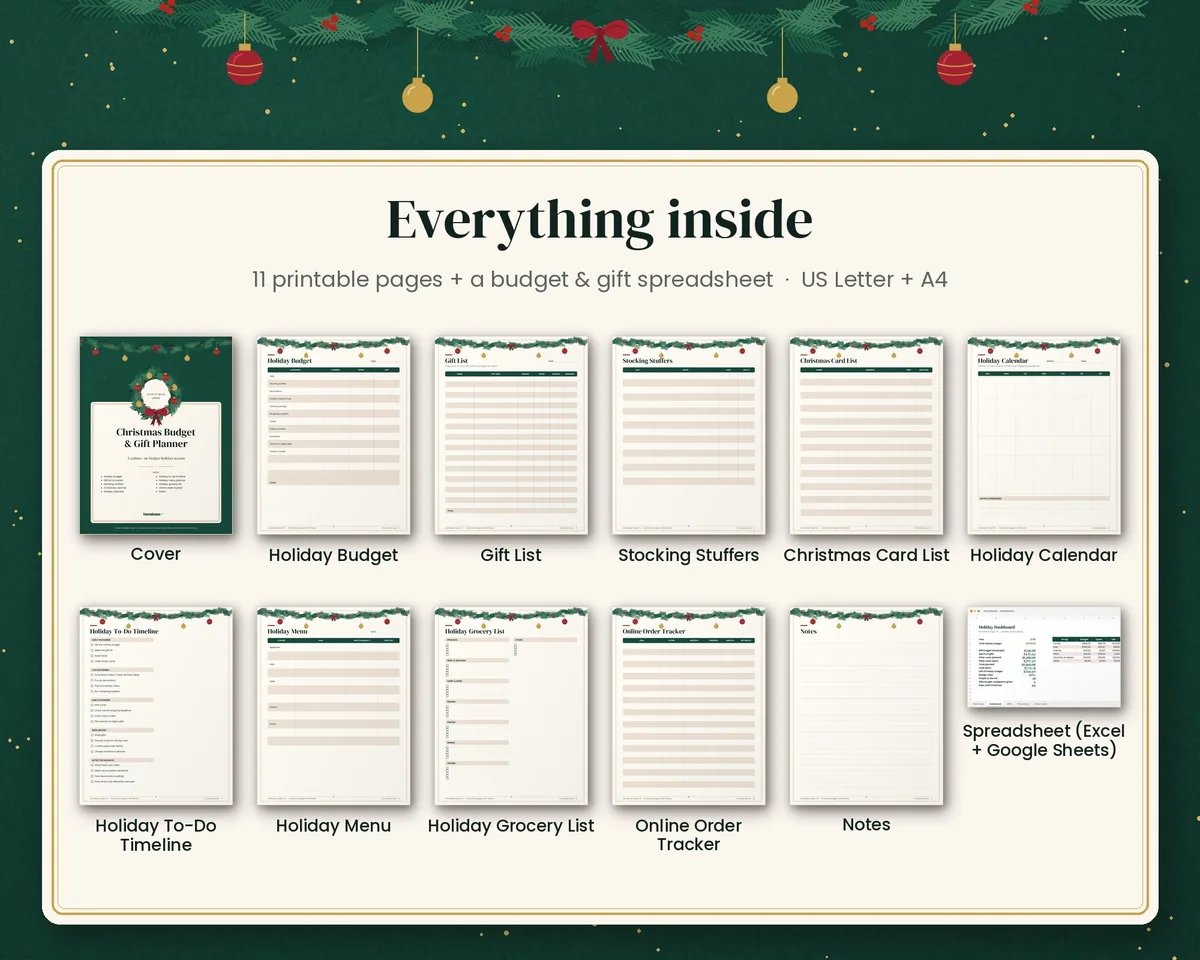
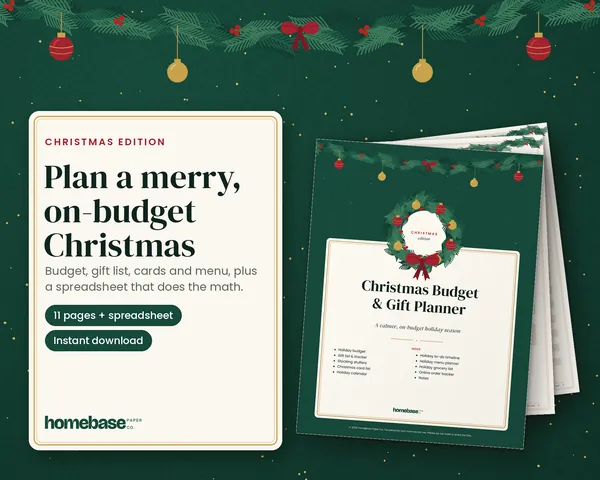
The Christmas Budget & Gift Planner adds up every list for you: a budget for each person, a log of each purchase and the amount left to spend, plus printable gift, card, menu and to-do pages.
- Spreadsheet for Excel and Google Sheets
- 11 printable pages, US Letter + A4
- Instant download, 14-day fix-or-refund promise
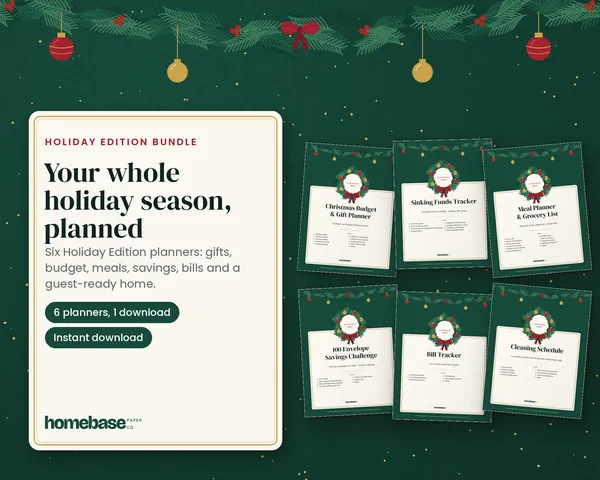
Planning the whole season? See the holiday sets from $7, with early prices through Cyber Monday
Make it easier
Tools for this
Printables
Christmas Budget & Gift Planner
Set a budget for every person, log each purchase, and watch what's left - plus printable gift, card, menu and to-do pages.
 Starter pick
Printables
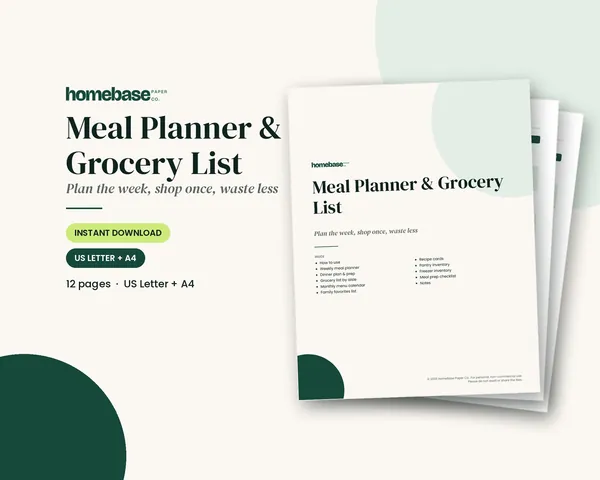
Meal Planner & Grocery List
Weekly meals, a grocery list sorted by aisle, and pantry and freezer inventories so you shop once and waste less.
Printables
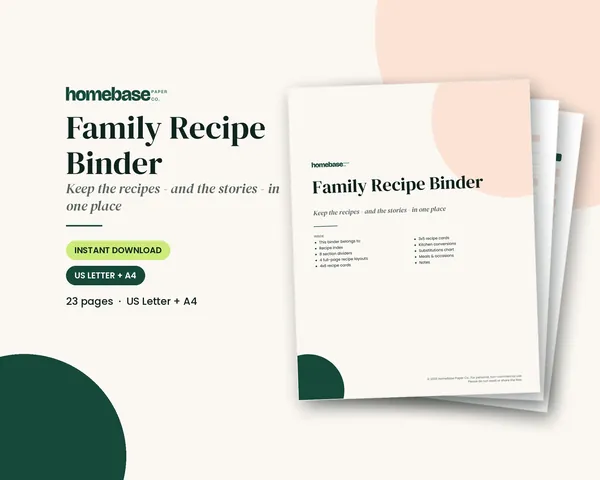
Family Recipe Binder
Section dividers, four recipe page layouts with room for the family story, 4x6 and 3x5 cards and a conversion chart - print it or type into the fillable version.
Frequently asked questions
How do you cook prime rib? To cook prime rib, season the roast with salt a day ahead, bring it out of the fridge about 1 hour before cooking, sear it at 450°F for 15 to 20 minutes, then roast at 325°F until a thermometer reads 5 to 10°F below your target. Rest it 20 to 30 minutes, then carve.
How long do you cook prime rib per pound? You should cook prime rib about 13 to 15 minutes per pound at 325°F for medium-rare, after a 15 to 20 minute sear at 450°F. A 6-pound bone-in roast usually takes about 1 3/4 to 2 hours in total. Go by a thermometer, since roasts and ovens vary.
What temperature should prime rib be? For medium-rare, take prime rib out at about 120 to 125°F and let it rise to 130 to 135°F as it rests. USDA FSIS recommends cooking beef roasts to at least 145°F with a 3-minute rest for safety, which is medium. Choose the doneness that fits your family.
How much prime rib do I need per person? Plan about 1 pound of bone-in prime rib per person, or 1/2 to 3/4 pound boneless. A simple rule is 1 rib for every 2 people. A 3-rib roast serves about 6, and a 4-rib roast serves about 8.
What temperature do you cook prime rib at? Most cooks use 450°F for a short sear, then 325°F for the rest of the time. For the reverse-sear method, roast it low at 225 to 250°F until it is 10°F below your target, rest it, then blast it at 500°F for 8 to 10 minutes to brown the outside.
Should prime rib be covered when cooking? No, don't cover prime rib while it roasts. Leaving it uncovered gives it a brown, crisp crust. Tent it loosely with foil only while it rests after cooking.
How long should prime rib rest? You should rest prime rib for 20 to 30 minutes before carving. The temperature will rise 5 to 10°F as it rests, so take it out of the oven before it reaches your target. Resting also keeps the juices in the meat instead of on the cutting board.
Is prime rib the same as ribeye? Prime rib and ribeye are the same cut in one way and different in another. Prime rib and ribeye come from the same rib section of the cow. Prime rib is the whole roast, cooked in one piece. Ribeye steaks are slices cut from it before cooking. "Prime" in prime rib often refers to the cut, not always to the USDA Prime grade.
Bone-in or boneless prime rib? Bone-in prime rib is the classic choice, since the bones protect the meat and make a built-in rack. Boneless is easier to carve and cooks a bit faster. Many butchers will cut the bones off and tie them back on, which gives you the best of both.
Can you cook prime rib the day before? You can, but prime rib is best cooked the day you serve it. If you need to work ahead, season it up to 2 days before and keep it uncovered in the fridge. If you do cook it early, cool and refrigerate it within 2 hours and reheat slices gently.
How long does leftover prime rib last? Leftover prime rib lasts 3 to 4 days in the fridge or 2 to 3 months in the freezer for best quality, according to USDA FSIS. Refrigerate it within 2 hours of serving. Reheat slices gently in a covered pan with a splash of beef broth.
What is the best way to plan a prime rib Christmas dinner? Plan backward from dinner: buy the roast early in December, season it 1 to 2 days ahead and start it about 3 hours before you eat. Our Christmas Budget & Gift Planner ($4.99) includes a holiday menu page and to-do pages, plus a per-person budget, so the roast and sides fit the plan and the budget.
More from HomeBase
You may also like
 Thanksgiving Edition
Printables
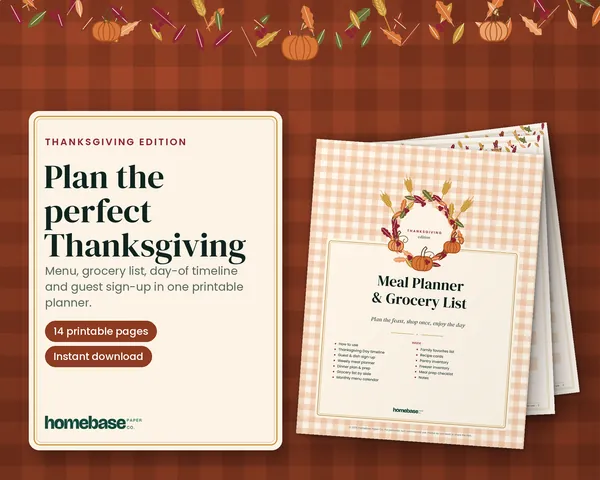
Meal Planner & Grocery List: Thanksgiving Edition
Plan the perfect Thanksgiving: our meal planner in a warm harvest design, with a Thanksgiving Day timeline, a guest & dish sign-up, an aisle-sorted grocery list and pantry and freezer trackers.
Printables
Budget Planner Printable
Twelve undated pages you can print every month: budget, bills, spending, savings and debt.
Printables
Household Binder
Family info, emergency plan, calendars, meals, groceries, cleaning, bills and sitter notes.
 Starter pick
Printables
Kids Chore Chart
Weekly chore chart, morning and evening routines, chore ideas by age, a sticker reward chart and an allowance tracker.
 Club
Monthly club
Meal Plan Club
Families who want dinner planned and a grocery list ready every week.
Free printable
Save the family favorites: get the free recipe book pages
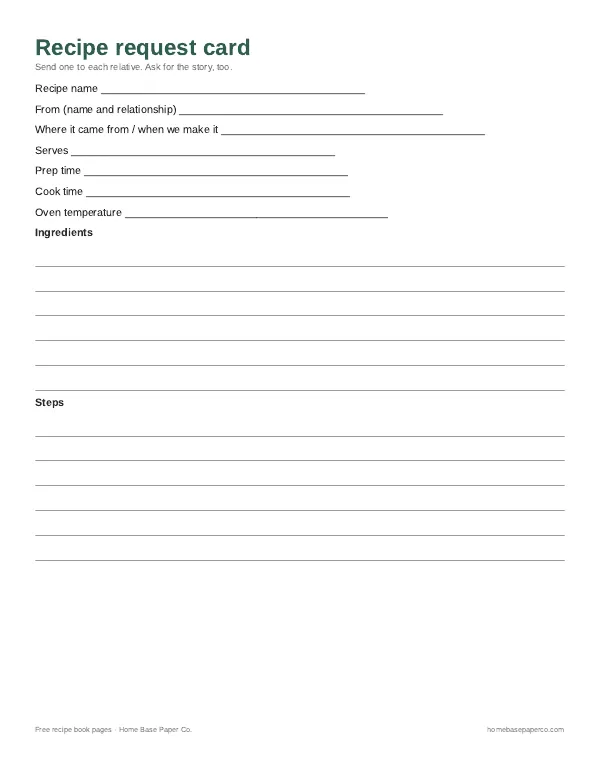
Printable recipe pages and a recipe request card to send to relatives, so the dishes everyone loves end up in one book. You'll also get our weekly HomeBase email with easy meal planning ideas and family recipe tips.
Sources
- USDA FSIS: Beef from farm to table fsis.usda.gov
- USDA FSIS: Safe minimum internal temperature chart fsis.usda.gov
- USDA FSIS: Leftovers and food safety fsis.usda.gov