The short answer: to learn how to fix a running toilet, start with the three parts inside the tank that cause almost every case: the flapper chain, the water level (set by the float) and the rubber flapper itself. Most of these fixes are short jobs that need only a towel, a sponge and sometimes an adjustable wrench.
- Find the leak first: put a few drops of food coloring in the tank. If color reaches the bowl within 10 minutes without a flush, the flapper is leaking.
- Fix it in this order: free or adjust the chain, lower the float so water stops 1/2 to 1 inch below the overflow tube, replace the flapper, then replace the fill valve if water still hisses in.
Repair steps checked November 19, 2026, against EPA WaterSense and Portland Water Bureau guidance. Below: a symptom chart, the parts in your tank, four fixes in the order to try them, phantom flushes, how much water a leak wastes and when to call a plumber.
Why a toilet keeps running
A toilet runs for one of two reasons. Either water is leaking out of the tank into the bowl, or the tank keeps filling past where it should stop. Match what you hear and see to the fix below.
| What you notice | Most likely cause | Fix to try first |
|---|---|---|
| Water runs nonstop after a flush | Chain too short, tangled or caught under the flapper | Adjust the chain |
| Water trickles into the overflow tube | Water level set too high | Lower the float |
| Toilet refills by itself every so often | Flapper not sealing (slow leak) | Clean the seat or replace the flapper |
| You have to jiggle the handle to stop it | Chain or handle sticking | Adjust the chain, tighten the handle nut |
| Hissing sound, tank never fully fills or overfills | Worn fill valve | Replace the fill valve |
| Dye shows up in the bowl within 10 minutes | Leaking flapper or worn flapper seat | Replace the flapper |
Quick tip: if you can't fix it right away, turn the shutoff valve behind the toilet clockwise to stop the water. Turn it back on (counterclockwise) when you're ready to test.
Parts inside a toilet tank
Lift the lid and you'll see the same handful of parts in almost every tank. Portland Water Bureau describes two common styles: an older float-ball toilet and a newer vertical-float toilet.
| Part | What it does | Where to find it |
|---|---|---|
| Shutoff valve | Turns the water supply on and off | On the wall or floor behind the toilet |
| Fill valve | Lets fresh water into the tank after a flush | Tall tower on the left side of the tank |
| Float (ball or cup) | Tells the fill valve when to stop | A ball on an arm, or a cup on the fill valve |
| Overflow tube | Sends extra water into the bowl so the tank can't flood | Open pipe in the middle of the tank |
| Refill tube | Small hose that refills the bowl after a flush | Clipped from the fill valve to the overflow tube |
| Flapper | Rubber seal that holds water in the tank | At the bottom of the tank, over the drain hole |
| Flapper seat | The ring the flapper presses against | Under the flapper |
| Chain and handle | Lifts the flapper when you flush | From the handle arm down to the flapper |
Diagnosing a running toilet
Work through these steps in order. Each one takes a few minutes, and you can stop as soon as the running stops.
- Do the dye test. Put a few drops of food coloring in the tank and wait. The EPA's Fix a Leak Week guide says color in the bowl after 10 minutes means you have a leak. Flush afterward so the dye doesn't stain.
- Watch a full flush. Take the lid off, flush and watch where the water goes. Note whether the flapper closes fully and where the water stops filling.
- Check the chain. Make sure it isn't tangled, caught under the flapper or pulled tight.
- Check the water level. It should stop about 1/2 to 1 inch below the top of the overflow tube.
- Check the flapper. Turn off the water, flush to empty the tank and feel the rubber for warping, softness or slime.
- Check the fill valve. If water keeps hissing in after the tank is full and the level is right, the fill valve is worn.
- Test again. Turn the water back on, let the tank fill and repeat the dye test.
Fix 1: adjust the flapper chain
A chain that's too short holds the flapper open a crack, so water leaks nonstop. A chain that's too long can fold under the flapper and stop it from sealing. Portland's guide puts it simply: the chain should be neither too long nor too short.
- Too tight: unhook the clip and move it one or two links down the chain so there's a little slack when the flapper is closed.
- Too loose: move the clip up so the extra chain can't drop under the flapper. Trim the tail if it keeps getting caught.
- Sticky handle: if you have to jiggle the handle, tighten the nut that holds the handle to the inside of the tank. On many toilets this nut is reverse-threaded, so it may turn the opposite way from a normal nut. Replace the handle if it's cracked.
Flush two or three times and watch the flapper drop flat each time.
Fix 2: lower the water level
If water spills over the top of the overflow tube, the toilet runs forever and refills forever. The Portland Water Bureau's toilet leak guide says the right water level is about 1/2 to 1 inch below the top of the overflow tube.
Vertical float (cup) toilets
Most newer toilets have a plastic cup float that slides up and down the fill valve. Squeeze the spring clip on the metal rod and slide the float down, or turn the adjustment screw on top of the fill valve a few turns counterclockwise. Flush and check where the water stops. Repeat in small moves.
Float-ball toilets
Older toilets have a ball on the end of an arm. Turn the screw where the arm meets the fill valve to lower the shutoff point. If there's no screw, Portland notes you can carefully bend a metal arm downward a little. A ball that's waterlogged (it sits low or feels heavy) should be replaced.
Check the overflow tube too: if it's cracked below the water line, water drains through the crack nonstop. A cracked overflow tube usually means replacing the whole flush valve, which is a bigger job.
Fix 3: replace the flapper
Flapper rubber breaks down over time, and the EPA recommends checking flappers periodically and replacing them at least every five years. Portland adds a simple test: if rubbing the flapper leaves black streaks on your fingers, replace it.
- Turn off the water at the shutoff valve and flush to empty the tank. Sponge out what's left.
- Unhook the chain from the handle arm.
- Pop the flapper's ears off the pegs on each side of the overflow tube, or slide a ring-style flapper up and off the tube.
- Wipe the flapper seat with a cloth or a non-scratch pad. Grit and mineral buildup can stop even a new flapper from sealing.
- Fit the new flapper the same way, hook the chain with a little slack and turn the water back on.
- Flush a few times and run the dye test again.
Get the right size: most toilets take a 2-inch or 3-inch flapper, matched to the drain hole at the bottom of the tank. Take the old flapper with you to the hardware store so you can match it.
Fix 4: replace the fill valve
If the chain, water level and flapper are fine but you still hear hissing, or the tank refills slowly or never shuts off, the fill valve is worn out. Universal replacement valves fit many toilets; check the package against your tank.
- Turn off the water and flush. Sponge the tank dry and set a towel on the floor.
- Unscrew the supply line from the bottom of the tank. A little water will drip out.
- Loosen the plastic locknut under the tank and lift the old fill valve out.
- Set the new valve's height to match your tank (the instructions show where the top should sit compared with the overflow tube).
- Insert it, hand-tighten the locknut from below and reconnect the supply line.
- Clip the refill tube to the overflow tube so its end sits above the water, not down inside it.
- Turn on the water, set the float so the level stops 1/2 to 1 inch below the overflow tube and check for drips under the tank.
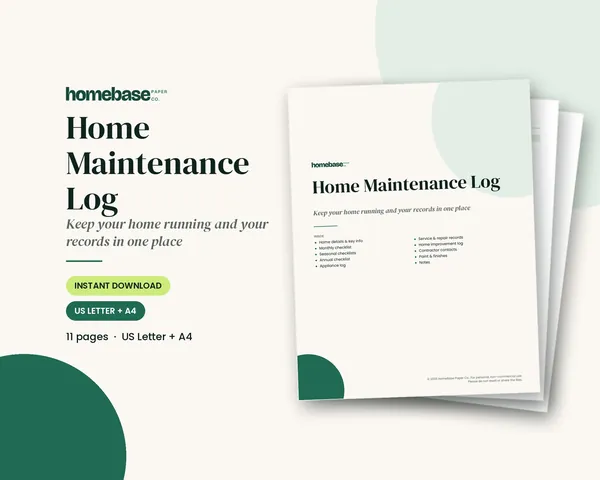
Once it's fixed, write it down. The Home Maintenance Log, $5.99, has monthly, seasonal and annual checklists plus a record page for every appliance and repair, so next time you'll know which flapper you bought and when. Browse more home and organizing printables.
Why a toilet runs on its own (phantom flushes)
A toilet that suddenly runs for a few seconds when nobody has touched it is called a phantom or ghost flush. Water is slowly seeping from the tank into the bowl. When the tank level drops far enough, the fill valve kicks on to top it up.
- Most common cause: a worn flapper or a dirty, pitted flapper seat. Clean the seat first, then replace the flapper.
- Second cause: a refill tube pushed down inside the overflow tube can siphon water out of the tank. Clip it so the end sits above the water line.
- Check for an outside leak: if water is on the floor, look at the supply line, the tank bolts and the base. That's a leak out of the toilet, not a running toilet.
How much water a running toilet wastes
Small leaks add up. The EPA says the average household's leaks can waste more than 9,300 gallons of water a year, and nine percent of homes have leaks that waste 50 gallons or more a day. Worn toilet flappers are one of the most common culprits, and an old flapper can silently leak thousands of gallons a year.
You can also check your water meter. The EPA suggests reading it before and after a two-hour stretch when no one uses water. If the number changes, something is leaking.
Money-saving tip: fix a running toilet the week you notice it, because it wastes water every hour it runs. If you track household bills, a jump on your water bill is often the first clue.
When to call a plumber or replace the toilet
Most running toilets are a do-it-yourself fix. Call a plumber when:
- The shutoff valve won't turn, or it leaks when you turn it.
- The tank or bowl has a crack, or water pools around the base.
- The flush valve or overflow tube is cracked and the tank has to come off the bowl.
- You've replaced the flapper and fill valve and it still runs.
Sometimes it makes sense to replace an old toilet instead. According to EPA WaterSense, toilets account for nearly 30 percent of an average home's indoor water use. The current federal standard is 1.6 gallons per flush, and WaterSense labeled models use 1.28 gallons or less. Older toilets can use as much as 6 gallons per flush. When you shop, check the rough-in (the distance from the wall to the floor bolts, usually 12 inches) and the bowl height.
Toilet repair supplies to keep on hand
A small kit in the bathroom cabinet makes a running toilet a quick job.
| Item | Why you want it |
|---|---|
| Food coloring or dye tablets | For the 10-minute leak test |
| Spare flapper (your size) | The most common fix |
| Adjustable wrench | For the supply line and handle nut |
| Sponge and old towel | To empty the tank and protect the floor |
| Non-scratch scrub pad | To clean the flapper seat |
| Flashlight | To see the chain and the water line mark |
| Notebook or log page | To record the date, part and store |
For more help around the house, see our home maintenance checklist, our guide to unclogging a drain and how to clean a shower drain.
Keep every home repair in one place
A running toilet is rarely a one-time thing in a house with more than one bathroom. Writing down the part number, the date and the store saves a second trip next time. If you want the whole household organized, the Home Management Bundle is $16.99 and includes the Home Maintenance Log, Household Binder, Cleaning Schedule, Moving Planner, Home Inventory and Password Log.
Frequently asked questions
Why does my toilet keep running? A toilet keeps running when water leaks out of the tank faster than it should or the tank never stops filling. The usual causes are a worn or misaligned flapper, a chain that is too short or tangled, or a water level set so high that water spills into the overflow tube.
How do I fix a running toilet fast? The fastest fix for a running toilet is to check the chain first. Lift the tank lid, flush, and make sure the chain has a little slack and isn't caught under the flapper. If the water still runs, lower the float so the water stops about 1/2 to 1 inch below the top of the overflow tube.
How do I know if my toilet flapper is bad? A bad flapper usually feels soft, warped or slimy, and Portland Water Bureau notes that if rubbing it leaves streaks on your fingers, it should be replaced. Other signs are a toilet that refills on its own every so often or a dye test that turns the bowl colored within 10 minutes.
How do you do a toilet dye test? To do a toilet dye test, put a few drops of food coloring in the tank and don't flush. The EPA says that if any color shows up in the bowl after 10 minutes, you have a leak. Flush right after the test so the dye doesn't stain the tank.
Why does my toilet run for a few seconds every so often? A toilet that runs for a few seconds on its own is usually leaking slowly from the tank into the bowl. When the tank level drops far enough, the fill valve turns on to top it up. A new flapper or a cleaned flapper seat fixes this in most cases.
Where should the water level be in a toilet tank? The water level in a toilet tank should sit about 1/2 to 1 inch below the top of the overflow tube, according to Portland Water Bureau. Many tanks also have a water line mark stamped inside. If the water reaches the top of the tube, it drains into the bowl and the toilet keeps running.
How do I adjust the float on a toilet? On a vertical float (a cup that slides up and down the fill valve), squeeze the spring clip or turn the adjustment screw to move the float down. On an older float-ball toilet, turn the screw where the float arm meets the fill valve, or gently bend a metal arm downward.
Is a running toilet an emergency? A running toilet is usually not an emergency, but it wastes water every hour it runs. Turn the shutoff valve behind the toilet clockwise to stop the water until you can fix it. Water on the floor around the base or tank is a different problem and needs attention sooner.
Can a running toilet raise my water bill? Yes, a running toilet can raise your water bill because it wastes water around the clock. The EPA counts worn toilet flappers among the most common household leaks and says an old flapper can silently leak thousands of gallons a year.
How often should a toilet flapper be replaced? The EPA says toilet flappers should be checked periodically and replaced at least every five years. The rubber wears out over time, so an older flapper is a likely suspect whenever a toilet starts running.
Do I need a plumber to fix a running toilet? Most running toilets don't need a plumber. A chain adjustment, a float adjustment or a new flapper are simple do-it-yourself fixes with basic tools. Call a plumber if the shutoff valve won't turn, the tank or bowl is cracked, or water leaks onto the floor.
What size flapper do I need? Most toilets use either a 2-inch or a 3-inch flapper, and the size matches the drain opening at the bottom of the tank. Portland Water Bureau suggests taking your old flapper to the store so you can match it exactly.
How do I keep track of toilet repairs and parts? Write down the date, the part you replaced and where you bought it, so you know which toilet is due next. Our Home Maintenance Log is $5.99 and has seasonal checklists plus a record page for every repair and appliance in your home.
What bundle helps me organize home repairs and maintenance? The Home Management Bundle is $16.99 and includes the Home Maintenance Log, Household Binder, Cleaning Schedule, Moving Planner, Home Inventory and Password Log. It keeps repair notes, part numbers and household routines in one place.
Newsletter
Get the HomeBase email
Fresh tips three times a week, Mon/Wed/Fri, with our deals and new products, from printables, spreadsheets and bundles to paperback planners and apparel, plus simple home, money and planning tips.