

The short answer: to clean a shower drain, take off the cover, pull out the hair, scrub the cover and top of the pipe, pour in 1/2 cup of baking soda and 1 cup of white vinegar, wait 15 minutes and flush with very hot water.
- Time: about 15 minutes, and it costs almost nothing
- Weekly: wipe the hair off the cover and do a hot water flush
- Monthly: repeat the baking soda and vinegar clean
- Hair tools: gloved fingers, a plastic barbed tool, needle-nose pliers or a bent wire hanger
- Next step: Plan it with the Cleaning Schedule ($4.49).
To clean a shower drain, take off the drain cover, pull out the hair, scrub the slime from the cover and the top of the pipe with a stiff drain brush, then pour in 1/2 cup of baking soda and 1 cup of white vinegar, wait 15 minutes and flush with very hot water. It takes about 15 minutes, costs almost nothing and gets rid of most slow draining and bad smells. Repeat it once a month and wipe the hair off the cover every week, and the drain rarely gets bad again.
This guide covers the full monthly clean, what to use for each problem (hair, slime, smell or a slow drain), how to fix a shower drain that smells, how to clean a cover that won't come off, a simple prevention routine and the signs that mean it's time for a plumber. If the water is already standing and won't go down at all, skip ahead to our guide on how to unclog a drain, which covers plunging and drain snakes step by step.
Why shower drains get gross
A shower drain collects three things every day: hair, soap scum and the oils and skin cells that rinse off our bodies. Hair catches on the crossbar under the cover, soap scum glues it together, and the whole mat stays warm and wet. That is the perfect home for a gray or pink film of bacteria, sometimes called biofilm.
That film is what makes a drain smell musty or sour, and it is also where small fuzzy drain flies lay their eggs. Iowa State University Extension explains that moth fly larvae live in the gelatinous slime inside sink, tub, shower and floor drains, and that cleaning the organic matter out of the pipe is the only effective way to get rid of them.
Hard water adds one more layer: chalky mineral scale on the cover and the drain flange. So cleaning a shower drain is really three jobs: remove the hair, scrub off the slime and rinse away the residue.
What you need
You probably have most of this already.
- Rubber gloves
- A screwdriver (flat or Phillips, depending on your cover)
- A plastic barbed drain tool (sometimes sold as a drain hair snake or zip tool)
- A stiff, narrow drain brush or an old toothbrush
- Baking soda and white vinegar
- Dish soap
- A kettle or pot for very hot water
- A paper towel or plastic bag for the hair
- Optional: an enzyme drain cleaner for monthly upkeep, and a hair catcher for the drain
How to clean a shower drain, step by step
- Run the hot water for a minute. Warm pipes loosen soap scum, so the gunk comes off more easily.
- Remove the drain cover. Most covers are held by one or two screws in the center or the sides. Snap-in covers pry up with a flat screwdriver. Put the screws in a cup so they don't go down the drain.
- Pull out the hair. With gloves on, lift out any hair you can see. Then push the barbed drain tool straight down a few inches, twist it and pull it back up slowly. Repeat until it comes up clean. Wrap everything in a paper towel and put it in the trash, never back down the drain.
- Scrub the cover and the opening. Wash the cover in the sink with hot water and dish soap. Then use the stiff drain brush to scrub the inside of the drain opening and the first few inches of pipe, as far down as the brush reaches. This step is the one most people skip, and it's the one that removes the slime.
- Add baking soda and vinegar. Pour about 1/2 cup of baking soda into the drain, then 1 cup of white vinegar. Cover the opening with a wet rag or the stopper and let it fizz for 15 minutes.
- Flush with hot water. Pour a kettle of very hot water down the drain. If your pipes are plastic (PVC), use the hottest tap water instead of boiling water, which can soften joints over time.
- Put the cover back and test it. Screw the cover back on and run the shower for a minute. Water should swirl down without pooling around your feet.
That's the whole monthly clean. Most of the time you'll see an immediate difference, because the hair and slime near the top of the pipe cause most slow-draining showers.
Shower drain cleaning methods compared
Pick the method that matches the problem. Start at the top and work down; each row is a little more effort than the one above it.
| Method | Tools | Time | Typical cost | When to use it |
|---|---|---|---|---|
| Wipe the cover | Paper towel or gloves | 1 minute | $0 | After every shower or once a week, to stop hair buildup |
| Hot water flush | Kettle or hot tap water | 2 minutes | $0 | Weekly, to rinse soap scum before it hardens |
| Pull hair with a barbed tool | Plastic drain tool, gloves | 5 minutes | Usually under $10 for a pack | Draining slower than usual; hair visible under the cover |
| Scrub cover and opening | Stiff drain brush, dish soap | 5 to 10 minutes | Usually under $10 for a brush | Slime, musty smell, drain flies |
| Baking soda and vinegar | Baking soda, white vinegar, hot water | 20 minutes | Under $1 per use | Monthly freshening after the hair is out; light odor |
| Enzyme drain cleaner | Store-bought enzyme or bacterial treatment | Overnight | A few dollars per dose | Monthly upkeep; drains that are hard to scrub; septic-safe option |
| Plunger | Cup plunger, wet rag | 5 minutes | $0 if you own one | Water stands in the shower after hair removal |
| Hand drain snake | 15 to 25 foot hand auger | 15 to 30 minutes | Often $15 to $30 | Clog deeper than the barbed tool reaches |
| Plumber | Professional equipment | Varies | Varies by area | Several drains slow at once, sewage smell, repeat clogs |
Prices are rough guides for common hardware store items; they change by store and region.
How to clean a shower drain that smells
A smelly shower drain usually has one of four causes. Match the smell to the fix.
| What it smells like | Likely cause | What to do |
|---|---|---|
| Musty, sour or mildewy | Hair and slime near the top of the drain | Do the full step-by-step clean above, with extra scrubbing |
| Rotten eggs or sewer, in a shower you rarely use | Dry P-trap letting sewer gas in | Run the shower for a minute or pour in a quart of water |
| Sewer, even in a shower used every day | Cracked pipe, loose seal or blocked plumbing vent | Call a plumber |
| Sewer smell in several drains at once | Main line or vent problem | Call a plumber |
Every shower drain has a curved pipe called a P-trap under it. It holds a little water that blocks sewer gas from coming up. In a guest bathroom or a shower nobody uses, that water slowly evaporates and the smell comes right in. North Dakota State University Extension recommends pouring a quart of water into drains of rarely used fixtures, such as showers and tubs, every three to four weeks.
Take a strong sewer smell seriously. The Wisconsin Department of Health Services notes that sewer gas can contain hydrogen sulfide, which smells like rotten eggs and can cause headaches, dizziness and nausea. If the odor is strong or anyone feels sick, open windows, leave the room, avoid sparks or flames and call for help.
How to get hair out of a shower drain
Hair is the number one reason shower drains slow down. Here's how to get it out without taking anything apart:
- Gloved fingers work for hair sitting right under the cover.
- A plastic barbed tool reaches 15 to 20 inches down. Push, twist and pull slowly so the hair comes out in one clump.
- Needle-nose pliers or tweezers grab a wad stuck on the crossbar under the cover.
- A bent wire hanger works in a pinch. Make a small hook at one end and go gently so you don't scratch the finish.
Once the hair is out, follow it with the scrub and the hot water flush. Hair removal alone leaves the slime behind, and the slime is what catches the next batch.
What if the drain cover won't come off?
Some covers have no visible screws, and some are glued or set in tile. You can still clean them well:
- Twist-off covers: Press down and turn counterclockwise. A rubber jar opener helps you grip.
- Pop-up or push stoppers: Unscrew the cap on top by hand, then remove the post underneath with a screwdriver.
- Fixed grates in tile showers: Push the barbed tool through the slots, and use a narrow brush or pipe cleaner between the bars. Then use baking soda, vinegar and hot water, or an enzyme treatment overnight.
- Linear (long, narrow) drains: Most lift out with a hook or a fingertip. The channel underneath often has a removable hair strainer you can rinse in the sink.
If a cover is stuck because of mineral scale, soak a rag in white vinegar, lay it over the cover for 30 minutes, then try again.
Is baking soda and vinegar enough?
Baking soda and vinegar is a good freshening step, not a clog remover. The fizz helps loosen soft soap scum and leaves the drain smelling cleaner, which is why it works well in a monthly routine. It won't dissolve a mat of hair, and it won't clear a real blockage. That's why the hair removal and scrubbing steps come first.
Iowa State University Extension also notes there is no benefit to pouring bleach or ammonia down drains to deal with drain flies. Scrubbing and an enzyme or bacterial drain treatment work better. Never mix bleach with vinegar, ammonia or other cleaners, because the combinations can release toxic gases.
Are chemical drain cleaners OK for a shower drain?
Use them only as a last resort, if at all. Chemical drain openers are caustic, they can splash back into your eyes and onto your skin, and they make plunging or snaking dangerous if the clog doesn't clear. The U.S. EPA's guide on how to care for your septic system also advises avoiding chemical drain openers, recommending boiling water or a drain snake instead, because the chemicals can harm the organisms that treat waste in the septic tank. Our how to unclog a drain guide covers chemical cleaner safety in more detail.
For regular upkeep, an enzyme drain cleaner is the gentler choice. It works slowly, usually overnight, by letting bacteria digest the organic buildup.
A simple routine to keep your shower drain clean
The easiest drain to clean is one that never gets bad. One lesson from my years as an ABA technician applies here too: big changes come from small, repeatable steps. A 30-second habit after each shower saves a 30-minute job later.
| How often | Task | Time |
|---|---|---|
| After each shower | Pull hair off the cover or hair catcher and toss it | 30 seconds |
| Weekly | Flush the drain with a kettle of hot water; rinse the hair catcher | 2 minutes |
| Monthly | Full clean: remove cover, pull hair, scrub, baking soda and vinegar, hot flush | 15 minutes |
| Monthly (unused showers) | Run the water or pour in a quart to refill the trap | 1 minute |
| Every 3 months | Check the cover screws and caulk around the drain; replace a worn hair catcher | 5 minutes |
A few more habits help:
- Use a hair catcher. A silicone or stainless steel catcher costs a few dollars and keeps most of the hair out of the pipe.
- Brush long hair before you shower, so less of it ends up in the drain.
- Go easy on bath oils and heavy conditioners, which coat pipes and trap hair.
- Rinse sand, mud and pet fur outside or into a bucket, not down the shower drain.
- Add the monthly clean to the same day you clean the rest of the bathroom. Our bathroom cleaning checklist lists everything else to do that day, and you can tackle shower mold, the shower head and glass doors in the same session.
When to call a plumber
Home methods handle most shower drains. Call a plumber if:
- The shower is still slow after you've removed the hair, scrubbed, plunged and tried a hand snake.
- Water comes up in the shower or tub when you flush a toilet or run the washer.
- More than one drain in the house is slow at the same time.
- You smell sewage in a shower that gets used every day.
- The clog comes back within a week or two of clearing it.
- You see water stains on the ceiling below the shower, or the drain flange is loose or cracked.
These signs usually point to a problem deeper in the pipes, the vent or the main sewer line, which hand tools can't reach. Write down what you tried and when, so the plumber can find the problem faster.
Put drain care on your cleaning schedule
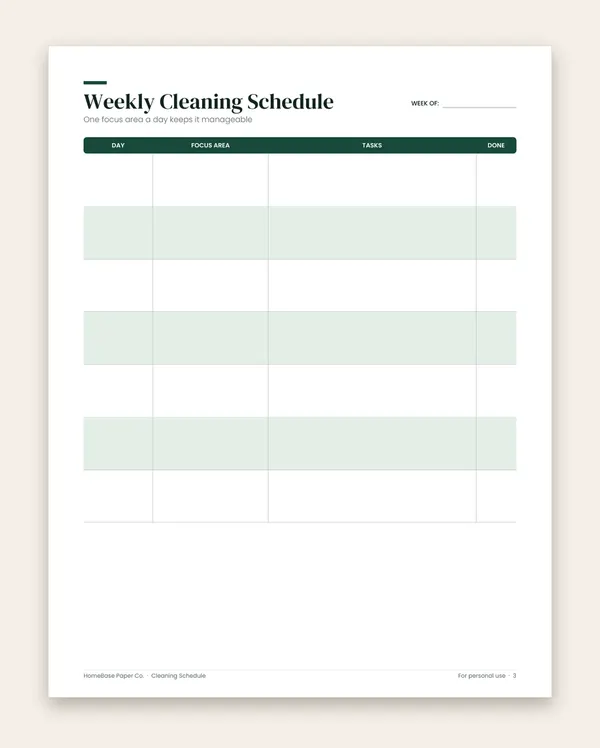
The monthly drain clean is easy to forget, because a drain only gets your attention once it's slow. Writing it down fixes that. The Cleaning Schedule ($4.49) has a Weekly Cleaning Schedule page with a focus area for each day, so you can write "bathroom: hair catcher and hot water flush" on the same day every week. Its Room-by-Room Checklists page has a shower and tub line in the bathroom section, and there are daily, monthly and seasonal checklists, too. It's a 9-page PDF in US Letter and A4, so you can print a fresh week whenever you need one. See our cleaning schedule template guide for how to set one up.
If you've had a plumber out, or a drain keeps acting up, log it in the Home Maintenance Log ($5.99). It has service and repair records and contractor contacts, so you'll know what was done and when. Both are part of the Home Management Bundle ($16.99, $32.94 if bought separately), along with the Household Binder, Home Inventory, Moving Planner and Password & Accounts Log. You can browse all Printables or the Bundles.
Planning the holidays at the same time? The free Holiday Budget Starter Kit is 3 US Letter pages, emailed to you after you join our list.
Related cleaning guides
- How to unclog a drain for standing water and stubborn clogs
- How to clean a garbage disposal for kitchen drain smells
- How to get rid of fruit flies if you're seeing small flies in the kitchen
- Deep cleaning checklist for a top-to-bottom reset
- How to clean an oven for the next big job on the list
Make it easier
Tools for this
Printables
Cleaning Schedule
Daily, weekly, monthly and seasonal lists - plus a family chore chart.

Printables
Home Maintenance Log
Monthly, seasonal and annual checklists plus a record of every appliance and repair.
 Save 48%
Bundles
Home Management Bundle
Household binder, maintenance log, moving planner, cleaning schedule, home inventory and password log.
Frequently asked questions
How do you clean a shower drain? To clean a shower drain, remove the cover, pull out the hair, scrub the cover and opening with a stiff brush, then pour in 1/2 cup of baking soda and 1 cup of white vinegar, wait 15 minutes and flush with very hot water. The whole job takes about 15 minutes. Do it once a month, and write it on the Cleaning Schedule ($4.49) so it doesn't slip.
How often should you clean a shower drain? Clean a shower drain fully once a month, and wipe hair off the cover after each shower or at least weekly. The Cleaning Schedule ($4.49) has a Weekly Cleaning Schedule page where you can give the weekly hot-water flush a set day. Showers with long hair or several users may need the full clean every two to three weeks.
How do I get rid of the smell in my shower drain? To get rid of a shower drain smell, clean out the hair and slime first, because that buildup causes most musty odors. Then use baking soda, vinegar and a hot water flush. If it smells like sewage or rotten eggs and the shower is rarely used, run water for a minute to refill the P-trap. A sewer smell in a shower you use daily needs a plumber.
Why does my shower drain smell like sewage? A shower drain that smells like sewage usually has a dry P-trap, which lets sewer gas come up from the pipes. This happens in showers that sit unused. North Dakota State University Extension recommends pouring a quart of water into rarely used drains every three to four weeks. If the smell continues, a cracked pipe or blocked vent may be the cause, so call a plumber.
Does baking soda and vinegar clean a shower drain? Yes, baking soda and vinegar help freshen a shower drain and loosen soft soap scum, but they won't dissolve a hair clog. Use them after you've removed the hair and scrubbed the opening. Pour 1/2 cup of baking soda, then 1 cup of vinegar, cover for 15 minutes and flush with very hot water.
How do I get hair out of my shower drain without taking it apart? Push a plastic barbed drain tool through the cover slots, twist it and pull it back up slowly to bring the hair out in one clump. Repeat until the tool comes up clean. Needle-nose pliers or tweezers work for hair caught just under the cover. Follow with a hot water flush.
What dissolves hair in a shower drain? Nothing safe for home use dissolves hair quickly, so pulling it out is the best fix. Caustic chemical drain openers can break down hair, but they can burn skin and eyes, and the EPA advises avoiding them in homes with septic systems. A plastic barbed tool removes most hair clogs in a few minutes for very little money.
How do I clean a shower drain that won't come off? Clean a stuck or fixed shower drain cover through the slots: use a barbed drain tool for hair, a narrow brush or pipe cleaner between the bars, then baking soda, vinegar and hot water. If mineral scale is holding a screw-in cover, lay a vinegar-soaked rag on it for 30 minutes, then try again.
What is the black or pink slime in my shower drain? The black, gray or pink slime in a shower drain is a film of bacteria and mold feeding on soap scum, oils and skin cells. Scrub it off the cover and the top of the pipe with a stiff drain brush, then flush with hot water. Regular monthly cleaning keeps it from building back up.
Why are there tiny flies coming from my shower drain? Tiny fuzzy flies near a shower drain are usually drain flies, also called moth flies, which breed in the slime inside the pipe. Iowa State University Extension says cleaning the organic matter out of the drain is the only effective way to get rid of them. Scrub the drain with a stiff brush and use an enzyme drain cleaner, rather than bleach.
Can I pour boiling water down my shower drain? You can pour very hot water down a shower drain, but use the hottest tap water instead of boiling water if your pipes are plastic (PVC). Boiling water can soften PVC joints over time. Hot water helps rinse soap scum and is a good weekly habit, but it won't clear a hair clog.
Is bleach good for cleaning a shower drain? No, bleach isn't a good drain cleaner. It may whiten the cover, but it doesn't remove hair or the slime layer, and Iowa State University Extension notes there's no benefit to treating drains with bleach or ammonia for drain flies. Never mix bleach with vinegar, ammonia or other cleaners, because the combinations can release toxic gases.
How do I keep my shower drain from clogging? Keep a shower drain from clogging by using a hair catcher, wiping hair off it after every shower and flushing the drain with hot water once a week. The Cleaning Schedule ($4.49) turns those steps into a weekly task you can check off. A full monthly clean handles whatever gets past the catcher.
When should I call a plumber for a shower drain? Call a plumber if the shower is still slow after removing hair, plunging and using a hand snake, or if water backs up when you flush a toilet. Several slow drains at once, a daily sewer smell or a clog that returns within a week or two also point to a deeper problem. Track each visit in the Home Maintenance Log ($5.99) so you can spot patterns.
More from HomeBase
You may also like

Printables
Household Binder
Family info, emergency plan, calendars, meals, groceries, cleaning, bills and sitter notes.

Printables
Home Inventory
Printable pages and a spreadsheet that totals the value of every room.

Printables
Vehicle Maintenance Log
Oil changes, repairs, tires, fuel and MPG, trip mileage and renewal dates - so resale and warranty records are easy.

 Club
Monthly club
Planner & Calendar Club
Anyone who wants a monthly calendar, bill calendar and meal plan ready to print.
Free printable
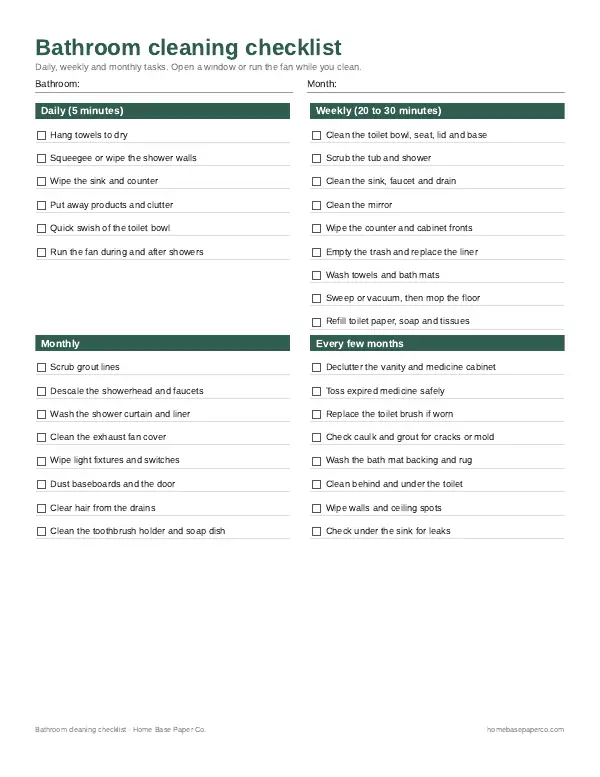
A clean bathroom in 5 minutes a day and 30 minutes a week
Daily, weekly, monthly and every-few-months tasks, plus a weekly tracker. You'll also get our weekly HomeBase email with simple cleaning routines and chore ideas the whole family can help with.
Sources
- Moth Fly (Iowa State University Extension and Outreach, Yard and Garden) yardandgarden.extension.iastate.edu
- Prevent Sewer Gas Backup (North Dakota State University Extension) ag.ndsu.edu
- Air: Sewer Gas (Wisconsin Department of Health Services) dhs.wisconsin.gov
- How to Care for Your Septic System (U.S. EPA) epa.gov