


The short answer: how to get rid of fruit flies for good: find what they're breeding in, clean or remove it, and only then trap the adults that are left.
- Check fruit bowls, trash cans, recycling bins and drains
- Traps alone don't stop the next batch from hatching
- Vinegar trap: apple cider vinegar, one or two drops of dish soap and plastic wrap
- A weekly prevention routine below
- Next step: Plan it with the Cleaning Schedule ($4.49).
Here's how to get rid of fruit flies for good: find what they're breeding in, clean or remove it, and only then trap the adults that are left. Traps alone catch flies, but they don't stop the next batch from hatching. That's the advice from university extension entomologists, and it's why fruit flies keep coming back when people only set traps.
Below: where fruit flies breed, a one-hour clean-up plan, two traps that work, how to tell fruit flies from gnats and drain flies, and a weekly routine to keep them away.
Why fruit flies show up
Fruit flies are drawn to anything ripe or fermenting. According to the University of Kentucky entomology fact sheet on fruit flies, they're common all year but especially in late summer and fall, when people bring in tomatoes, melons, grapes and other garden produce. Rotting bananas, potatoes and onions from the store attract them too.
Michigan State University Extension's guide on getting rid of fruit flies adds two reasons they seem to appear out of nowhere. They can arrive on produce that already has eggs inside, and they're small enough to pass through window screens. MSU notes that ripe tomatoes can become a breeding ground in just a few days.
How fast fruit flies multiply
University of Maryland Extension's fruit fly fact sheet says the adults are about 1/8 inch long, usually with bright red eyes. Females lay eggs on the surface of fermenting food or liquid, the larvae feed for 5 to 6 days, and the whole life cycle takes 8 to 10 days. The University of Kentucky says a female can lay about 500 eggs.
That's why a handful of flies on Monday can be a cloud by the weekend, and why a clean-up has to be thorough.
Step 1: Find where they're breeding
The flies you see are the adults. The real problem is wherever the eggs and larvae are. Texas A&M AgriLife Extension's guide to indoor flies lists the most common breeding sites. Check each one:
- Fruit bowls and counters: overripe or damaged bananas, pineapples, strawberries and tomatoes left out of the fridge. Bake spotty bananas into banana bread before they draw flies. Turn soft strawberries into strawberry shortcake the same day. Ripe bananas also work well in a banana pudding recipe.
- Potato and onion bags in the pantry, especially at the bottom.
- Trash cans, including the wet bottom of the can if a liner has leaked.
- Recycling bins with unrinsed wine, beer or soda containers.
- Bottles with loose lids: vinegar, wine, beer or cider.
- Damp mops, brooms and cleaning rags.
- Drains and garbage disposals.
- Spills under appliances: the University of Kentucky warns that fruit juice spilled under a refrigerator can breed thousands of fruit flies.
- The forgotten potato: the same fact sheet says a single rotting potato or onion at the back of a closet can do the same.
Step 2: Test your drains
Drains are the hardest place to check, because you can't see inside. The University of Kentucky and MSU both suggest a simple test: tape or lay a clear plastic food storage bag over the drain overnight. If flies are breeding there, adults will be caught in the bag in the morning. Test the kitchen sink, the garbage disposal and any floor drain.
If a drain is the source, clean the drain and trap as well as you can, then pour boiling water down it, as MSU recommends. Our guides to how to clean a garbage disposal and how to unclog a drain walk through the cleaning.
Step 3: Clean up (the one-hour plan)
Work through the kitchen in this order:
- Produce. MSU says ripe or damaged fruit should be eaten, refrigerated or thrown away. Cut damaged spots off firm fruit; the University of Kentucky notes larvae feed near the surface, so the rest can be kept.
- Trash. Take it out, then wash and dry the can before adding a new liner. In a bad outbreak, MSU suggests emptying the kitchen garbage every evening.
- Recycling. Rinse cans and bottles thoroughly, and keep recycling out of the living space if you can.
- Spills. Pull out the fridge and other movable appliances and clean any juice, wine or beer underneath.
- Pantry. Check drawers and bins where you keep potatoes and onions for anything soft or leaking.
- Drains. Clean and flush with boiling water.
- Mops and rags. Maryland Extension notes there can be enough food and moisture on a damp mop or towel for fruit flies to develop, so wring them out and let them dry.
Step 4: Trap the adults that are left
Once the breeding sites are gone, traps catch the adults still flying around. MSU recommends two homemade designs:
| Trap | How to make it | Tips |
|---|---|---|
| Paper cone jar | Roll a paper cone, set it in a small jar narrow end down, and put a little juice or rotting fruit in the bottom. | Flies go in and can't find the way out. Replace the bait every day. |
| Vinegar and soap | Fill a small glass about two-thirds with apple cider vinegar, add one or two drops of dish soap, stretch plastic wrap over the top and poke about a dozen holes with a toothpick. | Flies go in through the holes and drown. Set several where flies gather; empty and refresh as needed. |
Maryland Extension describes a similar trap: apple cider vinegar in a jar with a drop of dish soap, plastic wrap held on with a rubber band, and a tiny hole poked in the top. Commercial fruit fly traps work the same way.
Do sprays work?
Not by themselves. MSU points out that the adults you see may already have laid eggs, so killing them has only a small effect on the next generation. The University of Kentucky says that unless breeding sites are removed or cleaned, the problem continues no matter how often insecticides are applied. Texas A&M agrees that traps or sprays give temporary relief, but eliminating the breeding site is essential for complete control.
Fruit flies, fungus gnats or drain flies?
Texas A&M says identifying the fly should be the first step, because each small fly breeds somewhere different:
- Fruit flies: about 1/8 inch, stout body, usually reddish eyes. They hang around fruit, trash, recycling and drains. Black-eyed "dark-eyed fruit flies" breed more often in drains and around bathrooms.
- Fungus gnats: slender and mosquito-like with long legs, often around houseplants. Their larvae live in moist potting soil.
- Drain flies: fuzzy, moth-like, dark gray to black, found near sinks and tubs. They usually fly only a few feet at a time.
If the flies are mostly around houseplants, cleaning the kitchen won't help. If they're fuzzy and sitting on the bathroom wall, the drain is the place to look.
Are fruit flies harmful?
Mostly they're a nuisance. Texas A&M says fruit flies don't bite. The University of Kentucky notes they can contaminate food with bacteria and other organisms, so throw out produce they've been breeding in and wipe down counters after a clean-up.
How to keep fruit flies from coming back
- Refrigerate ripe produce. Maryland Extension recommends keeping fruit stored in the refrigerator.
- Shop smaller. Buy only as much fruit as you'll eat in a few days. A meal plan helps.
- Rinse every bottle and can before it goes in the recycling.
- Take out the trash before it's full in warm weather.
- Wipe spills right away, especially sweet ones.
- Close lids on vinegar, wine, cider and beer.
- Use tight-fitting screens. The University of Kentucky suggests 16-mesh screens on windows and doors.
- Seal home canning, wine and cider containers so flies can't lay eggs under the lid.
A weekly fruit fly prevention routine
| When | Task |
|---|---|
| Daily | Check the fruit bowl, wipe counters, rinse recycling |
| Twice a week | Take out trash and recycling; wring out and dry the mop |
| Weekly | Flush the kitchen drain and disposal; check potato and onion bins |
| Monthly | Wash the trash can; clean under the fridge and stove |
| Late summer and fall | Refrigerate garden produce; keep a trap out as an early warning |
The Cleaning Schedule ($4.49) has daily, weekly, monthly and seasonal checklists where these tasks fit, so they happen before the flies arrive instead of after. Our kitchen cleaning checklist covers the rest of the room.

Buy less, waste less
Most fruit fly outbreaks start with produce that sat too long. Planning meals for the week and shopping from a list means fewer bananas going brown on the counter. The Meal Planner & Grocery List ($3.99) has a weekly meal planner, a grocery list and pantry and freezer inventory pages, so you can see what you have before you buy more. The Home Management Bundle ($16.99) includes the Cleaning Schedule along with the Household Binder, Home Maintenance Log, Home Inventory, Moving Planner and Password & Accounts Log. Bought separately, those six come to $32.94.
Want more trap designs? Our DIY fruit fly trap guide covers 8 homemade traps, the best baits and why a trap stops working.
Make it easier
Tools for this

Printables
Cleaning Schedule
Daily, weekly, monthly and seasonal lists - plus a family chore chart.
 Starter pick
Printables
Meal Planner & Grocery List
Weekly meals, a grocery list sorted by aisle, and pantry and freezer inventories so you shop once and waste less.
 Save 48%
Bundles
Home Management Bundle
Household binder, maintenance log, moving planner, cleaning schedule, home inventory and password log.
Frequently asked questions
What is the fastest way to get rid of fruit flies? Remove what they are breeding in, then trap the adults. Eat, refrigerate or throw out ripe fruit, take out the trash, clean up spills and rinse recycling today. Then set apple cider vinegar traps where the flies gather. Extension experts say sanitation is the main control and traps only help.
Why do I suddenly have fruit flies? Usually because something is fermenting: ripe fruit, a forgotten potato or onion, a spill, unrinsed bottles or a dirty drain. Fruit flies can also arrive on produce with eggs already inside, and they are small enough to get through window screens. Late summer and fall are peak season.
How long do fruit flies live? The whole life cycle from egg to adult takes about 8 to 10 days, according to University of Maryland Extension. That is why one forgotten piece of fruit can turn into a swarm in a week, and why you need to keep traps and sanitation going for at least two weeks.
Does apple cider vinegar get rid of fruit flies? Yes, apple cider vinegar gets rid of fruit flies when you use it as a trap. Fill a small glass about two-thirds with apple cider vinegar, add one or two drops of dish soap, cover with plastic wrap and poke about a dozen toothpick holes. Michigan State University Extension recommends this design. It catches adults but will not stop breeding by itself.
How much dish soap goes in a fruit fly trap? You should put one or two drops of dish soap in a fruit fly trap, no more. Michigan State University Extension says to add a drop or two of liquid dish soap to apple cider vinegar and swirl it, and University of Maryland Extension uses a single drop. Flies that get in through the holes drown in the vinegar.
Can fruit flies live in drains? Yes, fruit flies can live in drains. Fruit flies can breed in the wet film inside drains and garbage disposals. To test a drain, cover it overnight with a clear plastic food storage bag. If flies are in the bag in the morning, clean the drain and pour boiling water down it, as Michigan State University Extension suggests.
Do fruit fly sprays work? Only for the adults you can see. Sprays do not kill eggs or larvae in the breeding site, so the flies come back. The University of Kentucky says that unless breeding sites are removed or cleaned, the problem will continue no matter how often insecticides are applied.
Are fruit flies harmful? Mostly they are a nuisance, and they do not bite. However, the University of Kentucky notes they can contaminate food with bacteria, so throw out produce they have been breeding in and keep counters and spills clean.
How do I keep fruit flies away? Store ripe produce in the refrigerator, take out the trash and recycling often, rinse cans and bottles, wipe up spills, clean drains weekly, and wring out and dry mops and rags. Tight-fitting screens on windows and doors also help.
Are those tiny flies fruit flies or gnats? They could be either fruit flies or gnats, so check where they gather. Fruit flies hover around fruit, trash and drains and usually have red eyes. Fungus gnats are slender, with long legs, and hang around houseplant soil. Drain flies look fuzzy and moth-like near sinks and tubs. Each one breeds in a different place.
Can I keep fruit that has a fruit fly on it? Yes, you can usually keep fruit that has a fruit fly on it. The University of Kentucky says fruit fly larvae feed near the surface, so damaged or overripe parts can be cut away and the rest kept. Throw out produce that is soft, leaking or fermenting all the way through.
How long does it take to get rid of fruit flies? It takes about one to two weeks to get rid of fruit flies after you remove every breeding site. Adults already in the house live on for a while, and eggs that were laid before you cleaned can still hatch, so keep traps out and refresh them until you see no flies for several days.
More from HomeBase
You may also like

Printables
Household Binder
Family info, emergency plan, calendars, meals, groceries, cleaning, bills and sitter notes.

Printables
Home Maintenance Log
Monthly, seasonal and annual checklists plus a record of every appliance and repair.

Printables
Home Inventory
Printable pages and a spreadsheet that totals the value of every room.

Printables
Vehicle Maintenance Log
Oil changes, repairs, tires, fuel and MPG, trip mileage and renewal dates - so resale and warranty records are easy.
 Club
Monthly club
Planner & Calendar Club
Anyone who wants a monthly calendar, bill calendar and meal plan ready to print.
Free printable
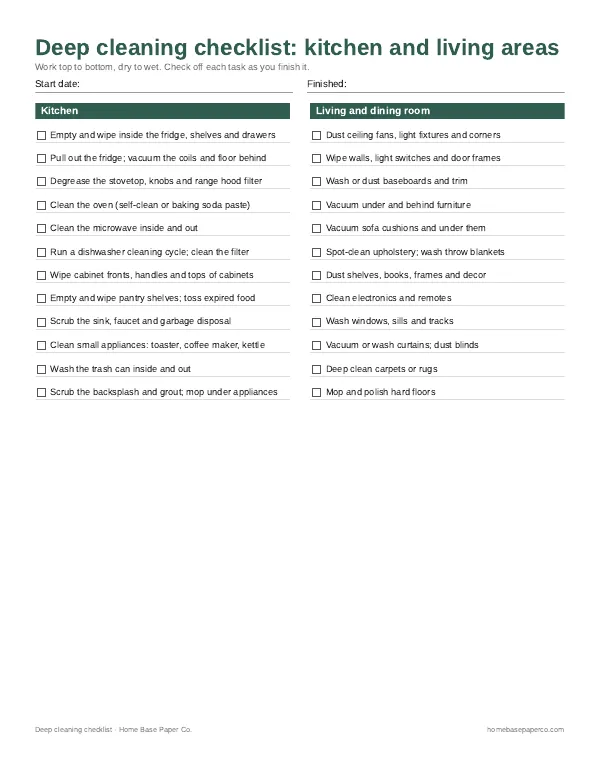
Clean the whole house in order: get the free deep cleaning checklist
A printable room-by-room deep cleaning checklist that tells you what to do first, so nothing gets cleaned twice. You'll also get our weekly HomeBase email with simple cleaning routines and chore ideas the whole family can help with.
Sources
- University of Kentucky Entomology: Fruit flies (ENTFACT-621) entomology.mgcafe.uky.edu
- Michigan State University Extension: How to get rid of fruit flies in your home canr.msu.edu
- University of Maryland Extension: Fruit flies extension.umd.edu
- Texas A&M AgriLife Extension: Indoor flies and their control agrilifeextension.tamu.edu