

The short answer: how to clean a garbage disposal is mostly about getting rid of the food film that causes the sour smell from the sink. You don't need harsh chemicals.
- Scrub the splash guard first, with the disposal and faucet off
- Ice routine: six ice cubes, 1 tablespoon of baking soda, six more ice cubes
- Flush with cold water for 30 seconds
- What not to put down the disposal, and a weekly routine
- Next step: Plan it with the Cleaning Schedule ($4.49).
Learning how to clean a garbage disposal is mostly about one thing: getting rid of the food film that causes that sour smell from the sink. The good news is that disposals need very little maintenance. Appliance experts told Consumer Reports that beyond proper use and occasional cleaning, they don't require much else, and you don't need harsh chemicals. A few things already in your kitchen do the job.
How to clean a garbage disposal: the quick version
- Scrub the splash guard with warm water and baking soda.
- Turn the disposal and faucet off.
- Add six ice cubes, 1 tablespoon of baking soda, three thin lemon slices and 1 teaspoon of bleach.
- Top with six more ice cubes.
- Run the disposal without water until the grinding stops.
- Flush with cold water for 30 seconds with the motor still running.
Start with the splash guard
The splash guard is the removable black rubber panel over your sink drain. "Most odors that come out of the garbage disposal are coming from food buildup on the splash guard," Moen product manager Alyssa Wiegand told Consumer Reports. Food gets trapped on the underside of those rubber flaps, where you can't see it.
To clean it:
- Scrub it with warm water and baking soda, using an old brush to get under each flap.
- Or put it in the dishwasher. If yours lifts out, CR says you can simply toss it in the top rack.
This step alone fixes a lot of sink smells. Then scrub the basin with baking soda; our stainless steel sink cleaning guide has the steps.
Clean inside the disposal with ice, baking soda and lemon
Food residue can also coat the walls of the grinding chamber. Eric Schultz, director of product management at InSinkErator, explained the ingredients to Consumer Reports: "Ice cubes help break up any food stuck to the disposal, while baking soda and bleach kill germs, and lemon provides a bit of freshness." He adds that ice and baking soda help scour the grind mechanism.
Here's the routine CR shares:
- Turn off the disposal and the faucet.
- Put six ice cubes in the chamber.
- Add 1 tablespoon of baking soda, three thin lemon slices and 1 teaspoon of bleach.
- Top it with six more ice cubes.
- Turn the disposal on without running water and let it run until you hear the grinding stop.
- Flush with cold water for 30 seconds while the motor is still running.
If you use your disposal daily, CR says it's a good idea to do this once a week.
| Ingredient | Amount | What it does |
|---|---|---|
| Ice cubes | 6, plus 6 on top | Breaks up stuck food and scours the grind mechanism |
| Baking soda | 1 tablespoon | Helps scour and kill germs |
| Lemon | 3 thin slices | Adds a fresh scent |
| Bleach | 1 teaspoon | Helps eliminate odor-causing bacteria |
| Cold water | 30-second flush | Rinses everything through |
Rinse the drain with baking soda and vinegar
For the drain itself, a professional cleaner quoted in Consumer Reports' kitchen sink guide suggests a simple monthly treatment:
- Pour a quarter-cup of baking soda down the drain.
- Immediately follow it with a quarter-cup of white vinegar.
- Let it sit for 30 minutes to an hour.
- Run hot water to rinse it out.
Do this on a different day from the bleach routine. Never combine bleach with vinegar or other cleaners in the same drain. For a serious clog, the same expert says you'll need a store-bought drain cleaner made for your situation or a plumber, but read the next section first, because many drain cleaners are not safe for disposals.
What not to put in a garbage disposal
Chemical drain cleaners. CR says never put lye or chemical drain cleaners into a garbage disposal. Schultz warns that some disposal cleaner products also contain corrosive materials that could cause harm to the disposal, so look closely at labels and choose products specifically formulated for disposal cleaning.
Your hand. Disposals don't have sharp blades. CR explains they have impellers that use centrifugal force to spin food against a stationary grind ring. Still, manufacturers caution against reaching inside to clean it. You won't lose a finger, but you could nick yourself. Use tongs to pull out anything that falls in, and only with the power off.
Food that's hard on the unit. CR notes that you can extend a disposal's life beyond its 8- to 10-year average if you're careful about which foods go down it. Check your disposal's manual for the foods its maker says to keep out.
Use water the right way every time
Running water is the easiest way to keep a disposal clean. CR suggests three stages of cold water:
| When | What to do |
|---|---|
| Before | Turn on cold water before you start the disposal |
| During | Keep the water running while you grind food |
| After | Keep it running for about 7 seconds after the grinding stops |
"Oftentimes, odors from the sink actually come from foods that haven't fully exited the disposal or drainpipes," Wiegand says. "You can't see it, but you can probably smell it."
In CR's lab, engineers installed disposals with clear pipes and watched what happened. Tiny food particles stayed suspended in water flowing through the P-trap during grinding, then settled to the bottom once the water was turned off. Turning the water back on flushed them away. That's why CR also suggests one last flush of water after the disposal is off.
Clean the sink, too
The disposal sits inside one of the germiest spots in the kitchen. A professional cleaner CR interviewed warns that a disposal can spew water and bacteria when it's turned on, and recommends cleaning the kitchen sink daily, with a weekly cleaning that focuses on the bottom and corners. The USDA, as cited by CR, suggests cleaning and sanitizing the sink every time it's used to wash or prepare food: wash with warm, soapy water, wipe it clean, apply a sanitizer and let it air-dry. One acceptable sanitizer is 1 tablespoon of bleach in a gallon of water.
A weekly disposal and sink routine
| Day | Task |
|---|---|
| Every use | Cold water before, during and 7 seconds after grinding |
| Daily | Rinse and wipe the sink, and scrub the splash guard if it smells |
| Weekly | Ice, baking soda, lemon and bleach routine; deep clean the sink |
| Monthly | Baking soda and vinegar drain rinse (on a different day) |
Garbage disposal myths
| Myth | What the experts told CR |
|---|---|
| You need strong chemicals to clean it | No. Simple kitchen ingredients like ice, baking soda and lemon do the job, and lye or chemical drain cleaners should never go in. |
| Disposals have sharp blades | No. They have impellers that spin food against a stationary grind ring, though you still shouldn't reach in. |
| The smell is coming from deep in the pipes | Usually it's the splash guard. Clean that first. |
| Once the grinding stops, you can turn the water off | Keep cold water running about 7 seconds longer, and add one last flush. |
| Disposals need lots of upkeep | Beyond proper use and occasional cleaning, they need very little. |
If you'd rather skip the bleach
The bleach in the routine above is there to help eliminate odor-causing bacteria, Schultz explains. If you prefer not to use it, the ice and baking soda still do the scouring, and the lemon still freshens. Pair that with a well-scrubbed splash guard and the three-stage cold-water habit, and most households keep odors under control. Whatever you choose, use one cleaner at a time and rinse well before trying another.
Supplies to keep under the sink
- A tray of ice cubes
- Baking soda
- A lemon
- Household bleach (optional)
- White vinegar for the monthly drain rinse
- An old toothbrush or small brush for the splash guard
- Kitchen tongs for retrieving dropped items with the power off
Keep them together in a small caddy so the weekly routine takes five minutes.
Troubleshooting a smelly disposal
If small flies hover over the sink, the drain may be where they breed; see how to get rid of fruit flies.
- Smell comes back quickly? Pull out or flip up the splash guard and scrub the underside. That's the most common source.
- Smell after you've cleaned the guard? Run the ice routine, then a long cold-water flush.
- Slow draining? Run more water during and after grinding so food clears the P-trap.
- Still slow or clogged? Call a plumber rather than pouring in a harsh chemical drain cleaner.
Track the disposal like any other appliance
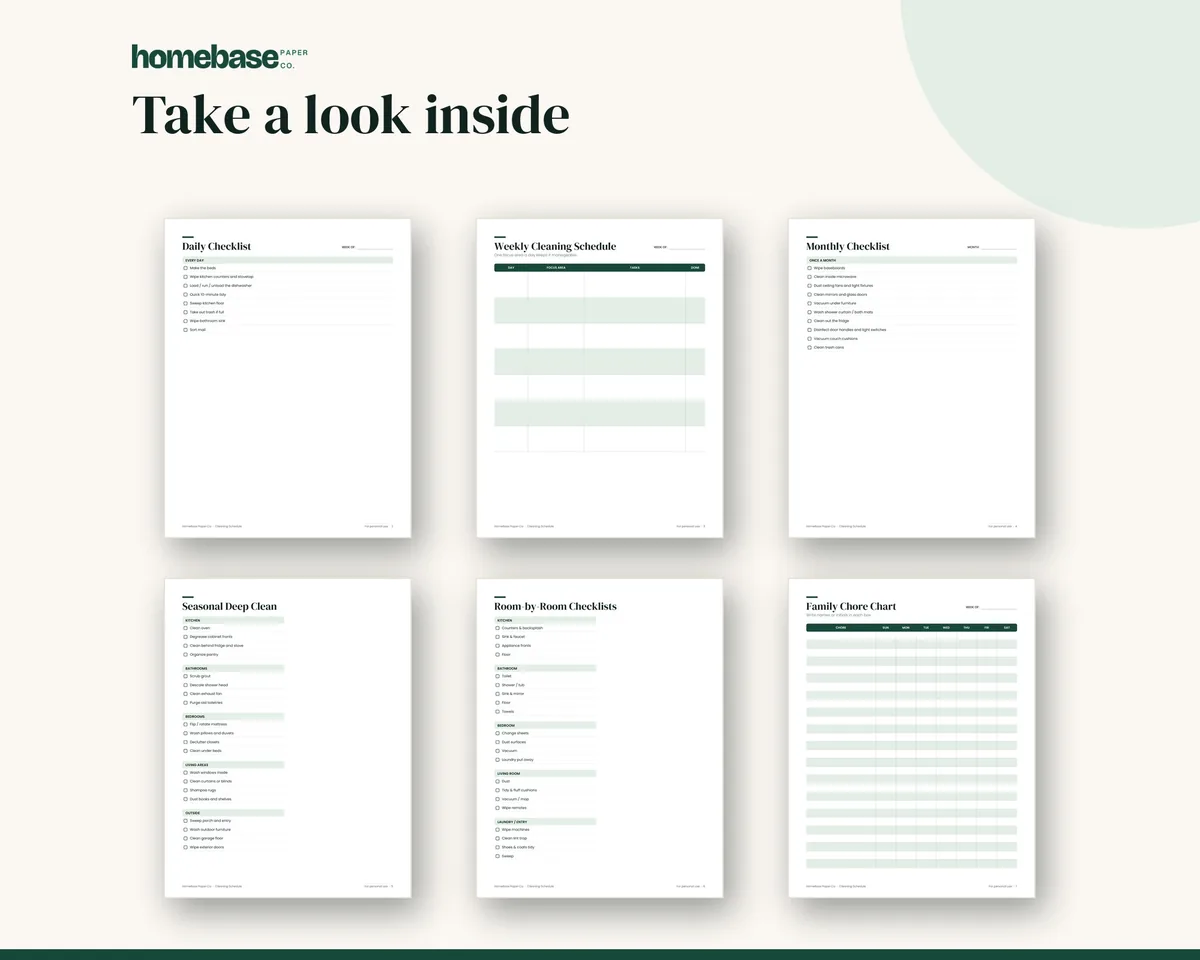
Our Cleaning Schedule ($4.49) is a 9-page printable with daily, weekly and monthly checklists, a seasonal deep clean list, room-by-room checklists, a family chore chart and a cleaning supplies list. Put "clean splash guard" on the daily or weekly kitchen list and the drain rinse on the monthly page.
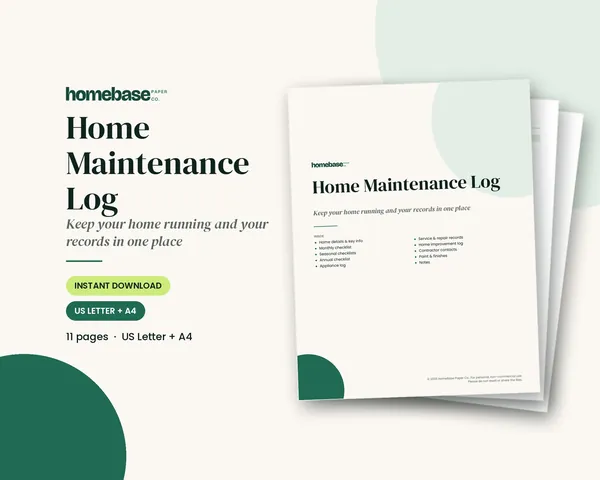
Our Home Maintenance Log ($5.99 printable) has monthly, seasonal and annual checklists, an Appliance Log for your disposal's model, purchase date and warranty, and Service & Repair Records for any repairs. With an average life of 8 to 10 years, knowing when it was installed helps you plan for a replacement.
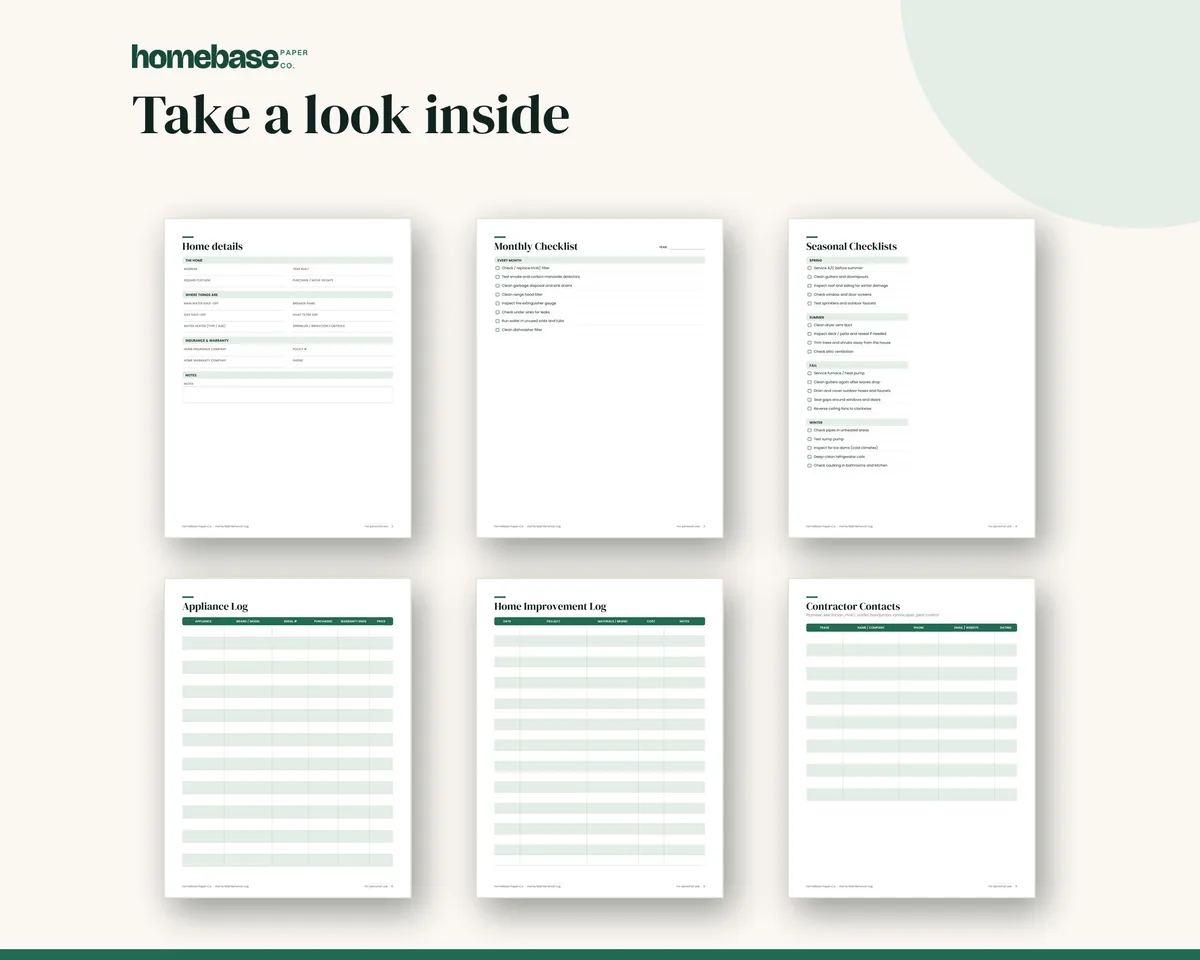
If you'd like to get the whole home organized at once, the Home Management Bundle ($16.99) includes the Cleaning Schedule along with the Household Binder, Home Maintenance Log, Home Inventory, Moving Planner and Password & Accounts Log. Bought separately, those six come to $32.94.
For more kitchen cleaning, see our deep cleaning checklist.
Your next step
Tonight, lift out or flip up the splash guard and give it a scrub with baking soda and warm water. Then run the ice, baking soda and lemon routine with a long cold-water flush, and add it to your weekly cleaning list so the smell doesn't come back.
A smelly disposal can draw fruit flies. After cleaning it, set a homemade fruit fly trap nearby to catch any adults that are left.
Make it easier
Tools for this
Printables
Cleaning Schedule
Daily, weekly, monthly and seasonal lists - plus a family chore chart.
Printables
Home Maintenance Log
Monthly, seasonal and annual checklists plus a record of every appliance and repair.
 Save 48%
Bundles
Home Management Bundle
Household binder, maintenance log, moving planner, cleaning schedule, home inventory and password log.
Frequently asked questions
What is the best way to clean a garbage disposal? The best way to clean a garbage disposal is to scrub the rubber splash guard first, since that is where most odors come from, then run a cleaning mix through the chamber. Consumer Reports shares InSinkErator's routine: six ice cubes, 1 tablespoon of baking soda, three thin lemon slices, 1 teaspoon of bleach and six more ice cubes, ground without water, then a 30-second cold-water flush.
How do you clean a garbage disposal with ice? With the disposal and faucet off, put six ice cubes in the chamber, add the other cleaning ingredients, and top with six more ice cubes. Turn the disposal on without water until the grinding stops, then flush with cold water for 30 seconds while the motor runs. InSinkErator says the ice helps break up food stuck to the grind mechanism.
How do you clean a garbage disposal with baking soda and vinegar? Pour a quarter-cup of baking soda down the drain, immediately followed by a quarter-cup of white vinegar, let it sit 30 minutes to an hour, then rinse with hot water. A professional cleaner Consumer Reports interviewed does this about once a month. Don't use it on the same day as a bleach routine, and never mix cleaners.
Why does my garbage disposal smell? Most garbage disposal smells come from food buildup on the splash guard, the removable black rubber flaps over the drain, according to a Moen product manager quoted by Consumer Reports. Odors can also come from food that hasn't fully left the disposal or drainpipes. Clean the splash guard and run plenty of water before, during and after grinding.
How do you clean a garbage disposal splash guard? Clean the splash guard by scrubbing it with warm water and baking soda, or, if it is removable, by putting it in the top rack of the dishwasher. Consumer Reports says this rubber guard is where most disposal odors start, so clean the underside as well as the top.
How often should you clean a garbage disposal? Clean a garbage disposal about once a week if you use it daily, according to the routine InSinkErator shares with Consumer Reports. Scrub the splash guard when you clean the sink, and run cold water every time you use the disposal to keep food from settling in the pipes.
Can you put drain cleaner in a garbage disposal? No, you can't put drain cleaner in a garbage disposal. Never put lye or chemical drain cleaners into a garbage disposal. Consumer Reports says some disposal cleaner products contain corrosive materials that can harm the unit, so read labels and choose products made specifically for disposal cleaning.
Is it safe to put your hand in a garbage disposal? No, it's not safe to put your hand in a garbage disposal. Manufacturers caution against reaching into a disposal to clean it. Consumer Reports explains that disposals don't have sharp blades; they have impellers that spin food against a grind ring, but you could still nick yourself. Clean the inside with ice and water, and use tongs if something falls in.
Should you run hot or cold water with a garbage disposal? Run cold water with a garbage disposal. Consumer Reports suggests running cold water before you turn it on, while grinding, and for about 7 seconds after the grinding stops. CR's tests also found one last flush of water after the disposal is off helps clear particles from the P-trap.
How long does a garbage disposal last? A garbage disposal lasts about 8 to 10 years on average, according to Consumer Reports. You can help it last longer by being careful about what foods you put down it, using plenty of water and avoiding harsh chemical drain cleaners.
Do garbage disposals need maintenance? Garbage disposals don't need much maintenance. Appliance experts told Consumer Reports that beyond proper use and occasional cleaning, garbage disposals don't require much else. Run water every time, clean the splash guard, do the ice routine weekly if you use it daily, and avoid corrosive cleaners.
How do I remember to clean the garbage disposal? Add it to a written weekly kitchen checklist. The Cleaning Schedule ($4.49) has daily, weekly and monthly checklists, so "scrub sink and splash guard" can go on the daily or weekly list and "baking soda and vinegar drain rinse" on the monthly one. Log the disposal's model and install date in the Home Maintenance Log.
More from HomeBase
You may also like

Printables
Household Binder
Family info, emergency plan, calendars, meals, groceries, cleaning, bills and sitter notes.

Printables
Home Inventory
Printable pages and a spreadsheet that totals the value of every room.
Printables
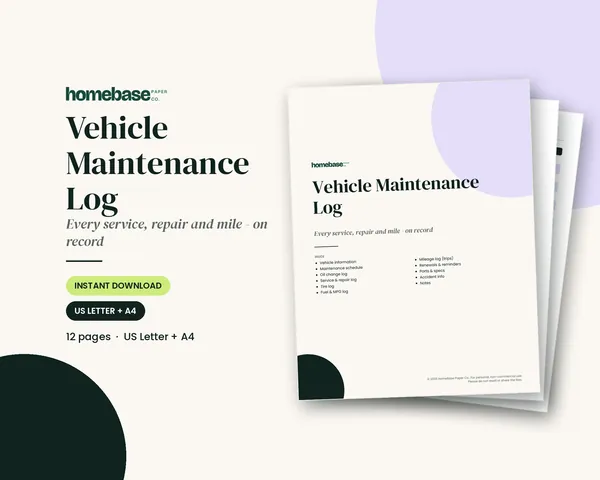
Vehicle Maintenance Log
Oil changes, repairs, tires, fuel and MPG, trip mileage and renewal dates - so resale and warranty records are easy.

 Club
Monthly club
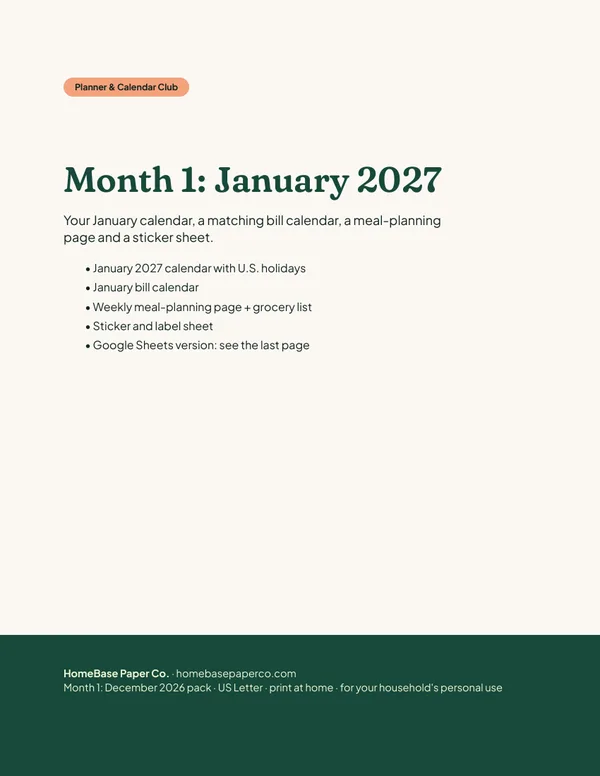
Planner & Calendar Club
Anyone who wants a monthly calendar, bill calendar and meal plan ready to print.
Free printable
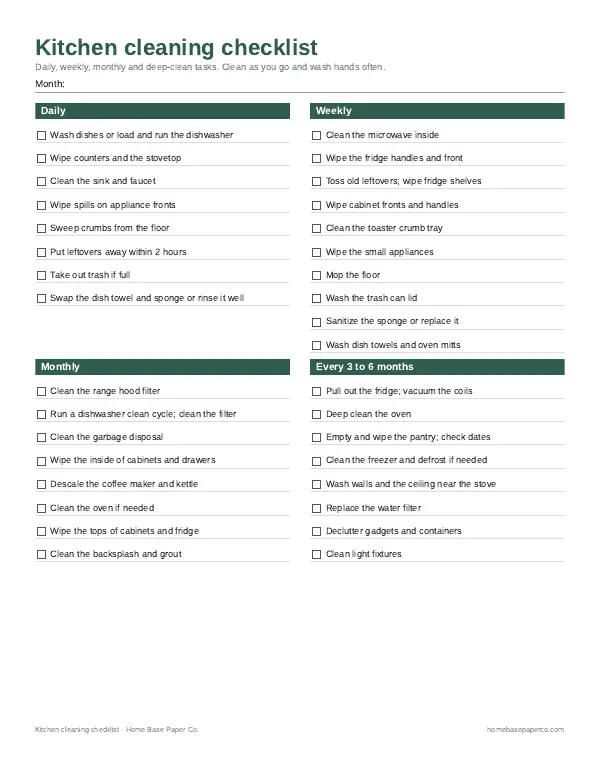
Keep the kitchen clean with a little every day
Daily, weekly, monthly and deep-clean tasks plus a who-does-what table. You'll also get our weekly HomeBase email with simple cleaning routines and chore ideas the whole family can help with.
Sources
- Consumer Reports: How to Clean a Garbage Disposal consumerreports.org
- Consumer Reports: Yes, You Need to Clean and Sanitize Your Kitchen Sink and Drain consumerreports.org