

The short answer: to organize your life, give every part of it one home: one calendar, one task list, one budget and one binder for paperwork, then review them in a short weekly reset.
- Start with a brain dump
- Set up one area at a time
- Keep systems simple enough to use on a hard week
- Nine steps and the habits that keep you organized
- Next step: Plan it with the Household Binder ($6.99).
To organize your life, give every part of it one home: one calendar for dates, one list for tasks, one budget for money and one binder for paperwork, then review them all in a short weekly reset. Start with a brain dump, set up one area at a time and keep the systems simple enough to use on a hard week. The nine steps below show how to organize your life, and how to stay organized once you have, without buying a new app or giving up a whole weekend.
I grew up as the oldest of three, the one my family leaned on to keep everything coordinated, and later worked as an executive assistant. What I learned from both: organized people are not tidier, they just have fewer places to look. Our Household Binder ($6.99) is built around that idea.
How to organize your life in 9 steps
- Do a brain dump. Write down every task, worry, errand and idea on one sheet. Getting it out of your head is the first relief.
- Pick one calendar. Put every appointment, bill due date, birthday and school or work event in it. One calendar beats three half-used ones.
- Keep one running task list. Sort it into today, this week and later. Everything else stays on the brain dump sheet.
- Break projects into tasks. "Clean the garage" is a project. "Empty one shelf" is a task you can finish in a sitting.
- Set up your money pages. List every bill and due date, then build a simple monthly budget.
- Gather your paperwork. Put IDs, insurance, medical and financial papers in one labeled folder or binder.
- Give everyday items a home. Keys, mail, bags and chargers each get one spot near the door.
- Plan meals for the week. A short meal plan and grocery list cut daily decisions and extra store trips.
- Schedule a weekly reset. Choose a fixed 20 to 30 minutes, such as Sunday evening, to review everything.
Stanford's Center for Teaching and Learning advice on keeping to-do lists puts it simply: list tasks, not projects, and a task is something you can do in one sitting, ideally in 30 minutes or less. That one rule makes any list less scary.
The six areas to organize (and where each one lives)
| Area | What goes in it | Where it lives |
|---|---|---|
| Time | Appointments, events, due dates | One calendar (paper or shared app) |
| Tasks | To-dos, errands, projects | One running list with today, week and later |
| Money | Bills, budget, savings goals | Budget pages or a budget spreadsheet |
| Home | Cleaning, maintenance, supplies | Cleaning schedule and maintenance log |
| Paperwork | IDs, insurance, records, passwords | A labeled binder or folder and an account log |
| Health and meals | Appointments, medications, meal plans | Calendar plus a weekly meal plan |
You do not need to fix all six at once. Pick the area that causes the most stress right now, set it up this week and add the next area next week.
How to prioritize when everything feels urgent
The University of Illinois Counseling Center's time management guide suggests sorting goals by urgency and importance, then protecting time for the important tasks that are not urgent yet. It also warns that over-planning can become its own way to procrastinate.
- Urgent and important: do these first (a bill due tomorrow).
- Important, not urgent: schedule these (building a budget, a doctor checkup).
- Urgent, not important: keep them short or hand them off.
- Neither: drop them or move them to a someday list.
Organize your money and paperwork
Money and paperwork are where most disorganization gets expensive: a late fee, a missed renewal, a lost form. Ready.gov's financial preparedness guidance tells families to gather their financial and critical personal, household and medical information as part of getting prepared.
- Keep a bill list with due dates, amounts and how each is paid.
- Set a monthly budget and check it once a week.
- Keep IDs, insurance policies and key records in one labeled spot.
- Record account logins in one secure place instead of on sticky notes.
The Budget Planner Printable ($5.99) covers the money pages, and the Password and Accounts Log ($3.99) keeps logins in one record. Our guide on how to organize important documents walks through the paperwork side step by step.
Daily and weekly habits that keep you organized
| When | Habit | Time |
|---|---|---|
| Every morning | Check calendar and pick your top three tasks | 5 minutes |
| Every evening | Reset the counters, launch pad and mail spot | 10 minutes |
| Once a week | Review calendar, bills, list and meal plan | 20 to 30 minutes |
| Once a month | Check the budget, renewals and upcoming birthdays | 30 minutes |
| Each season | Declutter one area and update home maintenance | 1 to 2 hours |
If you miss a day, start again on today's page. Systems work because you come back to them, not because you never slip.
How to stay organized when life gets busy
Getting organized is a weekend project. Staying organized is a habit, and the trick is a version of your system small enough to survive a hard week. These are the habits that keep the system running:
- Write it down the moment it comes up. A task, date or errand goes on the list or calendar right away, not "later."
- Keep a launch pad by the door. Keys, bags, outgoing mail and anything that leaves the house tomorrow live in one spot.
- Do small jobs right away. If something takes a minute or two, such as filing a receipt or answering a quick text, do it now instead of adding it to the list.
- Plan tomorrow tonight. Glance at the calendar and pick tomorrow's top three before bed. For more on this topic, see our home organizing guides.
- Put things back the same day. Organized rooms stay that way when everything has one home and goes back to it.
- Touch paper once. Open the mail over the recycling bin, act on it, file it or toss it.
- Use a minimum plan on bad weeks. When life gets busy, keep only the calendar, the top three and the evening reset. Skip everything else without guilt.
- Share the load. Put family jobs on a chore chart and shared dates on one family calendar so the system does not live only in your head.
- Protect the weekly reset. Keep the same 20 to 30 minutes each week, even if it is shorter than usual.
- Review what is not working. Once a month, drop any list or page you skipped all month and simplify it.
For a family, the shared calendar matters most. Our guide on how to organize a family calendar shows how to set one up that everyone checks. For the task side, a printable to-do list template with today, this week and later columns keeps the running list in one place. To protect focus on the calendar, add time blocking around your top three.
Common mistakes when you try to get organized
- Buying tools before deciding on a system. Bins and apps help only after you know what goes where.
- Using too many places. Two calendars and four lists mean nothing is fully trusted.
- Fixing everything in one weekend. Big overhauls fade. One area a week sticks.
- Making it pretty instead of usable. A plain list you check daily beats a beautiful one you avoid.
Printables to organize your life
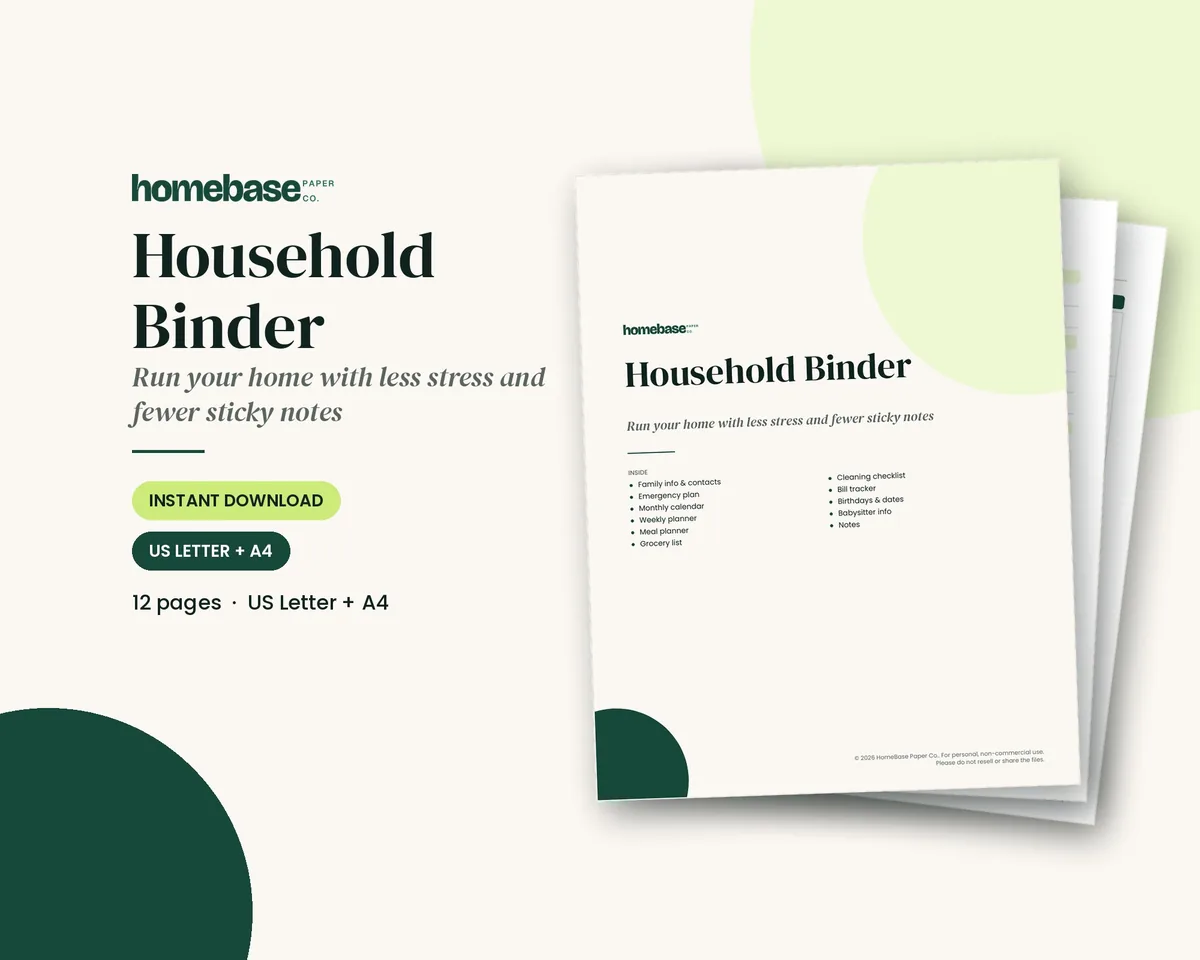
- Household Binder ($6.99): schedules, contacts, chores and home pages in one printable set.
- Home Management Bundle ($16.99, $32.94 if bought separately): cleaning, maintenance, inventory, moving and more.
- Budget Planner Printable ($5.99): monthly budget, bills and savings goals.
- Password and Accounts Log ($3.99): one place for account details.
HomeBase planners are undated or can start in any month, so you can begin today. Browse every printable in the shop. Our free Holiday Budget Starter Kit is three US Letter pages we email you after you join our list.
See also
Make it easier
Tools for this

Printables
Household Binder
Family info, emergency plan, calendars, meals, groceries, cleaning, bills and sitter notes.
 Save 48%
Bundles
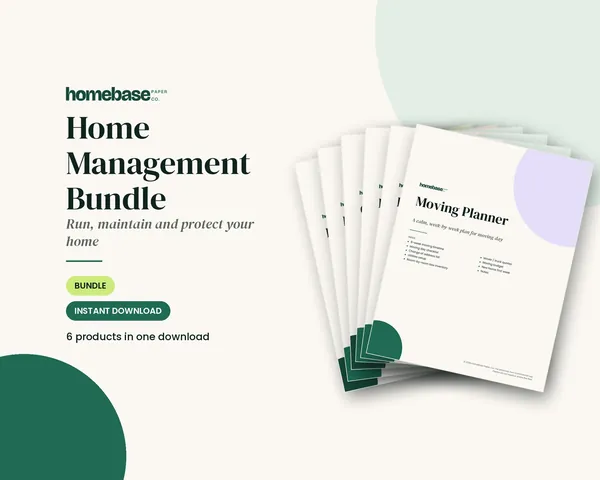
Home Management Bundle
Household binder, maintenance log, moving planner, cleaning schedule, home inventory and password log.

Printables
Budget Planner Printable
Twelve undated pages you can print every month: budget, bills, spending, savings and debt.
Frequently asked questions
How do I start to organize my life? Start by writing everything on your mind onto one list, then put every date on one calendar. A Household Binder gives those lists, schedules and contacts a single home, so you stop carrying them in your head. After that, pick one area, such as bills or meals, and set up a simple system for it before you move on.
What are the main areas to organize in your life? Most people need systems for six areas: time, tasks, money, home, paperwork and health. Each needs one place to live, such as a calendar for time, a list for tasks and a budget page for money. You do not have to fix all six at once.
How do I get organized when I feel overwhelmed? Do a brain dump first, then choose only three items to handle this week. Overwhelm usually comes from holding too many open loops in your head. Writing them down and picking a short list turns a fog into a plan you can start today.
How can I be more organized every day? Check your calendar and list at the same time each morning, and do a five-minute tidy each evening. Small daily habits matter more than a big weekend overhaul. Keep keys, mail and bags in fixed spots so nothing goes missing on busy mornings.
How do I stay organized long term? Stay organized with a weekly reset of 20 to 30 minutes where you review the calendar, clear the inbox and mail pile, check bills and plan meals. Systems fall apart when nobody looks at them, and a fixed weekly time keeps them working.
What is the best way to organize my finances as part of organizing my life? List every bill with its due date, set a monthly budget and keep both in one spot. A Budget Planner Printable puts income, bills and savings goals on paper next to your calendar. Review it weekly so tight weeks never catch you off guard.
Should I use a paper planner or an app to organize my life? Use whichever one you will actually open every day. Paper is easy to see at a glance, while apps send reminders and sync with family. Many households use a shared phone calendar for appointments and paper pages for plans, budgets and lists.
How do I organize important documents and passwords? Keep important documents in one labeled folder or binder and store account logins in one secure place. A Password and Accounts Log keeps account details in one notebook-style record instead of scattered sticky notes. Store it somewhere private and safe.
How long does it take to organize your life? Most people can set up the basic systems in two to four weeks by tackling one area per week. The setup is the slow part. After that, the daily check and weekly reset take only minutes, and small tweaks keep everything current.
What are good organizing tips for busy moms? Use one family calendar, a weekly meal plan, a running grocery list and a launch pad by the door for bags and keys. A Home Management Bundle adds cleaning, maintenance and household pages so the family plan lives in one place. Share the calendar so others can check it too.
How do you stay organized every day? Our Household Binder ($6.99) keeps your schedules, contacts and chore lists in one place, which is the base for staying organized every day. Each morning, check one calendar and pick your top three tasks. Each evening, reset the launch pad by the door and plan tomorrow. Keep everything in its one home and put it back the same day.
How do you stay organized when you are busy? Our Household Binder ($6.99) holds a short version of your system that still works on a busy week: the calendar, the task list and the family contacts. When life gets busy, keep only the calendar, your top three tasks and a 10-minute evening reset, and protect a shorter weekly reset. Add the rest back when things calm down.
How do I stay organized with money and bills? Our Budget Planner Printable ($5.99) puts income, bills and savings goals on paper, so money stays organized in one place. List every bill with its due date, set a monthly budget and check both during your weekly reset. A quick weekly look keeps tight weeks from catching you off guard.
How can a family stay organized at home? Our Home Management Bundle ($16.99) gives a family cleaning, maintenance, inventory and moving pages in one printable set, so home jobs have a shared plan. Keep one family calendar everyone can see, put chores on a chart, and hold a short weekly check-in to look at the week ahead.
More from HomeBase
You may also like
Printables
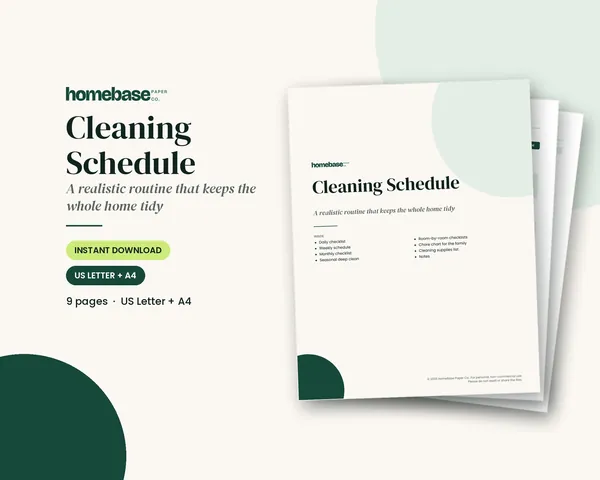
Cleaning Schedule
Daily, weekly, monthly and seasonal lists - plus a family chore chart.
Printables
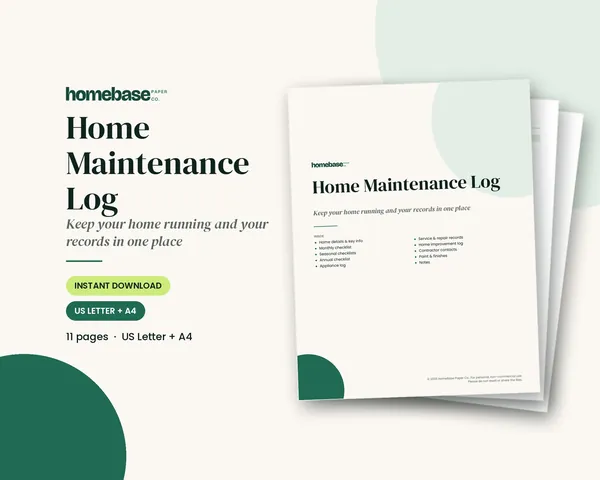
Home Maintenance Log
Monthly, seasonal and annual checklists plus a record of every appliance and repair.
Printables
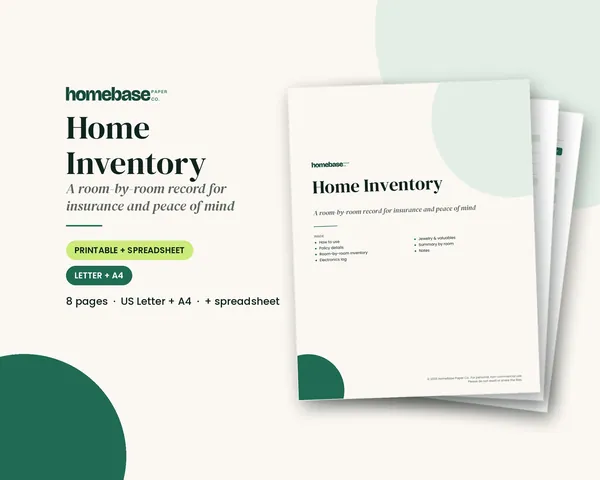
Home Inventory
Printable pages and a spreadsheet that totals the value of every room.
Printables
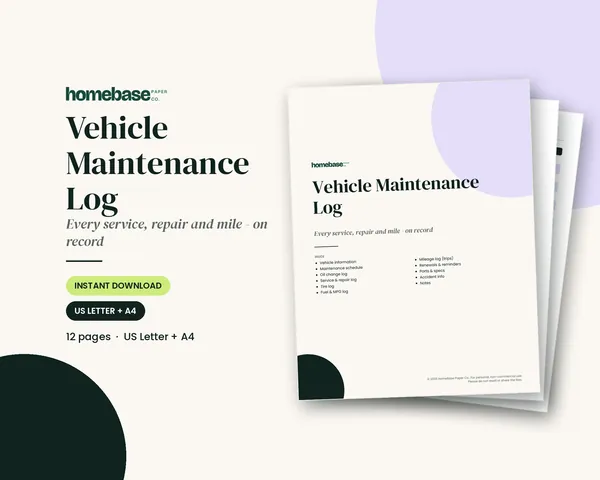
Vehicle Maintenance Log
Oil changes, repairs, tires, fuel and MPG, trip mileage and renewal dates - so resale and warranty records are easy.
 Club
Monthly club
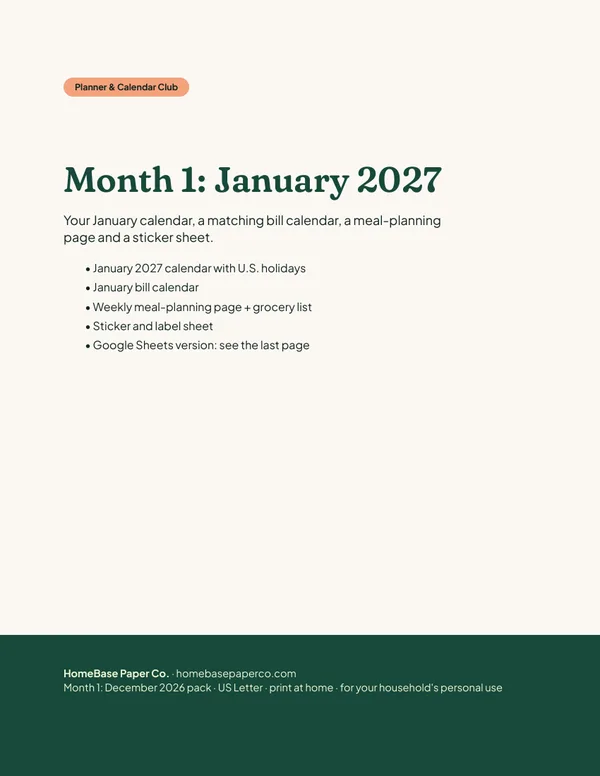
Planner & Calendar Club
Anyone who wants a monthly calendar, bill calendar and meal plan ready to print.
Free printable
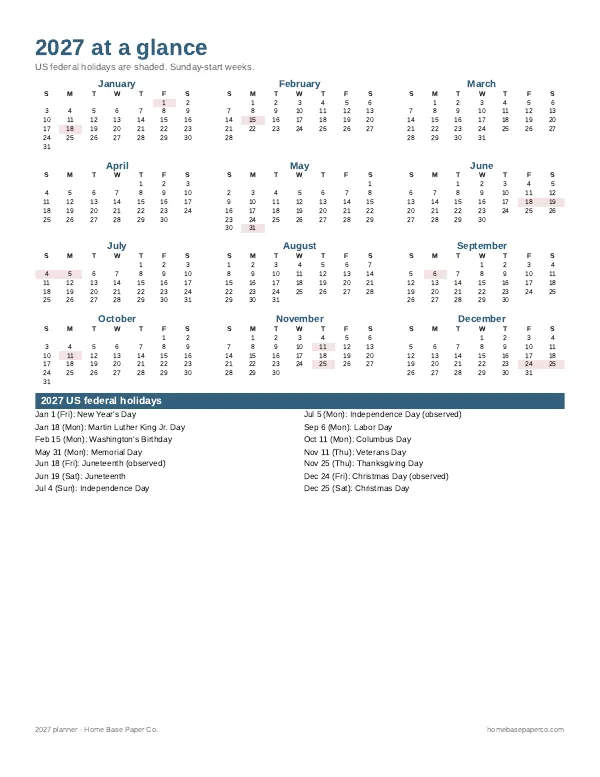
Get organized for the new year: get the free 2027 planner
A 16-page printable 2027 planner with a year-at-a-glance page and monthly calendars with US holidays marked. You'll also get our weekly HomeBase email with simple planning and home organization tips.
Sources
- Time Management (University of Illinois Counseling Center) counselingcenter.illinois.edu
- Keeping To-Do Lists (Stanford Center for Teaching and Learning) ctl.stanford.edu
- Financial Preparedness (Ready.gov) ready.gov