

The short answer: to organize a family calendar, choose one master calendar everyone can see, give each person a color, add every date in one sitting and review it together for 15 minutes once a week.
- Paper, digital or both: most busy families use both; pick which one wins
- Put it where everyone sees it, at kid height with a pen attached
- Weekly meeting: review the coming week, assign rides and plan meals around busy nights
- Plan the holidays on the same calendar
- Next step: Plan it with the Household Binder ($6.99).
Here's how to organize a family calendar: choose one master calendar everyone can see, give each person a color, add every date in one sitting, and review it together for 15 minutes once a week. The calendar becomes the single place plans become official, and you stop finding out about the field trip, the dentist and the work dinner on the same morning.
Our founder Malaysia grew up the oldest of three in Detroit and was the one her family leaned on to coordinate. This is the system that makes that job easier.
Here's how to set it up in six steps.
When a daughter's birthday comes around, these birthday wishes for your daughter help turn the calendar reminder into a personal card or text.
Step 1: Pick one master calendar
The single most important rule: one calendar is the master. Everything else copies from it.
| Option | Best for | Watch out for |
|---|---|---|
| Paper wall or binder calendar | Seeing the whole month at a glance, kids who can't use a phone yet | Needs a weekly update from digital invites |
| Shared digital calendar | Reminders, partners who work away from home, last-minute changes | Out of sight for anyone without a phone |
| Both | Most busy families | Pick which one wins when they disagree |
There's some evidence that writing on paper helps you remember plans. In a small University of Tokyo study, people who wrote appointments in a paper notebook did so faster than those using a tablet or phone and were more accurate on the simpler recall questions afterward. It's one study of 48 students, but it matches what a lot of families find: the calendar on the wall is the one people remember. If you're choosing a screen for the kitchen wall, our digital calendar guide compares wall displays, smart displays and day clocks.
For a deeper look at the trade-offs, see paper planner vs. digital planner.
Step 2: Give each person a color
- One color per person, plus one for whole-family events.
- Keep it to five or six colors so it stays readable.
- Use the same colors on paper and digital calendars.
- Write a color key in the corner for babysitters and grandparents.
Step 3: Gather every date in one sitting
Collect everything at once instead of adding events as they come up. You'll need about 30 minutes and these sources:
Homeschooling? Copy your terms, co-op days and field trips from a free homeschool planner onto the family calendar so everyone sees school days at a glance.
- School calendar: days off, early release, conferences, breaks
- Sports and activity schedules
- Work schedules, trips and late nights
- Medical, dental and vision appointments
- Birthdays and anniversaries
- Bill due dates
- Trash and recycling days
- Holidays, travel and visits
- Church, volunteer and community events
Add recurring events first, then one-off dates. For anything involving a ride, write who's driving.
Step 4: Put it where everyone sees it
For a paper wall version, print the current month from our free 2026 calendar printable and swap in a fresh page each month.
The calendar works best as the center of a family command center; see our hub for school planners, pet records, baby checklists and caregiver logs.
- Kitchen or main entry, wherever everyone passes every day.
- At kid height, so younger family members can read it.
- Pen attached. If there's no pen, nothing gets added.
- Make it a hub: a chore chart, a meal plan and a spot for school papers right next to it.
Step 5: Hold a 15-minute weekly family meeting
This is what keeps the calendar accurate. Sunday evening works for most families. A short family meeting agenda keeps it to 15 minutes.
Copy the week onto a free weekly calendar printable after the meeting, so everyone can see who goes where each day.
- Review the coming week day by day.
- Add anything new from emails, school folders and texts.
- Assign rides and responsibilities.
- Plan meals around busy nights. Slow-cooker or leftover nights go on practice days.
- Look two weeks out for birthdays, deadlines and anything that needs buying. Need words for the card? Our happy birthday wishes have 100 ideas.
- Update chores for the week.
Kids can add their own events, which builds responsibility and makes the calendar theirs too. The American Academy of Pediatrics offers a free Family Media Plan you can fill in together, and the weekly meeting is a natural time to agree on screen-free times and put them on the calendar. Our weekly planner guide compares layouts and shows how to use one.
Step 6: Plan the holidays on the same calendar
November and December are when family calendars break down. Put these on early:
Our free November 2026 calendar has Veterans Day, Election Day and Thanksgiving already marked.
- School breaks and teacher work days
- Travel dates and who's hosting
- Parties, concerts and recitals
- Shopping deadlines for shipping
- Big cooking days and the main meal
- Days off with nothing scheduled (yes, schedule rest)
Our Christmas planning checklist breaks the season into weeks, and the winter break schedule for kids helps fill the days off. The holiday countdown planner shows how many days you have left.
Common family calendar mistakes
- Two or three "master" calendars. Pick one.
- Too many colors or symbols. If it needs a legend longer than a few lines, simplify.
- Skipping the weekly meeting. Without it, the calendar goes stale fast.
- Only one person updates it. Everyone who can write should add their own events.
- No buffer. Leave white space for travel time and rest.
Tools that help
If you want the calendar, meal plans, chores and contacts together, our family planner guide shows how to set one up as a binder.
If you like seeing the whole month at once, a monthly planner page next to the wall calendar is a good home for bill due dates and budget notes.
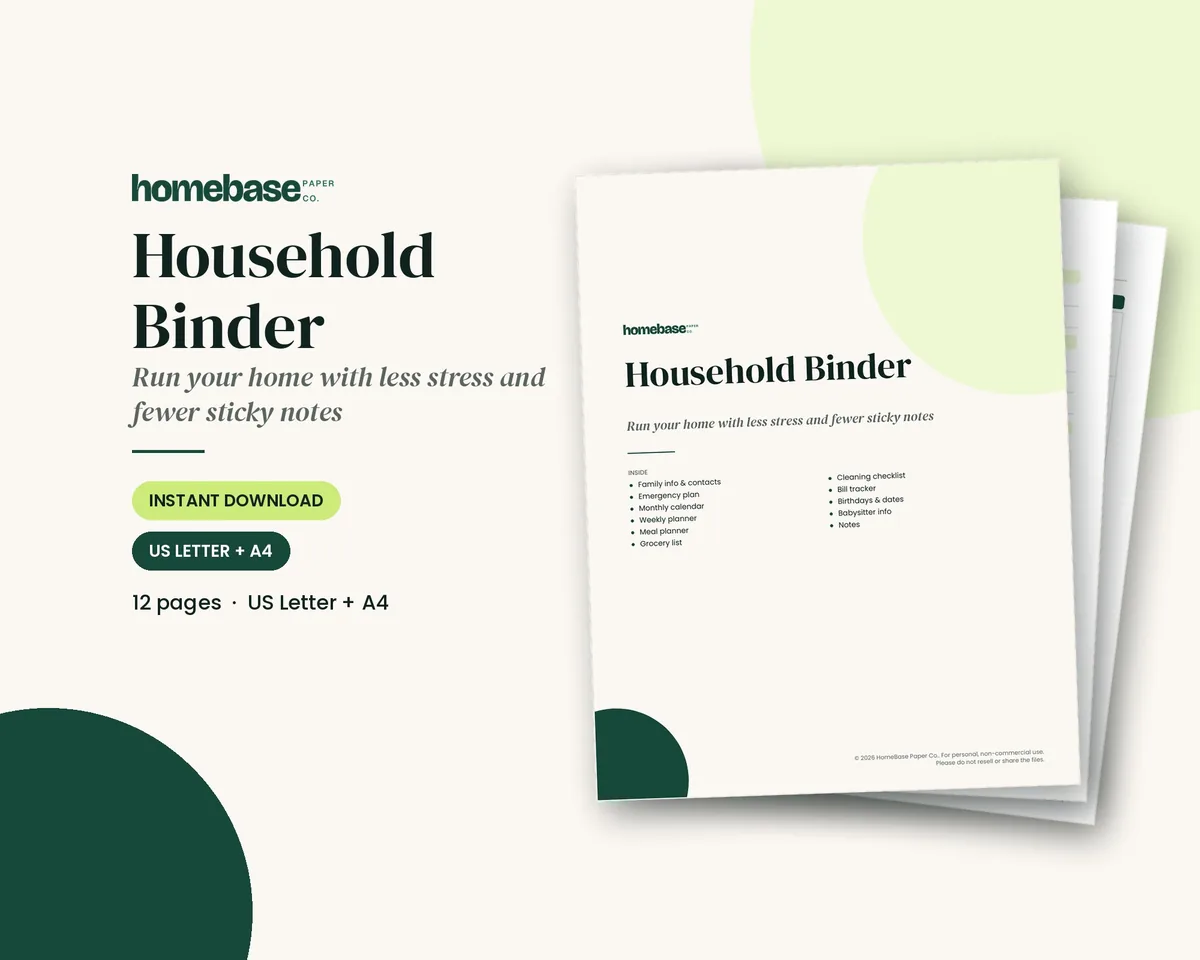
- Household Binder ($6.99): A 12-page printable (US Letter and A4) with a monthly calendar, weekly planner, birthdays and important dates, meal planner, grocery list, weekly cleaning, bill tracker, family information and emergency plan pages. It's the family calendar plus everything around it. Our home management binder guide shows how to set one up.
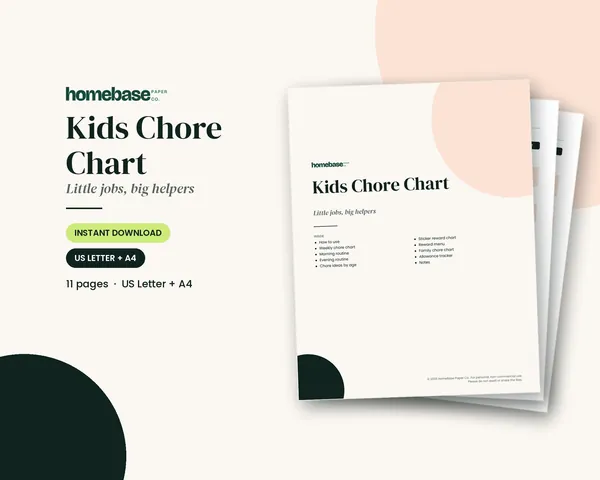
- Kids Chore Chart ($3.49): An 11-page printable with a weekly chore chart, morning and evening routines, chore ideas by age and a family chore chart. Hang it beside the calendar. See our chore chart by age guide.
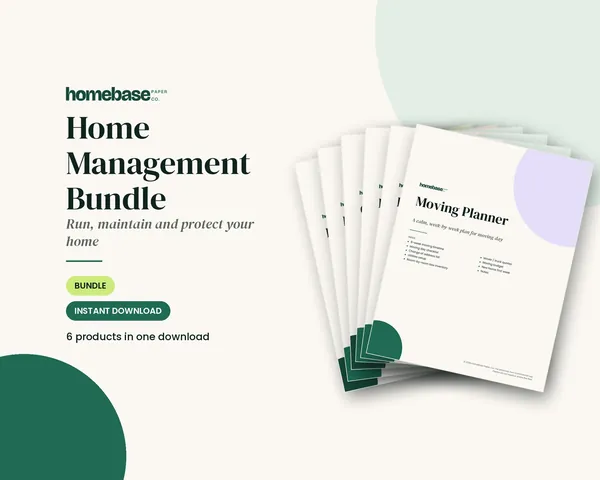
- Home Management Bundle ($16.99, vs. $32.94 bought separately): The Household Binder plus the Cleaning Schedule, Home Inventory, Home Maintenance Log, Moving Planner and Password & Accounts Log.
- Family Life Admin Bundle ($15.99, vs. $23.95 bought separately): The Kids Chore Chart, Meal Planner & Grocery List, Family Recipe Binder, Pet Health Records and Newborn Baby Tracker.
Browse all our family printables or the full set of bundles.
Putting holiday spending on the calendar too? The free Holiday Budget Starter Kit is 3 US Letter pages, emailed to you after you join our list.
Before writing a relative reminder such as tomorrow, check today’s date and weekday in your local time zone and record the full date on the calendar.
Make it easier
Tools for this

Printables
Household Binder
Family info, emergency plan, calendars, meals, groceries, cleaning, bills and sitter notes.
 Starter pick
Printables
Kids Chore Chart
Weekly chore chart, morning and evening routines, chore ideas by age, a sticker reward chart and an allowance tracker.
 Save 48%
Bundles
Home Management Bundle
Household binder, maintenance log, moving planner, cleaning schedule, home inventory and password log.
Frequently asked questions
What is the best way to organize a family calendar? Use one master calendar that everyone can see, give each person a color, add every recurring event and deadline in one sitting, and review it together for 15 minutes each week. The Household Binder includes a monthly calendar, weekly planner and birthdays and important dates page, so the whole system lives in one place.
Should a family calendar be paper or digital? Many families use both: a paper calendar in a shared spot that everyone sees every day, and a shared digital calendar for reminders on the go. Pick one as the master and copy new events into it during the weekly meeting so the two never disagree.
How do you color-code a family calendar? Give each person one color and use one extra color for whole-family events. Keep it to five or six colors so it's readable at a glance. Write the key in the corner of the calendar so babysitters and grandparents can read it too.
What should go on a family calendar? Everything that affects more than one person: school days off, practices and lessons, appointments, work trips, birthdays, bill due dates, trash and recycling days, holidays and travel. Add who's driving if it involves a ride.
Where should I put the family calendar? Put it where everyone passes every day, usually the kitchen or the main entry. Hang it at a height kids can read, keep a pen attached, and post the week's chore chart next to it.
How do I get my family to use the calendar? Make it the only place plans become official. If it isn't on the calendar, it isn't confirmed. A short weekly family meeting, where everyone adds their own events, builds the habit faster than reminders.
How far ahead should a family calendar go? Fill in the next 12 months for fixed dates such as birthdays, school breaks and holidays, and plan the details one month at a time. Review the coming week every weekend so there are no surprises.
More from HomeBase
You may also like

Printables
Family Recipe Binder
Section dividers, four recipe page layouts with room for the family story, 4x6 and 3x5 cards and a conversion chart - print it or type into the fillable version.
Printables
Newborn Baby Tracker
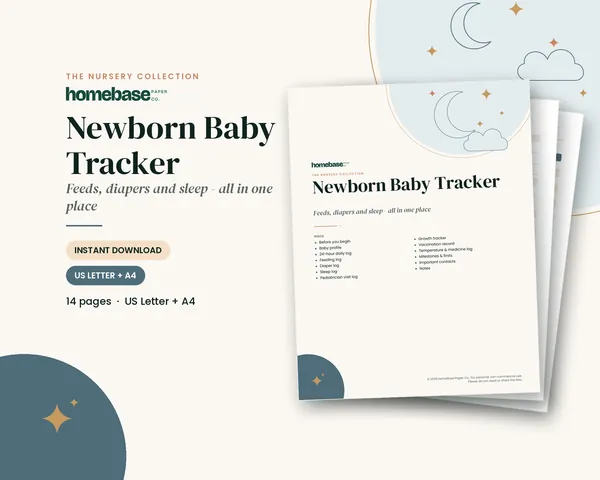
A 24-hour daily log plus feeding, diaper, sleep, growth and pediatrician-visit pages - easy to bring to checkups.
Printables
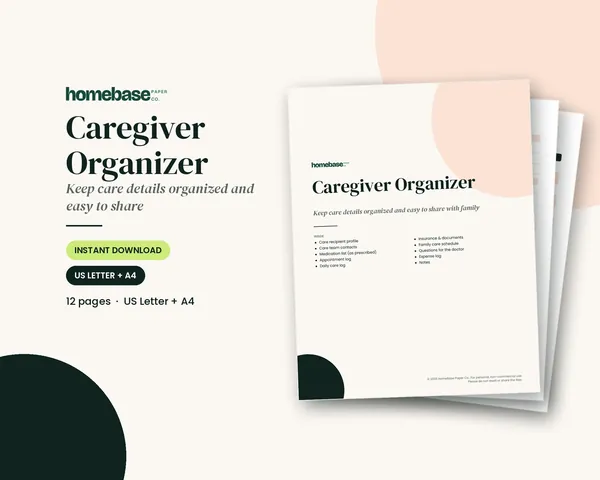
Caregiver Organizer
One place for contacts, appointments, the medication list from the doctor, and daily notes.
 Save 37%
Bundles
Family Peace of Mind Bundle
The If Something Happens to Me binder, Caregiver Organizer, Pet Health Records and Password Log together.
 Club
Monthly club
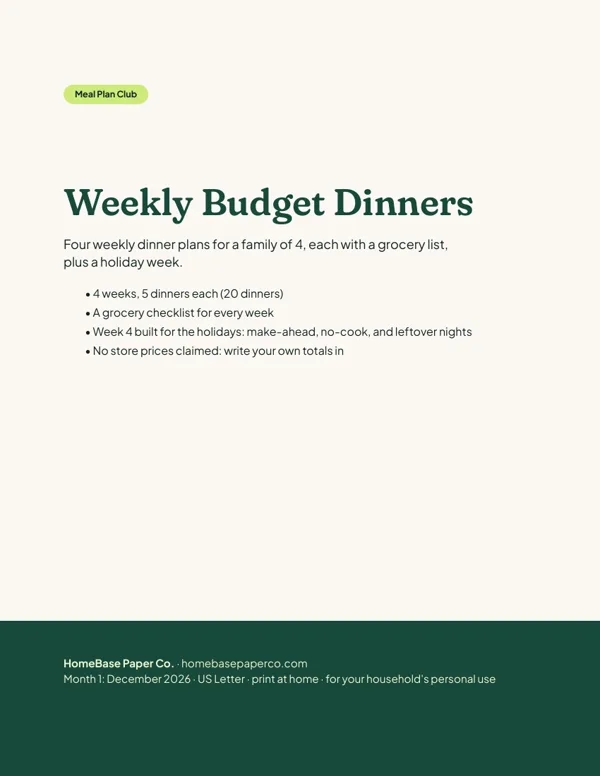
Meal Plan Club
Families who want dinner planned and a grocery list ready every week.
Free printable
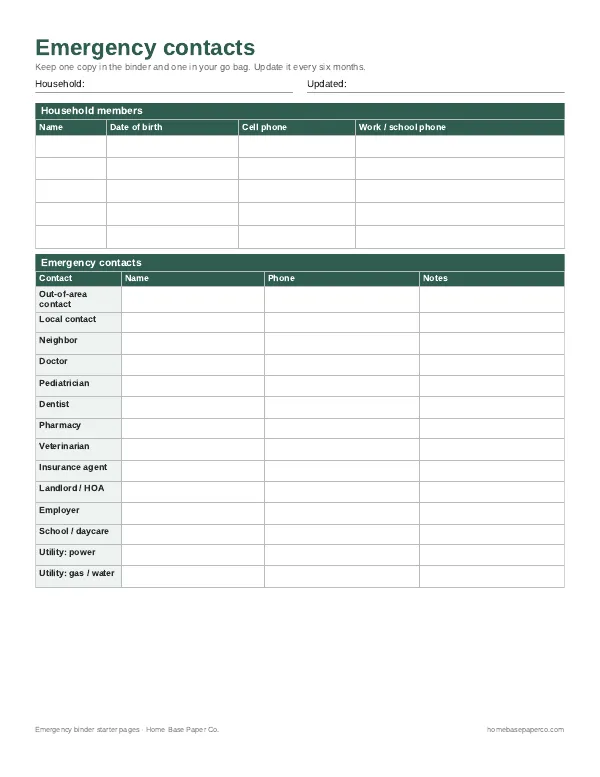
Have the important stuff in one place: get the free emergency binder pages
Printable starter pages for household members, emergency contacts, medical notes and where key documents live. You'll also get our weekly HomeBase email with simple ways to keep family records and important papers in order.
Sources
- University of Tokyo study frontiersin.org
- Family Media Plan healthychildren.org