

The short answer: a family meeting is a short, regular sit-down, usually 15 to 30 minutes once a week, to look at the week ahead, settle one problem together and end on something fun.
- Six-part agenda: check-in, calendar, chores, meals, one decision and wrap-up
- With young kids: keep it to 10–15 minutes
- When: the same day and time each week, after a meal
- 30+ topics, ground rules and roles by age
- Next step: Plan it with the Household Binder ($6.99).
A family meeting is a short, regular sit-down, usually 15 to 30 minutes once a week, where everyone in the household looks at the week ahead, shares what's working, settles one problem together and ends on something fun. A simple family meeting agenda has six parts: a check-in, the calendar, chores, meals, one decision and a wrap-up.
That's the whole idea. It isn't a lecture or a courtroom. It's the one time each week when the people who share a home also share the plan, so fewer things fall through the cracks between Monday and Friday.
Below you'll find a 20-minute agenda you can copy, roles for every age, ground rules, more than 30 family meeting topics, check-in questions and a fix for every common problem. As the oldest of three, I was the one who kept track of who needed a ride, which form was due and whose turn it was. A weekly meeting puts that job on the table where everyone can help carry it.
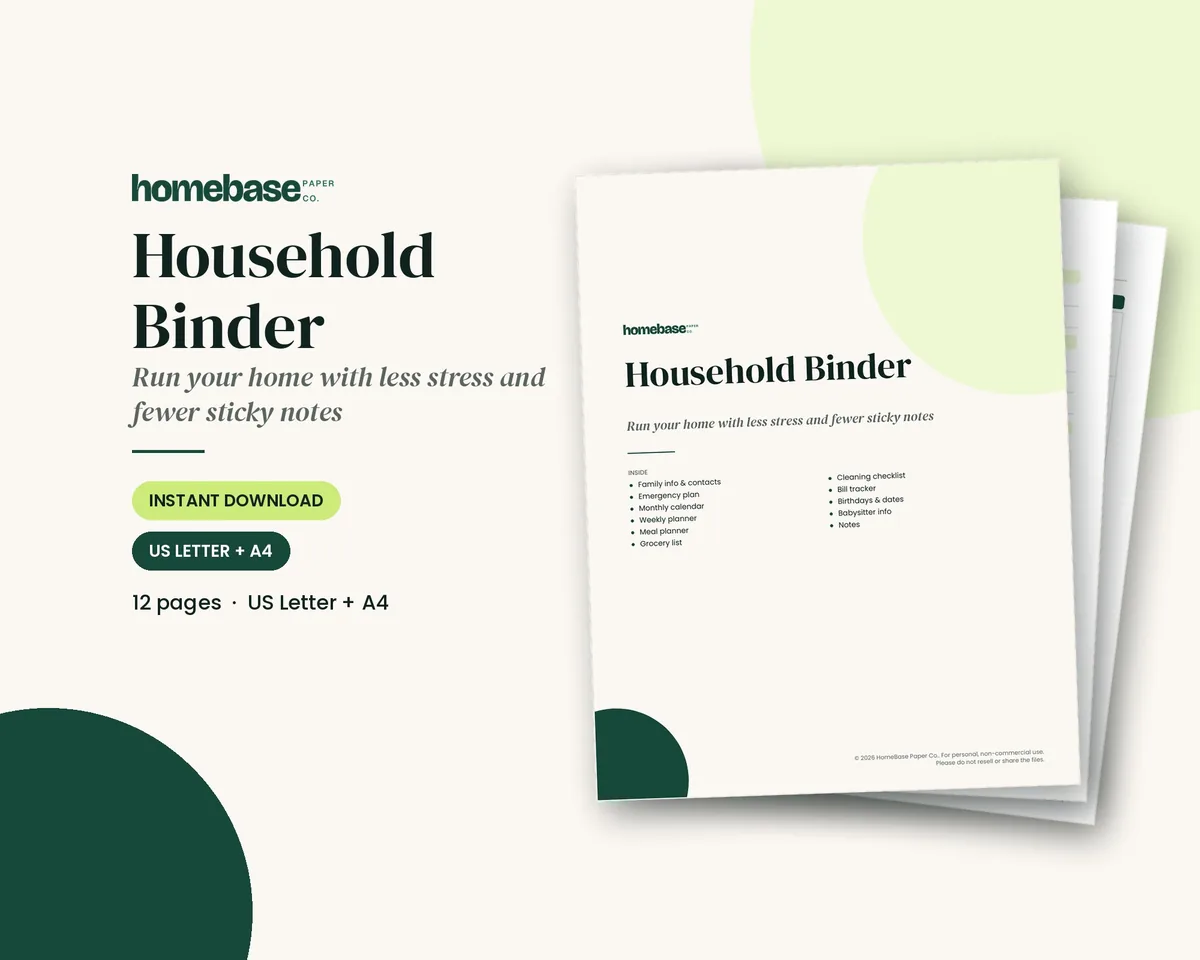
The easiest way to run it is from one place. The Household Binder ($6.99) is a 12-page printable with a monthly calendar, weekly planner, meal planner, grocery list, cleaning routine and bill tracker, so the whole agenda lives in one binder on the kitchen counter.
| Family meeting at a glance | |
|---|---|
| How long | 15–30 minutes; 10–15 with young kids |
| How often | Weekly, plus a monthly money check |
| Best time | Same day and time each week, after a meal |
| Who comes | Everyone who lives in the home |
| What you need | The calendar, a notebook or binder, a pen |
| Must-have rule | One person talks at a time, no put-downs |
| How to end | A game, a treat or a family activity |
What is a family meeting?
A family meeting is set-aside time for the household to communicate, make decisions and solve problems as a team. NC State Extension's guide to family meetings that build healthy families describes two kinds:
- Scheduled meetings. A planned, regular time with a simple written agenda. Some families call these family councils, because everyone weighs in on an issue that affects the whole household.
- Informal meetings. The quick talks that happen at dinner, in the car or before bed. They build the trust that makes the scheduled meetings work.
This guide is about the scheduled kind. It covers the whole household: logistics, chores, meals, plans and feelings. If you only want to talk about money, our family budget meeting agenda is a separate 30-minute monthly plan built for that.
Why hold family meetings?
A weekly family meeting does three jobs at once.
- It moves the mental load onto paper. The person who usually remembers everything gets to say it once, out loud, with the calendar open.
- It gives everyone a voice. The American Academy of Pediatrics' advice on how to have a family meeting says each person should share thoughts, feelings and hopes without criticism or interruption.
- It turns problems into plans. NC State Extension notes that when kids help find a solution, they are much more likely to follow it.
Growing up, I learned that the most helpful thing you can do for someone is listen first, then help with the plan. A family meeting builds that habit into the week.
A simple family meeting agenda (20 minutes)
This is the agenda I'd hand any household starting out. Copy it onto an index card or the notes section of your binder.
| Time | Agenda item | What happens |
|---|---|---|
| 0–3 min | Check-in and appreciations | Each person shares one good thing from the week and thanks someone |
| 3–8 min | Calendar | Walk through the next 7 days; flag rides, appointments and due dates |
| 8–11 min | Chores | Confirm who does what this week; swap if needed |
| 11–14 min | Meals | Pick dinners for busy nights; add items to the grocery list |
| 14–18 min | One topic or decision | Talk through one issue and agree on a next step |
| 18–20 min | Wrap-up and fun | Read back decisions, set the next meeting, then play or have a treat |
The AAP suggests keeping meetings to no more than 20 or 30 minutes unless the family wants to keep going. With toddlers and preschoolers, aim for 10 to 15 minutes and drop to just the check-in, the calendar and the fun part.
Family meeting agenda template
Use this as a fill-in template each week:
- Date and who's here: ______
- Good things this week: one per person
- This week's calendar: appointments, practices, rides, due dates
- Chores this week: name next to each job
- Dinners this week: busy nights first
- Today's topic: ______ Our decision: ______
- Next meeting: day and time
- Fun to finish: ______
How to have a family meeting: 8 steps
- Pick a regular time. The AAP recommends a regular, pleasant time, such as after dinner. Sunday evening works for many families because it sets up the week. Pair it with one of these Sunday dinner ideas and the meeting feels like part of the meal.
- Choose a spot with no screens. Sit where everyone can see each other, usually the kitchen table. Phones go in a basket.
- Keep a running agenda list. Post a sheet on the fridge all week. Anyone can add a topic, which saves you from springing surprises.
- Agree on ground rules at the first meeting. Write them down and keep them in front of you (see the list below).
- Start with something positive. Appreciations set a calm tone before you get to chores or problems.
- Handle one or two topics, not ten. A long list makes meetings drag. Park the rest for next week.
- Write down every decision. The AAP suggests keeping a record of main points, progress on goals and new agreements. Post the decisions where everyone can see them.
- End with fun and a quick review. Ask what went well and what to change next time, then play a game or share dessert.
For the calendar part, our guide on how to organize a family calendar shows how to set up one master calendar so the meeting has something solid to look at.
Family meeting roles for every age
Giving everyone a job keeps kids engaged and shares the work. Rotate roles each week so no one is stuck as the note-taker forever.
| Role | What they do | Good fit for |
|---|---|---|
| Leader | Opens the meeting and follows the agenda | Parents at first; kids 8 and up later |
| Note-taker | Writes decisions and the chore list | Ages 8 and up; a parent helps younger kids |
| Timekeeper | Watches the clock and gives a 2-minute warning | Ages 6 and up with a kitchen timer |
| Calendar reader | Reads each day's events aloud | Ages 7 and up |
| Snack or fun captain | Picks the treat or the closing game | Any age, even 3-year-olds |
| Talking-object keeper | Hands the talking object to the next speaker | Ages 3 to 6 |
Family meeting ground rules
Keep the rules short enough to fit on a sticky note. Here are eight that cover most households:
- One person talks at a time. Use a talking object if needed.
- No put-downs, yelling or eye-rolling.
- Everyone gets a turn, including the youngest.
- Use "I" statements: "I feel rushed in the mornings."
- Phones and TV stay off.
- We talk about problems, not about who's to blame.
- Parents have the final word on big decisions.
- What we decide gets written down and tried for one week.
Rule 7 comes straight from the AAP's list of tips. Kids still share ideas, and parents make the call when the decision is hard. The AAP also says the meeting is not the place to scold or bring up past mistakes. Handle those one-on-one.
Family meeting topics and ideas
Not sure what to talk about? Pick from these lists. Most weeks you'll only need the logistics plus one item from another list.
Weekly logistics
- Appointments, practices and school events
- Who drives where and when
- Permission slips, forms and fees due
- Birthdays and gifts to buy this month
- Babysitter or caregiver plans
Home and chores
- This week's chore assignments
- A messy spot that needs a new system
- Laundry: who washes, who folds, who puts away
- Pet care schedule
- Morning and bedtime routine trouble spots
Food
- Dinner plan for busy nights
- One new recipe to try
- Lunch packing jobs
- Grocery list additions
- Who cooks on which night
Money
- Allowance and what it covers
- A family savings goal, like a trip
- Upcoming big expenses
- Ways to cut one cost this month
Fun and connection
- Plans for the weekend
- Family movie or game night pick or a round of dad jokes
- A new family tradition to try
- Where to go on the next day trip
- Celebrating a win from the week
Big decisions and changes
- Holiday plans and travel
- A move, new school or new job
- Getting a pet
- Screen-time rules
- Helping a grandparent or relative
Seasonal and safety
- Back-to-school prep
- Summer schedule and camps
- Holiday hosting jobs
- Your family emergency plan
For safety, Ready.gov's Make a Plan page lists what to settle as a family, including how you'll get emergency alerts, your shelter plan, your evacuation route and how you'll reach each other. A once-a-year family meeting is a natural time to review it. The Household Binder includes an emergency plan page for writing it down. For fires specifically, our guide on how to make a fire escape plan turns that review into a quick home drill.
Family meeting questions to get everyone talking
NC State Extension suggests a "go around," where each person answers the same question. Pick one or two each week:
- What made you feel good this week?
- What bothered you this week?
- What is one thing you want to work on next week?
- Who helped you this week, and how?
- What's one thing we should do more of as a family?
- What's one thing that felt rushed or stressful?
- If you could plan Saturday, what would we do?
- What's something you're looking forward to?
- What's one rule or routine that isn't working?
- What should we celebrate?
Younger kids may find it easier to draw their answer or share while their hands are busy. NC State even suggests holding a meeting on a walk or a car ride.
Weekly, monthly and yearly family meetings
One weekly meeting covers most needs. A few longer meetings during the year keep the bigger picture current.
| Meeting | How often | Length | Main focus |
|---|---|---|---|
| Weekly family meeting | Every week | 15–30 min | Calendar, chores, meals, one topic |
| Monthly money check | Once a month | 20–30 min | Bills, savings goals, upcoming costs |
| Seasonal reset | Every 3 months | 30–45 min | Routines, chores by age, school or summer schedule |
| Yearly planning meeting | Each January | 45–60 min | Goals, traditions, trips, emergency plan review |
For the monthly money check, the family budget meeting agenda walks through each step. For the seasonal reset, our chore chart by age guide helps you hand older kids new jobs as they grow, and a weekly Sunday reset pairs well with a Sunday meeting.
Family meetings with kids, teens and couples
With young kids (3–7). Keep it to 10–15 minutes. Use pictures for the chore chart, a talking object and a treat at the end. Let them pick one dinner or one weekend activity, so they see their voice matters.
With school-age kids (8–12). Give them real roles: note-taker, timekeeper, calendar reader. The AAP's advice on chores and responsibility recommends regular family meetings to review progress and ask kids for their ideas about chores. The Kids Chore Chart ($3.49) has a weekly chart, routine cards and an allowance tracker you can update right at the table.
With teens. Teens join in when the meeting is short and they get a real say. Let them run a meeting, set an agenda item or plan a family outing. Keep personal issues for one-on-one time.
With just two adults. Couples without kids still benefit from a weekly check-in. Cover the calendar, meals, chores and money, then end with something you both enjoy.
Common family meeting problems and fixes
| Problem | Try this |
|---|---|
| Kids won't sit still | Shorten to 10 minutes; give them a job; meet on a walk |
| It turns into a gripe session | Start with appreciations; cap complaints at one topic |
| One person does all the talking | Use a talking object and a go-around |
| Nothing changes after the meeting | Write decisions down, post them and check them next week |
| Teens roll their eyes | Let them lead or pick the topic and the treat |
| You keep skipping weeks | Put it on the calendar like an appointment; keep it short |
| Parents disagree in front of kids | Settle big issues privately first, then bring a plan |
| Too much to cover | Handle one topic; park the rest on next week's list |
Keep your family meeting in one binder
A meeting is only as good as the follow-through, and paper helps. When the calendar, meal plan, chores and decisions all live in one spot, anyone can check the plan midweek without asking the person who usually remembers.
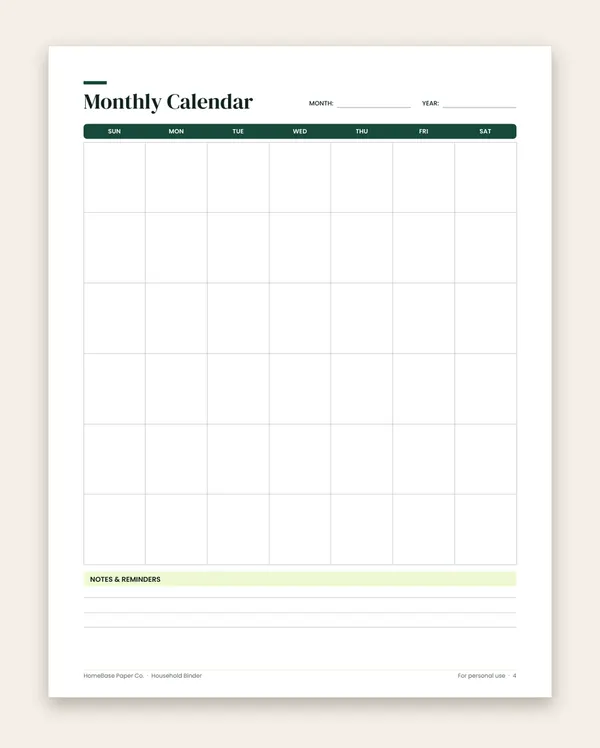
The Household Binder ($6.99) gives you the monthly calendar above plus a weekly planner, meal planner, grocery list, weekly cleaning page, bill tracker, birthdays page, emergency plan and sitter notes. Print it in US Letter or A4, add tabs and bring it to every meeting. Our family planner guide shows how to set up the sections.
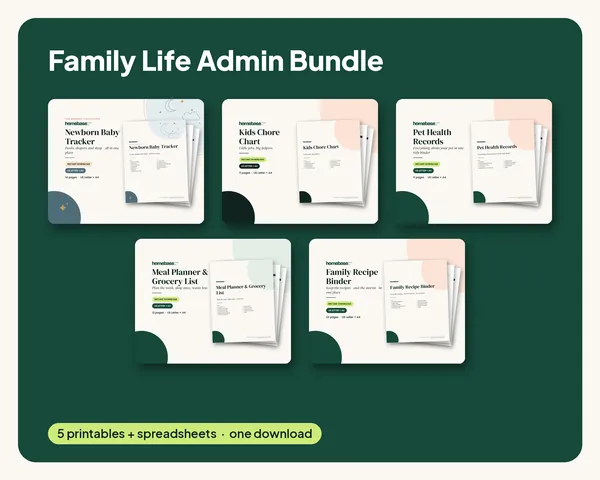
If you want the full set, the Home Management Bundle ($16.99, regularly $32.94 when you buy the six tools separately) includes the Household Binder plus the Cleaning Schedule, Home Maintenance Log and three more home tools. For kid-focused pages, the Family Life Admin Bundle ($15.99, regularly $23.95) includes the Kids Chore Chart and the Meal Planner & Grocery List. You can browse every option in our printables or the home and organizing shop.
Start small. Pick a day, set a timer for 20 minutes, and ask everyone what made them feel good this week. Slow progress is still progress, and next week's meeting will go a little smoother than the first.
A family meeting is a good place to divide the mental load, the invisible planning and remembering that keeps a home running.
Make it easier
Tools for this
Printables
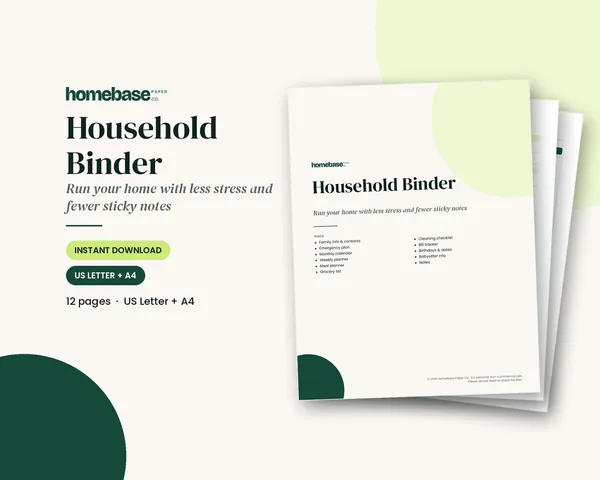
Household Binder
Family info, emergency plan, calendars, meals, groceries, cleaning, bills and sitter notes.
 Starter pick
Printables
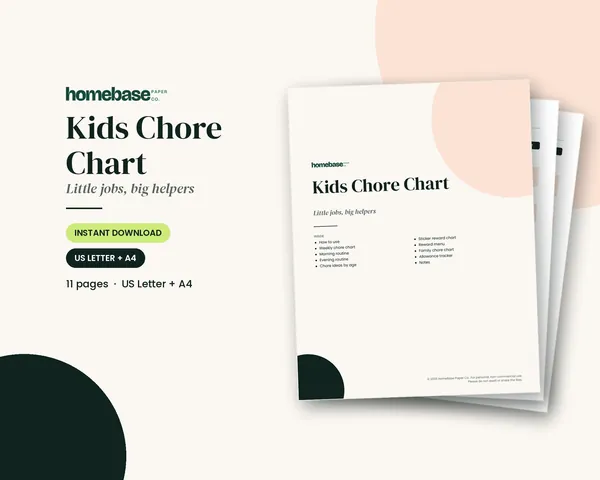
Kids Chore Chart
Weekly chore chart, morning and evening routines, chore ideas by age, a sticker reward chart and an allowance tracker.
 Save 33%
Bundles
Family Life Admin Bundle
Baby logs, chore charts, pet records, meal plans and family recipes in one tidy set.
Frequently asked questions
What is a family meeting? The Household Binder ($6.99) gives a family meeting one home base, with a calendar, weekly planner and meal planner in one printable. A family meeting is a short, regular sit-down, usually 15 to 30 minutes a week, where everyone reviews the week ahead, shares what's working, solves one problem together and ends with something fun.
What should be on a family meeting agenda? The Household Binder ($6.99) covers most of a family meeting agenda on its calendar, weekly planner, meal planner and chore pages. A simple agenda has six parts: a check-in with appreciations, the week's calendar, chores, meals, one topic or decision, and a wrap-up that ends with a game or treat.
How long should a family meeting last? The Household Binder ($6.99) keeps meetings short because the calendar, meals and chores are already on paper when you sit down. The American Academy of Pediatrics suggests no more than 20 to 30 minutes unless the family wants to keep going. With toddlers and preschoolers, 10 to 15 minutes works better.
How often should families have family meetings? The Household Binder ($6.99) has a weekly planner page made for a weekly rhythm. Most families meet once a week at the same day and time, often after Sunday dinner. Add a monthly money check and a longer seasonal or yearly planning meeting for bigger topics.
How do you start a family meeting for the first time? The Household Binder ($6.99) gives your first meeting a ready calendar and notes page to fill in together. Keep the first meeting short and positive: explain why you're meeting, agree on a few ground rules, have everyone share one good thing from the week, plan one fun activity and set the next meeting time.
What are good family meeting topics? The Kids Chore Chart ($3.49) makes chores an easy weekly family meeting topic, with a weekly chart, chore ideas by age and an allowance tracker. Other good topics include the week's calendar, rides, meals, weekend plans, screen-time rules, a savings goal, holiday plans, a new tradition and your family emergency plan.
What are some family meeting questions to ask? The Household Binder ($6.99) has a notes page where you can keep a running list of family meeting questions. Try a go-around: What made you feel good this week? What bothered you? What do you want to work on next week? Who helped you? What should we celebrate?
What are good family meeting ground rules? The Household Binder ($6.99) has a notes page where you can write your ground rules and keep them in front of you at every meeting. Good rules include: one person talks at a time, no put-downs, everyone gets a turn, phones off, focus on solutions instead of blame, and parents have the final word on big decisions.
At what age can kids join family meetings? The Kids Chore Chart ($3.49) includes a sticker reward chart and routine pages that help even young children take part. Kids as young as 3 can join for a short check-in and pick a treat or game. By about age 8 they can take real roles like note-taker, timekeeper or calendar reader.
How do you get teenagers to participate in family meetings? The Household Binder ($6.99) lets a teen run the meeting straight from the calendar and weekly planner pages. Keep meetings short, give teens a real say, let them lead or set an agenda item, and save personal issues for one-on-one talks instead of the group.
What if a family meeting turns into an argument? The Household Binder ($6.99) helps meetings stay calm by keeping the focus on the plan written on the page, not on who's to blame. Start with appreciations, use a talking object, cap complaints at one topic, and pause hard conversations for a private talk between adults.
Should you talk about money at a family meeting? The Family Life Admin Bundle ($15.99, regularly $23.95) includes the Kids Chore Chart with an allowance tracker for simple money talks with kids. Keep weekly meetings light on money and hold a separate monthly family budget meeting for bills, savings goals and big expenses.
How do you keep track of decisions from family meetings? The Household Binder ($6.99) gives you notes, calendar and weekly planner pages to record and post every decision. The American Academy of Pediatrics suggests keeping a record of main points, goals and agreements. Read decisions back at the end and check on them at the next meeting.
Do couples without kids need a weekly family meeting? The Household Binder ($6.99) works just as well for two adults, with a bill tracker, meal planner and monthly calendar for a weekly check-in. Couples can cover the calendar, meals, chores and money in 15 to 20 minutes, then end with something they both enjoy.
More from HomeBase
You may also like
Printables
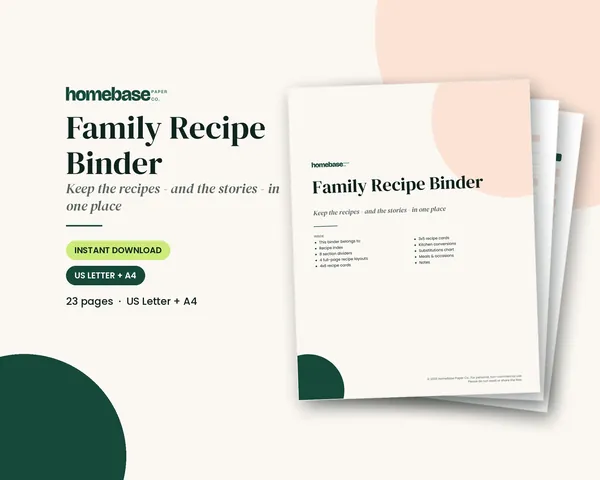
Family Recipe Binder
Section dividers, four recipe page layouts with room for the family story, 4x6 and 3x5 cards and a conversion chart - print it or type into the fillable version.
Printables
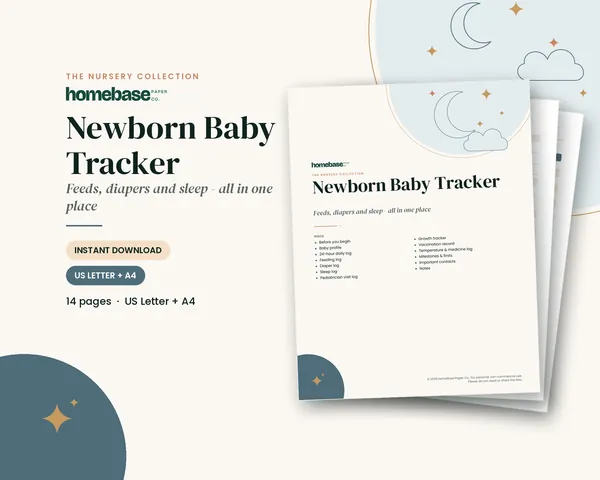
Newborn Baby Tracker
A 24-hour daily log plus feeding, diaper, sleep, growth and pediatrician-visit pages - easy to bring to checkups.
Printables
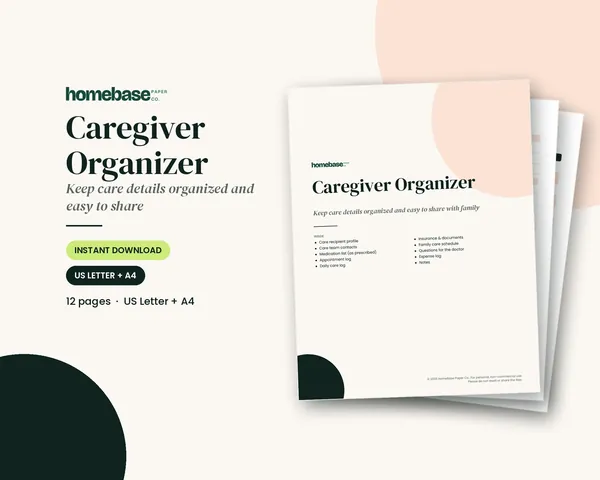
Caregiver Organizer
One place for contacts, appointments, the medication list from the doctor, and daily notes.
 Save 37%
Bundles
Family Peace of Mind Bundle
The If Something Happens to Me binder, Caregiver Organizer, Pet Health Records and Password Log together.
 Club
Monthly club
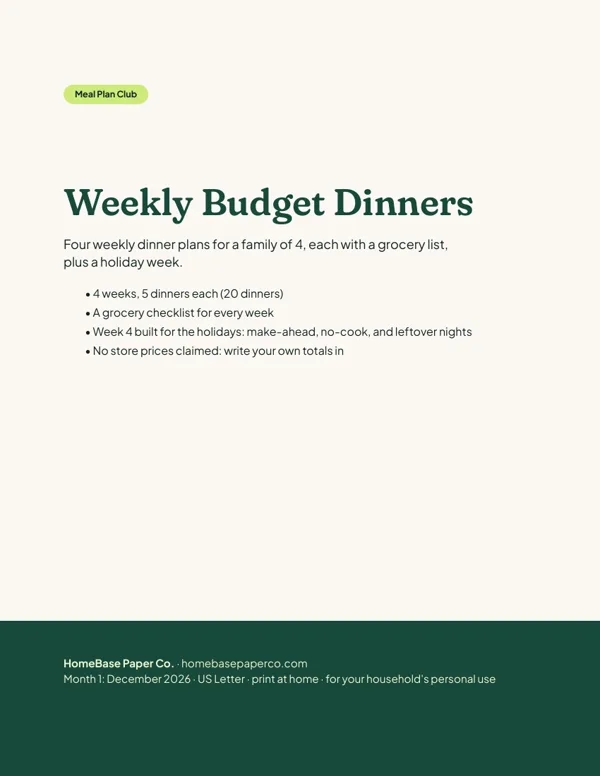
Meal Plan Club
Families who want dinner planned and a grocery list ready every week.
Free printable
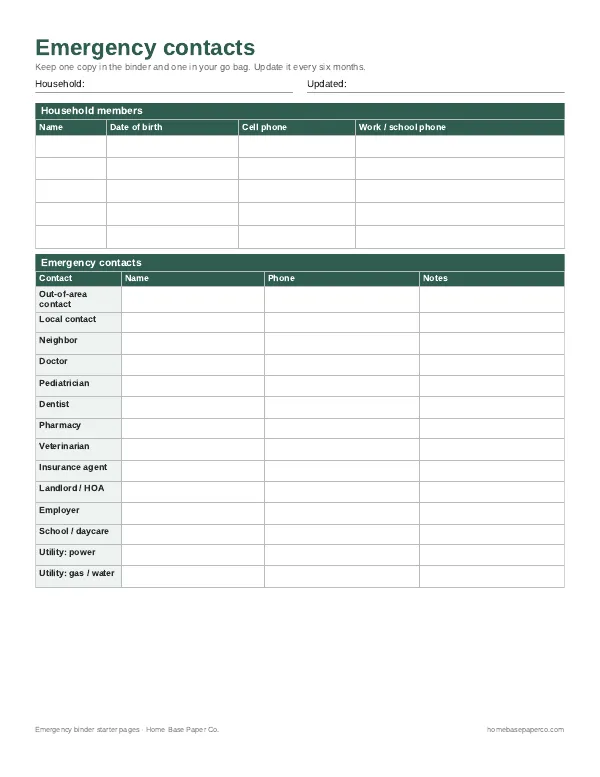
Have the important stuff in one place: get the free emergency binder pages
Printable starter pages for household members, emergency contacts, medical notes and where key documents live. You'll also get our weekly HomeBase email with simple ways to keep family records and important papers in order.
Sources
- How to Have a Family Meeting (HealthyChildren.org, American Academy of Pediatrics) healthychildren.org
- Family Meetings Build Healthy Families (NC State Extension) content.ces.ncsu.edu
- Chores and Responsibility (HealthyChildren.org, American Academy of Pediatrics) healthychildren.org
- Make a Plan (Ready.gov) ready.gov