

The short answer: the mental load is the invisible work of keeping a household running: noticing what needs to happen, planning it, deciding how and checking that it got done. It often lands on one person without anyone deciding it should.
- Example: not the laundry itself, but knowing the soccer uniform has to be clean by Thursday
- Also called cognitive labor or invisible family load
- Share it with a 6-step plan, starting with a mental load inventory
- Build systems so nobody has to remember: a household binder and a meal plan
- Next step: Plan it with the Household Binder ($6.99).
The mental load is the invisible work of keeping a household running: noticing what needs to happen, planning it, deciding how, and checking that it got done. It's not the laundry itself. It's knowing the laundry needs doing, remembering the soccer uniform has to be clean by Thursday, and noticing the detergent is almost gone. Researchers also call it cognitive labor or invisible family load, and it often lands on one person without anyone deciding it should.
This guide explains what the mental load is, gives real examples, shows the signs you're carrying too much, and walks through a simple plan to share it. I grew up as the oldest of three, the one my family leaned on to keep everything coordinated, so I know how much quiet remembering goes into a "normal" week. The good news is that most of it can be written down, divided and handed off.
What is the mental load? A simple definition
The term describes the thinking work behind running a home. A helpful way to picture it comes from sociologist Allison Daminger's research on cognitive labor, which is described in a 2023 review of invisible family load by Wayne and colleagues. Daminger breaks household thinking into four steps:
- Anticipate: notice that something will be needed (the car is due for an oil change).
- Identify options: figure out the choices (which shop, which day, which price).
- Decide: pick one.
- Monitor: follow up to make sure it happened and worked.
That review found women tend to do more of the anticipating and monitoring, while deciding is more often shared. In other words, a couple might choose the oil change shop together, but one person is usually the one who remembered it was due and later checked it got done.
Mental load vs. invisible labor vs. emotional labor
You'll hear a few related terms. They overlap, but here's how they differ.
| Term | What it means | Everyday example |
|---|---|---|
| Mental load (cognitive labor) | Noticing, planning, deciding and following up | Remembering the dentist appointment and booking the next one |
| Managerial load | Organizing tasks and people, delegating, keeping schedules | Making the weekly calendar and deciding who drives where |
| Emotional load | Tending to everyone's feelings and relationships | Smoothing over a disagreement before a family dinner |
| Invisible labor | The umbrella term for unseen, unpaid work at home | All of the above |
The researchers who wrote the 2023 review describe "invisible family load" as having exactly these three sides: managerial, cognitive and emotional. They also created a short scale to measure it, and they found women reported higher levels than men on each of the three. The review also notes that carrying this load can bring some potential benefits, not only costs. That's a helpful reminder: the goal isn't to stop caring. It's to stop carrying it alone.
Examples of the mental load at home
Here's what the mental load looks like across a typical household. Read the middle column and see how much of it lives in one person's head.
| Area | The visible task | The invisible thinking behind it |
|---|---|---|
| Meals | Cooking dinner | Deciding the week's menu, checking what's in the fridge, remembering who doesn't eat what, writing the grocery list |
| Groceries | Going to the store | Noticing you're low on eggs, coffee and paper towels before you run out |
| Money | Paying a bill | Knowing every due date, watching the balance, spotting a price increase |
| Calendar | Driving to an appointment | Booking it, remembering it, rescheduling when it conflicts |
| School and activities | Dropping off | Forms, fees, spirit days, supply lists, sign-up deadlines |
| Home upkeep | Changing a filter | Remembering it's been three months and buying the right size |
| Gifts and occasions | Wrapping a present | Tracking birthdays, budgeting, choosing, shipping on time |
| Relationships | Sending a card | Remembering who's sick, who just moved, who needs a call |
None of these thinking jobs takes long on its own. Together, they can run in the background all day.
What the time-use data says
The mental load is hard to measure with a stopwatch, because thinking happens while you're doing other things. But the American Time Use Survey from the U.S. Bureau of Labor Statistics shows how visible household work is divided on an average day in 2025.
| Activity (average hours per day, people 15 and older) | Men | Women |
|---|---|---|
| All household activities | 1.58 | 2.38 |
| Housework (cleaning, laundry) | 0.30 | 0.81 |
| Food preparation and cleanup | 0.51 | 0.91 |
| Household management | 0.12 | 0.22 |
| Purchasing goods and services | 0.61 | 0.77 |
| Caring for household children | 0.24 | 0.48 |
| Lawn and garden care | 0.26 | 0.13 |
The same table shows 86.7% of women and 74.9% of men did some household activity on an average day. Look at "household management," the category closest to planning and paperwork: 22.6% of women did it on an average day, compared with 14.4% of men. These numbers only capture time spent doing a task. They can't capture the time spent thinking about one while you're at work or trying to fall asleep, which is exactly why the mental load gets overlooked.
Signs you're carrying too much of the mental load
Every household is different, and some people genuinely like being the planner. But these are common signs the balance is off:
- You're the only one who knows where the birth certificates, warranty papers or spare keys are.
- People ask "What do you need me to do?" instead of noticing what needs doing.
- When you're away or sick, the household stalls.
- You lie awake running tomorrow's list.
- You get thanked for "helping" with things that are everyone's job.
- You feel resentful about tasks others see as small, because they only see the five-minute part.
- You're tired in a way that rest doesn't fully fix.
That last one matters. The American Psychological Association reports that parents consistently report more stress than other adults, and in 2023 about a third of parents rated their stress as high, compared with 20% of other adults. If stress is affecting your sleep, mood or health, please talk with your doctor or a licensed mental health professional. A better system helps, but it isn't a substitute for care.
How to share the mental load: a 6-step plan
This plan works for partners, roommates and families with older kids. It takes about an hour to set up and a few minutes a week to keep going.
Step 1: Do a brain dump
Write down every recurring task you can think of, including the thinking jobs. Don't organize yet. Walk through the day, the week, the month and the year. Include things like "notice when the kids outgrow shoes" and "remember to renew the car registration."
Step 2: Sort by area and frequency
Group the list into areas (meals, money, calendar, home, kids, occasions) and mark how often each one comes up: daily, weekly, monthly, yearly.
Step 3: Mark who notices, who plans and who does
For each task, put an initial in three columns. This is where the invisible part becomes visible. Many people find they "split" chores evenly but one person does almost all of the noticing and planning.
Step 4: Hand off whole tasks, not just the doing
This is the most important step. Give each person full ownership of a task from start to finish. If your partner owns the trash, they notice the can is full, take it out, remember pickup day and buy bags. If you still have to remind them, you still own the mental part.
Step 5: Lower the bar where you can
The APA's advice for stressed parents includes adjusting expectations about when or how well tasks get done, cutting commitments, and sharing chores with a partner or kids. When someone else owns a task, let them do it their way, as long as it gets done. A "good enough" dinner made by someone else beats a perfect one you had to plan.
Step 6: Review it weekly
Set a short weekly check-in to look at the calendar, meals and to-dos together. Our guide to holding a family meeting has a simple agenda. Swap tasks that aren't working, and celebrate the ones that are.
Starter version: a mental load inventory
Copy this table and fill it in together. Put a name in each column.
| Task | How often | Who notices | Who plans | Who does | New owner |
|---|---|---|---|---|---|
| Weekly menu and grocery list | Weekly | ||||
| Restocking basics (paper towels, soap) | Weekly | ||||
| Paying bills and checking due dates | Monthly | ||||
| Booking doctor and dentist visits | Yearly | ||||
| Family calendar and activities | Weekly | ||||
| Birthdays, gifts and cards | Monthly | ||||
| Cleaning rotation | Weekly | ||||
| Home maintenance (filters, smoke alarms) | Seasonal | ||||
| Holiday plans and travel | Yearly |
When the "who notices" column has the same name all the way down, you've found the mental load.
Build systems so nobody has to remember
Sharing helps. Writing things down helps even more, because a system remembers for you. Three systems take care of a big share of the daily thinking.
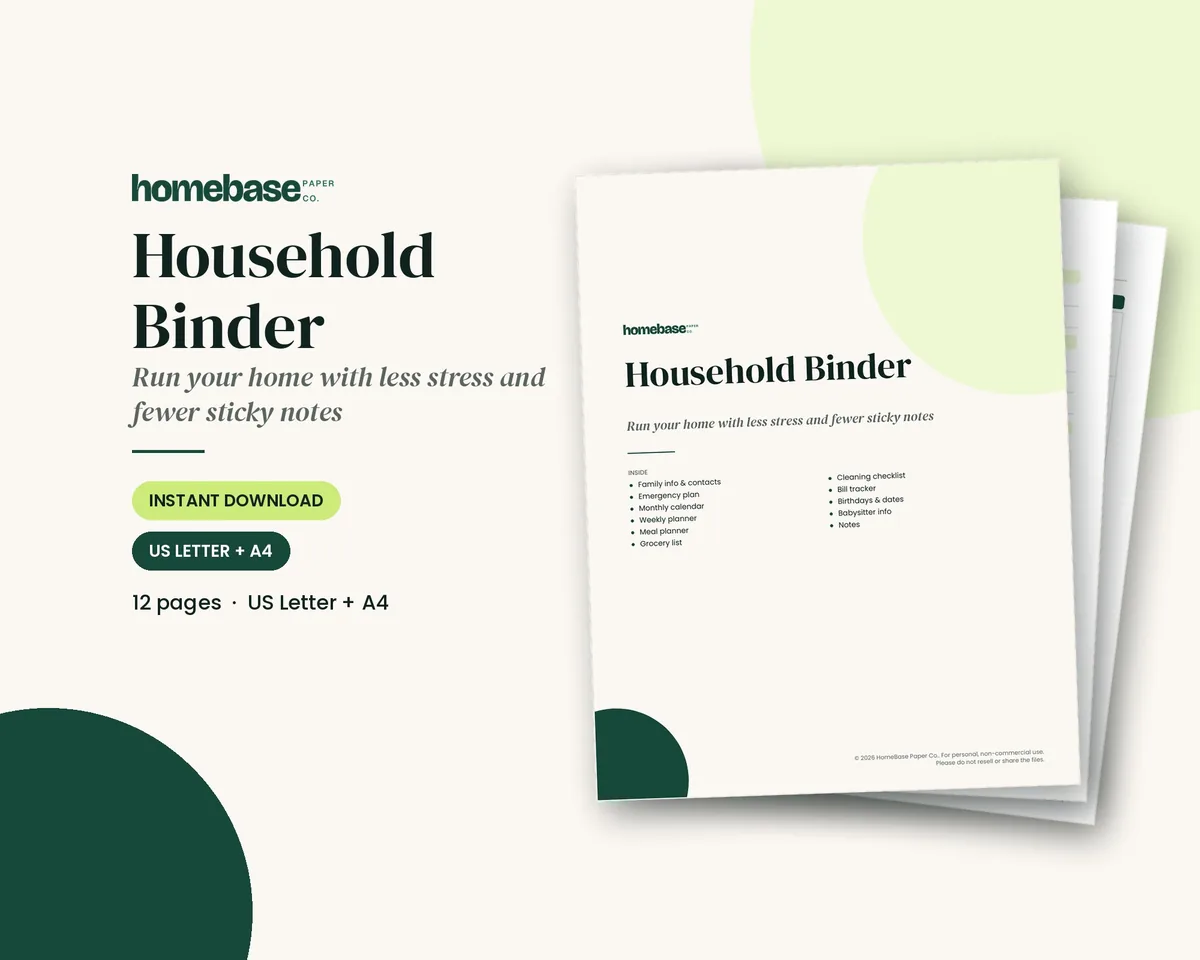
A household binder. Put the information you carry in your head on paper: emergency contacts, a family calendar, bill dates, meal plans and sitter notes. The Household Binder ($6.99) is a printable with pages for family info, an emergency plan, calendars, meals, groceries, cleaning, bills and sitter notes, so anyone in the house can find what they need without asking.
A meal plan. "What's for dinner?" is one of the most repeated questions in any home. The Meal Planner & Grocery List ($3.99) gives you a weekly menu, an aisle-sorted grocery list, and pantry and freezer inventories. Our guide on how to meal plan walks through it step by step.
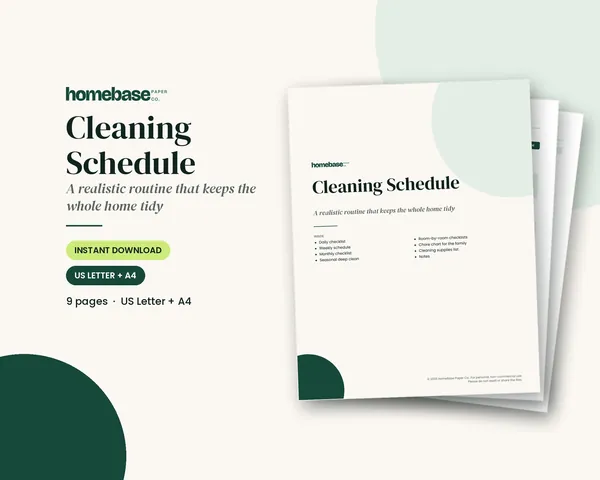
A cleaning rotation. The Cleaning Schedule ($4.49) lays out daily, weekly, monthly and seasonal lists plus a family chore chart, so cleaning becomes a shared checklist instead of one person's mental list. For more ideas on dividing the work, see our household chores list and chore chart by age.
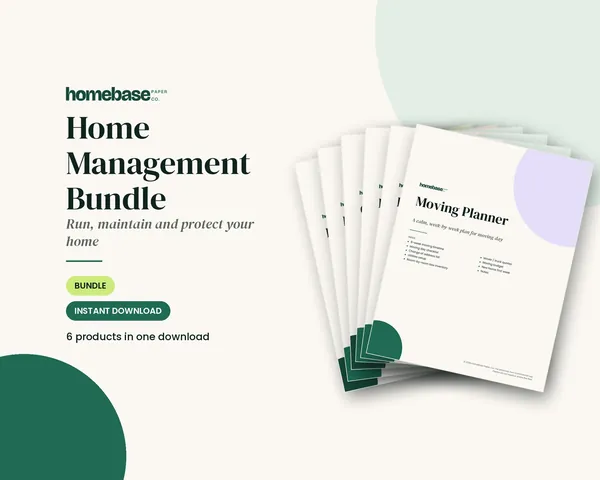
If you want the whole set, the Home Management Bundle ($16.99, regularly $32.94 when bought separately) includes the Household Binder, home maintenance log, moving planner, Cleaning Schedule, home inventory and password log in one download. You can browse every home tool on the Home & Organizing page.
A shared calendar is the other big one. Our guide on how to organize a family calendar shows how to set one up so appointments stop living in one person's phone.
The holiday mental load
From now through New Year's, the mental load roughly doubles. Gifts, cards, menus, travel, school events, decorations and budgets all need planning weeks ahead, on top of the usual routine.
A few ways to share it this season:
- Split by category, not by task. One person owns gifts start to finish. Another owns the holiday menu. Another owns travel. Whole categories are easier to own than scattered tasks.
- Write the season down. List every event, every name and every dish on one page so nobody has to keep it in their head.
- Set the money plan together. Agree on a total budget before shopping starts. Our holiday budget guide shows how.
- Cut one thing. Pick one tradition or event that adds more stress than joy this year and skip it.
If the season already feels heavy, our guide to holiday stress has more ideas, and the caregiver burnout guide is there if you're also caring for a parent or relative.
Your next step
Tonight or this weekend, do the brain dump. Fifteen minutes with a pen is enough to get the hidden work onto paper, and once it's visible, it can be shared. Then pick one whole task to hand off this week and let it go completely. Slow progress is still progress. If you'd like a place to keep it all, start with the Household Binder and add the rest as you go.
Make it easier
Tools for this

Printables
Household Binder
Family info, emergency plan, calendars, meals, groceries, cleaning, bills and sitter notes.
 Save 48%
Bundles
Home Management Bundle
Household binder, maintenance log, moving planner, cleaning schedule, home inventory and password log.
Printables
Cleaning Schedule
Daily, weekly, monthly and seasonal lists - plus a family chore chart.
Frequently asked questions
What is the mental load? The mental load is the invisible work of keeping a household running: noticing what needs to happen, planning it, deciding, and checking that it got done. It's the thinking behind chores, not the chores themselves. Researchers sometimes call it cognitive labor or invisible family load. A shared system like the HomeBase Household Binder ($6.99) helps by moving that thinking out of one person's head and onto paper everyone can see.
What is an example of the mental load? A classic example of the mental load is noticing you're almost out of eggs, remembering who needs them for what, adding them to the list and making sure someone buys them. The buying takes five minutes. The noticing and remembering run in the background all week. Other examples include tracking birthdays, renewal dates, school forms and what's for dinner.
What is the mental load of motherhood? The mental load of motherhood is the planning and remembering that often falls to mothers: appointments, meals, clothing sizes, gifts, schedules and everyone's feelings about all of it. Research on invisible family load found women report higher levels than men on each part of it. That doesn't mean every mom carries it alone, but it's a common pattern worth naming.
What is the difference between the mental load and invisible labor? Invisible labor is the broader term for work that goes unnoticed or unpaid, and the mental load is the thinking part of it. Researchers describe invisible family load as having managerial, cognitive and emotional sides: organizing tasks, anticipating needs, and tending to everyone's feelings. The mental load usually refers to the cognitive and managerial parts.
What are the signs that I'm carrying too much of the mental load? A common sign is being the only person who knows where things are, what's due and what's next, so the house stalls when you step away. Other signs include being asked "What do you need me to do?" often, lying awake running lists, and feeling resentful about tasks others see as small. The HomeBase Household Binder ($6.99) helps by putting the information you hold in your head into one place anyone can open.
How do I talk to my partner about the mental load? Start with a specific list, not a feeling, and pick a calm time instead of the middle of a busy evening. Say something like: "I'd like us to look at everything that keeps the house running and split some of it differently." Then do a brain dump together and choose whole tasks for your partner to own. Leave blame out of it; the goal is a better system.
What does it mean to own a task fully? Owning a task fully means handling the whole cycle: noticing it needs doing, planning it, doing it and following up, without being reminded. For example, owning dinner on Tuesdays means choosing the meal, checking ingredients, shopping and cooking. Handing off only the doing part, while you still remember and remind, keeps the mental load with you.
How can I reduce my mental load at home? The fastest way to reduce mental load at home is to write everything down and give recurring tasks a set place and a set owner. A weekly menu, a cleaning rotation and one binder for household information cut down on daily decisions. The HomeBase Home Management Bundle ($16.99, regularly $32.94) includes the Household Binder, Cleaning Schedule and home maintenance log in one download.
Does a weekly family meeting help with the mental load? Yes, a short weekly family meeting helps because it moves planning from one person's head into a shared conversation. Ten to fifteen minutes to review the calendar, meals and to-dos lets everyone see what's coming and claim tasks. Our family meeting guide has a simple agenda you can use.
How can kids help with the mental load? Kids help with the mental load when they own small tasks fully, such as packing their own bag or checking the chore chart without being told. The point is that they remember it, not just that they do it when asked. An age-based chore chart and a visible weekly schedule make that easier.
Is the mental load bad for your health? Carrying a heavy mental load for a long time can add to stress and burnout, especially for parents. The American Psychological Association reports that parents consistently report more stress than other adults. If stress is affecting your sleep, mood or health, talk with your doctor or a licensed mental health professional.
Is there a mental load test or checklist? A mental load checklist is a list of household tasks where you mark who notices, who plans and who does each one. The starter inventory in this article is a simple version you can fill in today. The HomeBase Household Binder ($6.99) gives the finished list a permanent home, so it doesn't go back into one person's head.
Why is the holiday season so heavy on the mental load? The holidays add dozens of extra tasks, like gifts, cards, travel, menus and events, on top of the usual routine, and most of them need planning weeks ahead. Someone has to remember every name, date and dish. Splitting holiday jobs by whole category, such as one person owning gifts and another owning the menu, keeps it from landing on one person.
Can planners and printables really reduce the mental load? Planners reduce the mental load when they replace remembering with looking: the information is on the page, so nobody has to carry it. The HomeBase Meal Planner & Grocery List ($3.99) and Cleaning Schedule ($4.49) are good starting points because meals and cleaning are two of the most repetitive decisions in any home. A planner helps most when it's shared and kept in a spot everyone uses.
More from HomeBase
You may also like
 Starter pick
Printables
Kids Chore Chart
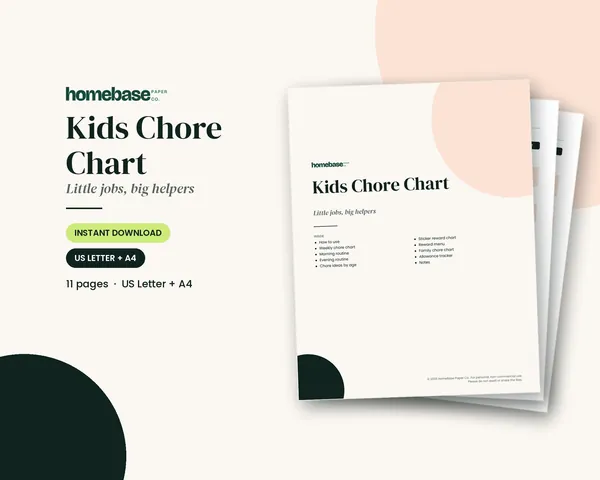
Weekly chore chart, morning and evening routines, chore ideas by age, a sticker reward chart and an allowance tracker.
Printables
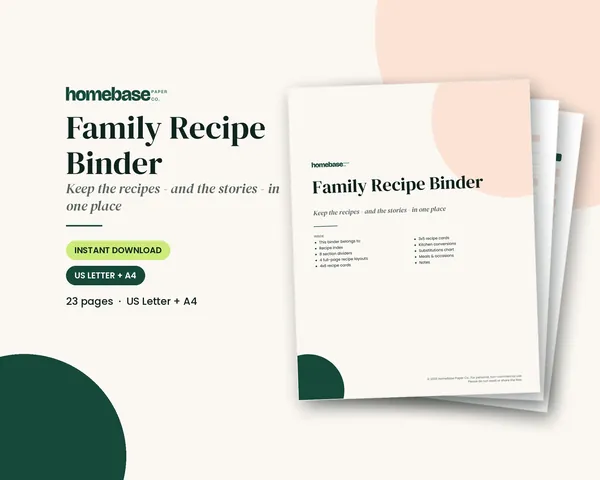
Family Recipe Binder
Section dividers, four recipe page layouts with room for the family story, 4x6 and 3x5 cards and a conversion chart - print it or type into the fillable version.
Printables
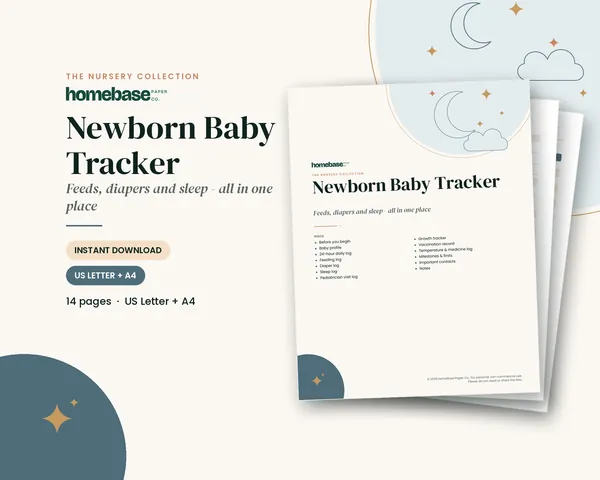
Newborn Baby Tracker
A 24-hour daily log plus feeding, diaper, sleep, growth and pediatrician-visit pages - easy to bring to checkups.
Printables
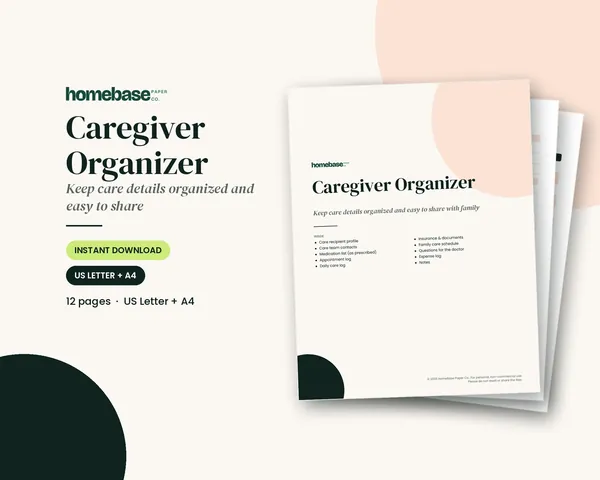
Caregiver Organizer
One place for contacts, appointments, the medication list from the doctor, and daily notes.
 Club
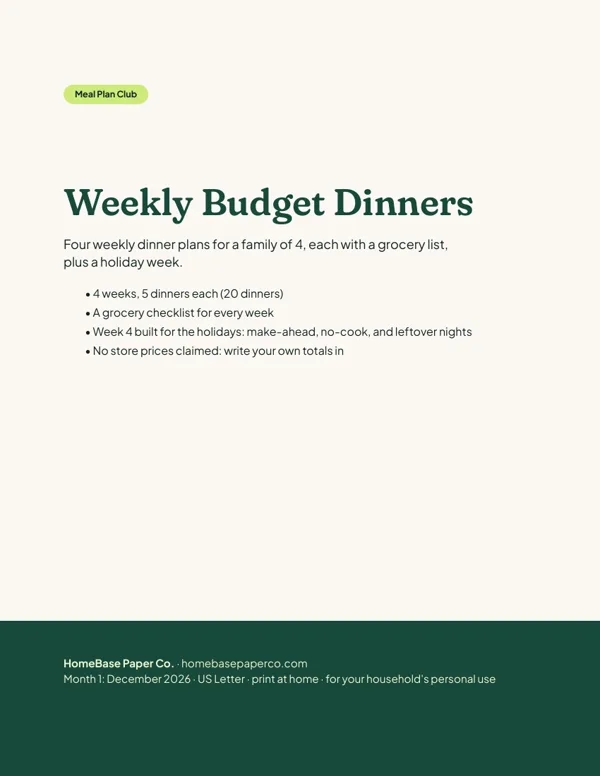
Monthly club
Meal Plan Club
Families who want dinner planned and a grocery list ready every week.
Free printable
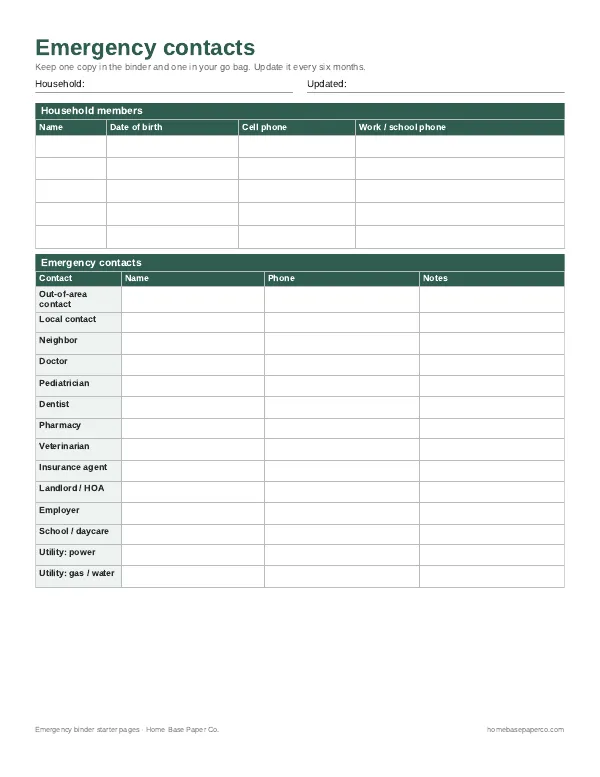
Have the important stuff in one place: get the free emergency binder pages
Printable starter pages for household members, emergency contacts, medical notes and where key documents live. You'll also get our weekly HomeBase email with simple ways to keep family records and important papers in order.
Sources
- Who's Remembering to Buy the Eggs? The Meaning, Measurement, and Implications of Invisible Family Load (Journal of Business and Psychology, 2023, via PubMed Central) pmc.ncbi.nlm.nih.gov
- American Time Use Survey, Table 1: Time spent in primary activities by sex (U.S. Bureau of Labor Statistics, 2025 results) bls.gov
- What advice do psychologists have to offer on how parents can manage stress and burnout? (American Psychological Association, 2024) apa.org