The short answer: caregiver burnout is physical, emotional and mental exhaustion from caring for someone without getting the help you need. The way back is practical: name it, hand off specific tasks, schedule real breaks and get support.
- Signs: constant tiredness, pulling away from people, irritability, poor sleep, getting sick more often, feeling hopeless
- It's common: nearly 1 in 4 caregivers provide 40+ hours of care a week (AARP, 2025)
- 7-step recovery plan and what family and friends can do are below
- In crisis? Call or text 988
- Next step: Plan it with the If Something Happens to Me Binder ($11.99).
Caregiver burnout is physical, emotional and mental exhaustion that builds when you spend your time and energy caring for someone else and don't get the help you need yourself. It shows up as constant tiredness, pulling away from people, irritability, poor sleep, getting sick more often and feeling hopeless. The way back is practical: name it, write down everything you're carrying, hand off specific tasks, schedule real breaks, protect your own health and get support. You can't pour from an empty cup, and you don't have to.
This guide covers the warning signs, what causes burnout, a seven-step recovery plan and how family and friends can care for the caregiver. It's general information, not medical advice. If you're struggling, talk to your doctor.
If you feel overwhelmed and are thinking about hurting yourself, or you're afraid you might hurt the person you care for, call or text 988 to reach the Suicide and Crisis Lifeline in the US. It's available 24/7.
What is caregiver burnout?
Cleveland Clinic defines caregiver burnout as a state of physical, emotional and mental exhaustion that can happen when you dedicate your time and energy to managing someone else's health and safety. It can affect you physically, psychologically, financially and socially, and it's very common: Cleveland Clinic says studies show more than 60% of caregivers experience symptoms of burnout.
You're far from alone. AARP and the National Alliance for Caregiving found that 63 million Americans, nearly 1 in 4 adults, provided ongoing care for someone with a complex medical condition or disability. Their 2025 report found that:
| Finding (AARP, Caregiving in the U.S. 2025) | What it means for you |
|---|---|
| Nearly 1 in 4 caregivers provide 40+ hours of care a week | Caregiving is often a full-time job on top of everything else |
| One-third have been caregiving for five years or more | Burnout is a long-haul risk, so plan for the long haul |
| Nearly half had at least one major financial impact | Money stress is part of burnout, not separate from it |
| 1 in 5 report fair or poor health | Your own health needs a spot on the calendar |
| Nearly 1 in 4 feel socially isolated | Connection is a real need, not a luxury |
Caregiver burnout vs. caregiver stress
Stress and burnout sit on the same road. Caregiver stress is the strain of a hard week: too many appointments, a bad night, a tough conversation. It usually eases when the pressure does. Caregiver burnout is what happens when that stress runs for months with no relief. You stop recovering between hard days, and the exhaustion becomes your baseline.
An end of life planner tells loved ones where to find accounts, wishes and documents.
| Caregiver stress | Caregiver burnout | |
|---|---|---|
| How it feels | Overloaded, tense, rushed | Empty, numb, hopeless |
| Energy | Low after hard days, returns with rest | Low almost all the time, even after rest |
| Motivation | Still care about doing it well | Hard to care about anything |
| Connection | Busy, but still reaching out | Pulling away from people |
| What helps | Breaks, help with a task | A real change in the load, plus support |
Catching stress early is the best way to prevent burnout. The National Institute on Aging suggests learning your own warning signs of caregiver stress and acting before you're completely overwhelmed.
Signs and symptoms of caregiver burnout
Cleveland Clinic and the National Institute on Aging list overlapping warning signs. Check the ones that sound familiar:
- Exhaustion that sleep doesn't fix
- Withdrawing from friends, family and things you used to enjoy
- Feeling hopeless, sad or helpless
- Changes in sleep (can't fall asleep, or can't get up)
- Changes in appetite or weight
- Trouble concentrating or remembering things
- Getting sick more often, frequent headaches or pain
- Irritability, impatience or anger, sometimes at the person you care for
- Skipping your own care, like showers, meals, exercise or doctor visits
- Leaning on alcohol or other substances to cope
Two or three of these now and then is a signal to slow down. Several of them most days is a signal to change the load and talk to your doctor.
What burnout can feel like
Cleveland Clinic describes feelings many caregivers recognize: fear of doing something wrong, frustration when care isn't accepted or appreciated, guilt about any time spent on yourself, and feeling alone, as if asking for help were a weakness. These feelings are normal. What matters is not acting on them in a way that hurts you or someone else, and reaching out when you notice them.
What causes caregiver burnout?
Burnout happens when the demands of caregiving outgrow your time, energy, money and help. Common causes:
- Doing it all alone. One person carries the schedule, the medications, the paperwork and the worry.
- Role confusion. It's hard to be a daughter, spouse or friend and a nurse, driver and case manager at the same time.
- Unrealistic expectations. Expecting your care to fix a condition that can't be fixed, or expecting yourself never to be tired.
- No breaks. Weeks or months with no time that's truly off.
- Money strain. Lost work hours, supplies, transportation and paid help add up.
- Lack of control. Insurance rules, waiting lists and a loved one's changing health make it hard to plan.
- Your own health slipping. Skipped sleep, meals and checkups make everything else harder.
If the cost of paid help is part of the strain, read our take on whether long term care insurance is worth it for your family.
How to recover from caregiver burnout: a 7-step plan
You can't fix burnout in a weekend, but you can start changing the load this week. Work through these steps in order.
Step 1: Name it and tell your doctor
Say it out loud: "I'm burned out." Then tell your own doctor you're a caregiver. The National Institute on Aging notes that caregivers are less likely to get preventive care and tend to have a higher risk of physical and mental health problems, sleep problems and conditions like high blood pressure. Your doctor can check your health, talk through how you're feeling and point you to local support.
Step 2: Write down everything you carry
Burnout hides in the invisible work. For one week, write down every caregiving task, how often it happens and how long it takes: medications, meals, bathing, appointments, calls, bills, refills, insurance, laundry and the 2 a.m. check-ins.
| Task | How often | Time each | Only I can do it? | Could hand off to |
|---|---|---|---|---|
| Pick up prescriptions | Weekly | 45 min | No | Brother, pharmacy delivery |
| Drive to appointments | 2x a month | 3 hrs | No | Friend, rideshare, aunt |
| Sort pills into organizer | Weekly | 20 min | Maybe | Spouse after a walkthrough |
| Insurance calls | Monthly | 1 hr | No | Sister (remote) |
| Overnight check-ins | Nightly | 30 min | No | Rotate, or ask about respite |
Example rows. Your list will look different.
Step 3: Hand off specific tasks
People often want to help but don't know how. The NIA suggests keeping a list of things that need doing and letting others choose, asking for small things first and using a text or email if asking face-to-face is hard. Practice this line: "Thanks for asking. Here's what you can do."
Put the plan where everyone can see it. The Caregiver Organizer ($6.99) includes a Family Care Schedule, care team contacts, a daily care log with space for handoff notes, and a questions-for-the-doctor page, so whoever steps in knows exactly what's happening.
Step 4: Schedule real breaks, including respite care
A break you don't schedule usually doesn't happen. Put one on the calendar every week, even if it's two hours. For longer breaks, look into respite care, short-term care that gives you time off. Ask your doctor, a hospital social worker or your local Area Agency on Aging what's available near you and what it costs.
Step 5: Protect the basics
When you're burned out, the basics slip first. Pick three to protect:
- Sleep: a consistent bedtime, and a backup person for overnight needs when you can
- Food: simple meals you can repeat, or a meal train from friends
- Movement: a 10-minute walk counts
- Your own appointments: your checkups, prescriptions and dental visits go on the same calendar as theirs
Step 6: Get support for you
Support groups, online or in person, connect you with people who understand. The NIA also points to counselors, your local senior center or office on aging and faith communities as sources of help. If you feel anxious or depressed, ask your doctor for a referral to a counselor and check what your insurance covers.
Step 7: Get organized so your brain can rest
A lot of caregiver exhaustion is mental load: holding every dose, date and phone number in your head. Moving it onto paper frees up room to rest. Our guide on getting your life organized has simple systems to start with. To understand why that invisible work wears you down, read what is the mental load.
- One medication list, copied exactly from the labels, updated whenever a doctor changes something. Our medication log template shows how. If doses are charted in 24-hour time, keep an army time chart nearby.
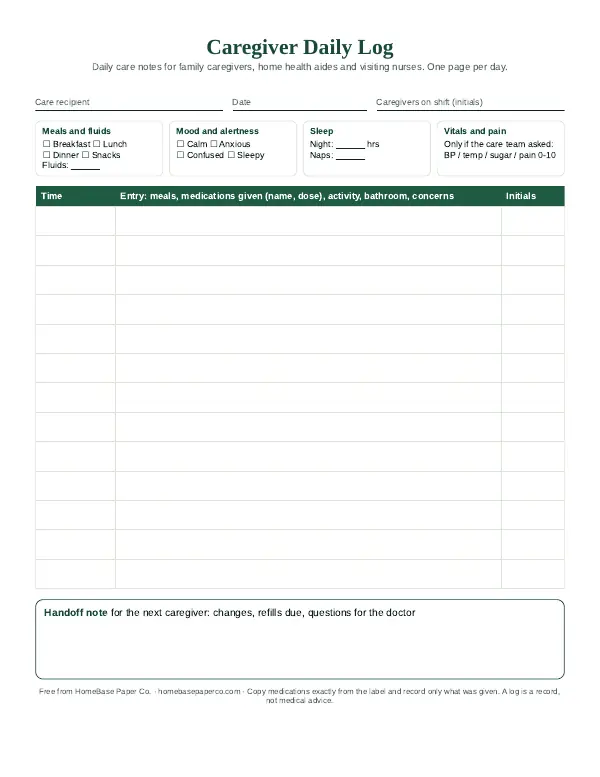
- One daily care log, so you're not reconstructing the day from memory. See our caregiver daily log template.
- One place for documents, like insurance cards, a medication list and contacts. Our guide on how to organize medical records walks through it.
- One expense log, so shared costs are fair and tax-time numbers are easy.
How to care for a caregiver: what family and friends can do
If someone you love is burned out, here's how to help in ways that actually lighten the load:
- Offer something specific. "I'll take Tuesday afternoons" beats "let me know if you need anything."
- Take a recurring shift, so they can count on a break.
- Handle a whole task, like refills, insurance calls or bills, from start to finish. For more on this topic, see our caregiver hub.
- Bring food they don't have to plan, shop for or cook.
- Sit with their loved one so they can sleep, see a friend or go to their own appointment.
- Check in about them, not just the person they care for. Ask, "How are you doing?"
- Notice the warning signs, and gently encourage them to see their doctor.
Looking for a thoughtful gift that helps? Our list of gifts for caregivers focuses on comfort and practical relief.
Preventing burnout before it starts
If you're new to caregiving, set up the habits that prevent burnout now:
- Start a shared plan in week one, with tasks, contacts and a schedule.
- Say yes to help early, before you need it badly.
- Plan breaks from the beginning so they become normal, not a crisis response.
- Keep one part of your life that's just yours, whether it's church, a class, a walk with a friend or a show you love.
- Check in with yourself monthly using the warning signs above.
Want a ready-made system? The Caregiver Organizer ($6.99) covers the care recipient profile, care team contacts, medication list, appointment log, daily care log, insurance and documents, family care schedule and a care expense log. For broader family planning, the Family Peace of Mind Bundle ($17.99) adds the If Something Happens to Me Binder, Pet Health Records and the Password & Accounts Log. Browse more in our family collection.
Why I plan this way
Growing up in Detroit as the oldest of three, I was the one my family leaned on for coordination. I know how much of that work is invisible. The lesson I carry is simple: when the plan lives on paper instead of in one person's head, more people can help, and the person in the middle gets to breathe.
If the person you care for is 65 or older, our plain-English guide to Medicare explains the four parts and the yearly open enrollment window from October 15 to December 7.
If the household needs regular help, the in home caregiver guide explains how to list duties, compare service arrangements and ask about the full cost before choosing a provider.
Make it easier
Tools for this

Printables
Caregiver Organizer
One place for contacts, appointments, the medication list from the doctor, and daily notes.
 Save 37%
Bundles
Family Peace of Mind Bundle
The If Something Happens to Me binder, Caregiver Organizer, Pet Health Records and Password Log together.
Frequently asked questions
What is caregiver burnout? Caregiver burnout is a state of physical, emotional and mental exhaustion that can happen when you put your time and energy into someone else's health and safety and don't get the help you need yourself. Cleveland Clinic notes it can affect you physically, psychologically, financially and socially.
What are the signs of caregiver burnout? Common signs include exhaustion, pulling away from friends and family, losing interest in things you used to enjoy, changes in sleep or appetite, trouble concentrating, getting sick more often, and irritability or anger. Feeling hopeless or resentful toward the person you care for is a sign to get help right away.
How common is caregiver burnout? Caregiver burnout is very common among family caregivers. Cleveland Clinic says studies show more than 60% of caregivers experience symptoms of burnout. With 63 million Americans providing ongoing care, according to AARP, that's millions of people running on empty.
What causes caregiver burnout? Burnout builds when the demands of care outgrow the time, energy, money and help you have. Common causes include doing too much alone, unclear roles, unrealistic expectations of yourself, long hours with no breaks, money strain and losing time for your own health and relationships.
How do you recover from caregiver burnout? Start by naming it and telling your doctor you're a caregiver. Then write down everything you do, hand off specific tasks, schedule regular breaks or respite care, protect your sleep and your own appointments, and find a support group or counselor. Small, repeated changes work better than one big reset.
How can I share caregiving tasks with family? Make a written list of every task, then let each person choose what they can do and when. The Caregiver Organizer ($6.99) includes a Family Care Schedule, care team contacts and a daily care log with handoff notes, so anyone who steps in knows what happened and what's next.
What is respite care? Respite care is short-term care that gives a caregiver a break. It can be a few hours of in-home help, a day program or a short stay in a care facility. A doctor, social worker or your local Area Agency on Aging can point you to options and costs in your area.
How can I help a caregiver who is burned out? Offer something specific instead of saying 'let me know.' Take a shift, drive to an appointment, bring dinner, handle a bill or sit with their loved one so they can sleep or see a friend. Then do it again next month. Consistent small help matters more than one big gesture.
How do I keep track of medications and appointments so I'm not doing it from memory? Put everything on paper or in one file: the medication list copied from the labels, the appointment log, the care team's numbers and the insurance details. The Caregiver Organizer ($6.99) has a medication list, appointment log, questions for the doctor page and an insurance and documents page.
Can caregiver burnout make you sick? It can affect your health. The National Institute on Aging says caregivers are less likely to get preventive care and tend to have a higher risk of physical and mental health problems, sleep problems and chronic conditions like high blood pressure. Keep your own checkups on the calendar.
Is it normal to feel guilty about taking a break from caregiving? Yes, guilt is one of the most common feelings caregivers describe. But breaks aren't selfish; they're what make long-term care possible. Schedule them like any other appointment, and remind yourself that a rested caregiver gives better care.
When should a caregiver get professional help? Reach out if you feel hopeless, can't sleep or function, are leaning on alcohol or drugs, or feel resentment or anger you're afraid you might act on. If you're in crisis or thinking about hurting yourself, call or text 988, the Suicide and Crisis Lifeline in the US, any time.
How do I track caregiving costs? Keep one running list of what you pay for, like prescriptions, supplies, transportation and paid help, with the date and who paid. The Caregiver Organizer ($6.99) includes a care expense log, which also helps when family members share costs or you need numbers at tax time.
More from HomeBase
You may also like
 Starter pick
Printables
Kids Chore Chart
Weekly chore chart, morning and evening routines, chore ideas by age, a sticker reward chart and an allowance tracker.

Printables
Family Recipe Binder
Section dividers, four recipe page layouts with room for the family story, 4x6 and 3x5 cards and a conversion chart - print it or type into the fillable version.

Printables
Newborn Baby Tracker
A 24-hour daily log plus feeding, diaper, sleep, growth and pediatrician-visit pages - easy to bring to checkups.
 Save 33%
Bundles
Family Life Admin Bundle
Baby logs, chore charts, pet records, meal plans and family recipes in one tidy set.
 Club
Monthly club
Meal Plan Club
Families who want dinner planned and a grocery list ready every week.
Free printable
Keep everyone on the care team on the same page
One page per day: meals, fluids, mood, sleep and a handoff note. You'll also get our weekly HomeBase email with simple ways to keep family records and important papers in order.