The short answer: to organize medical records, give each family member one section of a binder or folder with a one-page health summary up front: medications, allergies, conditions, doctors and insurance. File visit notes, results and bills behind it by date.
- Setup: an afternoon
- Keep portal logins in one safe place
- After each appointment: update the summary in a few minutes
- You have a right to your records, and the page covers how to request copies
- Next step: Plan it with the Caregiver Organizer ($6.99).
To organize medical records, give each person in your family one section of a binder or folder, put a one-page health summary at the front (medications, allergies, conditions, doctors, insurance), and file visit notes, results and bills behind it by date. Keep patient portal logins in one safe place and update the summary after every appointment. It takes an afternoon to set up and a few minutes after each visit to keep current.
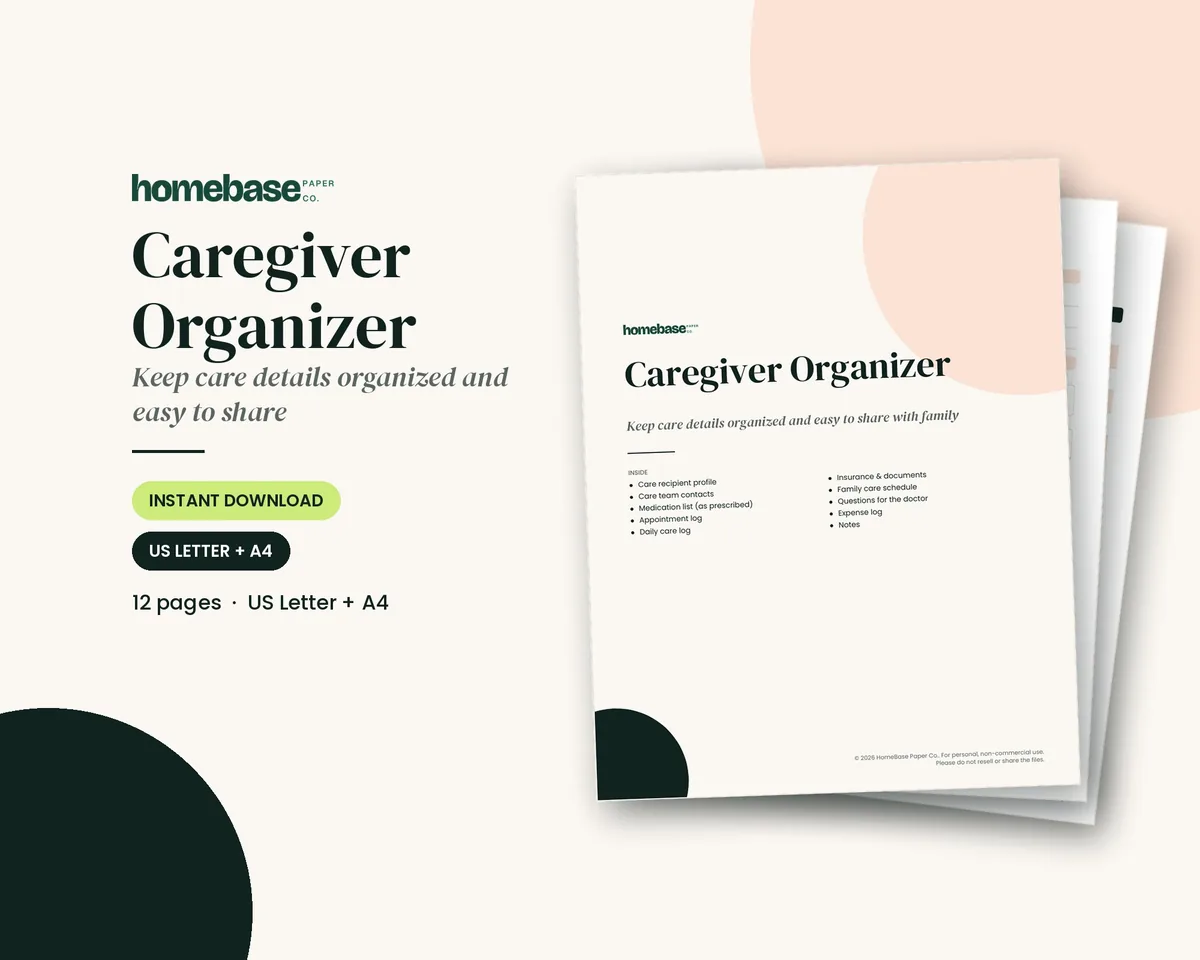
When you're caring for someone else, our Caregiver Organizer printable keeps care team contacts, the medication list, an appointment log and insurance pages in one place.
Here's the step-by-step setup, what to keep, and how to get copies of records you don't have.
Why organize medical records at all?
Health information is scattered across doctors' offices, urgent care visits, pharmacies, insurance portals and paper bills. When someone asks "when was your last tetanus shot?" or "what dose do you take?", it's hard to answer from memory, especially for a child or an aging parent. An organized set of records helps you answer quickly, notice billing errors and hand things off when someone else needs to help. For pets, keep vaccines and vet visits in a pet health record printable, or in the bound pet health record book we're preparing.
Organized records also take one job off a family caregiver's plate, which matters when you are trying to avoid caregiver burnout.
Step 1: Gather what you have
Pull everything into one pile: visit summaries, lab results, vaccination cards, prescription printouts, insurance cards and statements, and medical bills. Then check what's missing.
You have a right to your records. Under the HIPAA Privacy Rule, you have a right, with few exceptions, to inspect and get a copy of your health information held by covered providers and health plans. A provider can charge a reasonable, cost-based fee, but the rule limits it to labor for copying, supplies, postage and any summary you agree to.
Step 2: Set up one section per person
Use a binder with tabs or an accordion file, one section per family member. In each section:
Pets count too. Give each pet a section for vaccine certificates; our puppy vaccine schedule shows what a new puppy needs in the first year.
| Tab | What goes in it |
|---|---|
| Health summary | One page: medications, allergies, conditions, surgeries, doctors |
| Medications | Current list with dose, schedule and prescriber |
| Vaccinations | Shot records and dates |
| Visits | Visit summaries and notes, newest first |
| Results | Lab and imaging results |
| Insurance | Copies of cards, plan details, explanation of benefits |
| Bills | Medical bills and payment records |
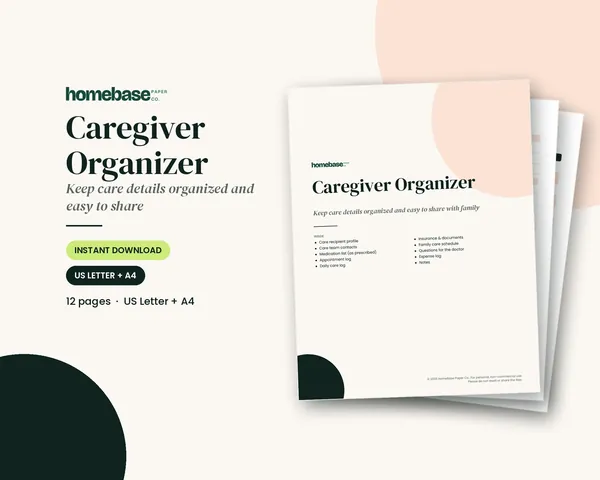
For a parent or relative you help care for, the Caregiver Organizer ($6.99) gives you ready-made pages: a care recipient profile, care team contacts, a medication list, an appointment log, a daily care log, insurance and documents, a family care schedule, questions for the doctor and a care expense log. It's a record-keeping tool, not medical advice.
Step 3: Make the one-page health summary
This page is the most useful thing in the binder. Include:
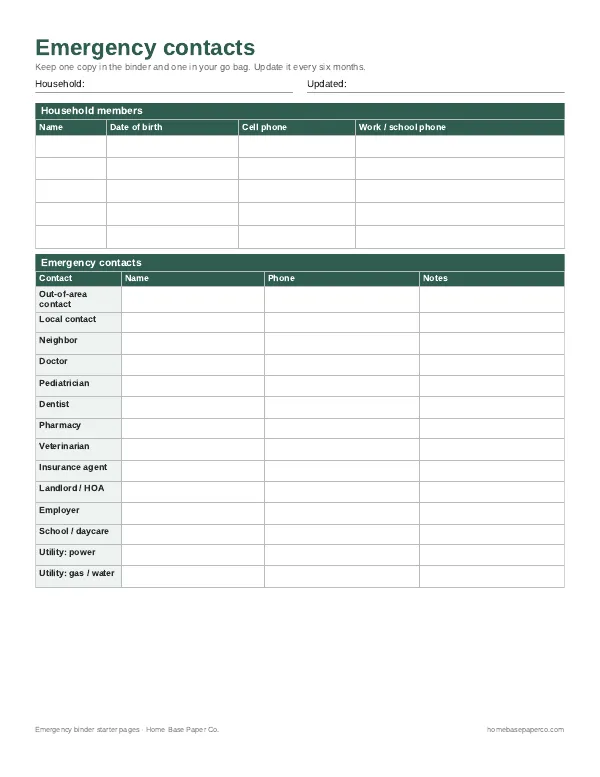
Put a copy of each health summary in your emergency binder too, so it is ready if you have to leave home quickly.
- Full name and date of birth
- Allergies and reactions
- Current medications and doses (copy from the doctor's or pharmacy's list)
- Ongoing conditions
- Past surgeries and hospital stays, with dates
- Doctors and specialists, with phone numbers
- Preferred pharmacy
- Insurance plan and member ID
- Emergency contacts
Update it after every appointment or medication change. If you track daily doses for someone, our medication log template guide shows a simple format. Hospital records often use 24-hour times, and our army time chart converts them.
Step 4: Organize patient portals and logins
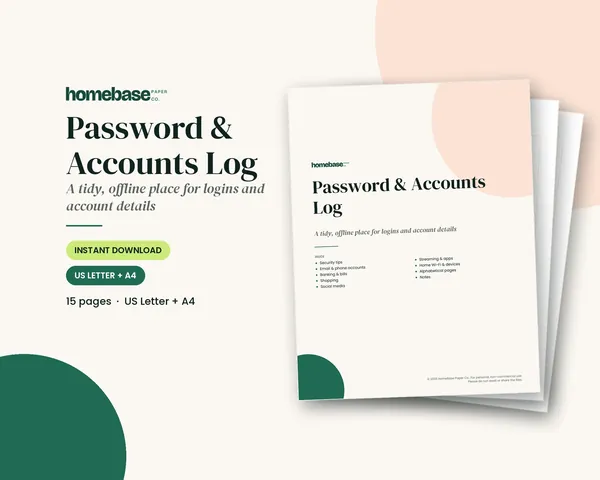
Most families end up with several portals: the pediatrician, the hospital system, the pharmacy, the insurer. List each one with its website and username, and store passwords somewhere secure. The Password & Accounts Log ($3.99) keeps logins on paper in one place; keep it somewhere private, not in the medical binder you carry to appointments.
A paperback password book is easy for older relatives to use.
Download important results and visit summaries from portals now and then. Portals change, and a saved copy is yours.
Step 5: Decide what to keep and for how long
Keep bills and insurance statements together too; they are your best tool if you ever need to dispute or negotiate medical debt.
| Record | How long to keep it |
|---|---|
| Health summary and medication list | Always current; replace old versions |
| Vaccination records | Long term |
| Surgery and hospital records | Long term |
| Major test results | Long term |
| Routine visit summaries | A few years, or as long as they're useful |
| Medical bills | Until paid and insurance questions are settled; longer if used on a tax return |
| Explanation of benefits | Until the matching bill is settled |
Our guide on how long to keep documents has the full household chart, and our important document organizer guide covers birth certificates, insurance policies and the rest of your paperwork.
Step 6: Keep it current with a 5-minute habit
- After each appointment: file the visit summary, update the health summary and note any follow-ups.
- When a bill arrives: compare it with the explanation of benefits before paying.
- Once a year: pull out outdated medication lists and check vaccination dates. Washington State's health department suggests taking your immunization record to every doctor visit so they can review and update it.
If you'd like to correct something in a record, the HIPAA amendment rule says the provider or health plan must act on your request within 60 days, and if it denies the change you can submit a written statement of disagreement.
What to bring to every appointment
A full binder is heavy. For most visits, a small folder with these is enough:
- The person's one-page health summary
- The current medication list, including vitamins and over-the-counter medicines
- Insurance card and photo ID
- A short list of questions, written before you go
- A blank page for notes, so you can write down instructions while you're in the room
- Any recent results from another doctor that this one hasn't seen
After the visit, move the notes into the main binder and update the summary that same day, while the details are fresh.
Organizing records when you're the caregiver
When you help a parent or relative, the binder becomes a team tool. Keep a daily log so everyone helping can see what happened today; our caregiver daily log template guide shows what to include. Bring a list of questions to each appointment and write the answers down while you're there.
Pets count too. Vaccination dates and vet records are easier to find in one place; see our dog vaccination record book guide.
One bundle for family records
If you're organizing for more than one person, the Family Peace of Mind Bundle ($17.99, $28.46 if bought separately) includes the Caregiver Organizer, Pet Health Records, the Password & Accounts Log and the If Something Happens to Me Binder. You can see all our sets on the bundles page or browse every printable.
Make it easier
Tools for this
Printables
Caregiver Organizer
One place for contacts, appointments, the medication list from the doctor, and daily notes.
 Save 37%
Bundles
Family Peace of Mind Bundle
The If Something Happens to Me binder, Caregiver Organizer, Pet Health Records and Password Log together.
Printables
Password & Accounts Log
Organized by category and A-Z, with room for hints instead of full passwords.
Frequently asked questions
What is the best way to organize medical records at home? The best way to organize medical records at home is to give each family member one section in a binder or folder, put a one-page health summary at the front, and file visit notes, test results and bills behind it by date. Keep portal logins and insurance cards in one place, and update the summary after every appointment. The Caregiver Organizer has a ready-made medication list and appointment log for that binder.
What medical records should I keep? Keep a current medication list, allergies, vaccination records, a list of conditions and surgeries, recent test results, visit summaries, insurance cards and medical bills. You don't need every page a provider has; keep what helps you answer questions at the next appointment.
Can I get a copy of my medical records? Yes, you can get a copy of your medical records. Under the HIPAA Privacy Rule (45 CFR 164.524), you have the right, with few exceptions, to inspect and get a copy of your health information held by covered providers and health plans, including your medical and billing records. A provider can charge a reasonable, cost-based fee, but the rule limits it to labor for copying, supplies and postage, plus the cost of any summary you agree to.
How do I organize medical records for a parent I care for? Set up one binder with their profile, care team contacts, medication list, appointment log and insurance details, so anyone helping can find what they need. The Caregiver Organizer ($6.99) has those pages plus a daily care log, a family care schedule, questions for the doctor and a care expense log.
Should I keep medical records on paper or digitally? Keep medical records both on paper and digitally. Patient portals are handy for test results and visit notes, but a paper summary works when the Wi-Fi doesn't, a portal changes, or someone else needs to step in. Download important results from the portal and keep a printed one-page summary for each person, for example in the Caregiver Organizer.
How long should I keep medical bills and records? Keep medical bills until they're paid and any insurance questions are settled, and longer if you used them on a tax return. Keep vaccination records, surgery notes and major test results long term. Our how-long-to-keep-documents guide has a full chart.
What if a medical record is wrong? You can ask the provider or health plan to correct it. Under the HIPAA Privacy Rule (45 CFR 164.526), they must act on your request within 60 days, and if they deny it, you can submit a written statement of disagreement, which they must add or link to your record.
Is a home medical binder medical advice? No, a home medical binder is not medical advice. A home binder is a record-keeping tool that helps you keep information organized and bring the right questions to appointments. Medical decisions should always come from your doctor or care team.
More from HomeBase
You may also like
 Starter pick
Printables
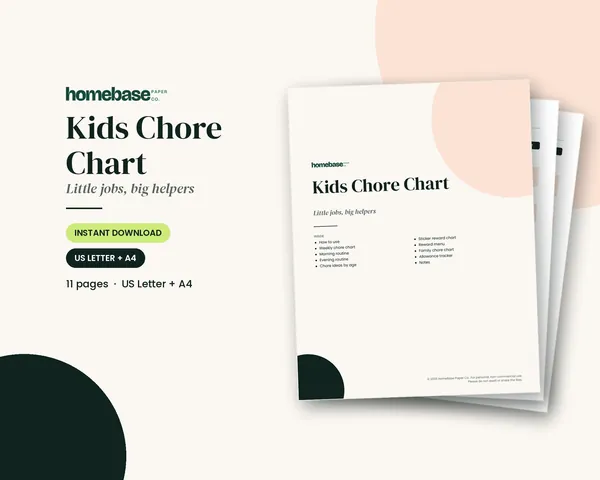
Kids Chore Chart
Weekly chore chart, morning and evening routines, chore ideas by age, a sticker reward chart and an allowance tracker.

Printables
Family Recipe Binder
Section dividers, four recipe page layouts with room for the family story, 4x6 and 3x5 cards and a conversion chart - print it or type into the fillable version.
Printables
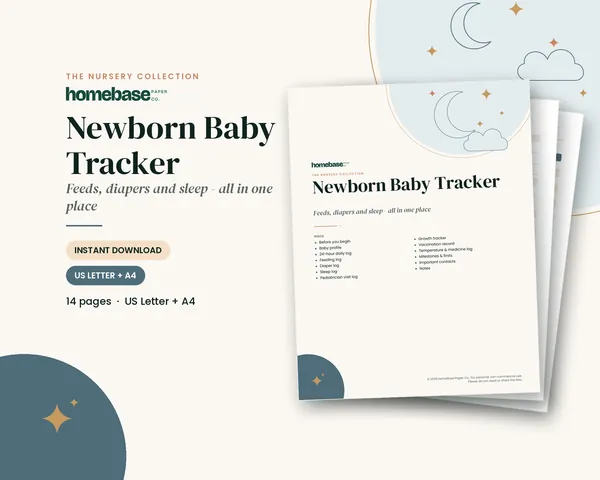
Newborn Baby Tracker
A 24-hour daily log plus feeding, diaper, sleep, growth and pediatrician-visit pages - easy to bring to checkups.
 Save 33%
Bundles
Family Life Admin Bundle
Baby logs, chore charts, pet records, meal plans and family recipes in one tidy set.
 Club
Monthly club
Meal Plan Club
Families who want dinner planned and a grocery list ready every week.
Free printable
Have the important stuff in one place: get the free emergency binder pages
Printable starter pages for household members, emergency contacts, medical notes and where key documents live. You'll also get our weekly HomeBase email with simple ways to keep family records and important papers in order.