

The short answer: how long to keep tax records: generally three years after you file, according to the IRS, and longer in some cases. Keep birth certificates, marriage papers, passports and wills permanently.
- Employment tax records: at least 4 years
- Pay stubs: until you match them to your W-2
- Bank and card statements: about 1 year; utility bills: until the next bill shows payment
- Simple system: an action folder, this year's file and a long-term box
- Next step: Plan it with the Household Binder ($6.99).
How long to keep documents depends on the type. How long to keep tax records? Generally three years after you file, according to the IRS, and longer in some cases. Birth certificates, marriage papers, passports and wills should be kept permanently. Most monthly bills can go once you've checked them. Below is a simple chart, what to keep forever, and how to set up a system that stays tidy.
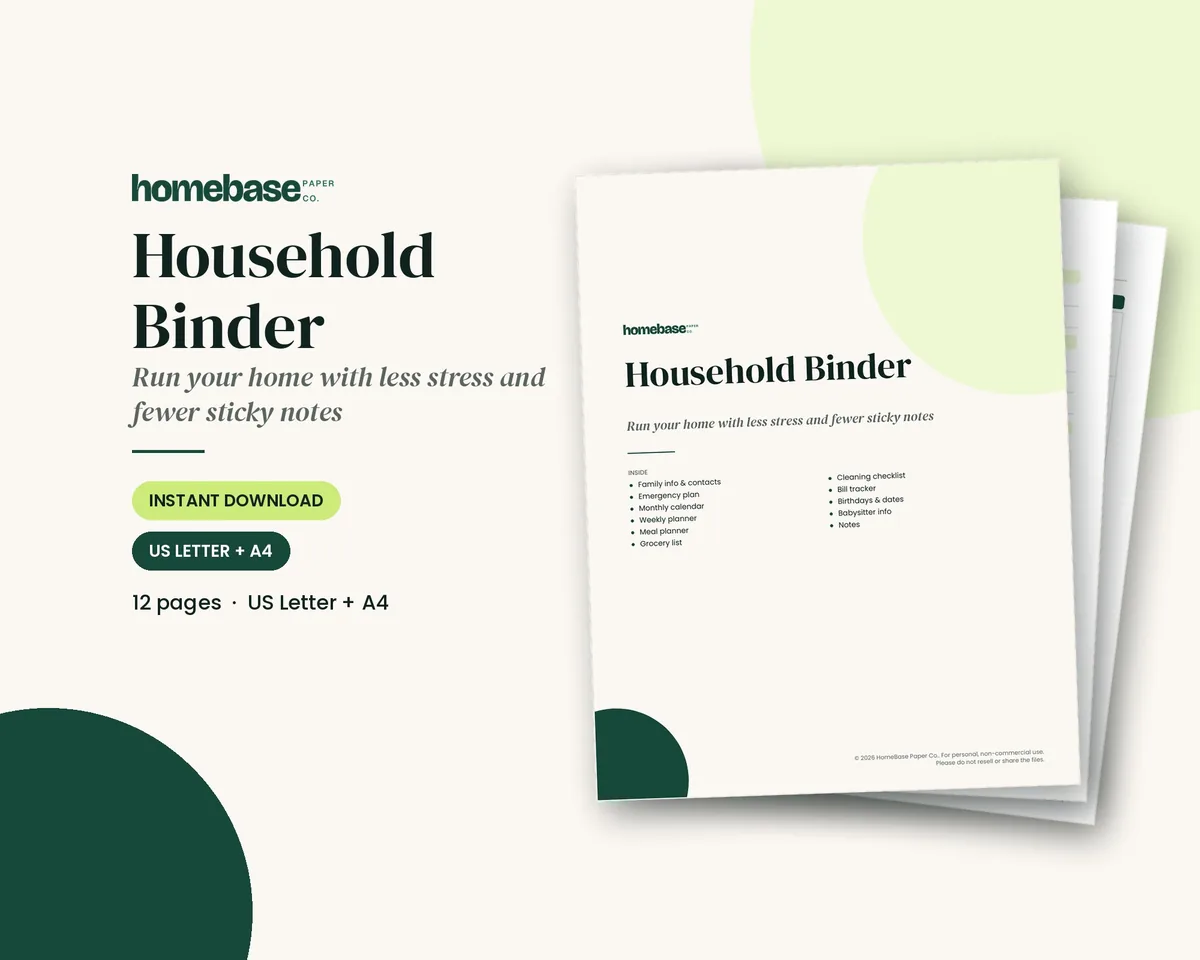
For the papers you reach for most, our Household Binder keeps family information, the emergency plan, calendars and bills in one printable binder.
This is general information, not legal or tax advice. If your situation is complex, such as a business or an estate, check with a tax professional or attorney.
The household document chart
| Document | How long to keep | Notes |
|---|---|---|
| Tax returns and supporting records | At least 3 years after filing | IRS guidance; longer in some cases (see below) |
| Employment tax records (if you employ someone) | At least 4 years | IRS guidance for employers |
| Pay stubs | Until you match them to your W-2 | Then keep the W-2 with tax records |
| Bank and card statements | About 1 year | Keep any needed for taxes with tax records |
| Utility and phone bills | Until the next bill shows payment | Keep longer if used for a home office deduction |
| Receipts for big purchases | As long as you own the item | Useful for warranties and insurance claims |
| Home purchase and improvement records | As long as you own the home, plus tax period | Improvements can affect tax when you sell |
| Car title and records | As long as you own the car | Maintenance records help when you sell; see our vehicle maintenance log book guide |
| Medical records and bills | Several years; longer for major care | Keep vaccination records permanently |
| Insurance policies | While active, plus a few years | Keep claims records with them |
How long to keep tax records: the IRS rules
The IRS sets the time based on how long it can review a return. Its guidance:
- 3 years from the date you filed, in most cases.
- 6 years if you didn't report income that was more than 25% of the gross income on your return.
- 7 years if you claim a loss from worthless securities or a bad-debt deduction.
- Indefinitely if you didn't file a return (the IRS also sets no time limit for a return filed with intentionally wrong information).
- Property records until the period runs out for the year you sell or dispose of the property.
Your state may have its own rules for state taxes, so check those too. If you run a small business, our checklist of business write-offs and the records to keep shows which receipts support each deduction. If you pay employees back for expenses, a written expense reimbursement policy spells out which receipts they need to turn in.
The IRS explains the rules on its page How long should I keep records?. The general rule is 3 years from the date you filed. Longer periods apply in some cases, such as 7 years for a claim for a loss from worthless securities or a bad debt deduction.
Documents to keep forever
Store these in a fire-resistant box or safe and know where they are:
- Birth and death certificates
- Marriage, divorce and adoption papers
- Social Security cards
- Passports and citizenship papers
- Military service records
- Wills, trusts and powers of attorney (originals)
- Vaccination records
Set up a simple system
You don't need a filing cabinet. Three places work for most homes:
- Action folder: bills to pay and forms to return this month.
- This year's file: tax-related papers as they arrive.
- Long-term box: past tax years and permanent documents.
Once a year, after filing taxes, move the year's file into the long-term box and shred the oldest year you no longer need.
For a step-by-step weekend plan, see our important document organizer guide.
A binder for the papers you use most
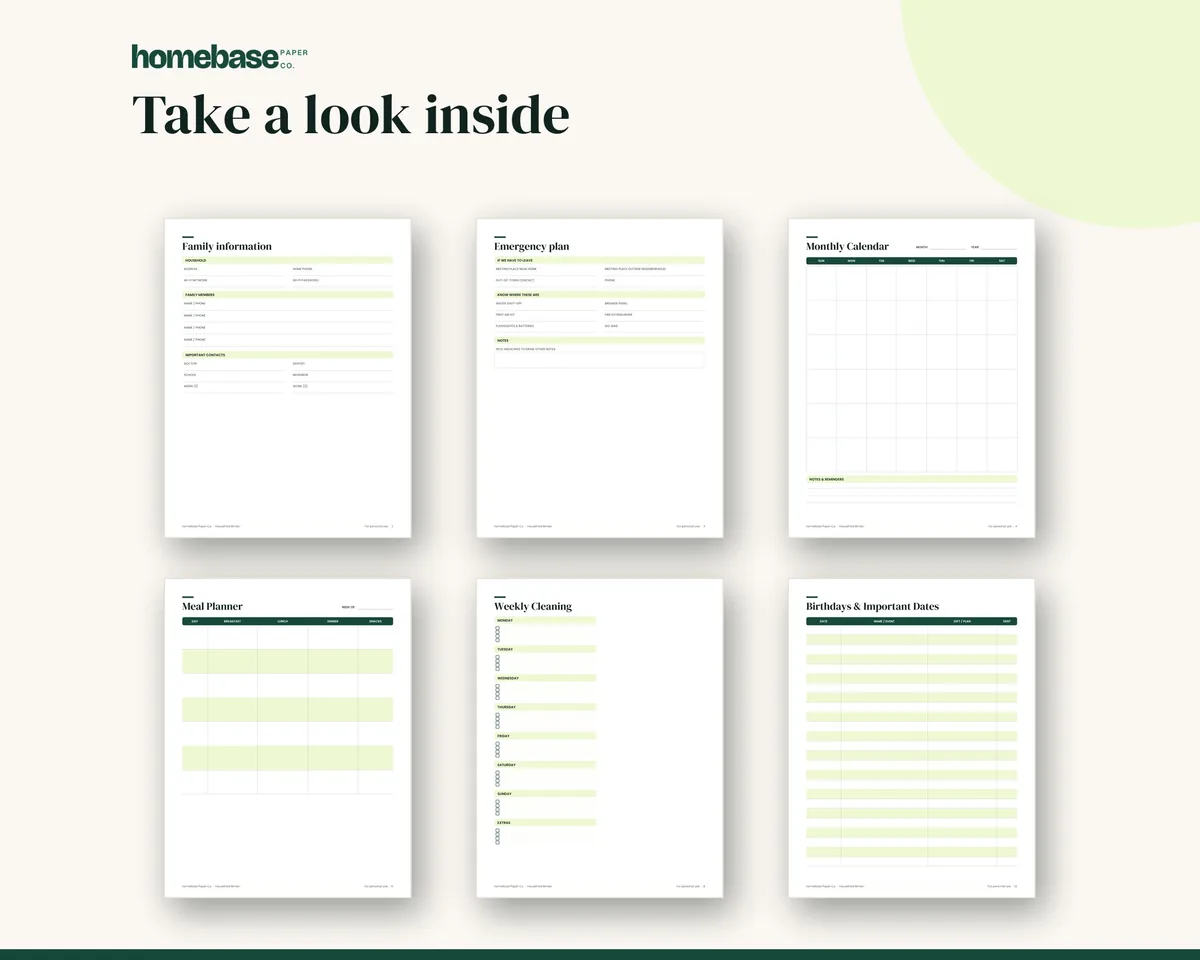
Day-to-day information is easier in a binder than a box. Our Household Binder ($6.99) has pages for family information, an emergency plan, bills and contacts. For a record of where important documents live, the If Something Happens to Me Binder ($11.99) covers accounts, insurance, key contacts and the location of papers like wills and deeds. It's an organizer, not a legal document.
Records for insurance claims
After a fire, flood or theft, insurers usually ask for a list of what you owned and its value (here's how to make an itemized list for an insurance claim). A home inventory with photos and receipts makes claims far easier. Our Home Inventory printable and spreadsheet ($5.49) walks through it room by room. Keep a copy outside the home, such as in cloud storage.
The Insurance Information Institute notes that an up-to-date home inventory helps you get an insurance claim settled faster and buy the right amount of coverage.
For side businesses and freelancers
If you run a small business or side hustle, keep income and expense records with your tax files for the same periods. The Small Business Income & Expense Tracker ($7.99) keeps a year of records in one spreadsheet.
Landlords can use a rental property spreadsheet for rent, expenses and repairs.
The IRS covers what business records to keep in Topic no. 305, Recordkeeping.
Shred safely
Affiliate links: we may earn a small commission. As an Amazon Associate we earn from qualifying purchases. Details.
Shred anything with account numbers, Social Security numbers, birth dates or signatures. A cross cut paper shredder handles most home needs. For a big clear-out, many communities and banks hold free shred days. Don't put sensitive papers in recycling unshredded.
Keeping papers safe
Store permanent documents in a fire-resistant, waterproof box at home, or a safe deposit box at your bank. Tell a trusted family member where they are. Keep a list of what's stored and where, and update it when something changes. If you keep digital copies, use a password-protected cloud account and a backup drive kept in a different place from the originals.
Go digital where you can
Scanning reduces clutter. Use a phone scanning app or a portable document scanner, name files clearly (such as "2026-taxes-W2"), and back them up in two places. Keep paper originals of permanent documents.
A January clean-out plan
- Gather every loose paper into one pile.
- Sort into keep, shred and action.
- File tax papers for the year in one folder.
- Shred what you no longer need.
- Update your binder with new account details.
An hour in early January, right after the holidays, is usually enough for most households. Put the next clean-out in your calendar for the same week next year.
See also: home management binder guide, if something happens to me binder and end-of-year financial checklist.
Make it easier
Tools for this

Printables
Household Binder
Family info, emergency plan, calendars, meals, groceries, cleaning, bills and sitter notes.
Printables
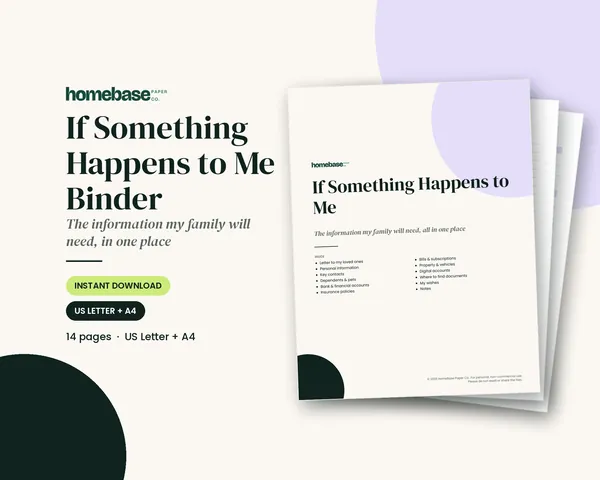
If Something Happens to Me Binder
Accounts, insurance, bills, contacts, documents and your wishes - so your family isn't left guessing.
Printables
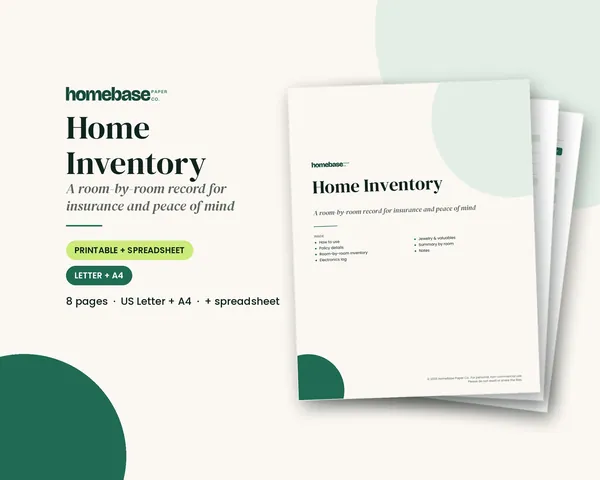
Home Inventory
Printable pages and a spreadsheet that totals the value of every room.
Frequently asked questions
How long should I keep tax documents? The IRS says to keep records for three years from the date you filed in most cases, six years if you underreported income by more than 25%, and seven years for a bad-debt or worthless-securities loss.
What documents should I keep forever? Keep birth and death certificates, marriage and divorce papers, Social Security cards, passports, adoption papers, military records and wills permanently, in a safe, fire-resistant place.
How long to keep documents like bank statements? Keep monthly bank statements for about a year, then keep only those needed for taxes. That's what many people do: after a year, they keep statements needed for taxes, such as statements showing deductible payments, with that year's tax records, and shred the rest.
What is the safest way to get rid of old documents? Shred anything with account numbers, Social Security numbers or signatures. A home cross-cut shredder works, or use a community shred day for large amounts.
How long should I keep tax returns? Three years from the date you filed is the general IRS rule, with longer periods in some cases: 6 years if you didn't report income that was more than 25% of the gross income on your return, 7 years if you claim a loss from worthless securities or a bad-debt deduction, and indefinitely if you didn't file a return. Keep property records until the period runs out for the year you sell or dispose of the property, and check your state's rules for state taxes too.
Is there a binder for organizing important papers? Yes, there is a HomeBase binder for organizing important papers. Our Household Binder keeps family information, the emergency plan, calendars and bills in one printable binder, and the If Something Happens to Me Binder records accounts, insurance, contacts and where to find documents.
More from HomeBase
You may also like
Printables
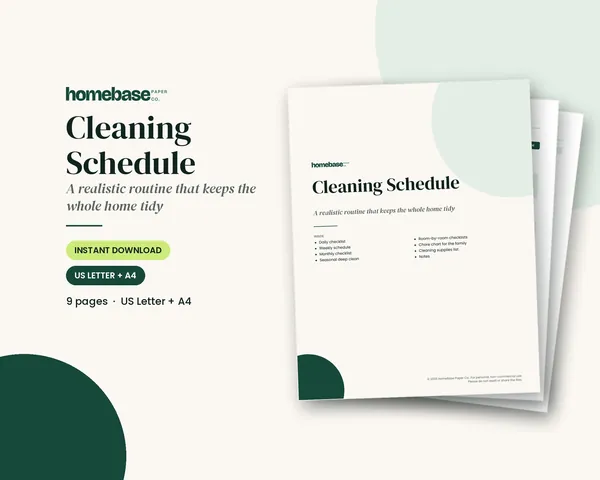
Cleaning Schedule
Daily, weekly, monthly and seasonal lists - plus a family chore chart.
Printables
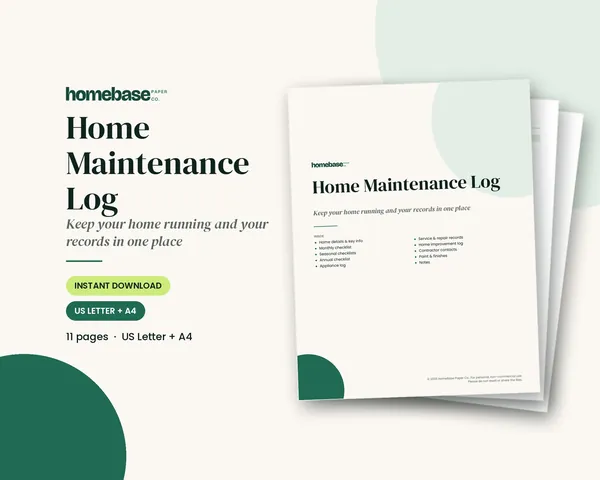
Home Maintenance Log
Monthly, seasonal and annual checklists plus a record of every appliance and repair.
 Save 48%
Bundles
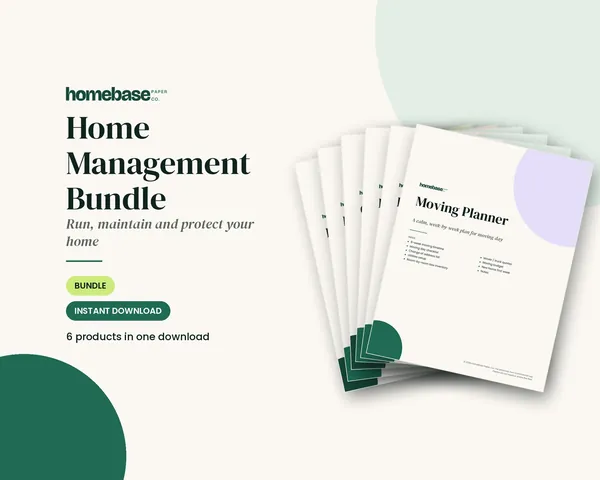
Home Management Bundle
Household binder, maintenance log, moving planner, cleaning schedule, home inventory and password log.
Printables
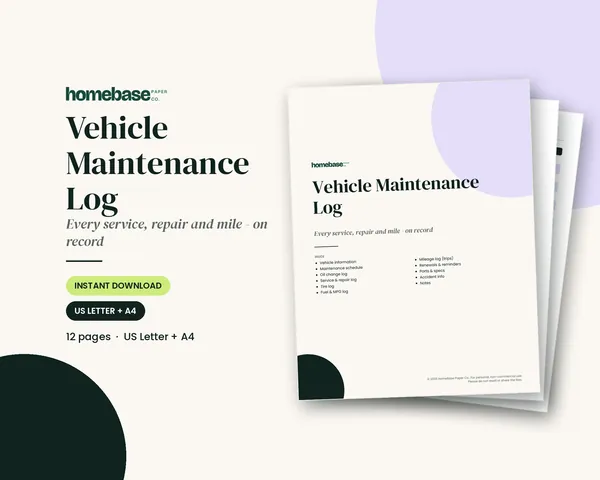
Vehicle Maintenance Log
Oil changes, repairs, tires, fuel and MPG, trip mileage and renewal dates - so resale and warranty records are easy.
 Club
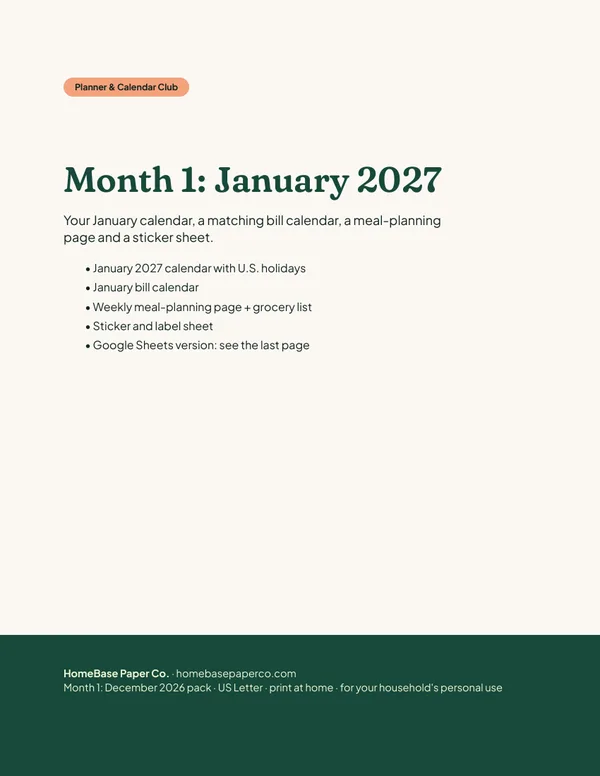
Monthly club
Planner & Calendar Club
Anyone who wants a monthly calendar, bill calendar and meal plan ready to print.
Free printable
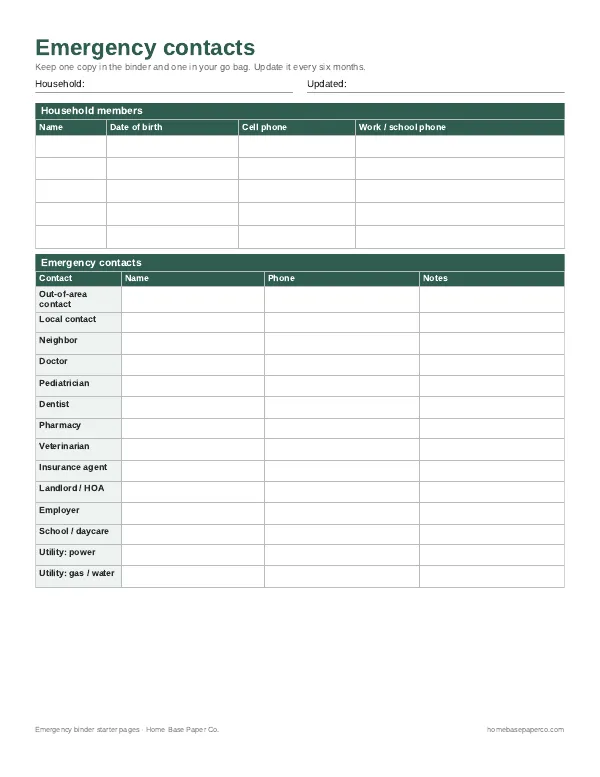
Have the important stuff in one place: get the free emergency binder pages
Printable starter pages for household members, emergency contacts, medical notes and where key documents live. You'll also get our weekly HomeBase email with simple ways to keep family records and important papers in order.
Sources
- How long should I keep records? irs.gov
- Up-to-date home inventory iii.org
- Topic no. 305, Recordkeeping irs.gov