

The short answer: how to start meal prepping is a four-part habit: plan a few meals, shop once, cook building blocks on Sunday, and store them safely for 3–4 days (or freeze the rest).
- First week: 2 dinners + 2 lunches only (not the whole fridge)
- Sunday block: about 60–120 minutes
- Storage: fridge 3–4 days for most cooked leftovers (FoodSafety.gov)
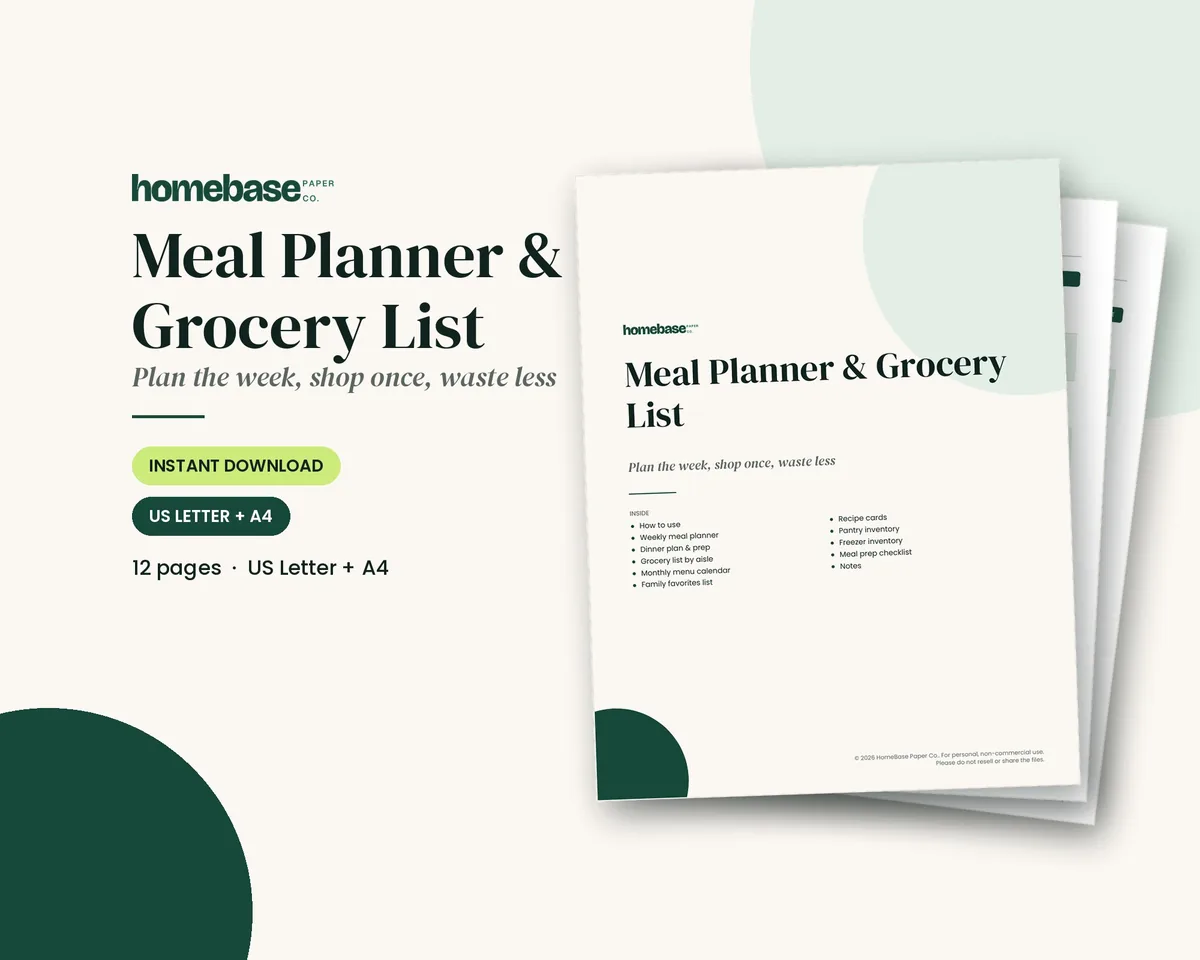
- Next step: Plan the week on the Meal Planner & Grocery List ($3.99). Free download: the daily food log (we email it to you).
Storage times checked against FoodSafety.gov and USDA leftovers guidance on November 5, 2026.
How to start meal prepping is less about fancy containers and more about a repeatable Sunday rhythm. Meal prep means washing, chopping or cooking food ahead so weeknights are mostly assembly. It pairs with meal planning (deciding what to eat) but is not the same skill — our how to meal plan guide covers the planning method. For dish inspiration after you learn the steps, use meal prep ideas. This page owns the beginner “how to start” angle only.
Meal prep vs meal plan (quick clarity)
| Meal plan | Meal prep | |
|---|---|---|
| Question it answers | What will we eat? What do we buy? | What can we cook or chop ahead? |
| Output | Weekly menu + grocery list | Containers of cooked or prepped food |
| Can stand alone? | Yes | Works best after a plan |
Beginners fail when they cook random trays with no plan for when they will eat them. Plan first, prep second.
Beginner steps: how to start meal prepping
1. Pick a tiny first week
Choose two dinners and two lunches. Example: chili twice, sheet-pan vegetables once, grain bowls for lunches. Leave other nights flexible or leftovers-based.
2. Check the calendar and the fridge
Mark late meetings, sports and nights out. Use what you already have before you shop. This is the same habit as in how to meal plan, applied to prep volume.
3. Shop from one list
Write only what the prepped meals need. Staples that always help: eggs, a grain, a can of beans, a protein, frozen vegetables and one sauce.
4. Block 90 minutes on Sunday
Put on a timer. Order of operations that saves dishes:
- Start the grain and any oven tray
- Simmer beans, chili or soup
- Chop raw vegetables for the week
- Cool, portion, label
5. Store safely, then stop
Do not keep cooking until midnight. A finished small prep beats an abandoned giant prep.
Your first Sunday meal prep plan
| Time | Task | Result |
|---|---|---|
| 0:00 | Oven to 400°F; start rice or quinoa on the stove | Grain cooking |
| 0:10 | Sheet-pan vegetables + tofu or chicken (if you eat meat) | Protein + veg roasting |
| 0:20 | Chili or lentil pot on the stove | Two dinners covered |
| 0:40 | Wash fruit; portion snacks; boil eggs | Grab-and-go pieces |
| 1:00 | Cool hot food; pack lunches for Mon–Wed | Fridge set |
| 1:20 | Label freezer portions; wipe counters | Done |
Vegetarian version: use tofu, beans or lentils as the protein. Omnivore version: cook one tray of chicken breasts and slice them for bowls.
Building-block prep (the method that scales)
Instead of five fully plated identical meals, prep components:
- Grain: rice, quinoa or pasta
- Protein: beans, lentils, tofu, eggs, chicken or turkey
- Vegetables: roasted tray + raw sticks
- Sauce: salsa, peanut sauce, vinaigrette or yogurt sauce
Mix and match into bowls, wraps and salads. That variety keeps beginners from quitting by Wednesday. More combinations live on meal prep ideas and healthy meal prep ideas.
Storage table (FoodSafety.gov / USDA)
| Food | Refrigerator | Freezer (best quality) |
|---|---|---|
| Cooked leftovers (general) | 3–4 days | 2–3 months |
| Soups and stews | 3–4 days | 2–3 months |
| Cooked grains | 3–4 days | 1–2 months |
| Hard-boiled eggs in shell | up to 1 week | not recommended |
| Cut raw vegetables | 3–4 days | varies |
| Cooked poultry or meat | 3–4 days | 2–3 months |
Sources: FoodSafety.gov cold food storage charts and USDA FSIS leftovers guidance. Cool food within 2 hours, reheat leftovers to 165°F, and when in doubt, throw it out.
Label tip: write the dish name and the cook date on masking tape. Eat fridge portions by day four or freeze them on day three.
Containers and tools beginners actually need
- 4–8 containers with lids (same size if possible)
- One sheet pan and one pot
- A marker for labels
- Optional: a cheap digital thermometer for reheating checks
Skip the 40-piece container set until you know you will stick with the habit.
Common beginner mistakes
- Prepping seven identical chicken-and-broccoli boxes. Boredom ends the habit. Use building blocks.
- Ignoring storage times. FoodSafety.gov’s 3–4 day window is the rule, not a suggestion.
- No plan for Thursday. Either cook a midweek refresh or freeze Sunday extras for the back half of the week.
- Starting with 12 recipes. Two dinners is enough for week one.
- Prepping without a grocery list. Impulse buys fill the fridge and crowd out the food you meant to eat.
Real example: Coordinating a busy household taught me that a short written plan beats a perfect plan. Meal prep works the same way: ninety focused minutes on Sunday is enough to make weeknights calmer.
How this page fits related guides
- Planning method: how to meal plan
- Dish lists: meal prep ideas
- Budget angle: meal prep on a budget and meal planning on a budget
- Protein-focused prep: high protein meal prep
- Lunch boxes: lunch meal prep
Use those hubs for ideas. Come back here when you need the beginner sequence.
Put your first prep on paper
Need boxes that match how you reheat? See best meal prep containers for sizes and materials.
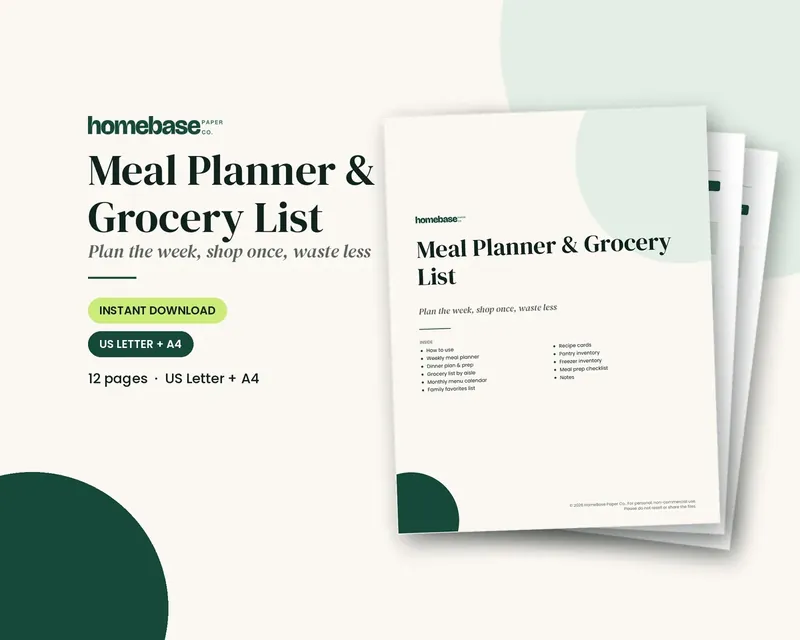
Write the two dinners, two lunches and Sunday prep tasks into the Meal Planner & Grocery List ($3.99). Save the chili and bowl formulas in the Family Recipe Binder ($6.99), or get both in the Family Life Admin Bundle ($15.99, $23.95). Browse printables and bundles.
Starting meal prep is a small weekly habit, not a lifestyle overhaul. Plan a little, cook a little, store it safely, and let next Sunday get easier.
Batch cooking single portions? Our guide on how to start meal prepping shows how to cook once and portion for the week, which works well with these meals for one.
Make it easier
Tools for this
 Starter pick
Printables
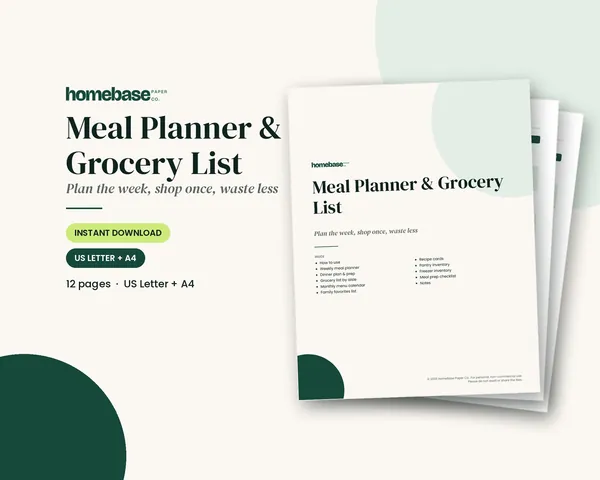
Meal Planner & Grocery List
Weekly meals, a grocery list sorted by aisle, and pantry and freezer inventories so you shop once and waste less.
Printables
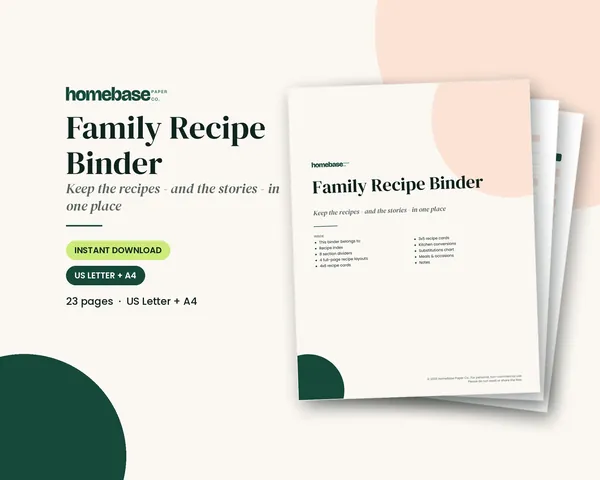
Family Recipe Binder
Section dividers, four recipe page layouts with room for the family story, 4x6 and 3x5 cards and a conversion chart - print it or type into the fillable version.
 Save 33%
Bundles
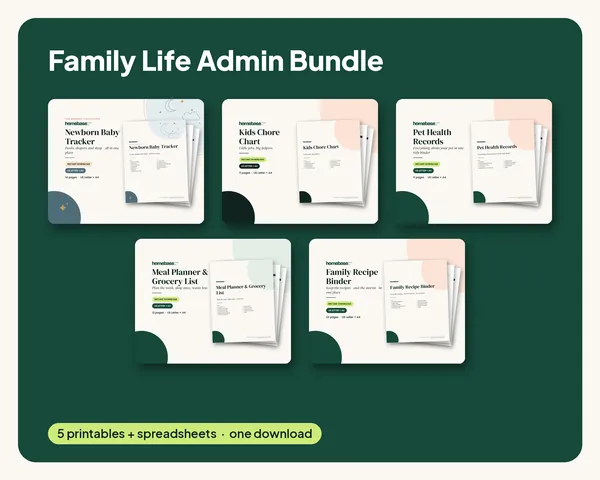
Family Life Admin Bundle
Baby logs, chore charts, pet records, meal plans and family recipes in one tidy set.
Frequently asked questions
How do I start meal prepping as a beginner? Start small: pick two dinners and two lunches for the week, shop once, then spend about 90 minutes on Sunday washing produce, cooking a grain and a protein, and packing portions. You do not need to prep every meal on day one.
What is the difference between meal prep and meal planning? Meal planning is deciding what you will eat and what to buy. Meal prep is the cooking and packing you do ahead of time. You can plan without prepping, but prepping without a plan usually wastes food.
How long does meal prep last in the fridge? Most cooked leftovers keep 3 to 4 days in the refrigerator, according to FoodSafety.gov cold storage charts. Freeze portions you will not eat in that window and label them with the date.
What should I meal prep first? Prep a grain (rice or quinoa), a protein (chicken, tofu, beans or eggs), chopped vegetables and one sauce. Those four building blocks assemble into bowls, wraps and quick dinners all week.
How much time does beginner meal prep take? A first Sunday session usually takes 60 to 120 minutes once groceries are put away. After a few weeks, many people finish a basic prep in about an hour.
Do I need special containers to start meal prepping? No, you don't need special containers to start meal prepping. Use any leakproof containers you already own. Glass or BPA-free plastic with lids is enough. Same-size containers stack better, but mismatched lids still work.
Is meal prepping only for weight loss? No, meal prepping is not only for weight loss. People meal prep to save time, cut takeout spending, reduce food waste and make busy weeknights easier. Weight goals are optional.
Where can I find meal prep ideas after I learn the method? Use our meal prep ideas hub for dish lists once the beginner method feels comfortable. This page stays focused on how to start, not on replacing that ideas collection.
What printable helps beginners start meal prepping? The Meal Planner & Grocery List ($3.99) from HomeBase Paper Co. has a weekly plan, an aisle-sorted grocery list and space to note prep tasks for Sunday.
Where do I keep meal prep recipes? The Family Recipe Binder ($6.99) from HomeBase Paper Co. stores the formulas you reuse, with fillable pages and dividers.
Is there a bundle with the meal planner and recipe binder? Yes, there is a bundle with the meal planner and recipe binder. The Family Life Admin Bundle ($15.99, $23.95 bought separately) from HomeBase Paper Co. includes the Meal Planner & Grocery List, the Family Recipe Binder and three more household printables.
More from HomeBase
You may also like
 Thanksgiving Edition
Printables
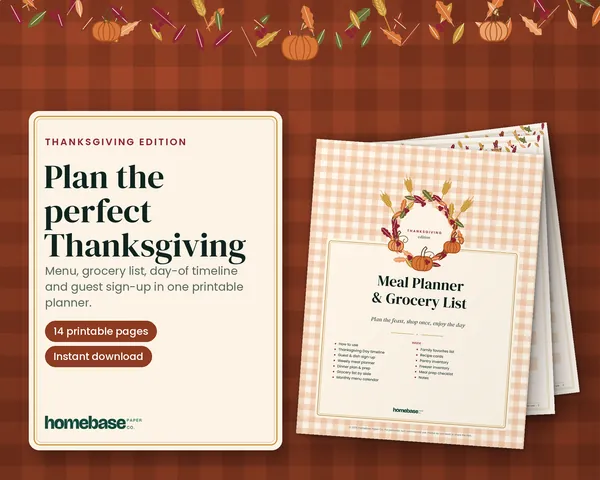
Meal Planner & Grocery List: Thanksgiving Edition
Plan the perfect Thanksgiving: our meal planner in a warm harvest design, with a Thanksgiving Day timeline, a guest & dish sign-up, an aisle-sorted grocery list and pantry and freezer trackers.
Printables
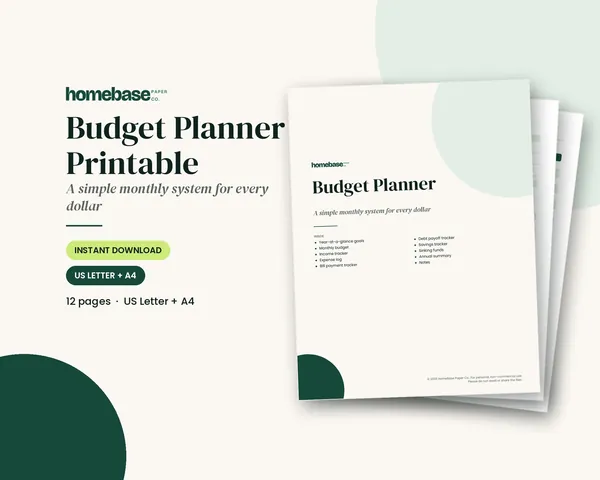
Budget Planner Printable
Twelve undated pages you can print every month: budget, bills, spending, savings and debt.

Printables
Household Binder
Family info, emergency plan, calendars, meals, groceries, cleaning, bills and sitter notes.
 Starter pick
Printables
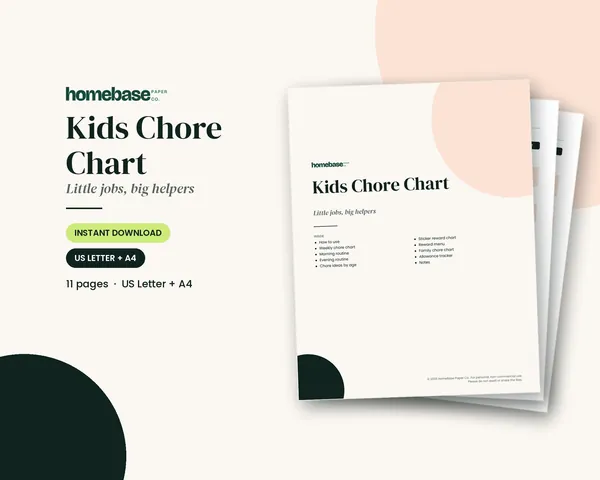
Kids Chore Chart
Weekly chore chart, morning and evening routines, chore ideas by age, a sticker reward chart and an allowance tracker.
 Club
Monthly club
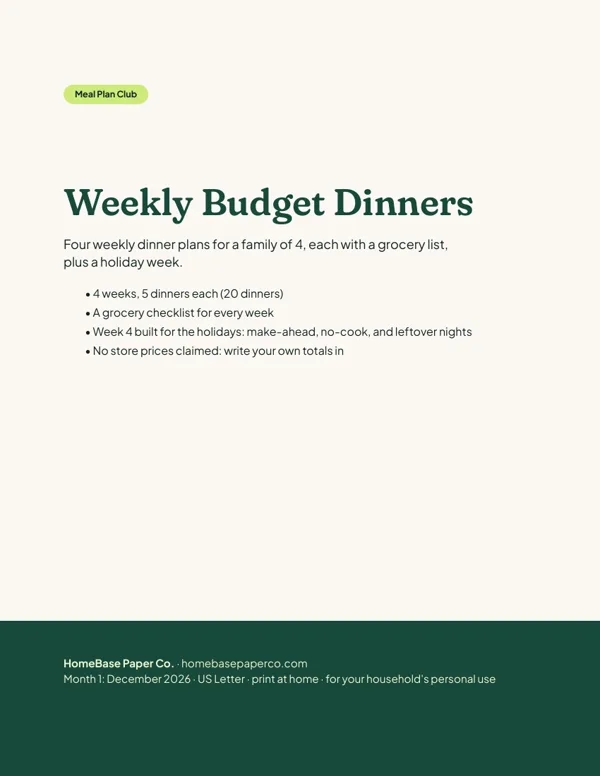
Meal Plan Club
Families who want dinner planned and a grocery list ready every week.
Free printable
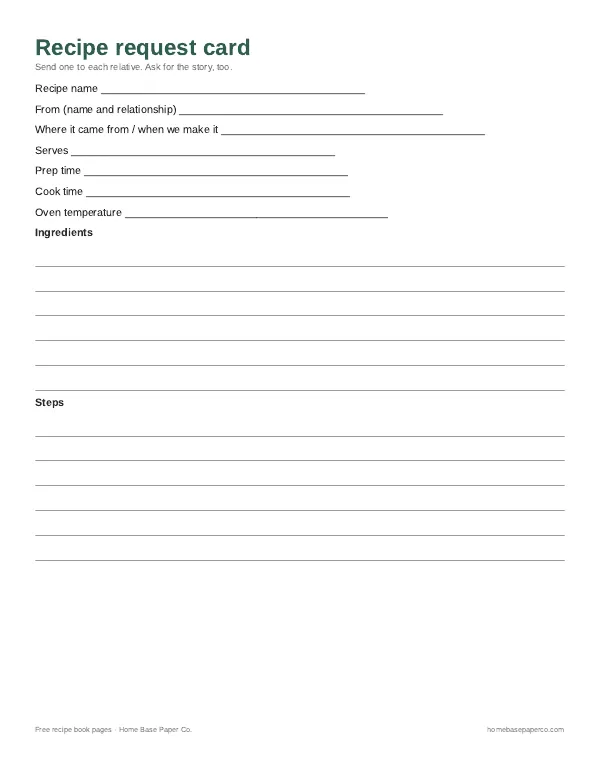
Save the family favorites: get the free recipe book pages
Printable recipe pages and a recipe request card to send to relatives, so the dishes everyone loves end up in one book. You'll also get our weekly HomeBase email with easy meal planning ideas and family recipe tips.
Sources
- Cold Food Storage Chart (FoodSafety.gov) foodsafety.gov
- USDA Food Safety: Leftovers and Food Safety fsis.usda.gov