

The short answer: the best meal prep containers are the ones that match how you cook and reheat: glass rectangles for hot dinners, compartment trays for lunches, jars for oats and soups and freezer bags for bulk protein. Start with 8–12 pieces, not a 40-piece set you will not wash.
- 12 picks below by job (not brand rankings)
- Key rules: cool food before sealing · fridge 3–4 days · freeze the rest (USDA FSIS)
- Top move: label lids with the meal and the day
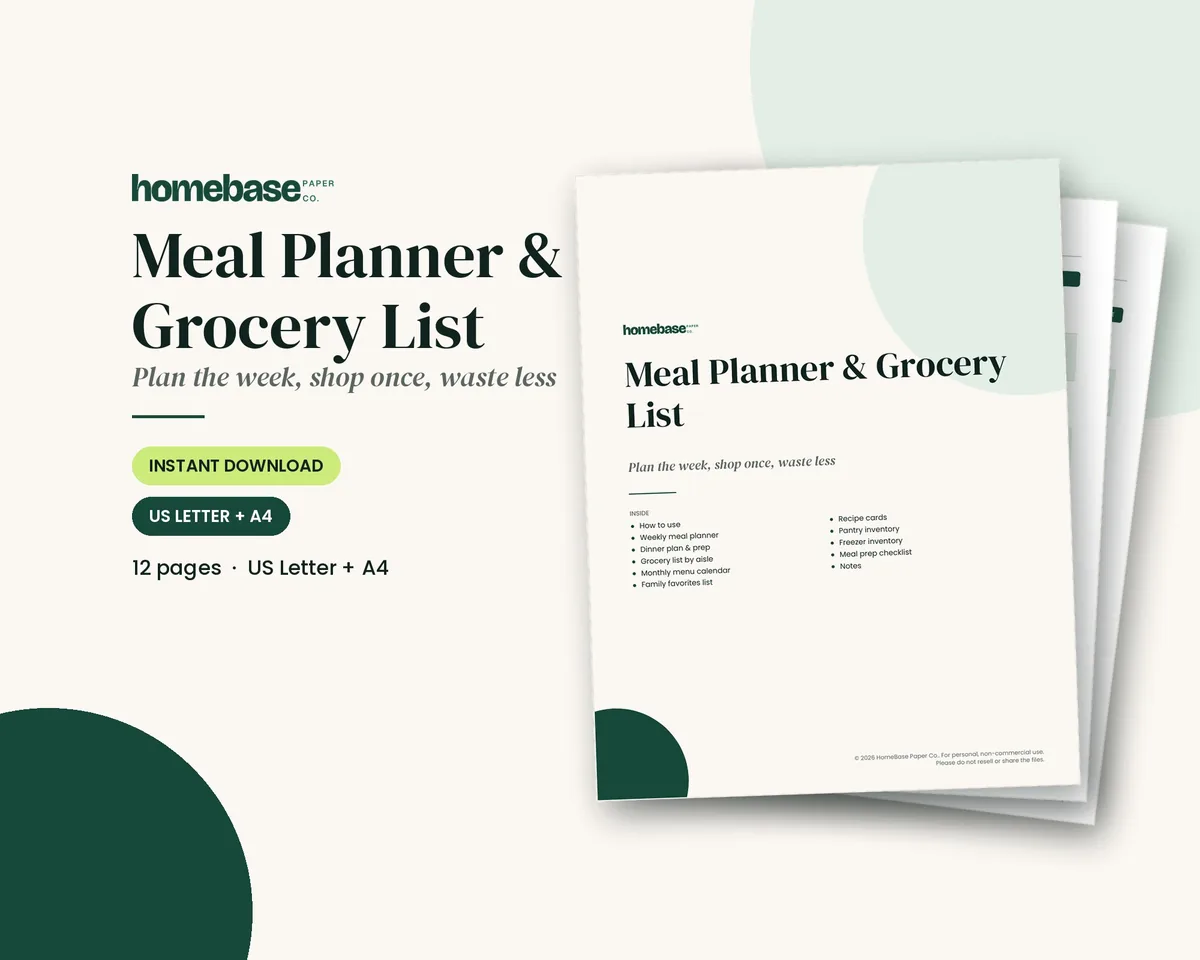
- Next step: plan what goes in them with the Meal Planner & Grocery List ($3.99).
Our picks for best meal prep containers
 Starter pick
Printables
Meal Planner & Grocery List
Weekly meals, a grocery list sorted by aisle, and pantry and freezer inventories so you shop once and waste less.

Printables
Family Recipe Binder
Section dividers, four recipe page layouts with room for the family story, 4x6 and 3x5 cards and a conversion chart - print it or type into the fillable version.
 Save 33%
Bundles
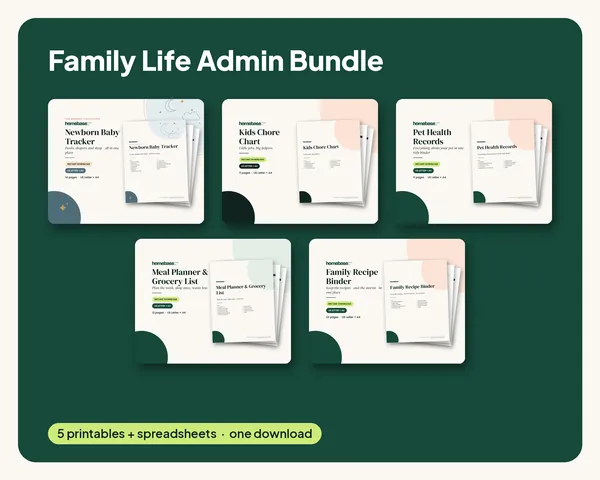
Family Life Admin Bundle
Baby logs, chore charts, pet records, meal plans and family recipes in one tidy set.
This guide compares container types and sizes, not sponsored brand rankings. Pair with how to start meal prepping and healthy meal prep ideas.
Glass vs plastic vs bags
| Type | Best for | Pros | Watch-outs |
|---|---|---|---|
| Glass with lid | Dinners you reheat | Oven/microwave friendly, stains less | Heavier; lids can warp in dishwasher heat |
| BPA-free plastic | Cold lunches, kids, travel | Light, cheap, nestable | Can stain with tomato; check microwave label |
| Compartment trays | Macros / picky eaters | Keeps foods separate | Smaller volumes; lids must fit all wells |
| Mason / meal jars | Oats, salads, soups | Cheap, seal well | Not for hot oven use; pack dressing separately |
| Freezer bags | Bulk chicken, crumbled meat, broth | Flatten to save space | Single-use unless you wash sturdy ones |
12 container picks by job
| # | Container | Size guide | Use it for |
|---|---|---|---|
| 1 | Glass rectangle | 3–4 cups | Full dinners (protein + side) |
| 2 | Glass rectangle | 2 cups | Leftovers and sides |
| 3 | Deep glass square | 4–5 cups | Soups, stews, chili |
| 4 | Compartment tray (3-section) | ~3 cups total | Lunch: protein / carb / veg |
| 5 | Small round | 1 cup | Sauces, dips, dressings |
| 6 | Pint jar (16 oz) | 2 cups | Overnight oats, layered salads |
| 7 | Quart jar (32 oz) | 4 cups | Large salads, leftover soup |
| 8 | Snack pack duo | 1–2 cups | Cut fruit, yogurt, nuts |
| 9 | Freezer bags (quart) | Flat portions | Shredded chicken, taco meat |
| 10 | Freezer bags (gallon) | Bulk | Marinating, bone broth ice blocks |
| 11 | Silicone muffin cups | — | Egg bites, mini frittatas in a glass pan |
| 12 | Insulated lunch bag + ice pack | — | Safe transport for cold meals |
Starter kit shopping list
For one adult packing 4–5 lunches:
- 5 glass or plastic lunch containers (3–4 cup)
- 2 compartment trays
- 4 small sauce cups
- 4 pint jars
- 1 box quart freezer bags
- Masking tape + marker for labels
For a family of 4 prepping dinners:
- 8–10 glass rectangles (3–4 cup)
- 4 deep containers for soup nights
- Extra lids (lids fail first)
Food safety for prepped containers
| Rule | Detail |
|---|---|
| Cool first | Spread hot food in shallow containers before sealing so it cools faster |
| Fridge window | Most cooked leftovers: 3 to 4 days (FSIS leftovers) |
| Freezer | Meal-size portions; leave headspace for liquids (FSIS freezing) |
| Reheat | Heat leftovers to 165°F; stir microwaved food mid-way |
| Raw vs ready | Never store raw chicken above ready-to-eat salads in the same stack |
Cold storage times for common foods are also listed on the FoodSafety.gov cold storage chart.
How containers fit a prep day
- Write the week on the Meal Planner & Grocery List.
- Cook proteins and grains.
- Portion into containers while food is still slightly warm (not steaming hot).
- Label: meal name + day + use-by date.
- Fridge the next 3–4 days; freeze the rest flat.
More systems: lunch meal prep, high protein meal prep, burrito bowl meal prep.
Common meal prep container mistakes
| Mistake | Fix |
|---|---|
| Buying a 40-piece set on day one | Start with 8–12; add sizes you actually run out of |
| Sealing piping-hot food | Cool in a shallow layer first so steam does not waterlog the meal |
| No labels | Write meal + day + use-by on painter's tape |
| Reheating in any plastic | Only use containers marked microwave-safe; prefer glass for hot meals |
| Prepping 7 full days of leafy salads | Dress salads the morning you eat them; greens wilt by day 3 |
If you are new to prep, read how to start meal prepping before you buy more plastic.
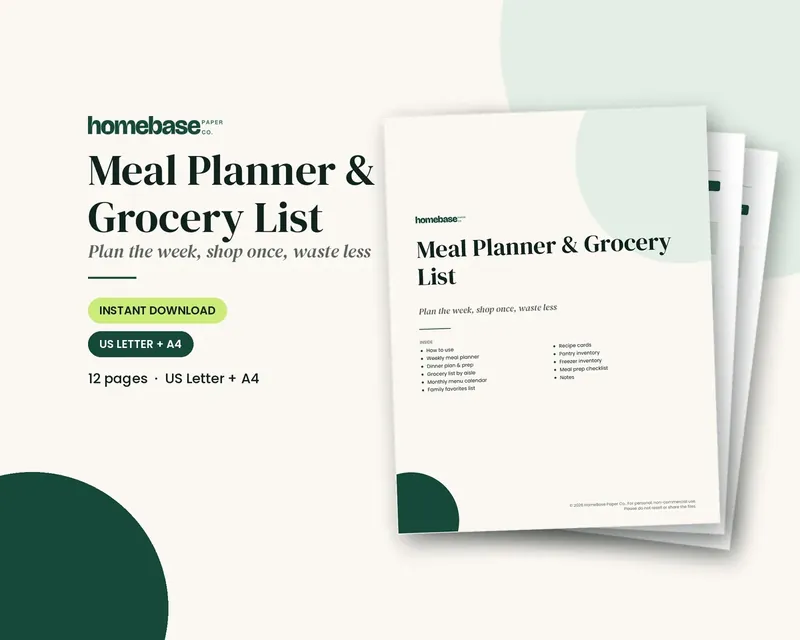
The Meal Planner & Grocery List ($3.99) has a weekly dinner plan and an aisle-sorted grocery list. Save keepers in the Family Recipe Binder ($6.99), or get both in the Family Life Admin Bundle ($15.99, $23.95 bought separately). See all printables.
Plan the week's meals and shop once
Weekly meals, a grocery list sorted by aisle, and pantry and freezer inventories so you shop once and waste less.
$3.99 · Instant download. Print at home or fill it in on screen. Or browse the full Home & Organizing collection.
Frequently asked questions
What are the best meal prep containers? The best meal prep containers for most people are a set of glass rectangles with lids for dinners, a few compartment trays for lunches, pint jars for overnight oats or soups and freezer bags for bulk proteins. Buy what matches how you reheat: glass for the oven and microwave, plastic only if it is microwave-safe.
Are glass or plastic meal prep containers better? Glass holds up to reheating, stains less and lasts longer. Plastic is lighter and cheaper for cold lunches and snacks. Many households use both: glass for hot dinners and plastic for grab-and-go.
What size meal prep containers do I need? A practical starter set is 3-cup to 4-cup rectangles for dinners, 2-cup containers for sides or leftovers, compartment trays about 3 cups total for lunches and 8 to 16 ounce jars for oats and dressings.
Can you freeze food in meal prep containers? Yes, if the container is labeled freezer-safe. Leave headspace for liquids that expand. USDA FSIS freezing guidance applies: cool food first, freeze in meal-size portions and label with the date.
How long does meal prep last in containers? Most cooked meals last 3 to 4 days in the fridge. Freeze what you will not eat in that window. Keep raw proteins separate from ready-to-eat food.
Do meal prep containers need to be airtight? A tight lid keeps food fresher and prevents leaks in a bag. Soups and sauces need a reliable seal. For salads, pack dressing separately so greens stay crisp.
How many meal prep containers should I buy? Start with 8 to 12 containers if you prep 4 to 5 lunches plus a couple of dinners. Add more only after you see which sizes you actually reuse.
What printable helps with meal prep planning? The HomeBase Meal Planner & Grocery List is $3.99 and turns these meals into a weekly menu with an aisle-sorted grocery list. The Family Recipe Binder is $6.99, and both come in the Family Life Admin Bundle for $15.99, compared with $23.95 bought separately.
Free printable
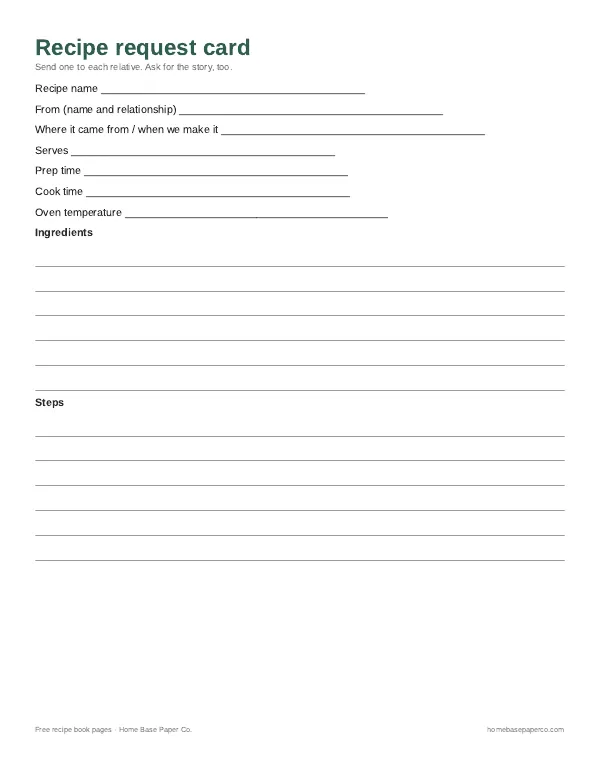
Save the family favorites: get the free recipe book pages
Printable recipe pages and a recipe request card to send to relatives, so the dishes everyone loves end up in one book. You'll also get our weekly HomeBase email with easy meal planning ideas and family recipe tips.
Sources
- USDA FSIS: Leftovers and Food Safety fsis.usda.gov
- USDA FSIS: Freezing and Food Safety fsis.usda.gov
- FoodSafety.gov: Cold Food Storage Charts foodsafety.gov