The short answer: for how to start a cleaning routine, begin smaller than you think: a 15-minute daily list, one weekly task per day and a short monthly list.
- Do a one-time reset first
- Pick three to five daily tasks
- Set a time and a trigger
- Run it for two weeks, then adjust
- Next step: Plan it with the Cleaning Schedule ($4.49).
If you are figuring out how to start a cleaning routine, begin smaller than you think you should: a 15-minute daily list, one weekly task per day and a short monthly list. That is the whole system. It works because it is easy to repeat, and the products you use can be chosen with help from the EPA's Safer Choice program, which helps people find cleaning products with safer ingredients.
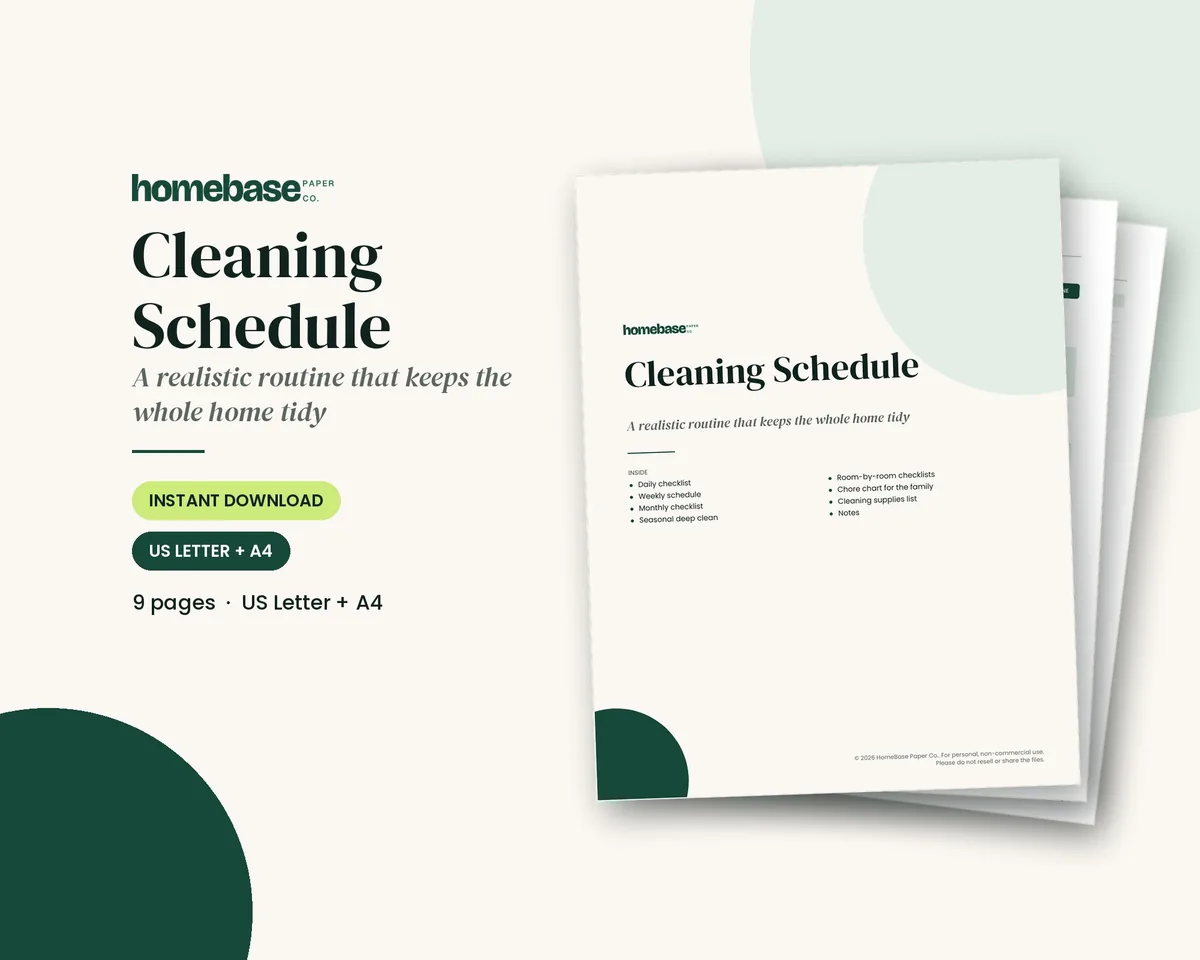
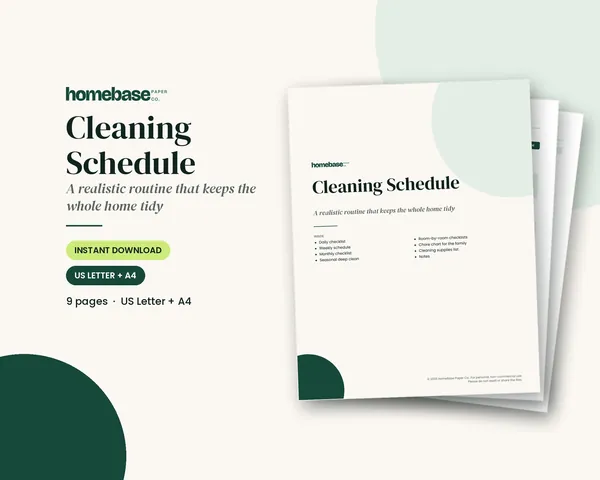
Our Cleaning Schedule printable has daily, weekly, monthly and seasonal lists ready to fill in, plus room-by-room checklists and a family chore chart.
This guide walks through how to build the routine step by step, gives you sample daily and weekly plans, and shows how to keep it going when life gets busy. If you just want a ready-made printable, our cleaning schedule template has daily, weekly and monthly lists you can print today.
Keep a separate seasonal list for outdoor work: planning a perennial flower bed includes recording the site conditions and choosing a manageable area before buying plants.
How to start a cleaning routine in 7 steps
- Do a one-time reset. Spend 20 minutes per room picking up, tossing trash and putting things away. Do not deep clean yet. You are just clearing surfaces so the routine has a starting point.
- Pick three to five daily tasks. Choose the jobs that make the biggest difference when skipped: dishes, kitchen counters, a bathroom wipe, a clutter pickup and the mail.
- Give each weekday one bigger task. Bathrooms, dusting, floors, kitchen and laundry each get a day, so no single day is long.
- Set a time and a trigger. Attach the daily list to something you already do, like after dinner or before bed. A routine tied to an existing habit is much easier to keep.
- Gather supplies in one caddy. If the spray and cloths are under one sink and the vacuum is in a closet upstairs, you will skip the task. Keep a caddy on each floor if you can.
- Write it down and post it. A list on the fridge or inside a cabinet door beats a plan in your head. Check tasks off so you can see progress.
- Run it for two weeks, then adjust. Drop what does not matter, move tasks that never get done to a better day, and only then add monthly and seasonal jobs.
A sample daily cleaning routine
A good daily cleaning routine takes 15 to 30 minutes. Split it into a morning and evening block so it never feels like a chore session:
If you have wood floors, our guide on how to clean hardwood floors explains why a daily sweep matters.
| When | Task | Time |
|---|---|---|
| Morning | Make the beds | 2 min |
| Morning | Wipe the bathroom sink and mirror | 2 min |
| Morning | Unload the dishwasher or put away clean dishes | 5 min |
| Evening | Load the dishwasher, wash pots, wipe counters and the stove top | 10 min |
| Evening | Quick pickup of the living room: toys, cups, blankets | 5 min |
| Evening | Sort the mail and recycle junk | 2 min |
| Evening | Start a load of laundry if the basket is full | 2 min |
Keep the daily list short on purpose. The goal is a house that never gets far out of hand, not a spotless one every night.
A beginner weekly cleaning schedule
Once the daily tasks feel automatic, add one weekly job per day:
| Day | Weekly task | About how long |
|---|---|---|
| Monday | Bathrooms: toilet, tub or shower, floor | 30 min |
| Tuesday | Dust surfaces, shelves and electronics | 20 min |
| Wednesday | Vacuum and mop main floors | 30 to 45 min |
| Thursday | Kitchen: wipe appliance fronts, clean the microwave, toss old food | 30 min |
| Friday | Wash sheets and towels | 15 min hands-on |
| Saturday | Catch-up day for anything you missed | 30 min |
| Sunday | Rest, plan meals and look at next week | 10 min |
If your week is irregular, ignore the day names and work through the list in order. The point is that each task comes around once every seven days.
Monthly and seasonal tasks to add later
After a month of steady daily and weekly cleaning, add a short monthly list. Do one or two of these each week rather than all at once:
In winter, add our guide on how to clean a humidifier to the weekly list; a dirty tank can spread mold and bacteria.
- Wipe baseboards, door frames and light switches.
- Clean inside the fridge and freezer and wipe the shelves.
- Vacuum under furniture and cushions.
- Clean the oven and the range hood filter.
- Wash windows and window sills.
- Check smoke alarm lights and clean vents and fans.
Seasonal jobs, like washing curtains, cleaning out closets or deep cleaning carpets, go on a list for two to four times a year. Our deep cleaning checklist covers those room by room.
How to clean a room fast: the order that works
The order matters as much as the task. Use this sequence in every room:
- Pick up clutter first. Carry a basket and put things back where they belong.
- Work top to bottom. Dust shelves and light fixtures before counters, and counters before floors.
- Go dry to wet. Dust and vacuum before you spray and mop, so you are not turning dust into mud.
- Clean in one direction. Move clockwise around the room so you do not skip spots.
- Finish with the floor. It catches everything that fell while you worked.
Clean safely: ventilation and product choices
A routine means you use cleaning products often, so it is worth a little care. The EPA explains that many household products, including cleansers and disinfectants, can release volatile organic compounds (VOCs) into indoor air. Its guidance is to increase ventilation when using these products, to meet or exceed any label precautions and to keep products you store in a well-ventilated place out of children's reach.
In practice that means:
- Open a window or run the bathroom fan when you clean.
- Use one product at a time and never mix products.
- Keep cleaners in their original containers with the labels on.
- Store them up high or locked away from kids and pets.
- Buy only what you will use instead of stockpiling.
When you replace products, look for the Safer Choice label, which the EPA uses to help shoppers find cleaning products that perform and contain safer ingredients.
Keep the routine going on busy weeks
Every routine breaks sometimes. Plan for it instead of starting over:
Our free habit tracker printable works for cleaning too. List two or three daily tasks and check them off for a month.
- Use a minimum list. On bad days, do only dishes and a five-minute pickup. That alone keeps you from losing ground.
- Batch with a timer. Twenty minutes with a timer beats an hour of good intentions.
- Share the load. Give each family member a short, age-appropriate list. A chore chart by age helps you pick fair jobs.
- Skip the guilt. A missed day is just a missed day. Pick up the next day's list rather than doubling up.
If you struggle with focus or time blindness, our ADHD cleaning planner breaks tasks into even smaller steps.
Adjust the cleaning routine to your household
The same plan does not fit every home. Use this table to shift the focus of your routine to where the mess actually comes from:
| Household | Where mess builds up | Add to the daily list | Weekly focus |
|---|---|---|---|
| Single or couple, small apartment | Kitchen and entry | Five-minute entry reset | Bathroom and floors on one day |
| Family with young kids | Toys, floors, laundry | Toy pickup before bed, one load of laundry | Floors twice a week |
| Family with teens | Bedrooms, bathrooms, dishes | Each teen loads their own dishes | Teens clean their own bathroom |
| Pets in the home | Floors and furniture | Quick vacuum of pet areas | Wash pet bedding, vacuum furniture |
| Working from home | Desk, kitchen at lunch | Lunch dishes right away | Wipe desk, keyboard and phone |
| Two homes or shared custody | Laundry and bags | Unpack bags the day they arrive | Laundry the day after switch-over |
If two lines fit, take the daily task from one and the weekly focus from the other. The routine should follow your real week, not an ideal one.
A good test after two weeks: write down which tasks you skipped most often. If a task is skipped every time, it is either on the wrong day, takes too long or does not matter much to your household. Move it, shrink it or drop it. A routine that fits your life always beats a longer list you abandon by the end of the month.
Put your cleaning routine on paper
A written plan is the part most people skip, and it is the part that makes the routine stick. Our Cleaning Schedule ($4.49) is a 9-page printable with a daily checklist, a weekly cleaning schedule, a monthly checklist, a seasonal deep clean list, room-by-room checklists, a family chore chart and a cleaning supplies list. Print the weekly page each week and tape it inside a cabinet door.
If kids are helping, the Kids Chore Chart ($3.49) adds a weekly chore chart, morning and evening routines, chore ideas by age, a sticker reward chart and an allowance tracker. And if you want the whole household on paper, the Home Management Bundle ($16.99) includes the Cleaning Schedule plus the Household Binder, Home Maintenance Log, Home Inventory, Moving Planner and Password & Accounts Log.
Start with the daily list tonight. In two weeks, you will have a cleaning routine that runs almost on its own.
Want to start small? Practice the routine on one space with our guide on how to clean your room in 10 steps.
Make it easier
Tools for this
Printables
Cleaning Schedule
Daily, weekly, monthly and seasonal lists - plus a family chore chart.
 Starter pick
Printables
Kids Chore Chart
Weekly chore chart, morning and evening routines, chore ideas by age, a sticker reward chart and an allowance tracker.
 Save 48%
Bundles
Home Management Bundle
Household binder, maintenance log, moving planner, cleaning schedule, home inventory and password log.
Frequently asked questions
How do I start a cleaning routine? To start a cleaning routine, pick three to five daily tasks that take about 15 minutes, add one bigger weekly task per day, and write both down where you will see them. Run the plan for two weeks before adding anything. Starting small and keeping the same time each day matters more than covering every room at once.
What should a daily cleaning routine include? A simple daily cleaning routine usually includes making the beds, a quick kitchen reset after dinner (dishes, counters, sink), a two-minute bathroom wipe, putting away clutter in the main living space and sorting the mail. Together these take 15 to 20 minutes and stop small messes from turning into a weekend-long job.
How long should a cleaning routine take each day? For most homes, 15 to 30 minutes a day is enough to keep things under control, plus one focused weekly task of 20 to 45 minutes. If you are starting from a messy house, do a one-time reset first, then keep the daily routine short so it is easy to repeat on busy days.
What is the best order to clean a room? Clean top to bottom and dry to wet. Pick up clutter first, then dust high surfaces, wipe counters and furniture, clean glass and mirrors, and finish with floors. Working this way means dust and crumbs fall onto areas you have not cleaned yet, so you never have to redo a surface.
How do I stick to a cleaning routine? Tie each task to something you already do, like wiping the bathroom sink after brushing your teeth or loading the dishwasher right after dinner. Keep the list visible, use a timer, and allow a catch-up day each week. Missing one day is normal; just do the next day's list rather than trying to make it all up.
What is a good weekly cleaning schedule for beginners? A beginner weekly schedule gives each day one task: Monday bathrooms, Tuesday dusting, Wednesday floors, Thursday kitchen deep wipe, Friday laundry and sheets, Saturday a 30-minute catch-up, and Sunday rest and planning. Each job takes 20 to 45 minutes, so no single day feels overwhelming.
How do I start a cleaning routine when the house is already a mess? Do a one-time reset before you start the routine. Set a timer for 20 minutes per room, start with the kitchen, and only pick up, toss and put away. Do not deep clean yet. Once the surfaces are clear, the daily routine keeps them that way, and deep cleaning can be added one room per week.
How can I get my family to help with cleaning? Give each person a short, clear list that matches their age, post it where everyone can see it, and check off jobs together. Young kids can match socks and wipe low surfaces, while older kids can load the dishwasher or vacuum. A chore chart with a small weekly reward keeps it fair and visible.
What cleaning supplies do I need for a basic routine? Most homes can run a routine with an all-purpose cleaner, dish soap, a glass cleaner, a toilet cleaner, microfiber cloths, a scrub brush, a vacuum and a mop. Keep a small caddy so supplies travel with you. The EPA Safer Choice label can help you find products with safer ingredients.
Is it safe to mix cleaning products? No, it's not safe to mix cleaning products. Never mix cleaning products, and especially never mix bleach with ammonia or acids. Use one product at a time, follow the label, open a window or run a fan, and rinse surfaces between products. The EPA advises increasing ventilation and meeting label precautions when using products that release VOCs.
How often should I deep clean my house? Most families deep clean each area every one to three months and do a bigger seasonal deep clean two to four times a year. Spread it out by picking one zone per week, such as the oven, baseboards or inside the fridge, so the deep cleaning never takes a whole weekend.
Should I clean every day or once a week? Both: a mix of daily and weekly cleaning works best. Short daily tasks keep the house livable and stop buildup, while one weekly task per day handles the bigger jobs like bathrooms and floors. Cleaning only once a week often means a long, tiring session, while cleaning only daily can leave deeper jobs undone. The Cleaning Schedule has a daily checklist and a weekly schedule built that way.
More from HomeBase
You may also like

Printables
Household Binder
Family info, emergency plan, calendars, meals, groceries, cleaning, bills and sitter notes.
Printables
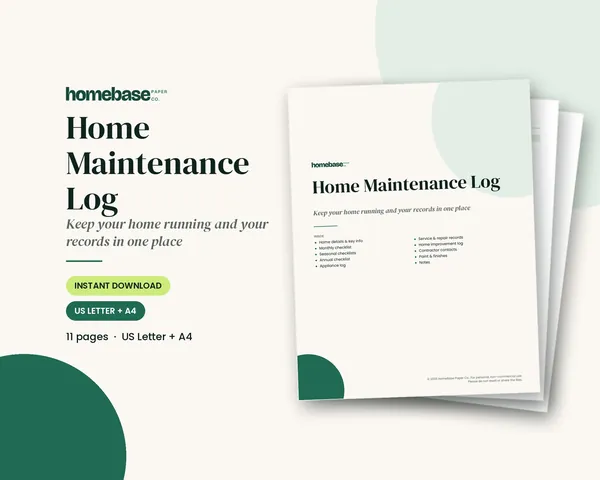
Home Maintenance Log
Monthly, seasonal and annual checklists plus a record of every appliance and repair.

Printables
Home Inventory
Printable pages and a spreadsheet that totals the value of every room.
Printables
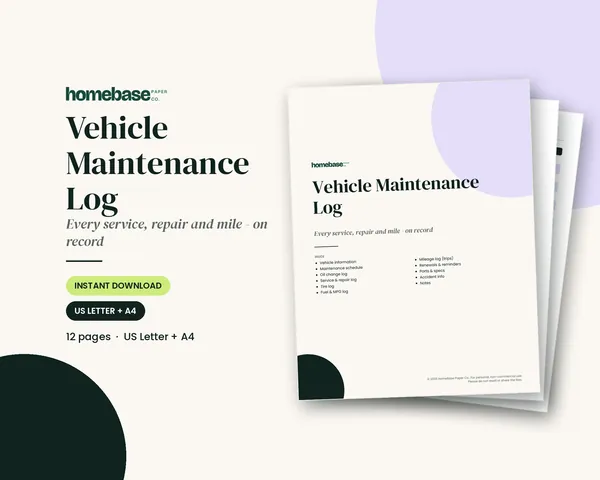
Vehicle Maintenance Log
Oil changes, repairs, tires, fuel and MPG, trip mileage and renewal dates - so resale and warranty records are easy.
 Club
Monthly club
Planner & Calendar Club
Anyone who wants a monthly calendar, bill calendar and meal plan ready to print.
Free printable
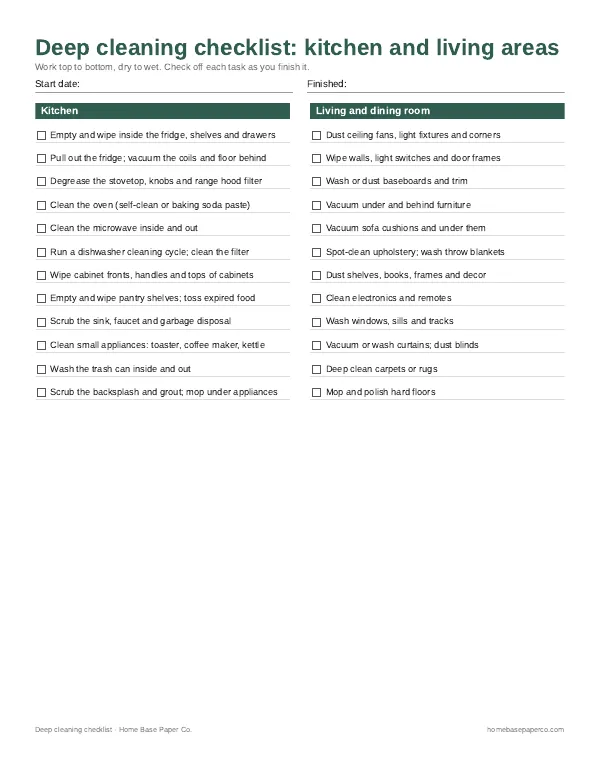
Clean the whole house in order: get the free deep cleaning checklist
A printable room-by-room deep cleaning checklist that tells you what to do first, so nothing gets cleaned twice. You'll also get our weekly HomeBase email with simple cleaning routines and chore ideas the whole family can help with.