

The short answer: for how to clean hardwood floors, the rule is dry most of the time, damp only when needed.
- Sweep or vacuum often to remove grit
- Deep clean with a pH-neutral wood cleaner on a damp, never wet, mop
- Skip steam mops, vinegar, bleach and vinyl or tile products
- Stains by finish type below
- Next step: Plan it with the Cleaning Schedule ($4.49).
If you want to know how to clean hardwood floors without dulling or warping them, the rule is: dry most of the time, damp only when needed. Sweep or vacuum often to remove grit, and deep clean with a pH-neutral wood cleaner on a mop that is damp, never wet. Skip steam mops, vinegar, bleach and products made for vinyl or tile. This guide covers daily care, deep cleaning, stains by finish type and how to protect the floor.

How to clean hardwood floors: the quick version
- Sweep or vacuum with a soft-bristle broom or a hard-floor setting.
- Check the care guide from your flooring maker for approved cleaners.
- Mix or spray a pH-neutral hardwood floor cleaner as the label directs.
- Damp-mop with a well-wrung microfiber mop, following the boards.
- Dry any wet spots right away.
- Protect with mats, felt pads and the right humidity.
Why hardwood needs special care
Wood is forgiving, but it does not like water or grit. Cornell Cooperative Extension warns that standing water can dull the finish, damage the wood and leave a discoloring residue. Grit acts like sandpaper underfoot. Consumer Reports says daily sweeping is essential to maintaining the integrity of a floor's finish, regardless of material.
What you need
| Item | Use |
|---|---|
| Soft-bristle broom or microfiber dust mop | Daily grit removal |
| Vacuum with a hard-floor setting | Beveled edges and gaps |
| pH-neutral hardwood floor cleaner | Deep cleaning |
| Microfiber flat mop | Damp mopping without excess water |
| Dry microfiber cloth | Wiping up wet spots |
| Felt pads and doormats | Protection |
Step 1: Remove dry dirt first
Use a soft-bristle broom on wood, Consumer Reports advises. If your boards have a beveled edge that traps crumbs, use the vacuum instead, a point Cornell also makes. Turn off the brush roll or use a hard-floor setting so it does not scratch. Work in the direction of the boards, and get the corners and along baseboards.
Step 2: Choose the right cleaner
For a deep clean, Consumer Reports recommends a pH-neutral hardwood floor cleaner. Cornell suggests a professional wood floor product recommended by a wood flooring professional. Either way, check the care guidelines from your flooring manufacturer before you apply a new cleaner.
Avoid:
- Bleach and ammonia. Consumer Reports says they might mar your floors.
- Wax-based cleaners on surface-finished floors.
- Acidic cleaners, including distilled white vinegar. Consumer Reports lists vinegar among what to avoid.
- Vinyl or tile floor products. Both sources say they dull wood. Cornell notes self-polishing acrylic waxes make wood slippery and dull quickly.
Step 3: Damp-mop, never wet-mop
Spray or apply cleaner as the label directs, then mop with a microfiber flat mop wrung out until it is only damp. Consumer Reports' guidance is "a damp, not wet, mop." Cornell's is blunter: "Do not wet-mop a wood floor." Work in sections, with the grain of the boards, and dry any spot that looks wet.
If your floor has a surface-penetrating sealer rather than a surface finish, Consumer Reports suggests a damp cloth rather than a mop.
Step 4: Skip the steam mop
It is tempting, but Consumer Reports says not to use a steam mop on wood floors, quoting a flooring retailer: drastic temperature changes and moisture may warp the wood. That holds for solid and engineered wood, and for bamboo. Some steam mop brands say sealed hardwood is fine, but the expert still recommends against it, because moisture can force its way into the joints between boards.
Know your finish
Care depends on the finish. Cornell's test: if a stain or scratch sits only in the finish and not the wood, it is a surface-finished floor, such as urethane. If it has gone into the wood, it is likely a wax-finished floor.
| Finish | Everyday cleaning | Stains |
|---|---|---|
| Surface finish (urethane, polyurethane) | Sweep, damp-mop with a wood cleaner | Use a cleaner made for urethane finishes |
| Wax or penetrating oil | Sweep, buff; damp cloth only | Fine steel wool and wax, per Cornell |
| Prefinished or engineered | Per the maker's care guide | Per the maker |
Removing common stains
From Cornell's guide:
- Gum, crayon or candle wax: hold a plastic bag of ice on it until it is brittle enough to crumble off. On urethane, clean the spot with a product made for urethane finishes.
- Food, water or pet spots on urethane: use a cleaner developed for urethane finishes. Stubborn spots may need a wood-floor scrub pad made for urethane.
- Oil or grease on urethane: rub with a urethane cleaner.
- Dried milk or food on wax finishes: gently rub with a damp cloth, then dry and wax.
- Wax buildup: if a waxed floor dulls, Cornell suggests buffing instead of adding more wax.
For deep scratches or burns, Cornell notes that touch-up kits, refinishing or board replacement may be needed. Wood is forgiving: most problems can be repaired.
Protect the floor between cleanings
Consumer Reports and Cornell agree on the basics:
- Doormats at every entry, inside and out, to stop grit.
- Mats in front of the sink and range, where foot traffic wears bare spots.
- Felt or plastic pads under furniture legs, and lift furniture rather than slide it.
- No high heels or cleats. Cornell says a person in high heels can exert 2,000 pounds per square inch, and an exposed heel nail up to 8,000.
- Wax the low-traffic spots less often on waxed floors. Cornell suggests waxing under furniture every other session to avoid buildup.
- The right humidity. Very dry air makes boards shrink, gap and creak. Consumer Reports suggests a humidifier to keep rooms at 30 to 40 percent in cooler, drier seasons.
Hardwood vs. engineered wood vs. laminate
These look alike but are not cleaned the same way. Solid hardwood is one piece of wood and can be sanded and refinished several times. Engineered wood has a real wood top layer over plywood; clean it like hardwood, and remember Consumer Reports' warning that steam can warp it too. Laminate is a photo layer over fiberboard with a plastic surface. Consumer Reports says to sweep or vacuum it regularly, because hard dirt particles scratch the plastic surface, and its steam mop guide says it is best to avoid steam on laminate as well. When in doubt, the gentle hardwood routine is safe for all three.
If you have rugs or carpeted rooms too, our guide on how to clean carpet covers vacuuming, spots and deep cleaning.
Homes with pets and kids
Pets and small children mean more spills, more grit and more nose prints, so the daily sweep matters most. Keep a dry microfiber cloth and a spray bottle of your wood cleaner handy for quick spot cleanups, and wipe pet water bowl areas daily, since drips there sit unnoticed. Trim pet nails to cut down on scratches, and put a washable mat under food and water bowls. Consumer Reports notes that keeping floors free of tracked-in contaminants matters especially with a crawling infant.
How often to clean hardwood floors
| Task | How often |
|---|---|
| Sweep, dust-mop or vacuum | Daily in busy areas, a few times a week elsewhere |
| Wipe spills | Immediately |
| Damp-mop with hardwood cleaner | Every 1 to 2 weeks |
| Clean mats and check felt pads | Monthly |
| Check humidity | Weekly in winter |
| Professional screen and recoat | Every few years, per your floor |
Common mistakes
Mopping before sweeping. You drag grit across the finish.
Too much cleaner. Extra product leaves film and streaks. Use the label dose.
Using a sponge mop with metal edges. Consumer Reports warns some can scratch floors.
Letting spills sit. Water and pet accidents soak into seams. Wipe them up at once.
Waxing a urethane floor. It leaves a slippery film and makes future recoating harder.
Make it a routine
Hardwood rewards small, frequent cleaning. Five minutes of sweeping most days does more than a two-hour scrub once a month.
Working top to bottom? Start with our guide on how to clean blinds.
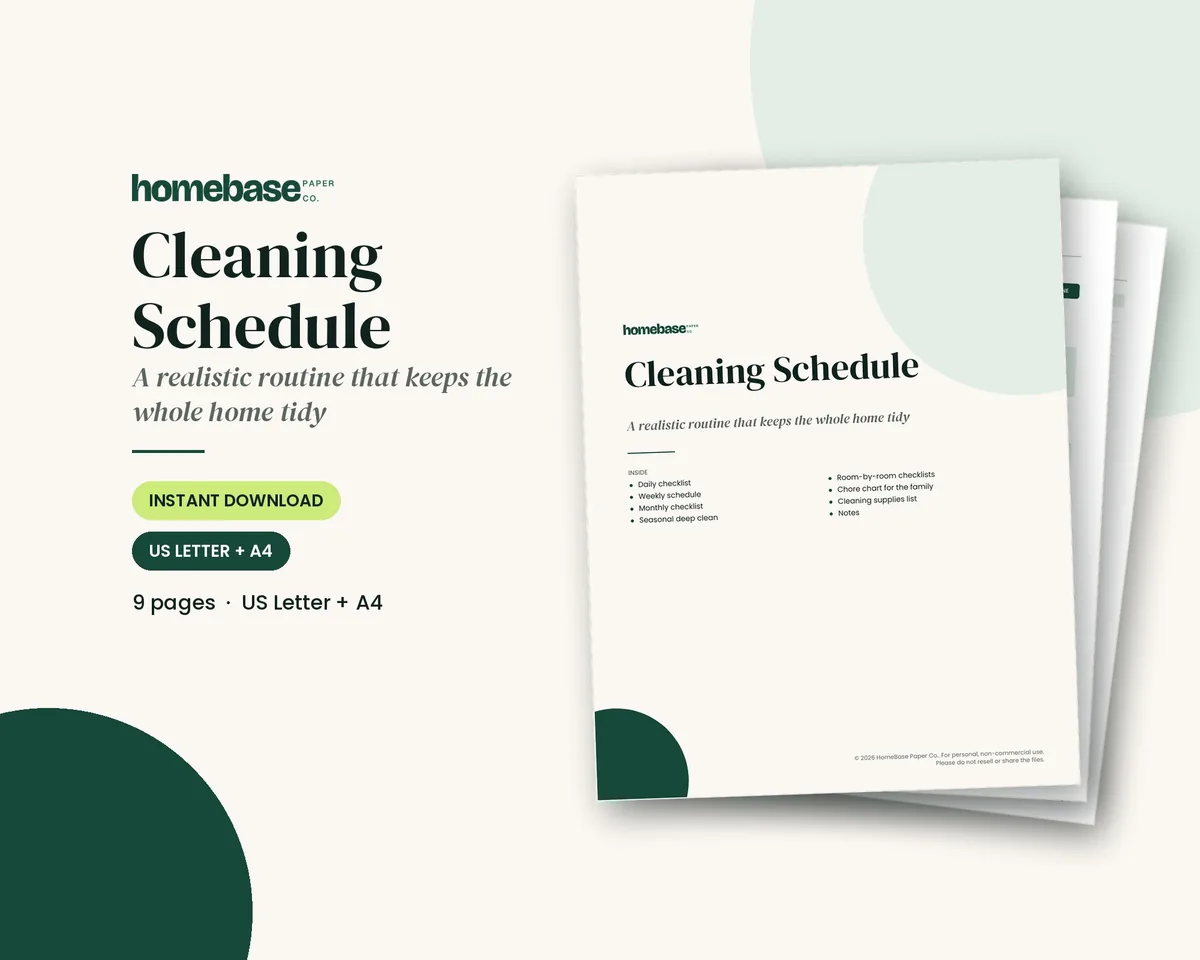
Our Cleaning Schedule ($4.49) is a 9-page printable with daily, weekly and monthly checklists, a seasonal deep clean list, room-by-room checklists, a family chore chart and a cleaning supplies list. Put "sweep kitchen and entry" on daily, "mop wood floors" on weekly, and "check felt pads and humidity" on the seasonal list.
For the whole home, the Home Management Bundle ($16.99) includes the Cleaning Schedule along with the Household Binder, Home Maintenance Log, Home Inventory, Moving Planner and Password & Accounts Log. Bought separately, those six come to $32.94.
Your next step
Look at the floor in your entryway. If you can feel grit underfoot, sweep it now and put a mat inside the door. This weekend, damp-mop with a pH-neutral wood cleaner and a well-wrung mop. Then put daily sweeping on your list.
Make it easier
Tools for this
Printables
Cleaning Schedule
Daily, weekly, monthly and seasonal lists - plus a family chore chart.
 Save 48%
Bundles
Home Management Bundle
Household binder, maintenance log, moving planner, cleaning schedule, home inventory and password log.
Frequently asked questions
What is the best way to clean hardwood floors? The best way to clean hardwood floors is to sweep with a soft-bristle broom or vacuum with a hard-floor setting often, then deep clean with a pH-neutral hardwood floor cleaner and a damp, not wet, mop. Dry any wet spots right away. Check your flooring maker's care guide before trying a new cleaner.
How often should you clean hardwood floors? You should sweep or vacuum hardwood floors daily in busy areas, or at least a few times a week, and damp-mop them with a hardwood cleaner every 1 to 2 weeks. Consumer Reports calls daily sweeping essential to maintaining a floor's finish, because grit scratches it.
Can you use vinegar on hardwood floors? No, it is best not to. Consumer Reports advises avoiding acidic substances like distilled white vinegar on wood floors, along with cleaners containing bleach, ammonia or wax, because they might mar the finish. Use a pH-neutral hardwood floor cleaner instead.
Can you use a steam mop on hardwood floors? No, you shouldn't use a steam mop on hardwood floors. Consumer Reports says to avoid steam mops on wood floors, solid or engineered, because heat and moisture can warp the wood. Even on sealed floors, moisture can work into the joints between boards. Use a damp mop instead.
Can you wet-mop hardwood floors? No, you should never wet-mop hardwood floors. Cornell Cooperative Extension warns that standing water can dull the finish, damage the wood and leave a discoloring residue. Wring the mop until it is only damp, and dry any puddles at once.
What is the best cleaner for hardwood floors? The best cleaner for hardwood floors is a pH-neutral cleaner made for wood, or one recommended by your flooring maker. Avoid vinyl or tile products, which Consumer Reports and Cornell both say can dull wood finishes and make floors slippery.
How do you clean hardwood floors without streaks? To clean hardwood floors without streaks, sweep or vacuum first so you are not dragging grit, use the cleaner at the dose on its label, wring a microfiber mop until it is just damp, and work with the direction of the boards. Too much cleaner is the most common cause of streaks and dull film.
How do you know what finish your hardwood floor has? Check whether a scratch or stain is only in the finish or in the wood. Cornell Cooperative Extension says if it sits only in the finish, the floor is surface finished, such as urethane; if it penetrates into the wood, it is likely a wax or oil finish. The care steps differ.
How do you remove gum or wax from a hardwood floor? To remove gum, crayon or candle wax from a hardwood floor, Cornell Cooperative Extension says to hold a plastic bag of ice on it until it is brittle enough to crumble off. On urethane floors, then clean the spot with a product made for urethane finishes.
How do you protect hardwood floors from scratches? Protect hardwood floors from scratches with felt or plastic pads under furniture legs, doormats at every entry, and mats in front of the sink and stove. Lift furniture rather than sliding it, and skip high heels indoors; Cornell says heels can hit with 2,000 pounds per square inch.
What humidity is best for hardwood floors? Keep room humidity around 30 to 40 percent in cooler, drier seasons, the range Consumer Reports suggests. Very dry air makes boards shrink, open gaps and creak. A humidifier helps in winter.
How do I keep up with floor cleaning? Put daily sweeping, weekly mopping and seasonal care on a written schedule. The Cleaning Schedule ($4.49) has daily, weekly and monthly checklists and a seasonal deep clean list, so floors get attention before grit wears the finish.
More from HomeBase
You may also like

Printables
Household Binder
Family info, emergency plan, calendars, meals, groceries, cleaning, bills and sitter notes.

Printables
Home Maintenance Log
Monthly, seasonal and annual checklists plus a record of every appliance and repair.

Printables
Home Inventory
Printable pages and a spreadsheet that totals the value of every room.

Printables
Vehicle Maintenance Log
Oil changes, repairs, tires, fuel and MPG, trip mileage and renewal dates - so resale and warranty records are easy.
 Club
Monthly club
Planner & Calendar Club
Anyone who wants a monthly calendar, bill calendar and meal plan ready to print.
Free printable
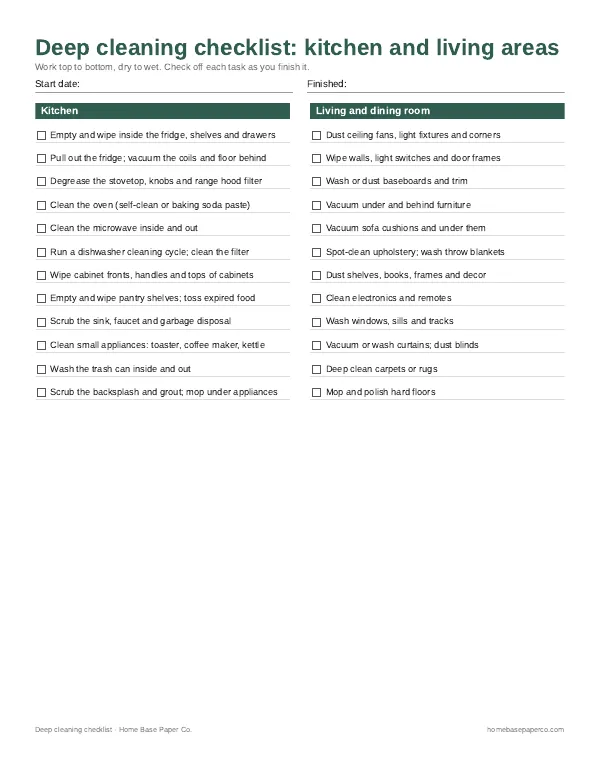
Clean the whole house in order: get the free deep cleaning checklist
A printable room-by-room deep cleaning checklist that tells you what to do first, so nothing gets cleaned twice. You'll also get our weekly HomeBase email with simple cleaning routines and chore ideas the whole family can help with.
Sources
- Consumer Reports: Ways to Clean and Protect Your Floors consumerreports.org
- Consumer Reports: Why You Shouldn't Use a Steam Mop on Wood Floors consumerreports.org
- Cornell Cooperative Extension: Maintenance of Hardwood Floors hamilton.cce.cornell.edu