

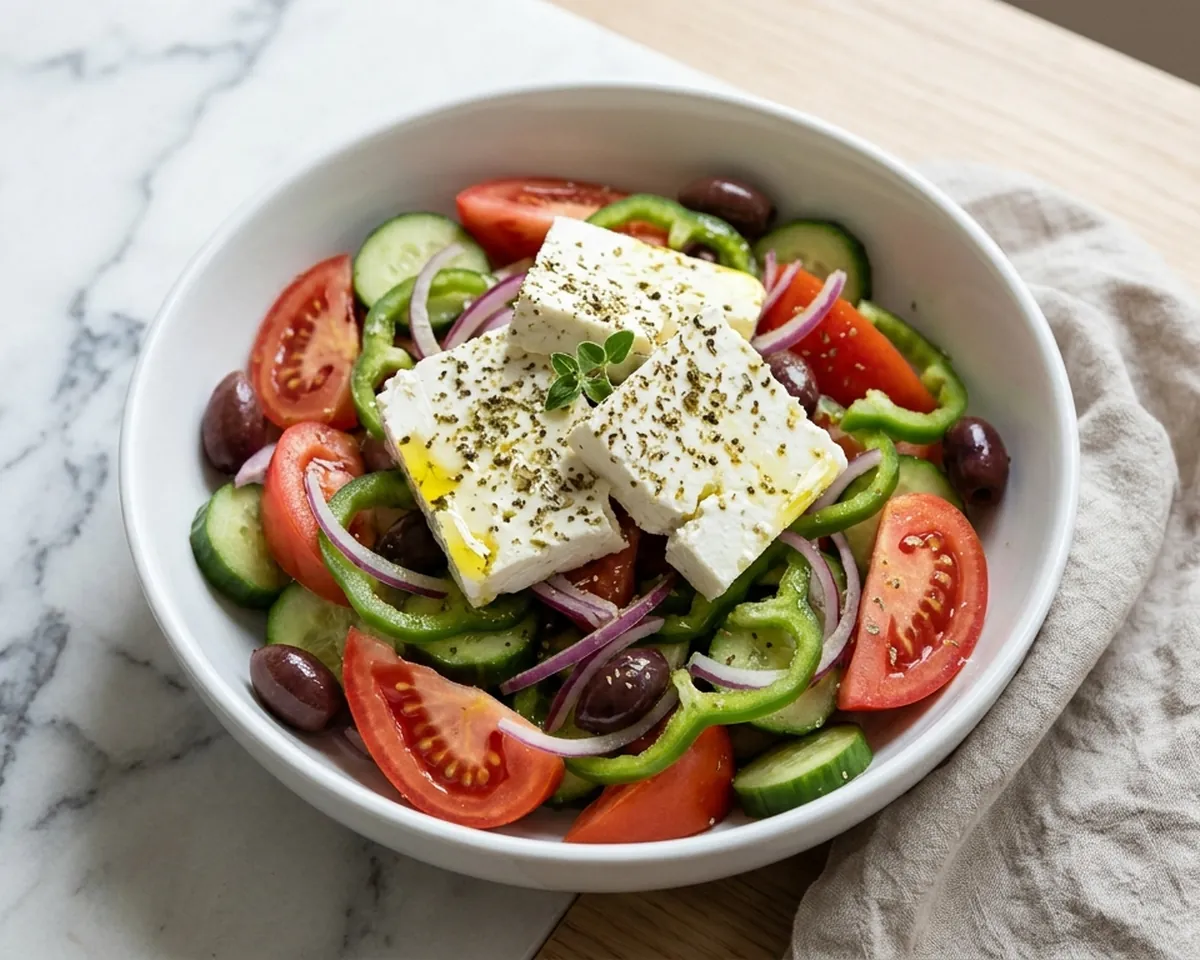
The short answer: This Greek salad is the classic Greek village salad, horiatiki: juicy tomatoes, crisp cucumber, sweet peppers, red onion, briny Kalamata olives and a slab of feta, dressed with good olive oil and oregano. Cut the vegetables into big chunks, add olives, set a piece of feta on top, then drizzle with olive oil and red wine vinegar and sprinkle with dried oregano and salt. It takes 15 minutes and no cooking.
Our picks for greek salad
 Starter pick
Printables
Meal Planner & Grocery List
Weekly meals, a grocery list sorted by aisle, and pantry and freezer inventories so you shop once and waste less.

Printables
Family Recipe Binder
Section dividers, four recipe page layouts with room for the family story, 4x6 and 3x5 cards and a conversion chart - print it or type into the fillable version.
Prep time: 15 minCook time: 0 minTotal time: 15 minServings: 4 servings
Below you'll find exact amounts, an easy Greek salad dressing, versions with lettuce or chicken, and tips for making it ahead.
One large salad serves 4 as a side or 2 as a main dish.
Greek salad ingredients
| Ingredient | Amount | Notes |
|---|---|---|
| Ripe tomatoes | 4 medium (about 1½ pounds) | Or 2 pints cherry tomatoes |
| Cucumber | 1 English cucumber | Peeled in stripes if you like |
| Green bell pepper | 1 | Thinly sliced into rings |
| Red onion | ½ small | Thinly sliced |
| Kalamata olives | ½ cup | Pitted or whole |
| Feta cheese | 6 to 8 ounces | A block in brine, not crumbles |
| Extra virgin olive oil | ¼ cup | The best you have |
| Red wine vinegar | 1 to 2 tablespoons | To taste |
| Dried oregano | 1 teaspoon | Greek oregano if you can find it |
| Salt and pepper | To taste | Go easy because feta is salty |
How to make Greek salad
- Wash the produce. Rinse the tomatoes, cucumber and pepper under running water and dry them. The FDA's produce safety guide says to skip soap and produce washes.
- Cut big pieces. Cut the tomatoes into wedges, the cucumber into thick half-moons, and the pepper and onion into thin rings.
- Season. Put the vegetables in a wide bowl or platter and sprinkle them with a pinch of salt.
- Add olives and feta. Scatter the olives over the vegetables and set the feta on top in one piece or a few big chunks.
- Dress and serve. Drizzle the olive oil and vinegar over everything, sprinkle the oregano over the feta, add pepper, and serve right away with crusty bread to soak up the juices. For a bigger Greek spread, add warm pitas and our tzatziki sauce.
Easy Greek salad dressing
If you'd rather toss the salad, shake ¼ cup of extra virgin olive oil, 2 tablespoons of red wine vinegar, 1 teaspoon of dried oregano, 1 small grated garlic clove, ½ teaspoon of Dijon mustard, ¼ teaspoon of salt and a few grinds of pepper in a jar. A squeeze of lemon makes it brighter. It keeps for a week in the refrigerator, so shake it again before using.
Greek salad variations
| Version | What to change |
|---|---|
| Greek salad with lettuce | Add 4 cups chopped romaine, and use the shaken dressing |
| Greek chicken salad | Top with sliced grilled chicken breast |
| Chickpea Greek salad | Add a drained can of chickpeas for protein |
| Greek orzo or quinoa salad | Toss in 2 cups cooked, cooled orzo or quinoa |
| Greek salad meal prep | Pack vegetables, feta and dressing in separate containers |
Tips for the best Greek salad
- Use the ripest tomatoes you can find. They're the heart of the salad. Out of season, cherry tomatoes taste better than large ones.
- Buy feta in brine. Block feta is creamier and tangier than pre-crumbled feta.
- Cut chunky pieces. Big pieces stay crisp and look like a real village salad.
- Don't overdress. The tomato juices mix with the oil to make the dressing.
- Soak the onion. If raw onion tastes too sharp, soak the slices in cold water for 10 minutes.
Greek salad and the Mediterranean diet
Greek salad is a natural fit for the Mediterranean way of eating. Mayo Clinic's Mediterranean diet guide describes it as rich in vegetables, fruits, whole grains, herbs and extra virgin olive oil, with moderate portions of dairy. A big Greek salad with chickpeas or fish and a piece of whole-grain pita checks most of those boxes in one meal.
What to serve with Greek salad
Serve it with grilled chicken, lamb, baked salmon, air fryer salmon, gyros or a simple pasta. It also pairs well with our cucumber salad on a buffet. For weeknight ideas, see our high-protein meals and meal prep ideas. For the chicken, our Greek yogurt chicken marinade uses lemon, garlic and oregano.
Plan the week's meals
More salads across greens, grains and meal prep: salad recipes.

- Meal Planner & Grocery List, $3.99. Plan the week's meals, keep a grocery list sorted by aisle, and track what's already in the pantry and freezer so you shop once and waste less.
- Family Recipe Binder, $6.99. Write your version of this recipe on a recipe page or a 4x6 card, file it behind a section divider, and use the conversion chart when you double the batch.
Building a Mediterranean spread? Serve this salad with our easy hummus and warm pita. For a full Mediterranean dinner, add our chicken shawarma recipe.
Round out the meal with our soft pita bread recipe.
Add quick pickled red onions for a sharp, crunchy topping; keep the jar refrigerated rather than treating this quick pickle as shelf-stable.
Greek salad pairs with grilled meat on our list of summer dinner ideas, sorted into no-cook, grill and cookout meals.
Frequently asked questions
What is in a traditional Greek salad? A traditional Greek salad, called horiatiki or village salad in Greece, is made with ripe tomatoes, cucumber, red onion, green bell pepper, Kalamata olives and a thick slab of feta cheese. It's dressed simply with extra virgin olive oil, a splash of red wine vinegar, dried oregano and salt. A traditional Greek salad has no lettuce, which is an American addition.
What is the dressing for Greek salad? A classic Greek salad dressing is ¼ cup of extra virgin olive oil, 2 tablespoons of red wine vinegar, 1 teaspoon of dried oregano, a small grated garlic clove, ½ teaspoon of Dijon mustard, salt and pepper, shaken in a jar. In Greece, many cooks simply drizzle oil and vinegar right over the salad and sprinkle oregano on the feta, so either way is authentic.
Can you make Greek salad ahead of time? Yes, you can make Greek salad a few hours ahead. Chop the cucumber, peppers and onion and keep them in a covered container, and keep the tomatoes, feta and dressing separate. Toss everything together within an hour of serving, because salted tomatoes and cucumbers release juice. Without lettuce, Greek salad holds up better than most salads on a buffet.
How long does Greek salad last in the fridge? Undressed Greek salad vegetables keep for 3 to 4 days in a covered container in the refrigerator. Once it's dressed, a Greek salad is best eaten within 1 day, because the tomatoes and cucumbers soften and turn watery. Store the feta in its brine and the dressing in a jar, and combine them with the vegetables just before you eat.
What can you add to Greek salad to make it a meal? To turn a Greek salad into a meal, add grilled chicken, shrimp, salmon, chickpeas or a scoop of cooked quinoa or orzo. Serve it with warm pita and hummus or tzatziki. Grilled chicken or chickpeas add protein, so a big Greek salad works as an easy weeknight dinner or a make-ahead lunch for the week when the dressing is packed separately.
Is Greek salad healthy? A Greek salad fits the Mediterranean way of eating, which Mayo Clinic describes as rich in vegetables, olive oil and herbs, with moderate portions of cheese. It's full of fresh vegetables, and the olive oil provides unsaturated fat. Feta and olives are salty, so if you're watching sodium, use a smaller piece of feta and fewer olives.