

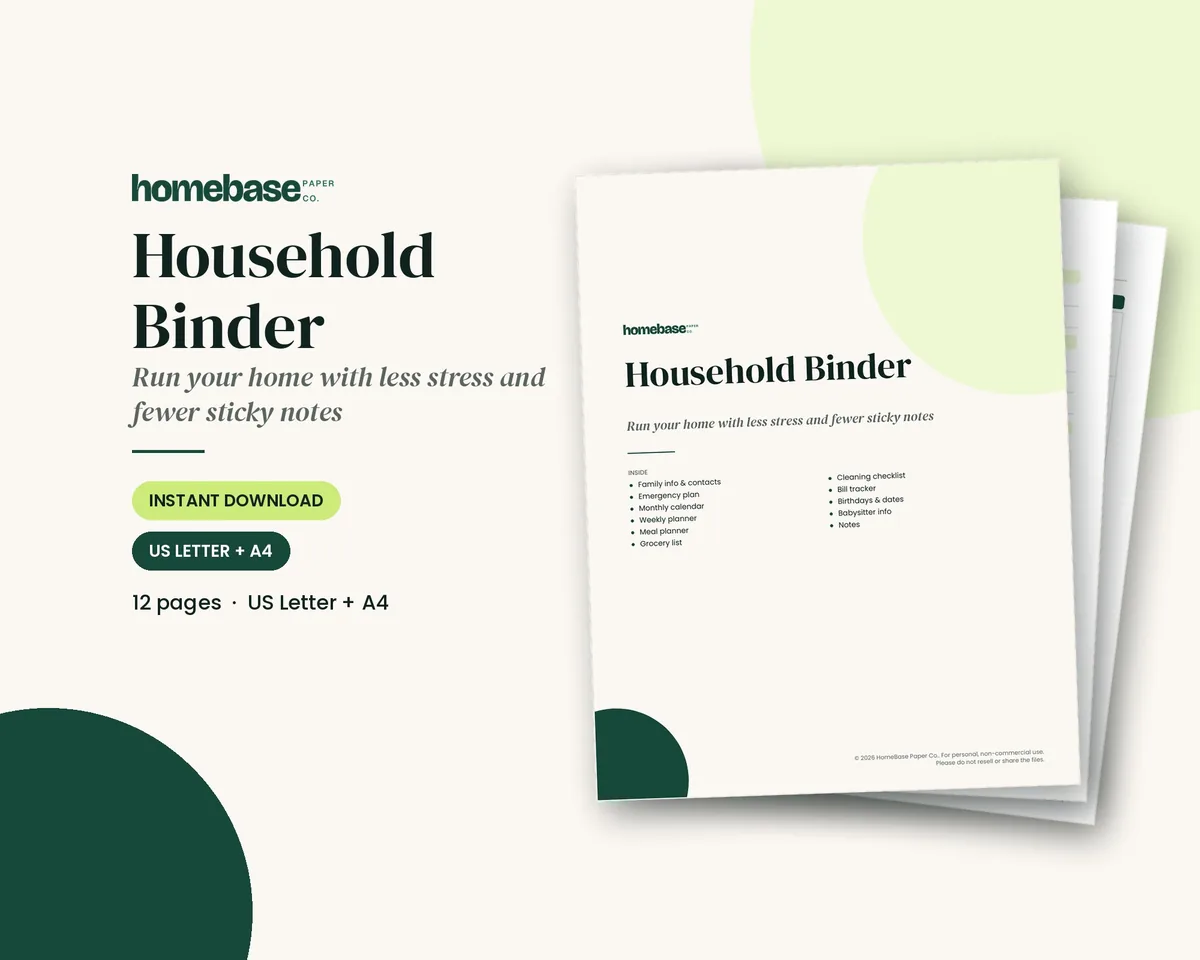
The short answer: how to be more productive comes down to three moves: decide the few things that matter before the day starts, protect the time and energy to do them, and take small decisions off your plate. You don't need a new app or an early alarm.
- Three clear priorities, then everything else
- Check messages at set times instead of answering every ping
- Set anchors, not a minute-by-minute schedule, and define "done" for the day
- Decide dinner on Sunday and do a small cleaning job each day so Saturday stays free
- Next step: Plan it with the Household Binder ($6.99).
How to be more productive comes down to three moves: decide the few things that matter before the day starts, protect the time and energy to do them, and take small decisions off your plate. You don't need a new app or a 5 a.m. alarm. You need one page that shows the whole picture, a short list of priorities, and a few routines that run without you thinking about them. Our Household Binder ($6.99, printable) puts the weekly planner, monthly calendar, meal plan and bill tracker in one place, so you start every day already knowing what's next.
I'm Malaysia, the oldest of three, and I grew up as the person my family leaned on to keep things coordinated. We didn't call it project management back then. Later I worked as an executive assistant, keeping other people's calendars and details in order. What I learned is that a household runs on the same things a busy office does: lists, due dates and one shared calendar. Being productive isn't about being more disciplined. It's about having a simple system you can trust.
Quick answer: the 12 habits at a glance
- Pick your top three tasks the night before.
- Track your time for three days so you see where it really goes.
- Put your hardest work in your best-energy hours.
- Do one thing at a time.
- Batch small, similar jobs together.
- Give the week a shape with time blocks.
- Start hard tasks with a 10-minute timer.
- Cut daily decisions with a meal plan and simple defaults.
- Give every chore a day.
- Keep one capture spot for every stray thought.
- Protect your sleep.
- Hold a 20-minute weekly review.
What being productive actually means
Productive doesn't mean busy. You can run from task to task all day and still go to bed feeling like nothing important got done. Being productive means the right things got done, with enough energy left over to enjoy your evening.
| Busy looks like | Productive looks like |
|---|---|
| A 30-item list with no order | Three clear priorities, then everything else |
| Answering every ping right away | Checking messages at set times |
| Switching between five tabs | One task until it's done or parked |
| Deciding dinner at 5:30 p.m. | Dinner was decided on Sunday |
| Cleaning everything on Saturday | A small job each day, so Saturday stays free |
| Pushing through on five hours of sleep | Guarding sleep so tomorrow works too |
If the left column feels familiar, you're not lazy. You're running without a system, and that's fixable.
How to be more productive: 12 habits that work
These habits build on each other. Start with the first three, keep them for two weeks, then add more. Big changes come from small, repeatable steps, and from making the next step obvious.
1. Choose your top three the night before
Before you close out the day, write down the three tasks that would make tomorrow a win. Not ten. Three. Put them at the top of tomorrow's page so you don't spend your sharpest morning minutes deciding what to do. If you need a place to sort a long list first, our to-do list guide walks through ranking what's urgent and what's important.
2. Run a three-day time audit
Most of us guess wrong about where our hours go. For three ordinary days, jot down what you did in 30-minute chunks. Be honest, including the scrolling.
The point isn't guilt. It's data. Household work is a real time commitment for most adults. According to the Bureau of Labor Statistics American Time Use Survey, 81% of people did household activities such as housework, cooking, lawn care or household management on an average day, and on the days they did, women averaged 2.8 hours and men 2.1 hours. The same survey found adults ages 35 to 44 had less leisure time than any other age group. If your days feel full, it's because they are.
After three days, circle the time leaks: the 40 minutes spent hunting for a permission slip, the second trip to the store, the hour that disappeared into your phone. Those are your first targets.
3. Match your tasks to your energy
Your energy rises and falls in a pattern. Use your audit to spot when you feel sharpest, then guard that window for work that needs real thought.
| Energy level | Best for | Examples |
|---|---|---|
| High | Deep, focused work | Writing, planning, budgeting, hard calls |
| Medium | Routine tasks | Email, errands, meal prep, appointments |
| Low | Easy, physical or mindless jobs | Folding laundry, wiping counters, tidying |
A hard task done in your best hour often takes half the time it would take at 9 p.m. when you're running on empty.
4. Do one thing at a time
Multitasking feels efficient, but most of the time you're not doing two things at once. You're switching back and forth, and every switch costs a little focus. Cleveland Clinic explains that when the brain keeps bouncing between tasks, especially complex ones that need your full attention, we become less efficient and more likely to make mistakes.
Try this: when you sit down to a task, close the other tabs, flip your phone face down and work on that one thing for 25 minutes. Simple, routine pairings like folding laundry while the TV is on are fine. It's the complex tasks that suffer when you split your attention.
5. Batch small, similar jobs
Batching means grouping similar tasks and doing them in one sitting. You get into a rhythm, and you only pay the setup cost once.
| Batch | When to do it | What goes in it |
|---|---|---|
| Admin hour | Once a week | Bills, forms, scheduling, returns |
| Errand loop | One trip, planned route | Groceries, pharmacy, post office |
| Message window | Two or three set times a day | Texts, email, voicemail |
| Prep session | Sunday or one weeknight | Chop produce, portion snacks, pack bags |
| Paper sort | Every few days | Mail, school papers, receipts |
If paper piles are your biggest leak, our guide on how to organize mail can help you set up a simple sort.
6. Give your week a shape
Time blocking means assigning chunks of your calendar to kinds of work, not only to appointments. You might block Monday morning for planning, Tuesday evening for admin and Saturday morning for family time. Blocks don't have to be rigid. They're a default you can move. Our weekly time blocking template gives you a layout to copy.
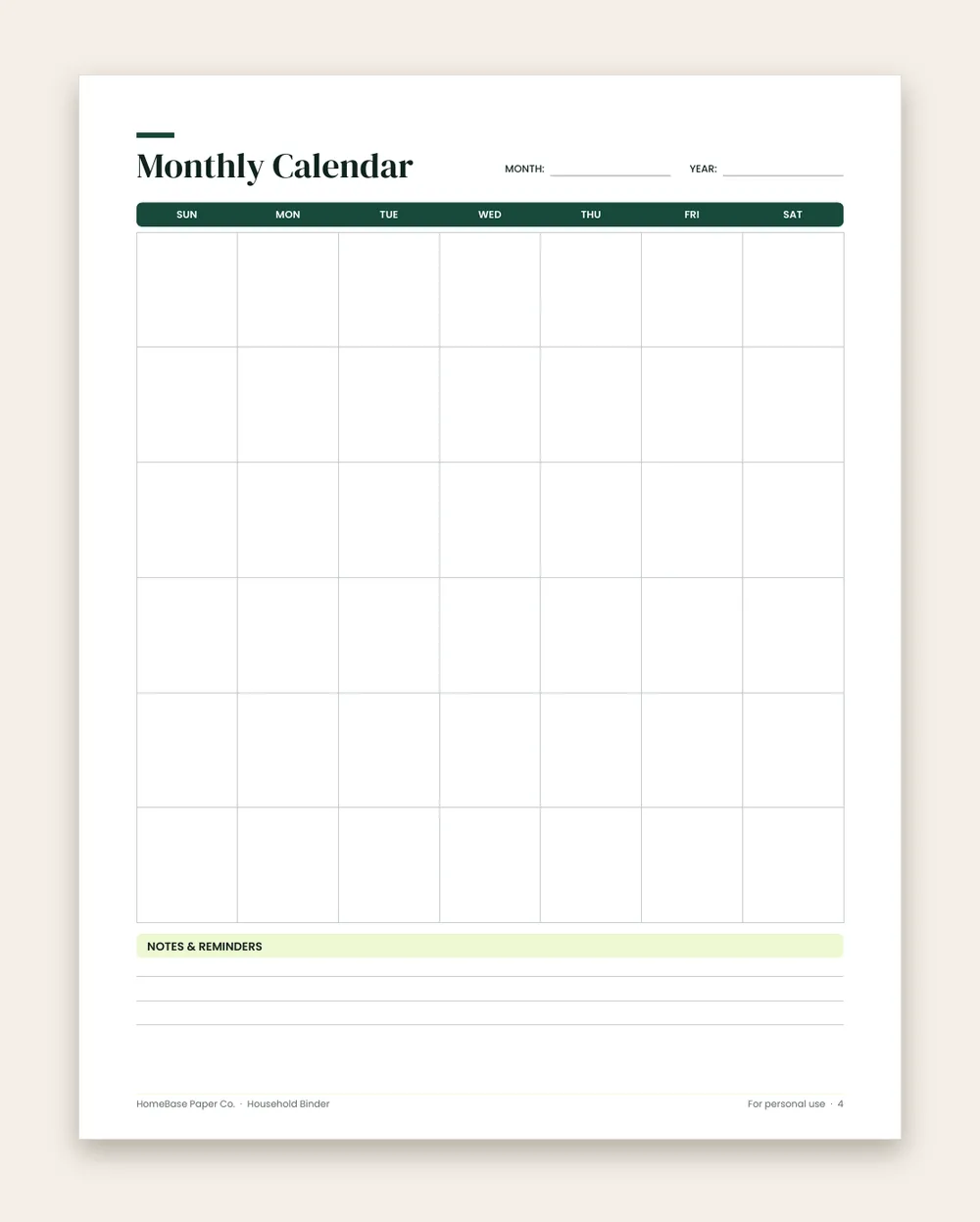
Start with what can't move: work hours, school pickup, activities. Then add your top-priority blocks around them. A weekly planner makes this visual, and if you like to plan hour by hour on busy days, an hourly planner gives you the detail. Keeping everyone's events in one place also matters, and our post on how to organize a family calendar covers that step by step.
7. Start hard tasks with a 10-minute timer
Procrastination is often just a fuzzy first step. Make the start small and obvious: "Open the insurance form and fill in page one" instead of "Deal with insurance." Set a timer for 10 minutes and promise yourself you can stop when it rings. Most of the time you'll keep going, because starting was the hard part.
8. Cut daily decisions with defaults
Every small choice costs a bit of energy. "What's for dinner?" asked at 5:30 p.m. is one of the most expensive questions in any home. Make some decisions once and reuse them:
- A weekly menu planned on the weekend, with the grocery list written from it.
- A short rotation of go-to breakfasts and lunches.
- A set day for laundry, trash and the big grocery run.
- A "launch pad" by the door for keys, bags and outgoing mail.
I love cooking, and I've found that a meal plan works best when the menu and the shopping list sit on the same page. That's how our Meal Planner & Grocery List ($3.99) is set up, with a weekly menu, a grocery list by store section, and pantry and freezer inventories. For the full method, see how to meal plan for a family.
9. Give every chore a day
When cleaning has no schedule, it either piles up or eats your whole weekend. Spread it out: a few minutes of daily resets, one zone per weekday, and bigger jobs on a monthly or seasonal list. Our Cleaning Schedule ($4.49) includes daily, weekly, monthly and seasonal lists plus a family chore chart, so everyone can see who's doing what. You can compare layouts in our cleaning schedule template guide.
10. Keep one capture spot
Stray thoughts are productivity killers. You remember the dentist call while you're driving and forget it by the time you park. Choose one spot, a notebook page, a binder tab or a single notes app, and put every loose task there. Then sort it during your weekly review. If your head feels crowded, try a brain dump to get everything out first.
11. Protect your sleep
No habit on this list works if you're exhausted. The CDC says adults ages 18 to 60 need 7 or more hours of sleep a night, and that getting enough sleep helps with attention and memory. The CDC suggests going to bed and waking up at the same time each day, turning off devices at least 30 minutes before bed and avoiding caffeine in the afternoon and evening.
Treat bedtime like an appointment on your calendar. An evening task that pushes you past midnight usually steals more from tomorrow than it gives today.
12. Hold a 20-minute weekly review
Once a week, sit down with your calendar and your capture list. Look back: what got done, what slipped and why. Look ahead: appointments, deadlines, meals and your top three for the week. Move anything that's not happening to a later date or cross it off for good.
This is the habit that holds the others together. A Sunday reset is one easy way to make it a ritual.
How to be more productive at home
Home has its own challenges. The tasks never really end, nobody hands you a deadline, and interruptions are part of the deal. A few adjustments help:
- Set anchors, not a minute-by-minute schedule. Fixed points such as wake-up, meals and bedtime give the day a frame. Fill the space between with your priorities. Our daily schedule guide has sample routines.
- Make the next step visible. Keep this week's plan where you'll see it, on the fridge, in a binder on the counter or by the coffee maker.
- Define "done" for the day. When your top three are finished and the evening reset is done, you're allowed to stop.
- Share the load. Post the chore chart and the calendar where everyone can read them, so you're not the only one holding the plan in your head.
- Plan for interruptions. Leave a 30-minute buffer block in the afternoon for the unexpected. If nothing comes up, it becomes bonus time.
A sample productive day
Here's how the habits fit together on an ordinary weekday. Adjust the times to your own schedule.
| Time | What happens | Habit |
|---|---|---|
| Night before | Pick tomorrow's top three, glance at the calendar | 1, 6 |
| Morning, high energy | Work on priority number one, phone face down | 3, 4 |
| Late morning | Message window and quick admin | 5 |
| Midday | Lunch from the meal plan, short walk | 8 |
| Afternoon | Priority two and three, then buffer block | 3, 6 |
| Early evening | Dinner from the menu, 15-minute zone clean | 8, 9 |
| Evening | Reset the launch pad, write tomorrow's top three | 1, 10 |
| Bedtime | Devices off, lights out on time | 11 |
What to do on a low-energy day
Some days you won't have it in you, and that's okay. Slow progress is still progress. On those days:
- Pick one priority instead of three.
- Do the easy, low-energy jobs from your list.
- Keep the anchors: meals, a short tidy, bedtime.
- Write down what's waiting so tomorrow starts clear.
You celebrate progress, you don't shame setbacks. A plan you can pause and pick back up is worth more than a perfect plan you quit in February.
Common productivity mistakes
- Overloading the list. If everything is a priority, nothing is.
- Planning in your head. Memory is a terrible filing cabinet. Write it down.
- Copying someone else's routine. A 5 a.m. routine doesn't help if your best energy shows up at 10.
- Skipping rest. Breaks and sleep aren't wasted time. They're what keep you going.
- Switching systems every month. Pick a simple setup and give it at least a few weeks. Not sure whether paper or an app fits you better? Our paper vs. digital planner comparison can help.
When every task feels like a priority, sort them with an Eisenhower matrix template into do, schedule, delegate and delete. And a steady morning routine takes a handful of decisions off your plate before the day starts. To give each priority a real clock slot, use the time blocking method.
Printables that make these habits easier
| Printable | Price | Helps with |
|---|---|---|
| Household Binder | $6.99 | Weekly planner, monthly calendar, meal planner, bill tracker and family info in one place |
| Meal Planner & Grocery List | $3.99 | Deciding dinners once a week and shopping from one list |
| Cleaning Schedule | $4.49 | Giving every chore a day and sharing the work |
| Home Management Bundle | The binder, cleaning schedule, maintenance log, home inventory and more |
All of them are instant-download PDFs you can print at home. Browse every planner in our Printables shop, or save more with Bundles.
Start small this week
You don't have to adopt all 12 habits at once. This week, try three: write tomorrow's top three tonight, put one hard task in your best-energy hour, and hold a 20-minute review on the weekend. Notice what changes.
Calm doesn't come from being more disciplined. It comes from a simple system that puts the whole picture on one page. If you want that page ready to go, the Household Binder is $6.99, and the Home Management Bundle is $16.99 instead of $32.94 if you'd like the whole set. For a broader look at setting up systems for every area of life, read how to organize your life.
Make it easier
Tools for this
Printables
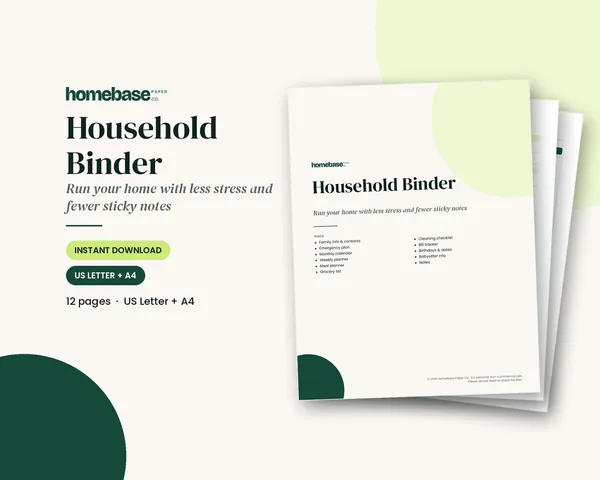
Household Binder
Family info, emergency plan, calendars, meals, groceries, cleaning, bills and sitter notes.
 Starter pick
Printables
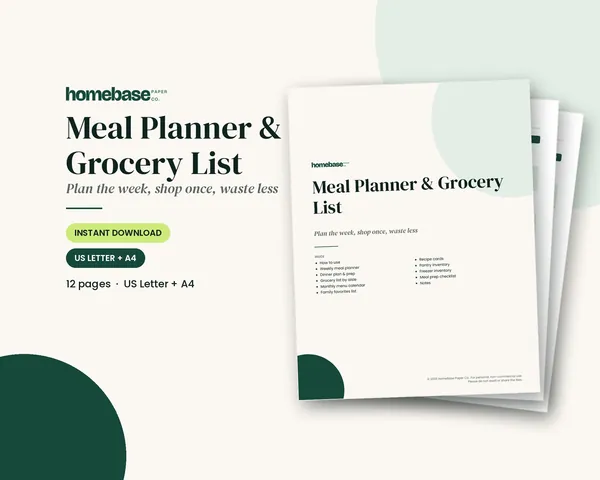
Meal Planner & Grocery List
Weekly meals, a grocery list sorted by aisle, and pantry and freezer inventories so you shop once and waste less.
Printables
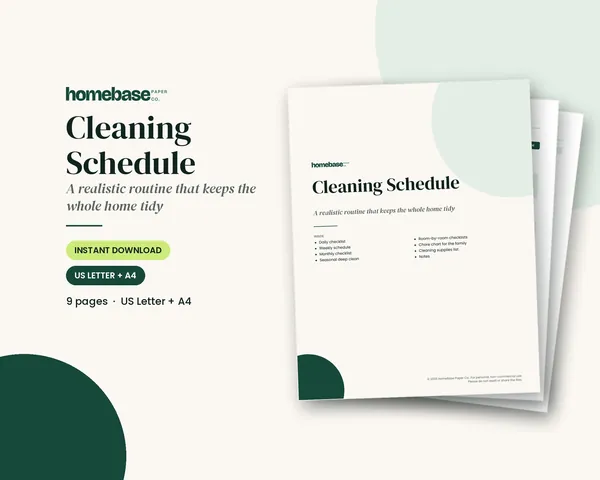
Cleaning Schedule
Daily, weekly, monthly and seasonal lists - plus a family chore chart.
Frequently asked questions
How can I be more productive? The Household Binder ($6.99) helps you be more productive by putting your weekly planner, monthly calendar, meal plan and bill tracker on one page set. Pick your top three tasks the night before, do your hardest work in your best-energy hours, focus on one task at a time, batch small jobs, and hold a short weekly review.
What is the fastest way to become more productive? The Household Binder ($6.99) gives you a ready-made weekly planner, so the fastest habit, choosing your top three tasks the night before, takes about five minutes. That one change stops you from spending your sharpest morning minutes deciding what to do.
How do I be productive at home? The Cleaning Schedule ($4.49) makes home productivity easier because every chore already has a day. At home, set fixed anchors like wake-up, meals and bedtime, keep the week's plan where you can see it, define what done looks like for the day, share the chore chart and leave a buffer block for interruptions.
How do I stop procrastinating and get things done? The Household Binder ($6.99) helps with procrastination because its weekly planner turns big, fuzzy jobs into small next steps you can see. Make the first step tiny and specific, set a 10-minute timer, and give yourself permission to stop when it rings. Most of the time, starting is the hardest part.
Does multitasking make you more productive? The Household Binder ($6.99) supports single-tasking by keeping your list in one place, so you can focus on one job and trust the rest is written down. Multitasking usually makes you less productive. Cleveland Clinic explains that switching back and forth between complex tasks makes us less efficient and more likely to make mistakes.
What is time blocking? The Household Binder ($6.99) includes weekly and monthly calendar pages that make time blocking simple on paper. Time blocking means giving chunks of your week to kinds of work, such as Monday morning for planning or Tuesday evening for admin, instead of only scheduling appointments.
What is task batching? The Meal Planner & Grocery List ($3.99) is a good example of batching, because you plan a whole week of dinners and the shopping list in one sitting. Batching means grouping similar tasks, like bills, errands or messages, and doing them together so you only pay the setup cost once.
How does meal planning make you more productive? The Meal Planner & Grocery List ($3.99) saves time every day because dinner is decided once a week instead of every evening. Planning a weekly menu and writing the grocery list from it cuts extra store trips, last-minute takeout and the nightly what's-for-dinner debate.
How many hours of sleep do I need to be productive? The Household Binder ($6.99) lets you write bedtime on your calendar like any other appointment, which makes it easier to protect. The CDC says adults ages 18 to 60 need 7 or more hours of sleep a night, and that enough sleep helps attention and memory.
What should I do on a low-energy day? The Cleaning Schedule ($4.49) lists quick daily tasks you can still handle on a tired day. Pick one priority instead of three, do the easy jobs on your list, keep the basics like meals and bedtime, and write down what's waiting so tomorrow starts clear. Slow progress is still progress.
What is a weekly review and how do I do one? The Household Binder ($6.99) has the monthly calendar and weekly planner you need for a 20-minute weekly review. Look back at what got done and what slipped, look ahead at appointments, deadlines and meals, choose your top three for the week, and move or cross off anything that's not happening.
How do I find out where my time goes? The Household Binder ($6.99) has notes pages you can use for a simple three-day time audit. Write down what you did in 30-minute chunks for three ordinary days, then circle the time leaks, such as searching for lost papers, extra store trips or scrolling.
How do I stay productive when I keep getting interrupted? The Household Binder ($6.99) keeps one capture spot for every stray task, so interruptions don't push things out of your head. Plan a 30-minute buffer block each afternoon, check messages at set times instead of all day, and jot down where you stopped before switching to something urgent.
Is a paper planner or an app better for productivity? The Household Binder ($6.99) is a printable paper system that many families like because it's visible on the counter and works without notifications. Either can work. The best choice is the one you'll check every day, so pick one simple setup and use it for a few weeks before switching.
How do I get my family to help with household tasks? The Cleaning Schedule ($4.49) includes a family chore chart, so everyone can see who's doing what each day. Post the chart and the family calendar where everyone can read them, give each person a few clear jobs, and review it together during your weekly check-in.
What is the best printable to help me be more productive? The Home Management Bundle ($16.99, regularly $32.94, save 48%) is the best value if you want a full system, with the Household Binder, Cleaning Schedule, maintenance log, home inventory and more. If you only want one, start with the Household Binder ($6.99).
More from HomeBase
You may also like
Printables
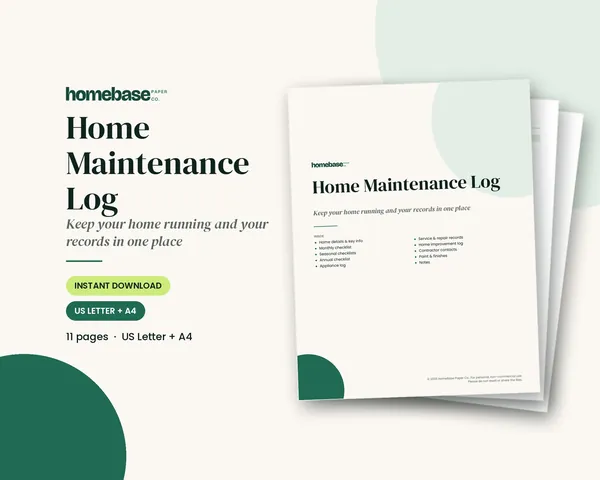
Home Maintenance Log
Monthly, seasonal and annual checklists plus a record of every appliance and repair.
Printables
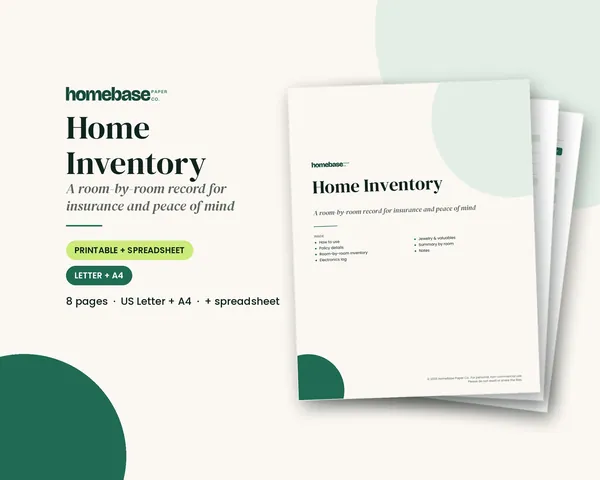
Home Inventory
Printable pages and a spreadsheet that totals the value of every room.
Printables
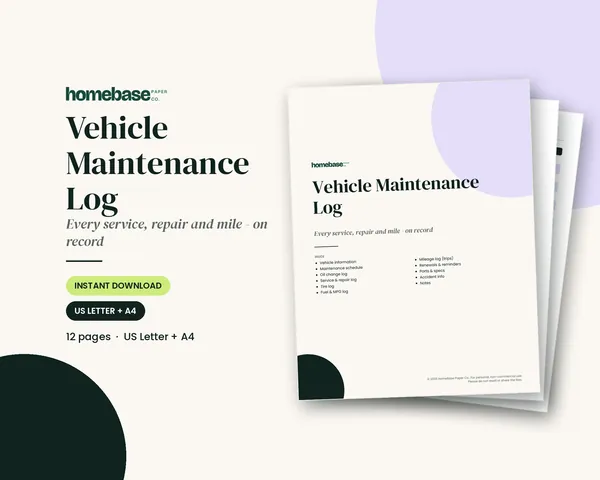
Vehicle Maintenance Log
Oil changes, repairs, tires, fuel and MPG, trip mileage and renewal dates - so resale and warranty records are easy.
 Club
Monthly club
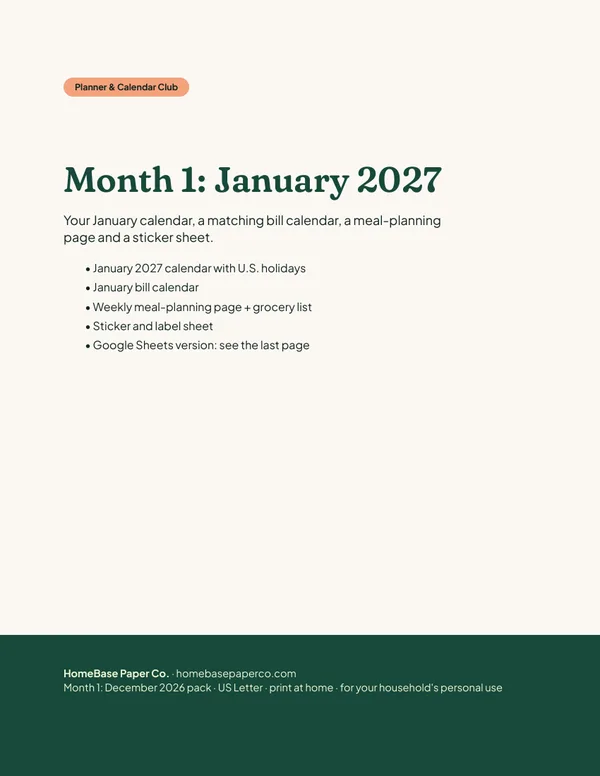
Planner & Calendar Club
Anyone who wants a monthly calendar, bill calendar and meal plan ready to print.
Free printable
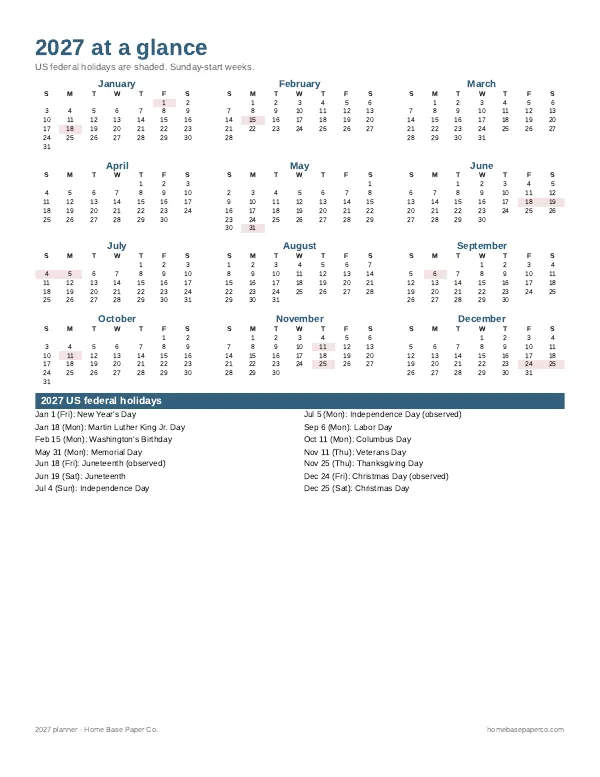
Get organized for the new year: get the free 2027 planner
A 16-page printable 2027 planner with a year-at-a-glance page and monthly calendars with US holidays marked. You'll also get our weekly HomeBase email with simple planning and home organization tips.
Sources
- American Time Use Survey Summary bls.gov
- Why Multitasking Doesn't Work health.clevelandclinic.org
- About Sleep cdc.gov