

The short answer: family meal planning sticks when you stop starting from scratch: check the calendar, pull from a list of meals everyone already likes and write the grocery list. It takes about 20 minutes a week.
- Use theme nights and plan around busy days
- Prep once, eat twice: cook a double batch, wash and chop, cook a pot of rice or pasta
- Kids pick one dinner a week; older kids own a night
- Two sample weeks are below
- Next step: Plan it with the Meal Planner & Grocery List ($3.99).
If you've been wondering how to meal plan for a family without spending your whole Sunday on it, the trick to family meal planning is to stop starting from scratch. Families who stick with meal planning do the same short routine every week: check the calendar, pull from a list of meals everyone already likes, and write the grocery list. It takes about 20 minutes, and it ends the nightly "what's for dinner?" question. If you're brand new to planning, start with our 7-step guide on how to meal plan.
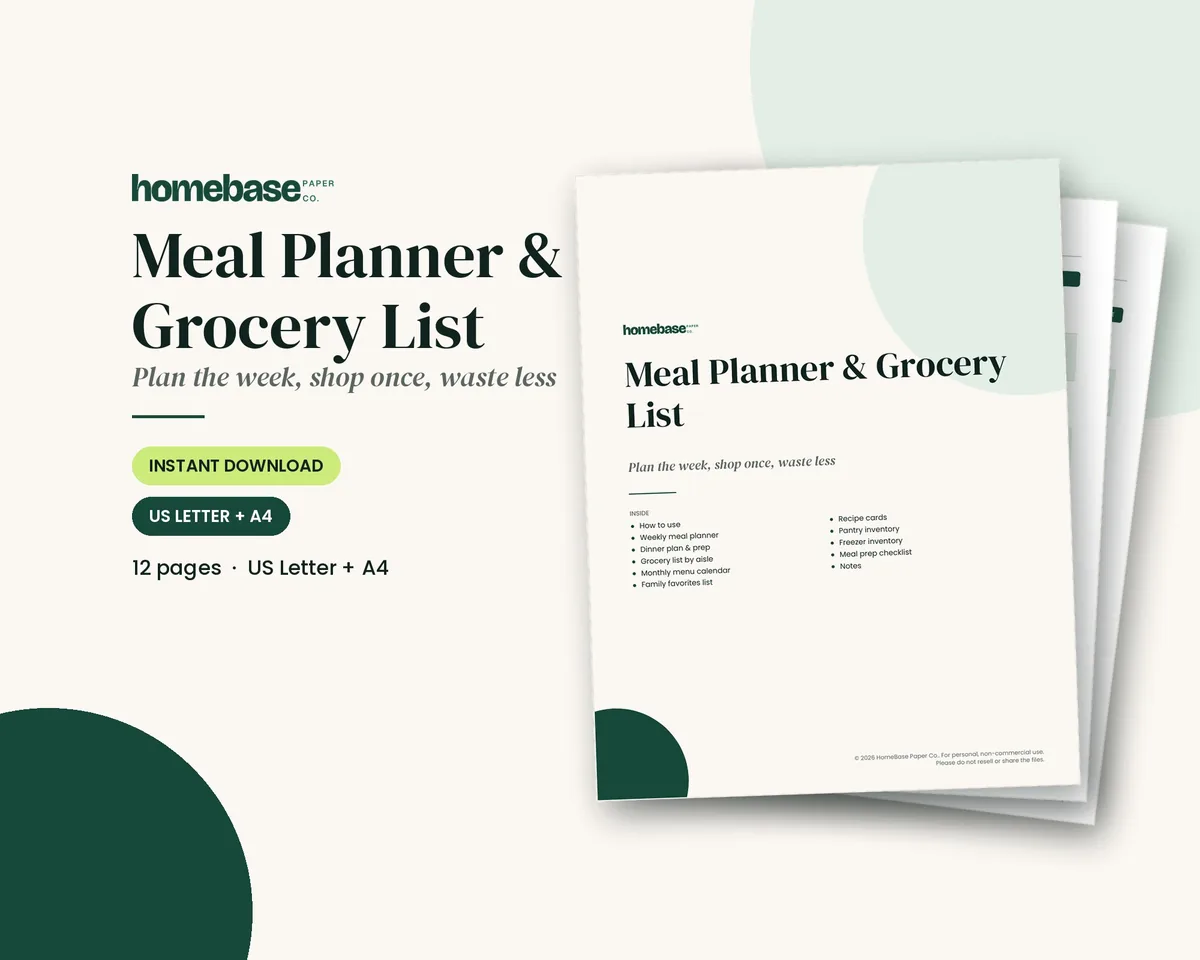
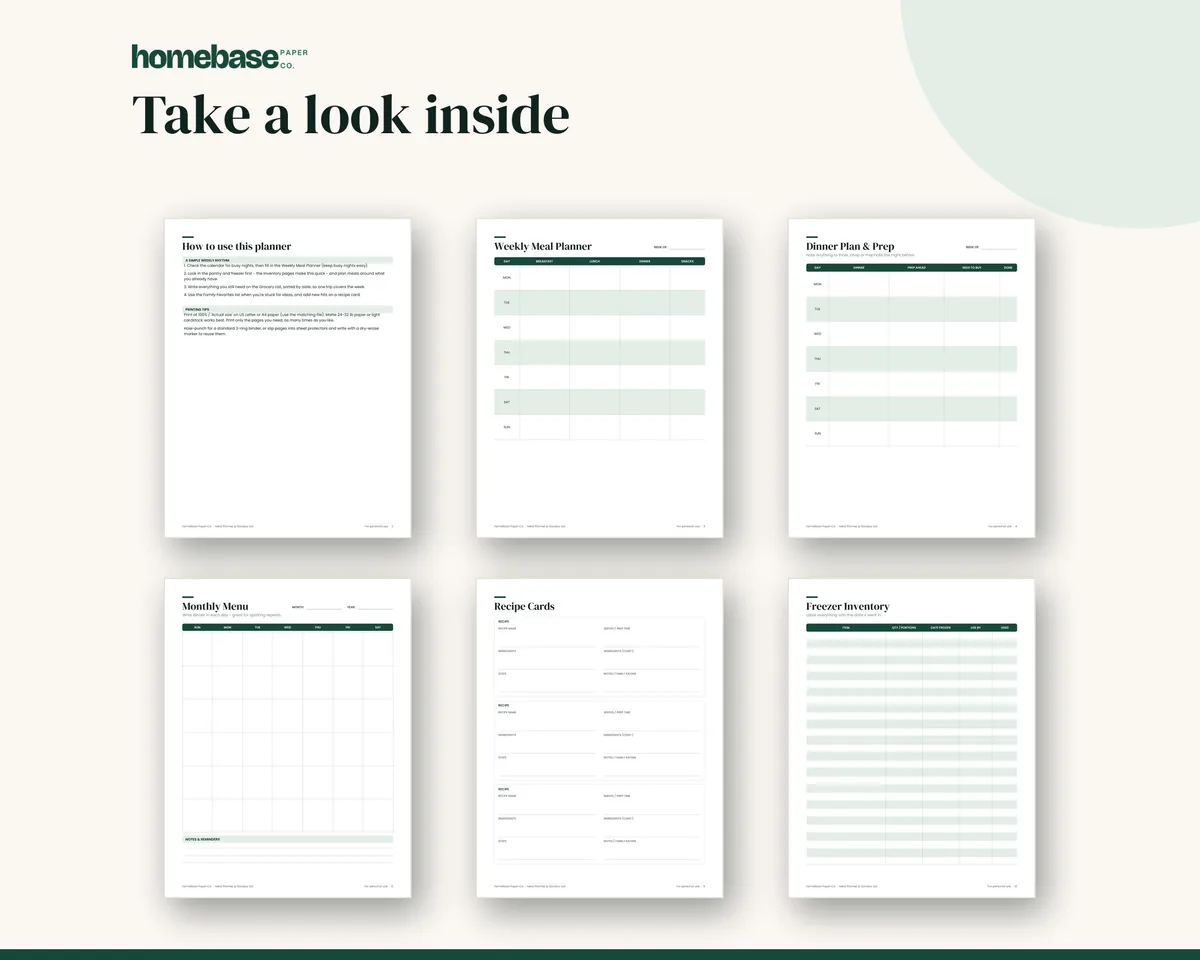
Our Meal Planner & Grocery List printable has the pages for this routine: a Family Favorites list, a weekly meal planner and a grocery list sorted by aisle.
Step 1: Make your family favorites list
Before you plan a single week, write down 15 to 20 dinners your family already eats without complaint. Ask everyone for two or three. Group them:
Write each favorite on a recipe card template so the list and the recipes stay together.
| Fast (under 30 min) | Slow cooker or oven | Weekend or special | Leftover-friendly |
|---|---|---|---|
| Tacos | Chili | Homemade pizza | Roast chicken |
| Pasta with sauce | Pot roast | Lasagna | Soup |
| Breakfast for dinner | Baked chicken thighs | Grill night | Rice bowls |
| Quesadillas | Pulled pork | Big pancake brunch | Casseroles |
This list is your menu. Most weeks you'll just pick from it. The Meal Planner & Grocery List ($3.99) includes a Family Favorites page for exactly this, along with a weekly meal planner, dinner plan and prep page, grocery list, monthly menu, recipe cards, pantry and freezer inventories and a meal prep checklist. If you also plan appointments and activities, a weekly planner keeps meals and schedules on one page.
Step 2: Check the family calendar first
Look at the week before you look at recipes. Which nights have practice, late work or school events? Those get the fastest meals or leftovers. Calm nights get the longer recipes or something new. Keep the recipes that work in a recipe journal so next month's plan is faster.
| Night | What's happening | Meal type |
|---|---|---|
| Monday | Normal night | Fast |
| Tuesday | Soccer practice | Slow cooker, ready when you walk in |
| Wednesday | Late work | Leftovers |
| Thursday | Normal night | Fast or new recipe |
| Friday | Family night | Pizza or fun dinner |
| Saturday | Free | Weekend favorite |
| Sunday | Prep day | Big batch, leftovers for Monday lunch |
Step 3: Use theme nights
Theme nights shrink the choices. Taco Tuesday, pasta Wednesday, soup Thursday, pizza Friday. You still vary the recipe, but you're choosing among three tacos instead of every meal in the world. Kids love knowing what's coming. Our soup recipes give you 30 to rotate on soup night. For pasta night, chicken alfredo is an easy start, and our broccoli cheddar soup works for soup night. Chicken tortilla soup bridges taco night and soup night.
For a meatless night, pick from our vegetarian meal prep ideas and cook a double batch for lunches.
Stuck for what to put on each night? Our list of easy dinner ideas is grouped by theme, from sheet pan meals to tacos.
Step 4: Shop the kitchen, then write the list
Check the pantry, fridge and freezer before writing the grocery list, and plan at least one meal around something you already have. The FDA's tips to reduce food waste recommend writing your list with next week's meals in mind and checking the fridge first, and they note that confusion over date labels accounts for an estimated 20 percent of consumer food waste.
A printable grocery list template sorted by store section makes this step faster.
Waste adds up for every family. USDA's food waste FAQs estimate food waste in the United States at 30 to 40 percent of the food supply. A plan is the simplest fix. For more ways to stretch the grocery budget, see how to grocery shop on a budget.
Step 5: Prep once, eat twice
A little Sunday prep makes weeknights easy:
For more ways to cook ahead, our list of meal prep ideas covers grab-and-go lunches, freezer dinners and prep for picky eaters.
- Cook a double batch of one protein, like chicken thighs or ground beef, and use it twice. An easy meatloaf is one way to use the beef.
- Wash and chop vegetables for the first half of the week.
- Cook a pot of rice or pasta to reheat.
- Portion snacks and lunches into grab-and-go containers.
Keep leftovers safe. USDA's Food Safety and Inspection Service says to refrigerate leftovers within 2 hours of cooking, and that leftovers keep in the refrigerator for 3 to 4 days or in the freezer for 3 to 4 months. Label containers with the date so nobody has to guess.
Step 6: Get everyone involved
Meal planning shouldn't be one person's job.
- Kids pick one dinner a week from the favorites list.
- Older kids own a night, with help, once a month.
- Everyone helps clean up on the nights they don't cook.
- Post the plan on the fridge or a family command center so nobody asks.
When a new recipe becomes a hit, add it to the Family Recipe Binder ($6.99), which has a recipe index, recipe cards, a holidays section and a fillable version. Our family recipe binder guide shows how to set one up.
Step 7: Keep it in one place
Put the meal plan where the rest of the family's life already lives. The Household Binder ($6.99) includes a meal planner and grocery list alongside the monthly calendar, weekly planner, weekly cleaning page and family info, so the week's plan and the week's meals sit side by side.
To plan a whole month at once, use a monthly meal planner with all 30 dinners on one page.
Family meal plans: two sample weeks
Ready-made family meal plans are easiest to follow when they reuse ingredients across the week. Here are two weeks you can copy, swap and repeat. Each one uses theme nights, cooks a big batch once and plans a leftovers night so nobody cooks seven times.
Week 1: busy-weeknight family meal plan
| Day | Dinner | Reuses |
|---|---|---|
| Monday | Sheet-pan chicken thighs with potatoes and green beans | Cook extra chicken |
| Tuesday | Chicken quesadillas with salsa and sliced peppers | Monday's chicken |
| Wednesday | Spaghetti with meat sauce and a bagged salad | Make a double batch of sauce |
| Thursday | Breakfast for dinner: eggs, toast and fruit | Pantry staples |
| Friday | Homemade pizza night | Wednesday's extra sauce |
| Saturday | Slow-cooker chili | Freeze half |
| Sunday | Leftovers or "clean out the fridge" bowls | Anything left |
Week 2: budget family meal plan
| Day | Dinner | Reuses |
|---|---|---|
| Monday | Black bean tacos with rice and corn | Cook a big pot of rice |
| Tuesday | Fried rice with eggs and frozen vegetables | Monday's rice |
| Wednesday | Baked potato bar with chili from the freezer | Week 1 chili |
| Thursday | Chicken noodle soup and grilled cheese | Rotisserie chicken |
| Friday | Pasta with roasted vegetables | Pantry pasta |
| Saturday | Burgers or bean burgers with oven fries | Freeze extra patties |
| Sunday | Leftovers night | Anything left |
To balance the plates, try filling about half of each plate with fruits and vegetables, which is an easy check when you write the week. For a grocery target that fits your family size, the USDA's cost-of-food reports publish monthly estimates at several budget levels.
Want the month mapped out? Use our monthly meal planner, and for cheaper weeks see meal planning on a budget. Prepping ahead on Sunday? Our meal prep ideas has make-ahead recipes that fit these weeks.
Planning ahead for the holidays
Holidays are when a plan matters most. Before Thanksgiving, start with the Thanksgiving menu template and the holiday freezer meal prep plan, so busy weeknights in November and December are already handled. For the everyday budget side, our meal planning on a budget guide has more money-saving ideas.
Planning for a toddler? Our toddler meals guide covers portion sizes, safe cutting tips and a 7-day toddler meal plan. Short on time in the morning? Keep a list of quick breakfast ideas that take 10 minutes or less.
Make it easier
Tools for this
 Starter pick
Printables
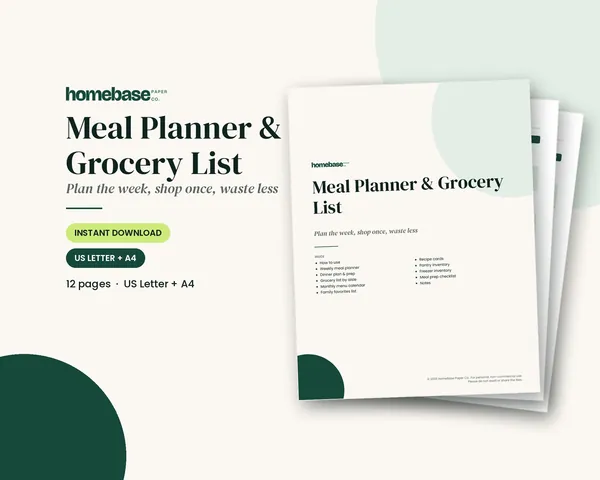
Meal Planner & Grocery List
Weekly meals, a grocery list sorted by aisle, and pantry and freezer inventories so you shop once and waste less.
Printables
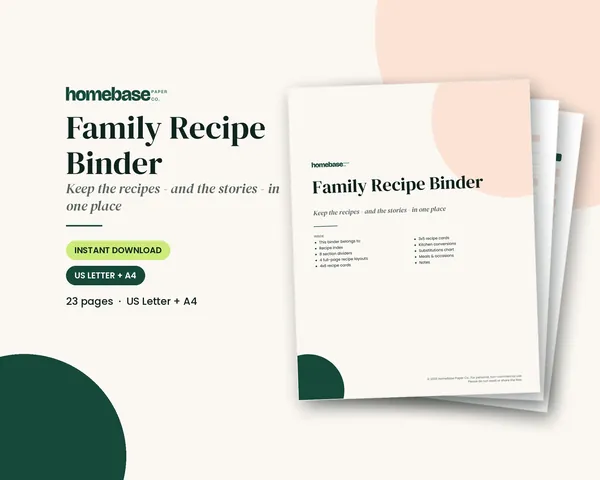
Family Recipe Binder
Section dividers, four recipe page layouts with room for the family story, 4x6 and 3x5 cards and a conversion chart - print it or type into the fillable version.

Printables
Household Binder
Family info, emergency plan, calendars, meals, groceries, cleaning, bills and sitter notes.
Frequently asked questions
How do I start meal planning for a family? Start meal planning for a family by writing a list of 15 to 20 meals everyone already likes, then choosing dinners for the week from that list around your calendar. The Meal Planner & Grocery List includes a Family Favorites page and a weekly planner, so the list and the plan live together.
How long does family meal planning take? Family meal planning takes about 20 minutes a week once you have a favorites list: ten minutes to choose meals around the calendar and ten minutes to check the pantry and write the grocery list.
What are theme nights in meal planning? Theme nights give each weeknight a category, like Taco Tuesday, pasta night or soup night, so you choose from a few options instead of everything. They make family meal planning faster and give kids something to look forward to.
How do I meal plan for picky eaters? Meal plan for picky eaters by building dinners with a safe side everyone eats, serving components separately so each person builds their own plate, and letting kids pick one meal a week from the family favorites list.
How do I meal plan around a busy schedule? Meal plan around a busy schedule by checking the family calendar first and putting the fastest meals, slow-cooker dinners or leftovers on practice and late-work nights. Save new recipes for calmer evenings.
Should I plan breakfast and lunch too? Plan dinners first, since they're the hardest. Then add a short rotation of two or three breakfasts and lunches, and use dinner leftovers for lunches when you can.
How long are leftovers safe to eat? According to USDA's Food Safety and Inspection Service, leftovers can be kept in the refrigerator for 3 to 4 days or frozen for 3 to 4 months. Refrigerate them within 2 hours of cooking.
How can kids help with meal planning? Kids can help with meal planning by choosing one dinner a week, finding a recipe in the family recipe binder, checking the pantry against the list and helping with simple prep. Kids who help plan often eat better too.
How do I keep family recipes organized for meal planning? Keep family recipes organized in one recipe binder with an index, so you can flip to a favorite and add its ingredients to the grocery list. The Family Recipe Binder includes a recipe index, recipe cards and a holidays section.
Does meal planning save money for families? Yes, meal planning saves families money because you buy only what the week's meals need and use what's already in the kitchen. It also cuts last-minute takeout on busy nights.
Where should I post the family meal plan? Post the family meal plan on the fridge or a command center wall so everyone can see what's for dinner. It cuts down on the 'what's for dinner?' question and helps whoever gets home first start cooking.
What is a good weekly meal plan for a family? A good weekly meal plan for a family uses five or six dinners everyone likes, theme nights to make choosing easy, one big batch that becomes a second meal and one leftovers night. For example: sheet-pan chicken Monday, chicken quesadillas Tuesday, spaghetti Wednesday, breakfast for dinner Thursday, pizza Friday, chili Saturday and leftovers Sunday.
How do I make a cheap family meal plan? Build the week around low-cost staples such as rice, beans, eggs, pasta, potatoes and frozen vegetables, plan meals that share ingredients, cook one big batch that turns into a second dinner and shop from a list after checking your pantry. The USDA's cost-of-food reports can help you set a realistic monthly grocery budget for your family size.
How many meals should I plan for a family each week? Most families plan five or six dinners and leave one or two nights for leftovers, takeout or a simple pantry meal. Planning every single night often leads to wasted food when plans change, while planning too few leaves you deciding at 5 p.m.
More from HomeBase
You may also like
 Thanksgiving Edition
Printables
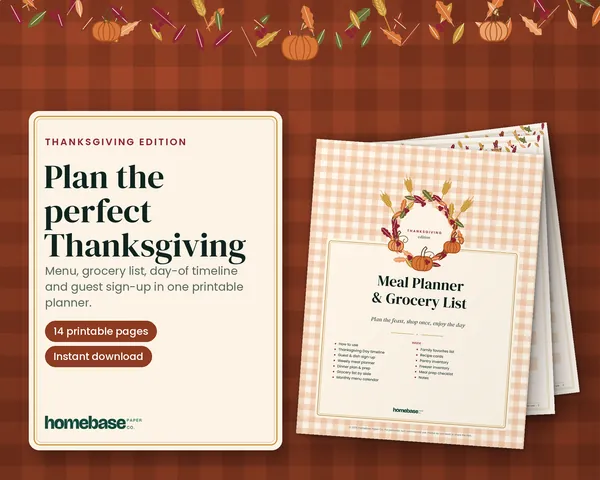
Meal Planner & Grocery List: Thanksgiving Edition
Plan the perfect Thanksgiving: our meal planner in a warm harvest design, with a Thanksgiving Day timeline, a guest & dish sign-up, an aisle-sorted grocery list and pantry and freezer trackers.
Printables
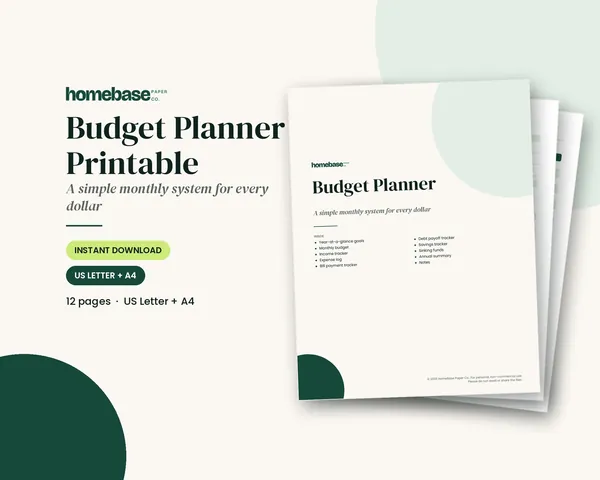
Budget Planner Printable
Twelve undated pages you can print every month: budget, bills, spending, savings and debt.
 Starter pick
Printables
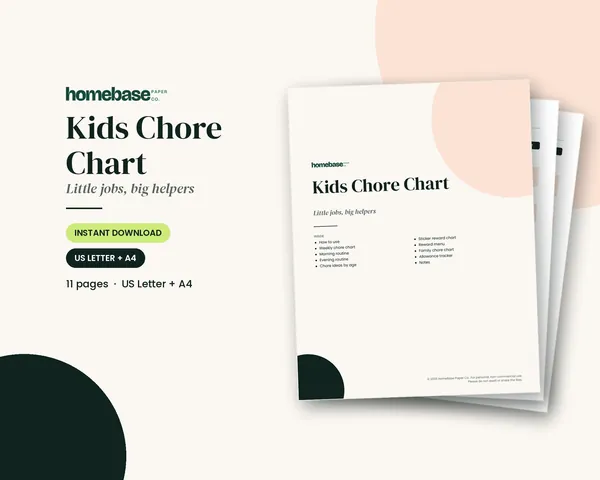
Kids Chore Chart
Weekly chore chart, morning and evening routines, chore ideas by age, a sticker reward chart and an allowance tracker.
 Save 38%
Bundles
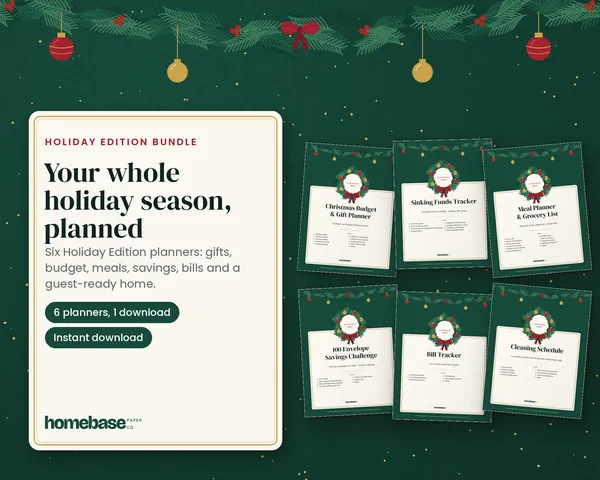
Holiday Season Bundle
Plan Christmas, save for it all year, and host without the January money hangover.
 Club
Monthly club
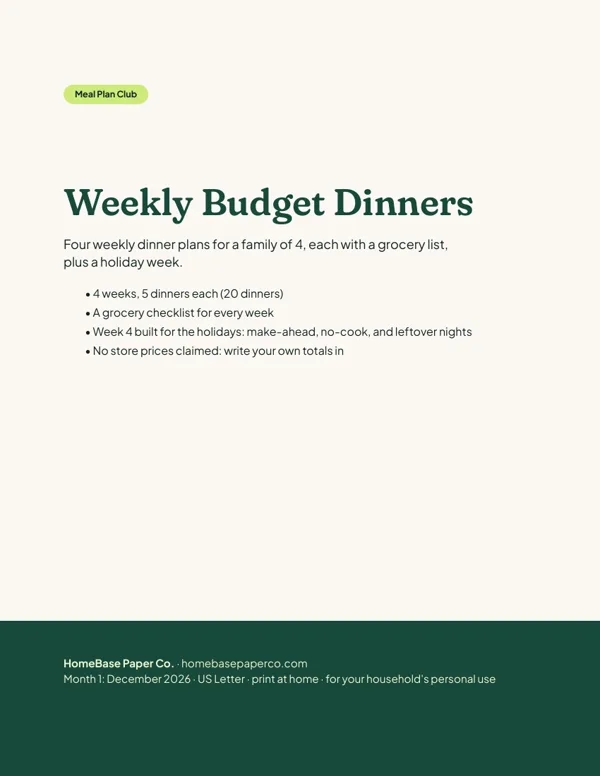
Meal Plan Club
Families who want dinner planned and a grocery list ready every week.
Free printable
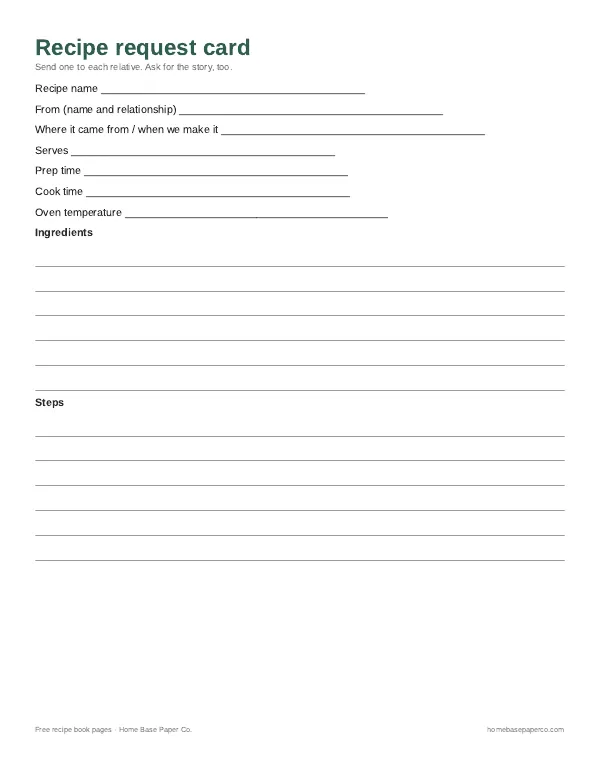
Save the family favorites: get the free recipe book pages
Printable recipe pages and a recipe request card to send to relatives, so the dishes everyone loves end up in one book. You'll also get our weekly HomeBase email with easy meal planning ideas and family recipe tips.
Sources
- Tips to reduce food waste fda.gov
- Food waste FAQs usda.gov
- Refrigerate leftovers fsis.usda.gov
- Cost-of-food reports fns.usda.gov