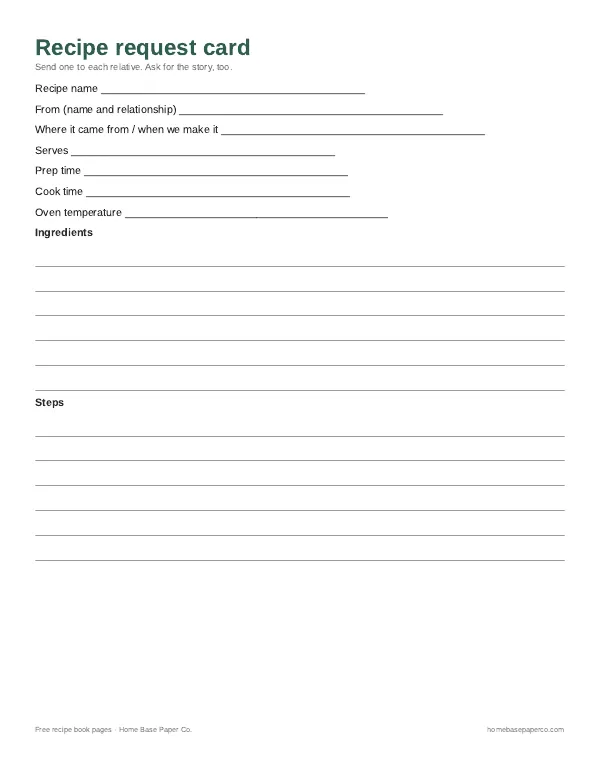
The short answer: a recipe card template is a ready-made layout, usually 4x6 or 3x5 inches, with labeled spaces for the name, servings, times, ingredients, steps and notes.
- Same template for every recipe makes cards easy to share
- Note who the recipe came from
- Add the oven or doneness temperature
- List allergens
- Next step: Plan it with the Family Recipe Binder ($6.99).
Our picks for recipe card template
Printables
Family Recipe Binder
Section dividers, four recipe page layouts with room for the family story, 4x6 and 3x5 cards and a conversion chart - print it or type into the fillable version.
 Starter pick
Printables
Meal Planner & Grocery List
Weekly meals, a grocery list sorted by aisle, and pantry and freezer inventories so you shop once and waste less.
 Save 33%
Bundles
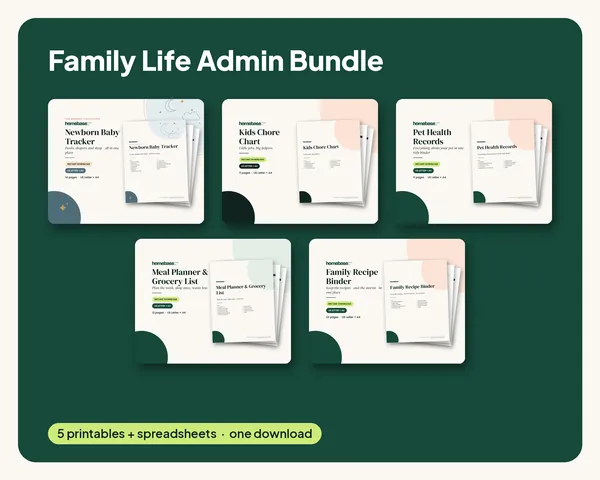
Family Life Admin Bundle
Baby logs, chore charts, pet records, meal plans and family recipes in one tidy set.
A recipe card template is a ready-made layout, usually 4x6 or 3x5 inches, with labeled spaces for the recipe name, servings, times, ingredients, steps and notes. Using the same template for every recipe makes your collection easy to read, easy to share and easy to cook from. The best cards also note who the recipe came from, the oven or doneness temperature and any allergens. Our kitchen conversion calculator converts cups, tablespoons and grams by ingredient.
Our Family Recipe Binder includes 4x6 and 3x5 recipe cards, four recipe page layouts and a fillable version you can type into.
Here's what to put on a card, which size to choose, a sample card and the printable we make.
What every recipe card needs
| Field | Why it matters |
|---|---|
| Recipe name | Easy to find in a box or index |
| From | Who the recipe came from. This is what makes it a family card. |
| Servings | So you can double or halve it |
| Prep time and cook time | Helps you plan weeknight vs. weekend cooking |
| Oven temperature or doneness | "350°F" or "165°F internal," not "until done" |
| Ingredients with amounts | In the order you use them |
| Numbered steps | One action per step |
| Notes | Swaps, make-ahead tips, what you changed |
| Contains | Major allergens, for guests and relatives |
4x6 vs. 3x5 recipe cards
| 4x6 | 3x5 | |
|---|---|---|
| Room for | Most recipes, front only | Short recipes, or front and back |
| Fits | Most current recipe boxes, 4x6 photo sleeves and albums | Older recipe boxes |
| Best for | Everyday collections, gifts | Sauces, dressings, drinks |
| Printing | Two cards per letter page is common | More cards per page |
If you're starting fresh, choose 4x6. You'll rarely run out of space, and 4x6 photo sleeves make easy protectors.
Fillable vs. handwritten cards
Handwritten cards feel personal and become keepsakes. Fillable cards, typed on a computer or tablet, are easier to read, easy to fix and easy to print multiple copies of for siblings and cousins. Many families do both: type a clean card for the kitchen and keep the handwritten original safe.
Sample recipe card
Sunday Pot Roast From: Aunt Denise · Serves 6 · Prep 20 min · Cook 3 hr 30 min Oven: 300°F · Done when fork-tender
Ingredients: 3 lb chuck roast, 1 tsp salt, ½ tsp pepper, 2 tbsp oil, 1 onion (sliced), 4 carrots (chunked), 1½ lb potatoes (halved), 2 cups beef broth, 2 tbsp tomato paste, 2 sprigs thyme
Steps: 1) Season the roast. 2) Brown it in oil in a Dutch oven, 4 minutes per side. 3) Add onion, tomato paste and broth. 4) Cover and bake 2 hours. 5) Add carrots, potatoes and thyme, and bake 1 hour 30 minutes more.
Notes: Doubles well for holidays. Contains: none of the major allergens (check your broth label).
Sample card for illustration.
How to write a recipe card anyone can follow
- Use exact amounts. Replace "a pinch" and "a handful" with what you actually measured.
- List ingredients in order of use.
- Number the steps and keep each step to one action.
- Say what done looks like. For meat, eggs and casseroles, add a safe internal temperature. FoodSafety.gov's safe minimum internal temperature chart lists 165°F for poultry and casseroles, 160°F for ground meat and 145°F (with a 3-minute rest) for beef, pork and lamb steaks, roasts and chops.
- Note allergens. The FDA lists nine major food allergens: milk, eggs, fish, crustacean shellfish, tree nuts, peanuts, wheat, soybeans and sesame.
- Test it. Have someone else make the recipe from the card and fix anything they had to ask about.
Our recipe card templates
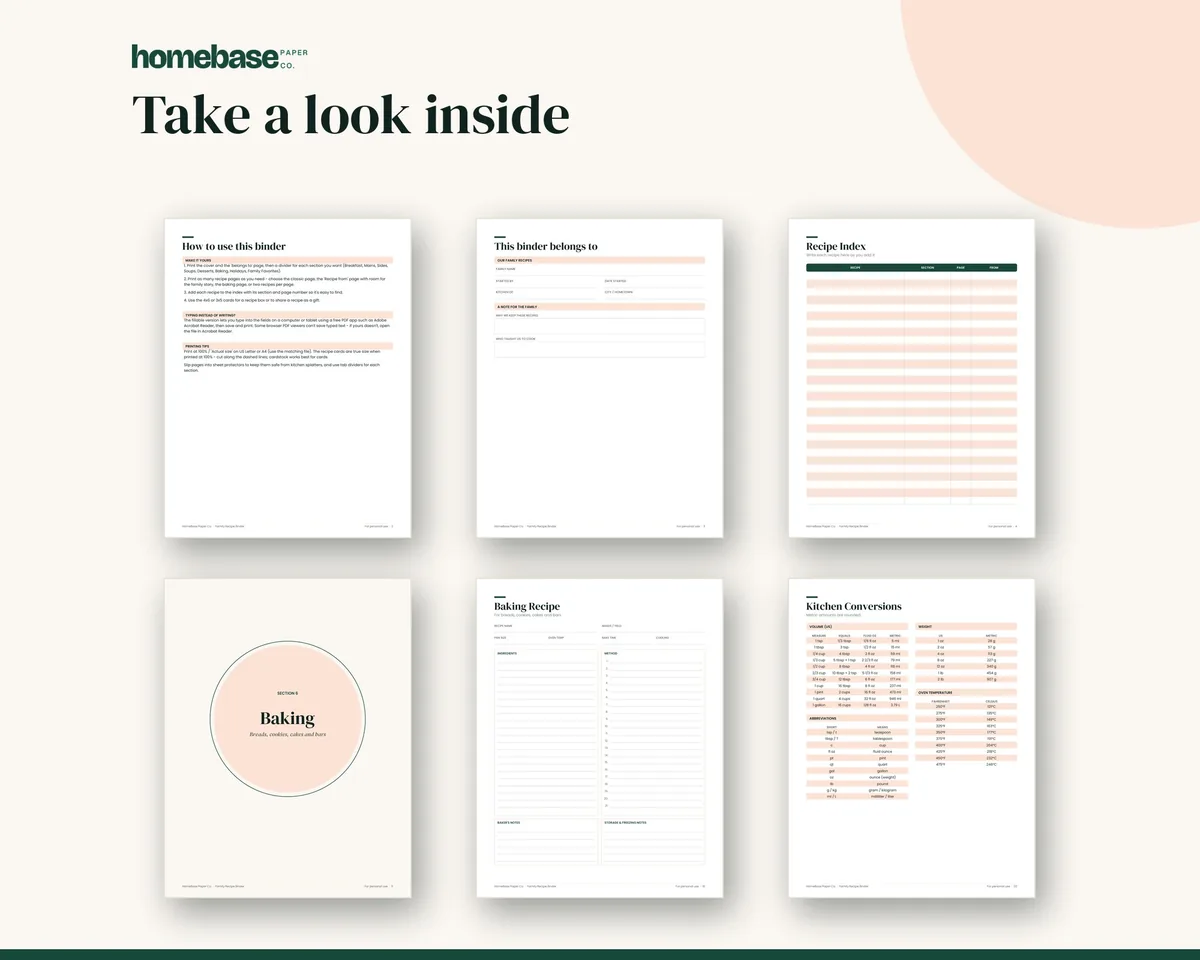
The Family Recipe Binder ($6.99) is a 23-page printable PDF in US Letter and A4 with 4x6 recipe cards, a recipe index, section dividers (breakfast, mains, sides, soups, desserts, baking, holidays and family favorites) and four full-page recipe layouts, including a "Recipe From" page for the story behind the dish. It also includes fillable versions, so you can type your cards, save them and print clean copies.
Want a few cards for the meals you make every week? The Meal Planner & Grocery List ($3.99) includes Recipe Cards plus a Weekly Meal Planner, Grocery List, Monthly Menu and Family Favorites.
Both are included in the Family Life Admin Bundle ($15.99), along with the Newborn Baby Tracker, Kids Chore Chart and Pet Health Records.
Building a full collection? Our family recipe binder guide covers sections, gathering recipes from relatives and protecting pages. If you would rather keep recipes in a bound book than on cards, see our recipe journal guide.
How to store and share recipe cards
- Recipe box: classic and easy to flip through. Use dividers that match your binder sections.
- Photo album with 4x6 sleeves: wipe-clean and easy to read on the counter.
- Binder: slip cards into card-size sheet protectors next to full recipe pages.
- Share copies: print a set for each sibling or cousin, or send the fillable file so they can print their own.
- Back up: photograph or scan every card once a year.
Ready to collect them into one book? Our guide to making a family recipe book walks through it step by step.
Recipe card vs. recipe card template
A recipe card is the finished card for one dish, with its name, servings, times, ingredients, steps and notes written in. A recipe card template is the blank layout you fill in to make one. Using the same template for every recipe card keeps your collection consistent, so anyone in the family can pick up a card and cook from it.
If you're making recipe cards for a gift or a family collection, start with the recipes people ask for most, write who each one came from, and print them on cardstock so they hold up in the kitchen.
Why I plan this way
I'm the oldest of three from a working family in Detroit, and I was the one my family leaned on for coordination. Writing things down so anyone can pick them up is the habit behind every page we make, recipes included.
Recipe cards are perfect for holiday heirlooms like tamales, where the masa ratio and steaming time are worth writing down for the next generation.
Keep every family recipe in one binder
Section dividers, four recipe page layouts with room for the family story, 4x6 and 3x5 cards and a conversion chart - print it or type into the fillable version.
$6.99 · Instant download. Print at home or fill it in on screen. Or browse the full Home & Organizing collection.
Frequently asked questions
What should a recipe card template include? Every card needs the recipe name, servings, prep and cook time, an ingredient list with amounts, numbered steps and the oven or doneness temperature. Room for notes, allergens and who the recipe came from makes it more useful. The Family Recipe Binder ($6.99) includes 4x6 recipe cards with these fields.
What size are recipe cards? The two standard sizes are 4x6 inches and 3x5 inches. 4x6 is the most popular today because it fits a full ingredient list and steps without tiny handwriting. 3x5 cards fit older recipe boxes but work best for short recipes.
Can I type on a recipe card template? Yes, if it's fillable. The Family Recipe Binder ($6.99) comes with fillable versions of its PDFs, so you can type recipes into the fields on a computer or tablet, save them, and print clean copies.
How do I print 4x6 recipe cards at home? Print the card page on heavy paper or cardstock at actual size, not 'fit to page,' then cut along the guides. Check your printer's maximum paper weight and choose the cardstock or heavy-paper setting first.
What's the difference between a recipe card and a recipe binder page? A recipe card is small and portable, good for a recipe box or a gift. A full binder page has more room for long recipes, photos and stories. The Family Recipe Binder ($6.99) includes both 4x6 cards and full-page layouts.
How do I write a recipe card someone else can follow? List ingredients in the order you use them, give exact amounts, number the steps and say what 'done' looks like, such as an internal temperature or a color. Test the card by having someone else cook from it.
Should I include allergens on recipe cards? Yes, especially if you share recipes. The FDA lists nine major food allergens: milk, eggs, fish, crustacean shellfish, tree nuts, peanuts, wheat, soybeans and sesame. A short 'Contains' line on the card helps guests and relatives.
How do I protect recipe cards in the kitchen? Use 4x6 photo sleeves or card protectors, laminate the cards you use weekly, or keep a printed copy in the kitchen and the original somewhere safe. Never use a one-of-a-kind handwritten card while cooking.
Are there recipe cards in the Meal Planner & Grocery List? Yes, the Meal Planner & Grocery List includes recipe cards. The Meal Planner & Grocery List ($3.99) includes Recipe Cards along with a Weekly Meal Planner, Grocery List, Monthly Menu and Family Favorites, which is handy if you want a few cards for the recipes in your meal rotation.
How can I make recipe cards as a gift? Collect a set of family favorites, print them on cardstock in a matching design, add who each recipe came from, and tie them in a stack or put them in a small box. The Family Life Admin Bundle ($15.99) includes the Family Recipe Binder and the Meal Planner & Grocery List.
How do I convert an old family recipe to a card? To convert an old family recipe to a card, photograph the original first. Then write it out with exact measurements, replacing 'a handful' with what you actually measured when you made it. Add a safe internal temperature for meat dishes, using a chart like FoodSafety.gov's, if the original just says 'cook until done.'
Where can I get printable recipe cards? You can draw your own with the template layout above, or print ready-made ones. Our Family Recipe Binder ($6.99) is a printable PDF in US Letter and A4 with 4x6 printable recipe cards, a recipe index and section dividers, and the Meal Planner & Grocery List ($3.99) includes recipe cards alongside a weekly meal planner. Print on cardstock so the cards hold up in the kitchen.
What is a recipe card? A recipe card is a small card, usually 4x6 or 3x5 inches, that holds one recipe: its name, servings, prep and cook time, ingredients with amounts, numbered steps and notes. Recipe cards are easy to store in a box, share with family or give as a gift.
Free printable
Save the family favorites: get the free recipe book pages
Printable recipe pages and a recipe request card to send to relatives, so the dishes everyone loves end up in one book. You'll also get our weekly HomeBase email with easy meal planning ideas and family recipe tips.