

The short answer: a family recipe book collects the dishes your family actually cooks, in one place, with the names and stories behind them.
- Choose a format: ring binder, bound blank book or printed photo book
- Collect recipes from relatives
- Check them and write every recipe the same way
- Free starter pages, including a recipe request card
- Next step: Get the free recipe book starter pages (we email it to you); want more? The Family Recipe Binder is $6.99.
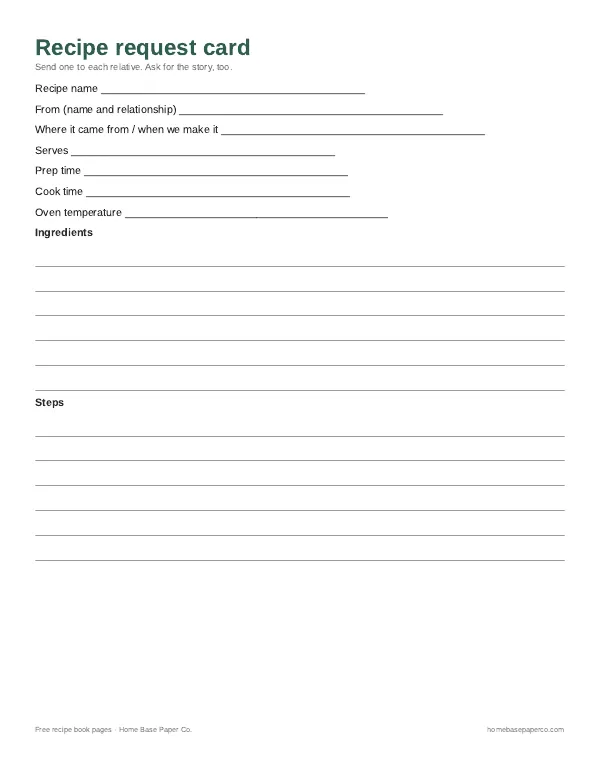
A family recipe book collects the dishes your family actually cooks, in one place, with the names and stories behind them. This guide walks through making one from start to finish: choosing a format, collecting recipes from relatives, checking them, writing them the same way and putting the book together. The free starter pages below include a recipe request card you can send to the family.
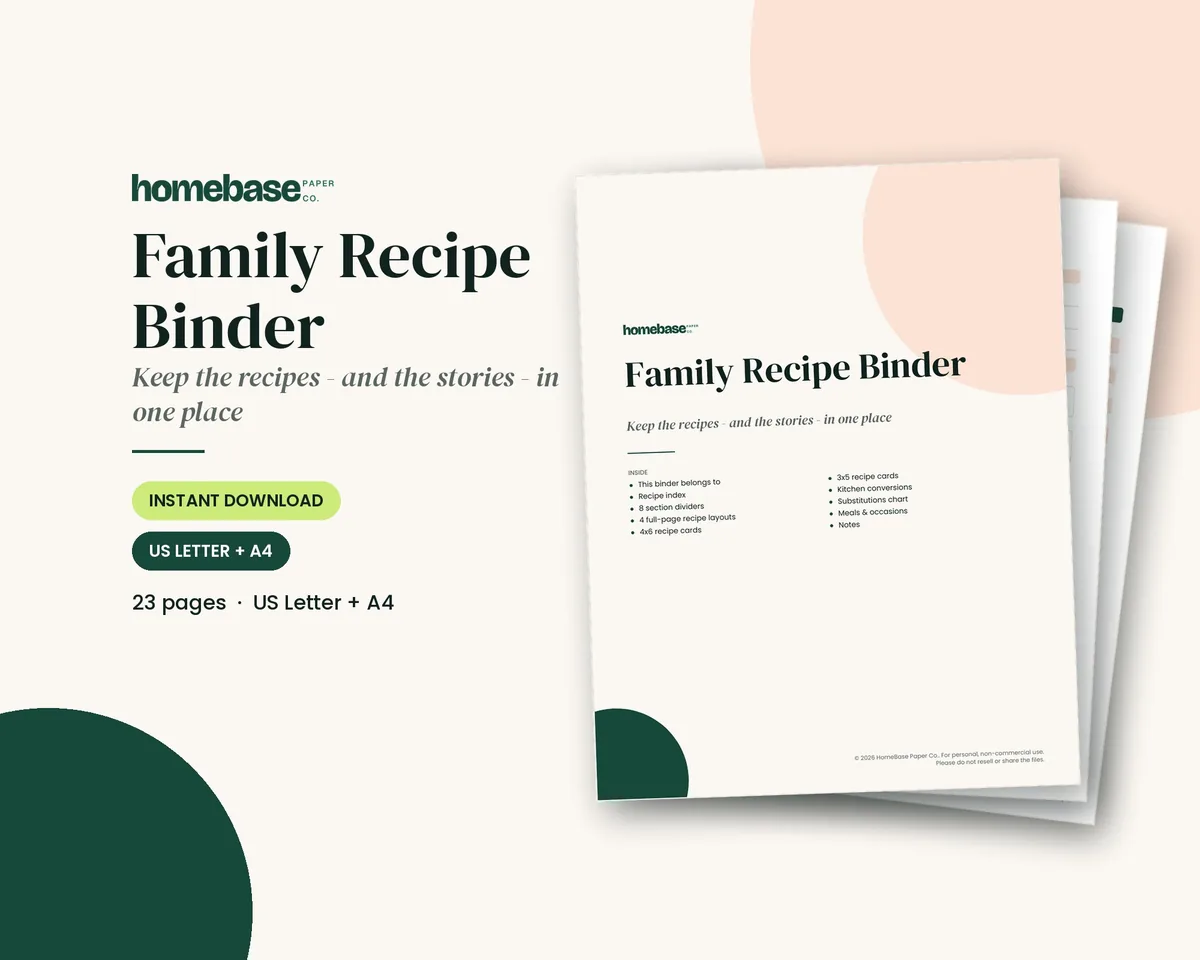
Our Family Recipe Binder has section dividers, four recipe page layouts and recipe cards ready to print, or a fillable version to type into.
What's in the free recipe book pages
The free PDF has four pages:
- Recipe request card. Send it to relatives to fill in, with a line for the story.
- Recipe page. A clean layout for the final book, with servings, times and temperature.
- Table of contents. Page, recipe, section and who it's from.
- Recipe book planner. A 10-step checklist from format to final print.
Step 1: Choose a format
Decide early, because it shapes everything else.
| Format | Best for | Things to know |
|---|---|---|
| Ring binder | A book that keeps growing | Add, remove and reorder pages any time |
| Bound blank book | Writing by hand as a keepsake | Pages stay in order, so keep an index |
| Printed photo book | Gifts and many copies | Needs all recipes typed and final first |
If you're unsure, start with a binder. You can always turn it into a printed book later, once the collection is complete.
Step 2: Pick your sections
Most family recipe books use a handful of sections: breakfast, mains, sides, soups, desserts, baking, holidays and family favorites. Some families add a section for one grandparent, or one for a holiday tradition. Keep the list short so every recipe has an obvious home.
Step 3: Collect recipes from the family
This is the part that takes longest, so start it first.
- Send a recipe request card to each relative, with a date to send it back.
- Ask for the story, not just the ingredients: who made it, when and why.
- Ask for a photo of the dish or the cook, if they have one.
- Collect old recipe cards and scan or photograph them before anything gets lost.
- Cook with the person for recipes nobody ever wrote down, and measure as they go.
- Follow up kindly a week before your deadline.
A family dinner or holiday is a good time to hand out cards. Many people are happy to share, but they need a nudge and a deadline.
Step 4: Check each recipe
Family recipes often say "a handful" or "bake until done." Before a recipe goes into the book, read it all the way through. University of Illinois Extension suggests reading a new recipe at least twice: once when planning and once more before making it. That catches missing ingredients and steps like an overnight marinade.
The same Extension article points out that wording matters:
- "1 cup sifted flour" means sift first, then measure.
- "1 cup flour, sifted" means measure first, then sift.
- Chopped, diced and minced are different sizes: chopped is small pieces, diced is smaller and minced is smaller still, so "1 cup minced onion" is more onion than "1 cup chopped."
When you write recipes for the book, use these words carefully so the next cook gets the same result.
Step 5: Write every recipe the same way
A recipe book is easiest to use when every page follows the same pattern:
- Recipe name and who it's from.
- Servings, prep time and cook time.
- Oven temperature or doneness temperature.
- Ingredients in the order you use them, with clear amounts.
- Numbered steps, one action per step.
- The story: a line or two about where it came from.
Add safe cooking temperatures
Old recipes often say "cook until done." Add a temperature where it matters. FoodSafety.gov's safe minimum internal temperatures chart says to always use a food thermometer and lists these temperatures:
| Food | Safe minimum internal temperature |
|---|---|
| Chicken, turkey and other poultry | 165°F (74°C) |
| Ground beef, pork and sausage | 160°F (71°C) |
| Beef, pork, lamb and veal steaks, roasts and chops | 145°F (63°C), then rest 3 minutes |
| Fish | 145°F, or until it's no longer see-through and separates easily with a fork |
| Egg dishes | 160°F (71°C) |
| Casseroles and leftovers | 165°F (74°C) |
A small temperature chart at the front of the book is handy for every cook in the family.
Step 6: Add the stories and photos
The stories are what turn a stack of recipes into a family recipe book. A line like "Grandma made this every Christmas Eve" is often what people remember most. Put a photo of the cook or the dish next to the recipe if you have one, and keep handwritten cards: a scan of Grandpa's handwriting next to the typed recipe means a lot.
Step 7: Number the pages and build the contents
Number each recipe page, then fill in the table of contents with the page, recipe name, section and who it's from. If the book is a binder, number pages within each section (like "Desserts 4") so you can add pages without renumbering everything.
Step 8: Proofread, then print
Ask a second person to read every recipe once. Fresh eyes catch a missing ingredient or a "tsp" that should be "Tbsp." Then print, put the pages in sheet protectors if it's a binder, and add tabs for the sections.
Handwritten or typed?
Both make a good recipe book. Handwriting feels personal, and a page in Mom's writing becomes a keepsake on its own. Typing is easier to read at the stove, easier to fix and easier to share as copies for siblings and cousins. Many families do both: type the recipe so it's clear, then add a scan of the original card or a handwritten note beside it. If you want typed pages that still look like a family book, a fillable recipe page lets you type into a printable layout.
Recipe book ideas
Not every recipe book has to hold everything. A few themes that work well:
- Grandma's kitchen. One cook's recipes, in her words, with photos from her kitchen.
- The holiday book. Only the dishes made for Thanksgiving, Christmas, Easter or other family holidays.
- A wedding or new home book. Each guest or relative adds one favorite recipe and a note.
- Kids' first recipe book. Simple recipes kids can make with a grown-up, with big print and pictures.
- The weeknight book. The 20 dinners your family actually eats, so anyone can cook them. To round out the list, browse our recipe topic hubs.
- A family reunion book. One recipe from each branch of the family, with a family tree at the front.
Common recipe book mistakes
- Starting too late. Collecting recipes always takes longer than you think.
- Mixed formats. Recipes copied in different layouts are hard to follow. Rewrite each one the same way.
- Vague amounts. Ask the cook to measure "a handful" once, then write the real amount.
- No index. Without a table of contents, a big book is hard to use.
- Skipping the stories. The notes and names are what your family will treasure.
A recipe book timeline for a gift
If the book is a gift, work back from the date:
| When | What to do |
|---|---|
| 3 months before | Choose the format and sections, and send request cards |
| 2 months before | Collect recipes and follow up |
| 6 weeks before | Check and write up each recipe |
| 1 month before | Add stories and photos, and proofread |
| 2 weeks before | Print, assemble or order copies |
Ready-made recipe book pages
If you'd rather not design the pages yourself, the Family Recipe Binder ($6.99) is a printable set built for a family recipe book: section dividers, four recipe page layouts with room for the family story, 4x6 and 3x5 recipe cards, a kitchen conversion chart and a fillable version you can type into before printing.
We're also preparing My Family Recipes, a bound blank recipe book ($10.99). It isn't on Amazon yet, so it can't be ordered right now.
To put your family recipes to use every week, the Meal Planner & Grocery List ($3.99) has weekly meal pages and a grocery list sorted by aisle. The Household Binder ($6.99) keeps family info, calendars, meals and bills in one binder, with room for a few favorite recipes.
More recipe printables
For a working notebook of recipes you try, see our recipe journal guide. For single cards to share, use our recipe card template. To set up a binder section by section, our family recipe binder printable guide walks through it.
Make it easier
Tools for this
Printables
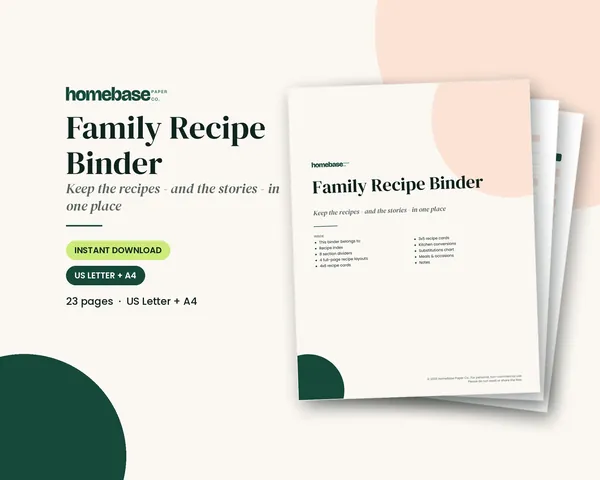
Family Recipe Binder
Section dividers, four recipe page layouts with room for the family story, 4x6 and 3x5 cards and a conversion chart - print it or type into the fillable version.
 Starter pick
Printables
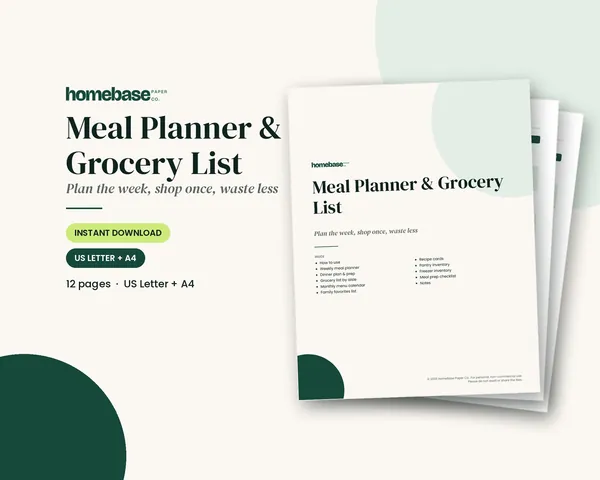
Meal Planner & Grocery List
Weekly meals, a grocery list sorted by aisle, and pantry and freezer inventories so you shop once and waste less.

Printables
Household Binder
Family info, emergency plan, calendars, meals, groceries, cleaning, bills and sitter notes.
Frequently asked questions
How do I make a family recipe book? Pick a format, choose your sections, collect recipes from relatives, check each one, write them all in the same layout, add a table of contents and then print or assemble the book. Our free recipe book pages include a recipe request card and planner to get you started.
Is the recipe book template free? Yes, the recipe book template is free. The recipe book starter pages on this page are a free 4-page PDF that we email to you: a recipe request card, a recipe page, a table of contents and a planner checklist.
Should a recipe book be a binder or a bound book? A binder is the better choice if the book will keep growing, and a bound book is better as a finished keepsake. A binder lets you add and move pages, while a bound book stays in the order it was made.
What sections should a family recipe book have? Most family recipe books use breakfast, mains, sides, soups, desserts, baking, holidays and family favorites. Add a section named after a grandparent or a tradition if it fits your family. Fewer, clear sections are easier to use.
What should each recipe page include? The recipe name, who it came from, servings, prep and cook time, oven temperature, ingredients in the order they're used, numbered steps and a line or two about the story behind it.
How do I get recipes from relatives? Send each relative a recipe request card with a deadline, ideally a month or two before you need the book. For recipes nobody wrote down, cook together and write down the amounts as they go.
Should I test every recipe before it goes in the book? Yes, if you can, or at least read each one carefully. University of Illinois Extension suggests reading a new recipe all the way through at least twice: once when planning and once before cooking.
Can I make a recipe book as a gift? Yes, you can make a recipe book as a gift. A family recipe book makes a thoughtful gift for a wedding, a new home, a graduation or a holiday. Start about three months ahead so relatives have time to send recipes.
How many recipes should a family recipe book have? Twenty to fifty well-loved recipes make a lovely book, though there's no set number. A binder can keep growing, so it's fine to start small.
What tools help make a recipe book? The Family Recipe Binder ($6.99) is a ready-made set of recipe book pages: section dividers, four recipe page layouts with room for the family story, 4x6 and 3x5 recipe cards, a conversion chart and a fillable version you can type into.
Should I include cooking temperatures in a recipe book? Yes, you should include cooking temperatures in a recipe book for meat, poultry, eggs and leftovers. FoodSafety.gov lists safe minimum internal temperatures, like 165°F for poultry and 160°F for ground meat, and says to always use a food thermometer to check.
Is a recipe book the same as a recipe journal? A recipe book is not quite the same as a recipe journal. A recipe book is usually a finished collection, often shared or given as a gift. A recipe journal is a working notebook where you log recipes you try, with notes on changes and ratings.
More from HomeBase
You may also like
 Thanksgiving Edition
Printables
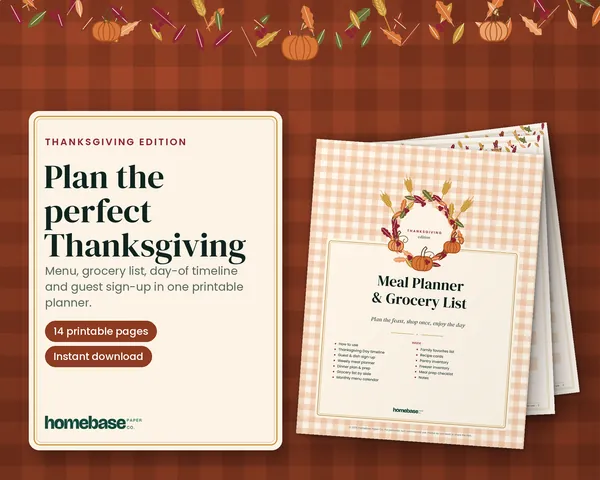
Meal Planner & Grocery List: Thanksgiving Edition
Plan the perfect Thanksgiving: our meal planner in a warm harvest design, with a Thanksgiving Day timeline, a guest & dish sign-up, an aisle-sorted grocery list and pantry and freezer trackers.
Printables
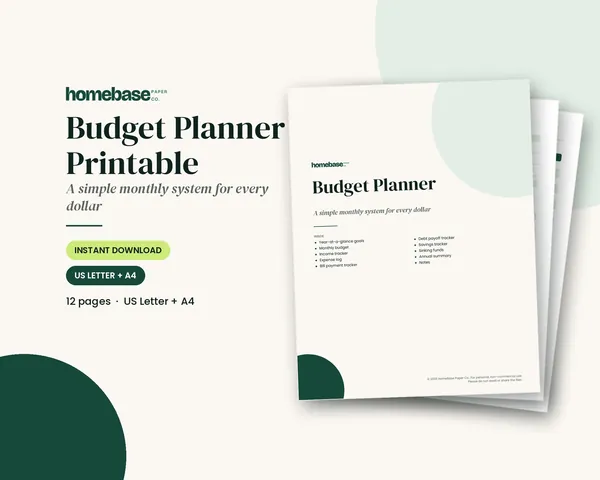
Budget Planner Printable
Twelve undated pages you can print every month: budget, bills, spending, savings and debt.
 Starter pick
Printables
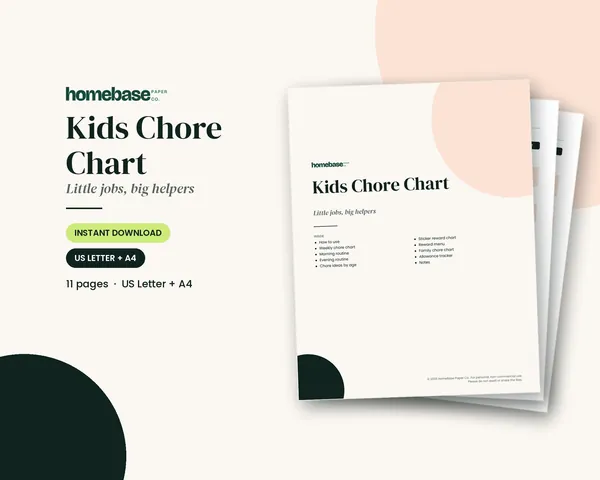
Kids Chore Chart
Weekly chore chart, morning and evening routines, chore ideas by age, a sticker reward chart and an allowance tracker.
 Save 38%
Bundles
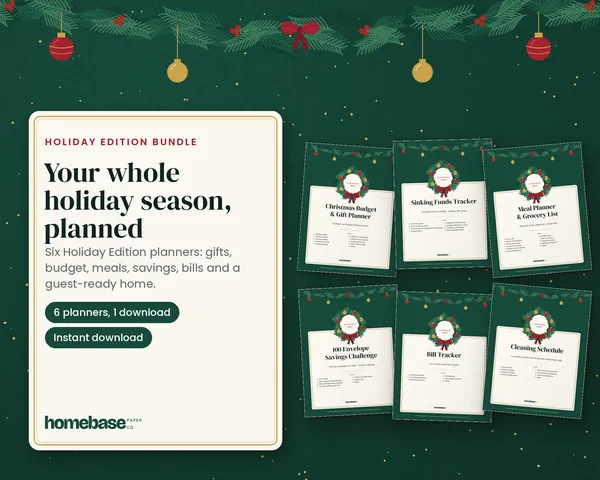
Holiday Season Bundle
Plan Christmas, save for it all year, and host without the January money hangover.
 Club
Monthly club
Meal Plan Club
Families who want dinner planned and a grocery list ready every week.
Free printable
Save the family favorites: get the free recipe book pages
Printable recipe pages and a recipe request card to send to relatives, so the dishes everyone loves end up in one book. You'll also get our weekly HomeBase email with easy meal planning ideas and family recipe tips.
Sources
- University of Illinois Extension: Using a new recipe? Better check it twice extension.illinois.edu
- FoodSafety.gov: Safe minimum internal temperatures foodsafety.gov