

The short answer: a good winter break schedule for kids isn't a minute-by-minute timetable. It's a simple daily rhythm: regular wake-up and bedtime, a morning routine, one or two planned activities, some chores, free play and screen time at set points.
- Morning: wake within an hour of the school-day time
- Mid-morning: one planned activity, like outside time, a craft or baking
- Early afternoon: quiet time for reading, puzzles or rest
- Sample days by age and tips for working parents below
- Next step: Plan it with the Kids Chore Chart ($3.49).
A good winter break schedule for kids isn't a minute-by-minute timetable. It's a simple daily rhythm: a regular wake-up and bedtime, a morning routine, one or two planned activities, some chores, free play, and screen time at set points. Kids know what comes next, parents get some quiet, and the days don't all blur into pajamas and tablets.
Here's a flexible rhythm, sample days by age, activity ideas and tips for parents who are working through the break.
Why a loose schedule helps
Long breaks are fun for a few days, then many children get restless. Predictable anchors such as meals, a morning routine and a regular bedtime help them settle. They also make the return to school in January much easier, because sleep times haven't drifted by two hours. A digital calendar on the kitchen wall can show the break schedule to the whole family at a glance.
The basic daily rhythm
When school starts again, our daily schedule guide has sample school-day schedules and morning and evening routines for kids.
| Time block | What happens |
|---|---|
| Morning | Wake within an hour of the school-day time, breakfast, get dressed, morning routine |
| Mid-morning | One planned activity: outside time, a craft, baking, an outing |
| Lunch | Simple lunch, kids help set and clear |
| Early afternoon | Quiet time: reading, puzzles, rest for little ones |
| Late afternoon | Free play, screen time, or a second outing |
| Evening | Dinner, chores, bath, wind-down, regular bedtime |
Keep the blocks, not exact times. Holidays, visits and travel days will break the pattern, and that's fine.
A morning routine they can follow alone
Give each child a short checklist they can do without reminders:
When school starts again, our back to school checklist helps reset bedtimes and mornings.
- Get dressed
- Make the bed
- Brush teeth and hair
- Breakfast and put the dish away
- One small job (feed the pet, empty the dishwasher basket)
A printed routine chart on the fridge does the nagging for you. Younger children can follow pictures.
Chores during the break
Winter break is a good time to practice new chores, because nobody's rushing. Match them to age:
- Ages 3 to 5: put toys in bins, match socks, wipe the table.
- Ages 6 to 8: set the table, feed pets, fold towels, help unpack groceries.
- Ages 9 to 12: load the dishwasher, vacuum a room, help make simple meals.
- Teens: cook one dinner a week, do their own laundry, help with holiday cleanup.
Our chore chart by age guide has longer lists.
The AAP's guide to age-appropriate chores for children explains why helping out at home is good for kids and offers ideas by age.
Screen time that doesn't take over
A few simple rules work better than constant negotiation:
Swap one show for a puzzle: our free Christmas crossword has three printable grids, from easy to harder, each with an answer key.
- Screens after the morning routine and one activity are done.
- A set block, such as an hour in the late afternoon, rather than all day.
- Shared screen time counts differently: a family movie night is an activity.
- A reward menu: extra screen time is one option kids can earn, along with choosing dinner or a later bedtime.
The American Academy of Pediatrics has a free Family Media Plan tool that helps you set screen-time rules together.
Activity ideas that cost little
At home: baking cookies, a puzzle that stays out all week, a fort, a board game tournament, crafts with leftover wrapping paper, writing thank-you notes.
For quiet time after lunch, print our free Christmas coloring pages or a free Christmas word search and keep a stack ready for the whole break.
Outside: a winter walk with a scavenger list, sledding if you have snow, a bike ride, feeding the birds.
Out and about: the library, free museum days, a local light display, a park meetup with friends.
Write a list of ideas on the fridge. When someone says "I'm bored", they pick one. For the last big night of the break, try these low-cost ways to ring in the new year at home.
Aim for active play every day. The CDC recommends that children ages 6 to 17 get at least 60 minutes of physical activity daily.
Sample days by age
Preschooler: wake 7:00, breakfast and routine, play outside, snack, craft, lunch, nap or quiet time, free play, short screen time, dinner, bath, bed 7:30.
School-age child: wake 7:30, routine and chore, outing or project, lunch, reading time, friends or free play, screen time, dinner, family game, bed 8:30.
Teen: wake by 9:00, one family job, their own plans, a family dinner, a set time for phones to charge outside the bedroom.
If you're working through the break
- Swap days with other parents: you take their kids one day, they take yours another.
- Front-load activities so mornings are busy and afternoons are quieter while you work.
- Use a "do not disturb" sign with a clear rule about when it's okay to interrupt.
- Prepare lunches the night before so kids can serve themselves.
Keep the week visible
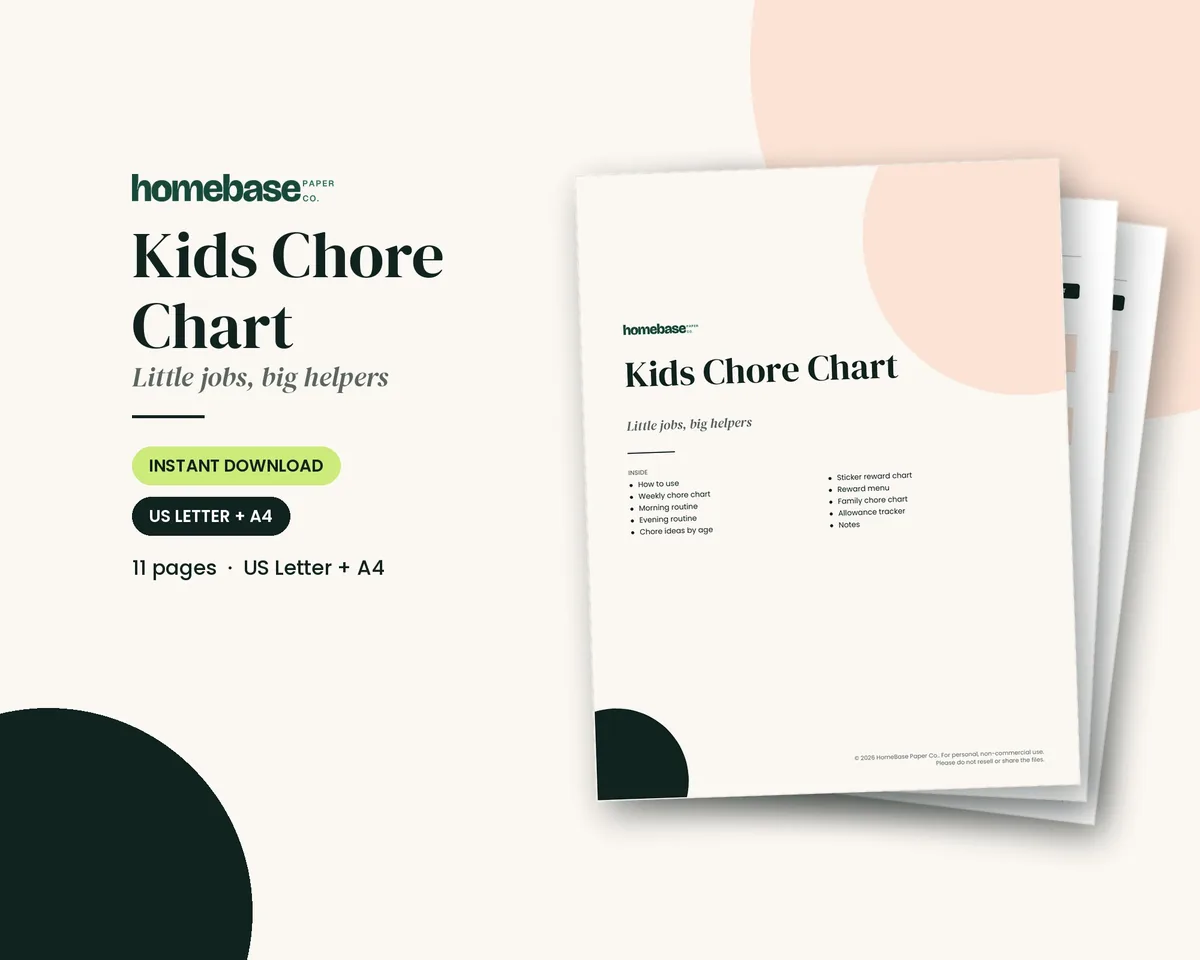
The Kids Chore Chart ($3.49) includes a weekly chore chart, morning and evening routine charts, chore ideas by age, a sticker reward chart, a reward menu, a family chore chart and an allowance tracker. Print a fresh set for the break.
For the family calendar and meal plan, the Household Binder ($6.99) has a monthly calendar, weekly planner, meal planner, grocery list and babysitter info pages. Planning simple break-time meals? The Meal Planner & Grocery List ($3.99) helps too. The chore chart and meal planner are both part of the Family Life Admin Bundle ($15.99).
For outings and cozy days after the break, plan a winter bucket list for the rest of the season.
Plan the meals ahead
Kids at home all day means more meals and more snacks. A simple plan saves money and stops the 11 a.m. "what's for lunch" debate:
- Pick five easy lunches and rotate them: quesadillas, pasta, sandwiches, soup and grilled cheese, leftovers. Our easy lunch ideas have more to rotate in.
- Set out a snack basket each morning; when it's empty, snacks are done for the day.
- Let kids cook one meal a week with help. Pizza on store-bought dough and tacos are good starters.
- Shop once a week with a list, so you're not running to the store every other day.
Getting ready for school again
Three or four days before school starts, move bedtime and wake-up back to school times by about 15 minutes a day, check backpacks and uniforms, and restart the school-morning routine. It makes the first day back much smoother.
Need something for the craft block in the schedule? Pick from our Christmas crafts for kids.
Winter break often starts near December 21, so try a few winter solstice traditions with the kids.
Earlier sunsets change outdoor play time, so check the daylight savings 2026 dates when you plan winter routines.
Make it easier
Tools for this
 Starter pick
Printables
Kids Chore Chart
Weekly chore chart, morning and evening routines, chore ideas by age, a sticker reward chart and an allowance tracker.

Printables
Household Binder
Family info, emergency plan, calendars, meals, groceries, cleaning, bills and sitter notes.
 Save 33%
Bundles
Family Life Admin Bundle
Baby logs, chore charts, pet records, meal plans and family recipes in one tidy set.
Frequently asked questions
What is a good winter break schedule for kids? A loose daily rhythm works best: a regular wake-up and bedtime, a morning routine, one planned activity, lunch, quiet time, free play and screens at a set time, then dinner and chores. Keep the blocks rather than exact times.
How much screen time should kids have over winter break? Many families set a block, such as an hour or two in the afternoon, after the morning routine and an activity are done. Check guidance from your pediatrician for your child's age, and count family movie nights as a shared activity.
What chores can kids do during winter break? Young kids can tidy toys and wipe tables; school-age kids can set the table, fold towels and feed pets; older kids can load the dishwasher or vacuum; teens can cook a meal and do their own laundry. A printed chart helps them remember.
How do I get kids back on a school schedule after break? Three or four days before school, shift bedtime and wake-up by about 15 minutes a day toward school times, restart the morning routine and check backpacks and clothes. The first morning back is much easier.
More from HomeBase
You may also like

Printables
Family Recipe Binder
Section dividers, four recipe page layouts with room for the family story, 4x6 and 3x5 cards and a conversion chart - print it or type into the fillable version.
Printables
Newborn Baby Tracker
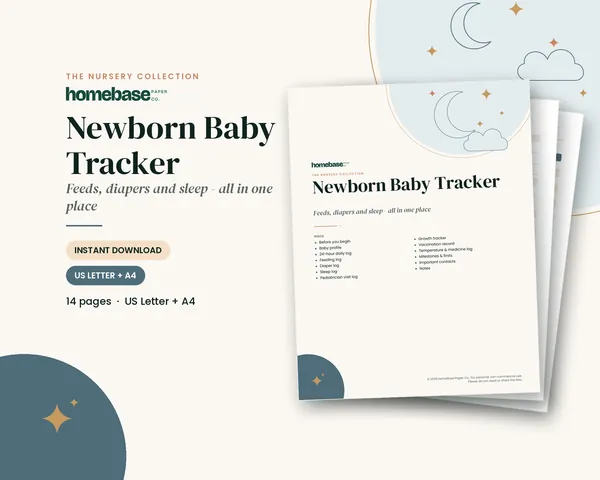
A 24-hour daily log plus feeding, diaper, sleep, growth and pediatrician-visit pages - easy to bring to checkups.

Printables
Caregiver Organizer
One place for contacts, appointments, the medication list from the doctor, and daily notes.
 Save 37%
Bundles
Family Peace of Mind Bundle
The If Something Happens to Me binder, Caregiver Organizer, Pet Health Records and Password Log together.
 Club
Monthly club
Meal Plan Club
Families who want dinner planned and a grocery list ready every week.
Free printable
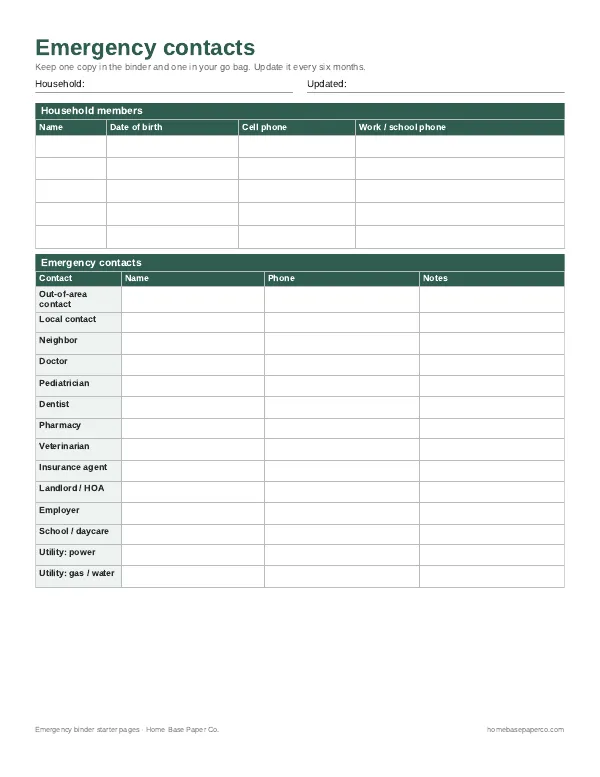
Have the important stuff in one place: get the free emergency binder pages
Printable starter pages for household members, emergency contacts, medical notes and where key documents live. You'll also get our weekly HomeBase email with simple ways to keep family records and important papers in order.
Sources
- Age-appropriate chores for children healthychildren.org
- Family Media Plan tool healthychildren.org
- Children ages 6 to 17 get at least 60 minutes of physical activity daily cdc.gov