

The short answer: this free academic planner runs from August 2026 to July 2027, matching the school year. It works for middle school, high school and college.
- Includes: year at a glance, class schedule and a weekly student planner
- Trackers: assignments, exams and grades, plus a monthly calendar
- Set up: add the school calendar and enter every syllabus
- Plan each week on Sunday and review each evening
- Next step: Get the free academic planner 2026-2027 (we email it to you); want more? The Household Binder is $6.99.
This free academic planner runs from August 2026 to July 2027, matching the school year instead of the calendar year. The printable PDF includes a year at a glance, a class schedule, a weekly student planner, an assignment tracker, an exam and grade tracker, and a monthly calendar. It works for middle school, high school and college. Below is what's on each page and how to set it up so you actually keep using it.
Get it now from the free download.
What's in the free academic planner
| Page | What it's for |
|---|---|
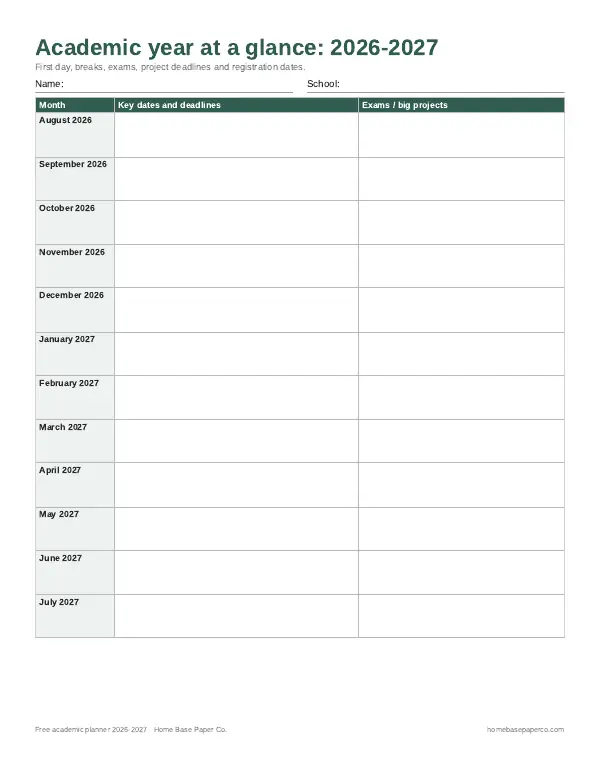
| Year at a glance 2026-2027 | First day, breaks, exams, project deadlines and registration dates, August to July |
| Class schedule | An hourly weekly grid from 7:00 to 8:00, plus a table for teacher or professor emails and office hours |
| Weekly student planner | Classes and events, what's due and what to study each day, plus a weekly goal, top 3 priorities and "coming up next week" |
| Assignment tracker | Class, assignment, date given, due date, done and grade |
| Exam and grade tracker | Test dates, a study-plan start date, scores, grade so far, and GPA goals |
| Monthly calendar | A blank five-week month with notes, to copy for each month of the school year |
Who this student planner is for
- Middle schoolers learning to track homework for the first time. Start with the weekly page only.
- High school students juggling six or seven classes, sports and a part-time job. The assignment tracker and class schedule earn their keep here.
- College students with lectures, labs, office hours and work shifts. The office hours table on the class schedule page saves a lot of syllabus digging.
- Parents keeping one or more kids' school dates straight.
- Teachers and tutors who want a simple, school-year layout to hand out.
Academic planner vs. regular planner
A calendar-year planner runs January to December, which splits the school year in half. An academic planner starts when school starts. You set it up once in August and use the same system through finals and summer. That makes it a better fit for students, teachers and parents who live by the school calendar.
For a calendar-year planner instead, see our free 2027 planner, with 12 monthly pages and a weekly page.
How to set up your academic planner
- Print the pages. Print the year at a glance, class schedule, assignment tracker and grade tracker once. Print 4 or 5 weekly pages and one monthly page for each month.
- Add the school calendar. Copy the first day, holidays, breaks, exam weeks and early release days onto the year at a glance.
- Fill in your class schedule. Add each class, room number and teacher. Reprint each semester.
- Enter every syllabus. As you get each syllabus, write every due date and test date on the monthly pages.
- Plan each week on Sunday. Copy the week's deadlines onto the weekly page and add practices, work shifts and appointments.
- Review each evening. Spend five minutes checking tomorrow and crossing off what's done.
- Update grades. Record each returned test or assignment on the grade tracker.
Keep everything in a binder with tabs, or punch the pages for a discbound planner.
Time management tips for students
A planner only helps if you use it to make decisions. The University of Illinois Counseling Center's time management guide suggests planning your week in advance, breaking large tasks into steps and scheduling study time like a class. Stanford's teaching and learning center has practical advice on keeping to-do lists, like ranking tasks and keeping one list instead of several.
A few habits that work:
- Write it down right away. Don't trust your memory for due dates.
- Work backward from big deadlines. A research paper due in four weeks needs a topic, sources, outline and draft dates.
- Use color codes. One color per class makes the week easy to scan.
- Block study time. Treat it like an appointment.
- Plan breaks. Rest is part of the plan, not a failure of it.
- Check the week ahead every Sunday. It takes ten minutes and prevents surprises.
Using an academic planner as a parent
Parents juggle more than one school calendar. Copy the key dates for each child onto one year at a glance: breaks, conferences, picture day and sports seasons. The American Academy of Pediatrics' back to school tips recommend setting up a regular homework routine and a quiet place to study, and a shared weekly page makes that routine visible. For younger kids, sit together on Sunday and fill in the week. For more on this topic, see our school planning guides.
The Household Binder has a monthly calendar, weekly planner, important dates and family information pages, so school dates sit right next to the family schedule. Pair it with a kids chore chart to fit chores around homework.
Academic planner for college students
College adds new deadlines: registration windows, add/drop dates, financial aid forms, housing applications and work shifts. Put all of them on the year at a glance in August. Use the assignment tracker for each course, and check the grade tracker before midterms so you know where you stand. College students managing money for the first time can add the Budget Planner Printable, and our college student budget guide shows how to plan a semester.
A sample week in the student planner
Here's how a high school junior might fill in one weekly page:
- Goal this week: finish the history essay draft.
- Top 3 priorities: history draft, chemistry lab report, study for the Friday math quiz.
- Monday: soccer practice; due today, English reading log; to do, essay outline.
- Tuesday: chemistry lab; to do, write the lab intro and draft essay paragraphs 1 and 2.
- Wednesday: due today, lab report; to do, essay paragraphs 3 and 4.
- Thursday: study 30 minutes for math using the practice set.
- Friday: math quiz; finish the essay draft.
- Coming up next week: essay final due Thursday, Spanish vocab test.
Notice how each big task is split into small, dated steps. That's the habit that makes a planner work. For more layouts and page ideas, see our ideas for setting up a planner.
A term-by-term routine for the planner
An academic planner works best when you do the same few things at the same points in every term:
| When | What to put in the planner |
|---|---|
| First week | Every syllabus due date, exam date and break, copied onto the year-at-a-glance and monthly pages |
| Every Sunday | Next week's assignments split into small, dated steps, plus the top 3 priorities |
| Two weeks before an exam | Study blocks on the weekly pages, working backward from the exam date |
| Midterms | A quick review of the grade tracker: which classes need extra time? |
| Last two weeks | Final project milestones and exam schedule on one monthly page |
Treat the first-week step as the foundation: once the dates are in, the rest of the term is just moving small tasks onto the right days. It also shows pile-ups, such as three deadlines in one week, while there is still time to start early.
Pair it with other school planning pages
- Teachers can plan lessons with our teacher planner ideas.
- Homeschool families can use the homeschool planner guide.
- Parents prepping for August can work from the back to school checklist.
- For a general weekly layout, see our weekly planner printables.
A good planner is the one you'll open every day. Start simple, fill it in each Sunday, and add pages only when you need them.
For class notes that actually help at test time, try Cornell notes: our guide shows the page layout, the 5 R's step by step and worked examples.
Make it easier
Tools for this

Printables
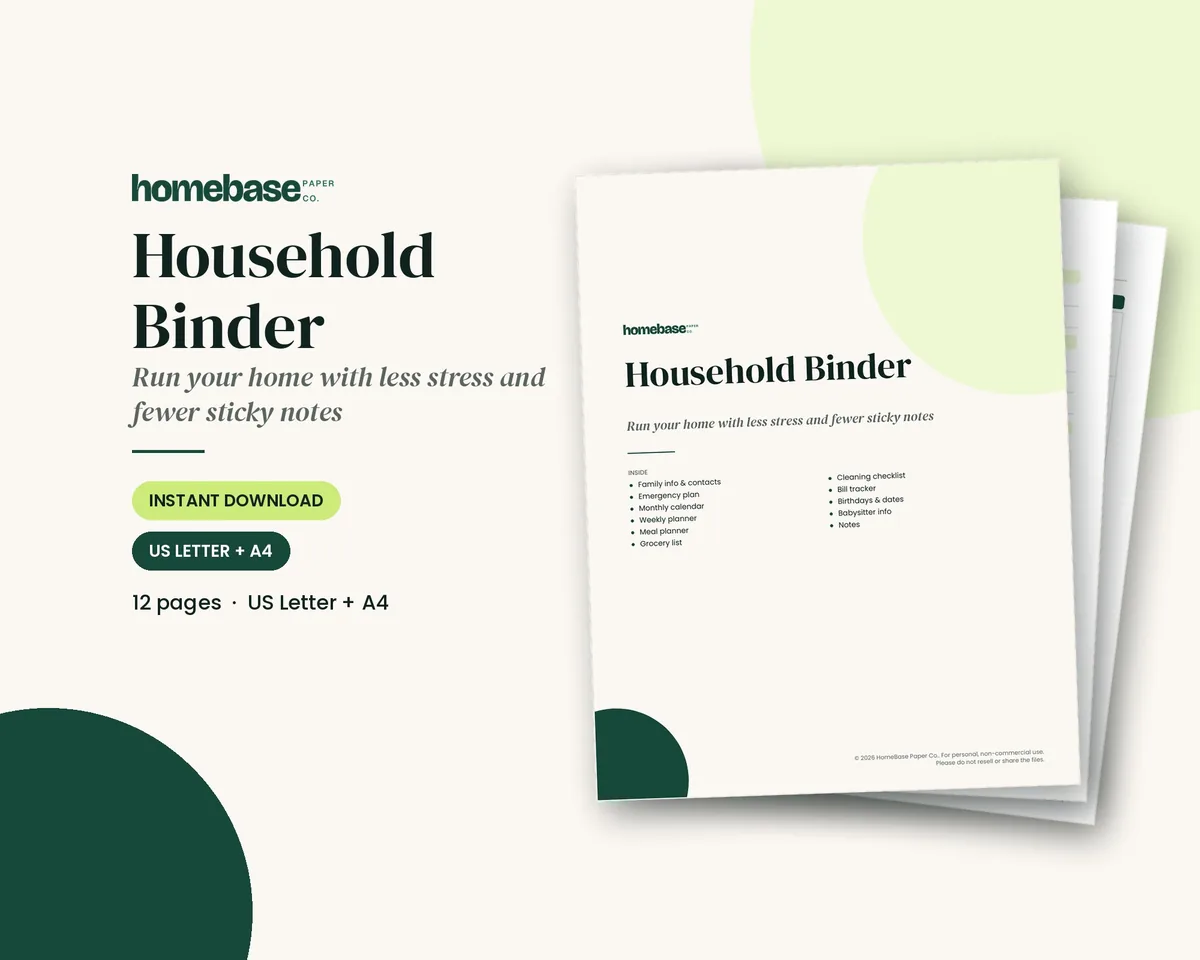
Household Binder
Family info, emergency plan, calendars, meals, groceries, cleaning, bills and sitter notes.
Printables
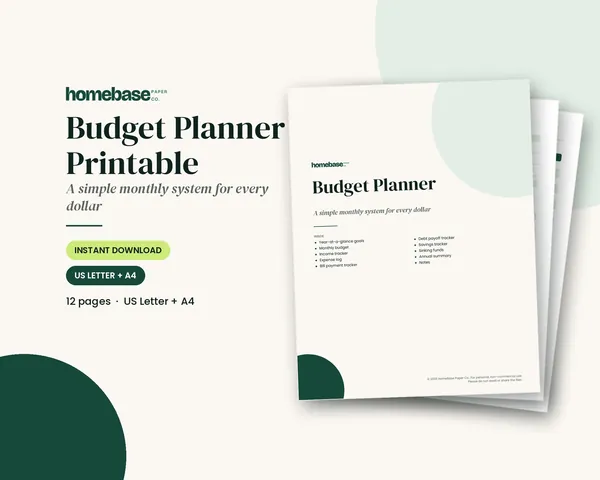
Budget Planner Printable
Twelve undated pages you can print every month: budget, bills, spending, savings and debt.
 Starter pick
Printables
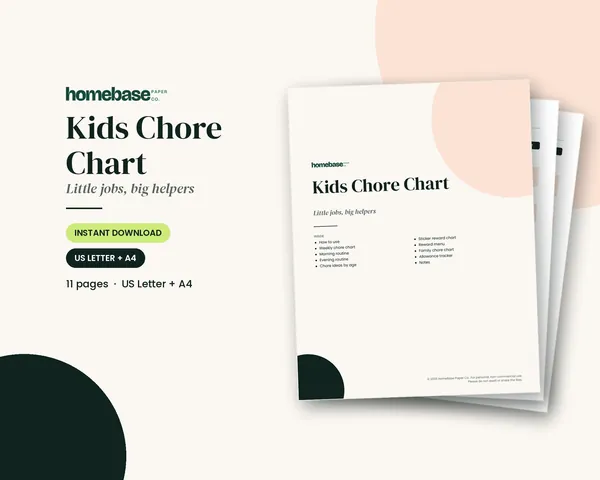
Kids Chore Chart
Weekly chore chart, morning and evening routines, chore ideas by age, a sticker reward chart and an allowance tracker.
Frequently asked questions
What is an academic planner? An academic planner is a calendar and planner that follows the school year instead of the calendar year, usually running from July or August to the following June or July. It has space for class schedules, assignments, exams and school events, so students can see the whole term at a glance.
What's the difference between an academic planner and a regular planner? A regular planner runs January to December. An academic planner starts in late summer when school starts and ends after the spring term, so you don't switch planners halfway through the year. Many also include class schedules, assignment trackers and grade pages that regular planners don't have.
When should I start using an academic planner? Start a week or two before classes begin. Fill in the year at a glance with the first day, breaks, exam weeks and registration dates as soon as your school publishes its calendar. Then add each syllabus as you get it, so every due date is in one place.
How do I use a student planner effectively? Write down every assignment the day it's given, including the due date. Review your planner each evening and each Sunday for the week ahead. Break big projects into smaller steps with their own dates, and cross things off as you go. Consistency matters more than fancy layouts.
Is a printable academic planner as good as a bound one? Yes, a printable academic planner can work just as well as a bound one, and it's more flexible. You print only the pages you use, add extra weekly pages for busy weeks and reprint the class schedule each semester. Keep the pages in a binder or discbound system with tabs so nothing gets lost.
Is this academic planner good for college students? Yes, this academic planner is good for college students. The pages work for high school and college students alike. College students can use the class schedule for lectures and labs, the assignment tracker for each course and the grade tracker to watch their average. The year at a glance helps with registration and financial aid deadlines.
How can parents use an academic planner? Parents can use the year at a glance to track school breaks, conferences, picture day and sports seasons, then copy key dates to the family calendar. For younger kids, a parent and child can fill in the weekly page together on Sunday night, which builds planning habits early.
What should I write in a student planner? Write assignments, due dates, test dates, project milestones, extracurricular practices, work shifts and appointments. Many students also track reading pages, study sessions and a short daily to-do list. Add personal events too, so you can see when a busy weekend will crowd your schoolwork.
How do I keep track of grades in a planner? Keep track of grades in a planner by using the grade tracker page to list each test, quiz and major assignment with its score and weight. Update it every time work is returned. Seeing your running average helps you spot a slipping class early and talk to the teacher before the end of the term. The grade tracker page is part of the free academic planner on this page.
Can teachers print this academic planner for students? Yes, teachers can print this academic planner for students. Teachers and homeschool parents can print the academic planner pages for their students at no cost. Please don't resell the file or upload it to another site. Share a link to this page instead, so students can download the newest version for the coming school year.
More from HomeBase
You may also like
Printables
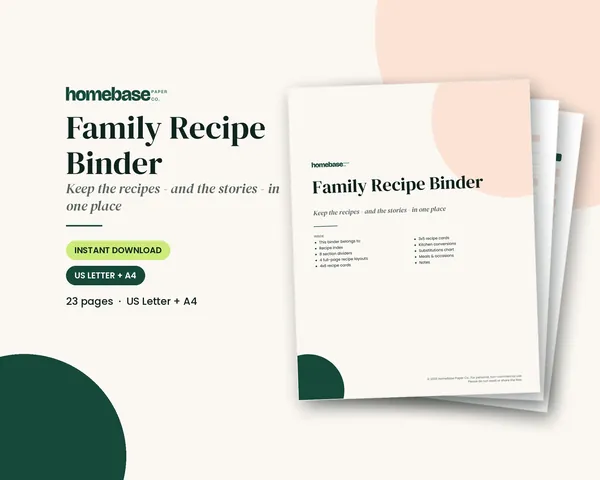
Family Recipe Binder
Section dividers, four recipe page layouts with room for the family story, 4x6 and 3x5 cards and a conversion chart - print it or type into the fillable version.
Printables
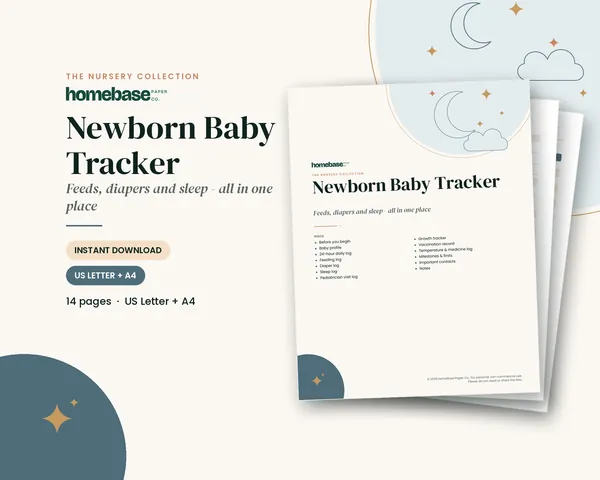
Newborn Baby Tracker
A 24-hour daily log plus feeding, diaper, sleep, growth and pediatrician-visit pages - easy to bring to checkups.
Printables
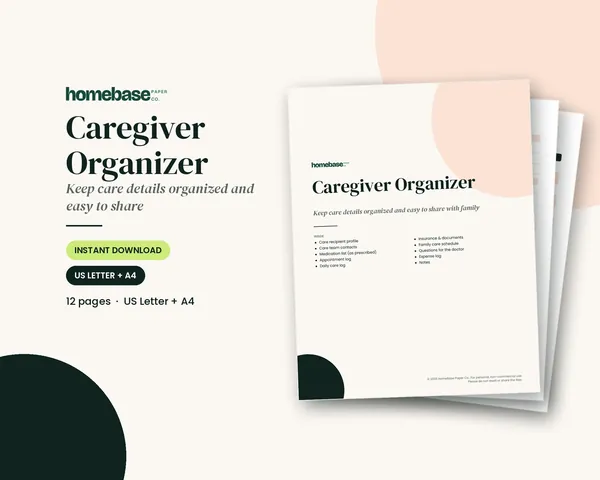
Caregiver Organizer
One place for contacts, appointments, the medication list from the doctor, and daily notes.
 Save 33%
Bundles
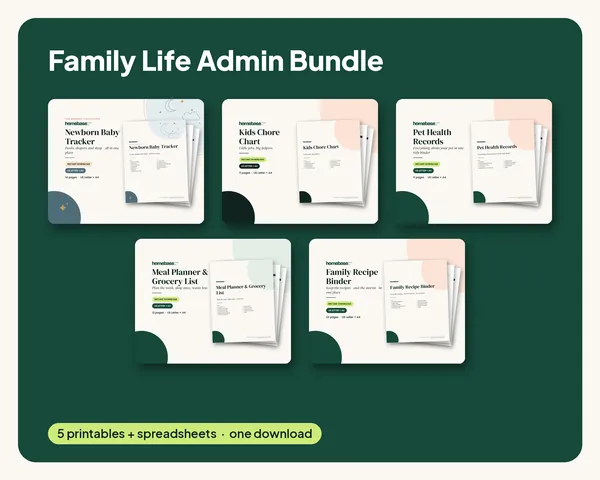
Family Life Admin Bundle
Baby logs, chore charts, pet records, meal plans and family recipes in one tidy set.
 Club
Monthly club
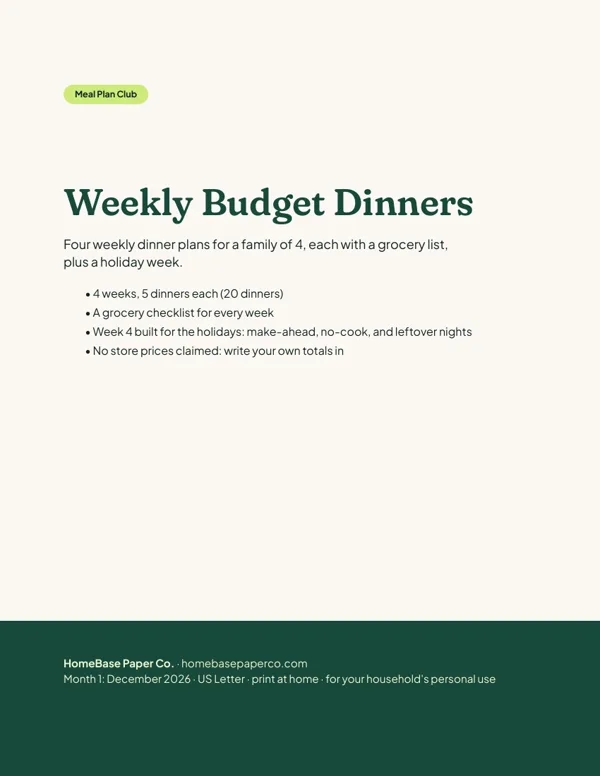
Meal Plan Club
Families who want dinner planned and a grocery list ready every week.
Free printable
A school-year planner that runs August to July
Class schedule, weekly planner, assignment and grade trackers in 6 pages. You'll also get our weekly HomeBase email with simple routines for kids, school days and family life.
Sources
- University of Illinois Counseling Center: Time management counselingcenter.illinois.edu
- Stanford Center for Teaching and Learning: Keeping to-do lists ctl.stanford.edu
- HealthyChildren.org (AAP): Back to school tips healthychildren.org