

The short answer: A simple homeschool planner turns a big school year into weekly pages your kids can check off, and keeps the attendance and work records your state may ask for. This free printable homeschool planner has a year plan by subject, a weekly lesson page for each student, an attendance and hours log, and a reading log with portfolio notes.
Our picks for homeschool planner

Printables
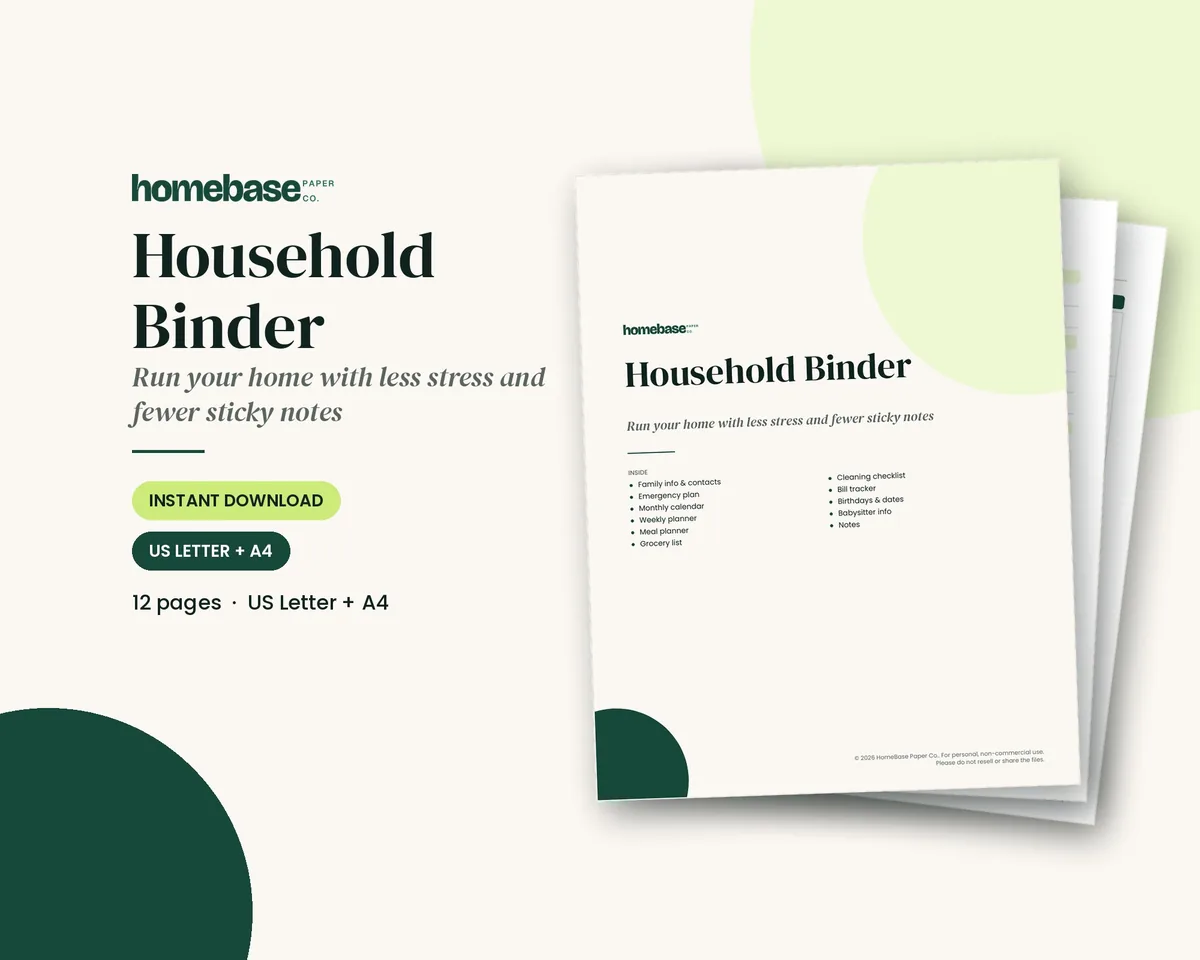
Household Binder
Family info, emergency plan, calendars, meals, groceries, cleaning, bills and sitter notes.
 Starter pick
Printables
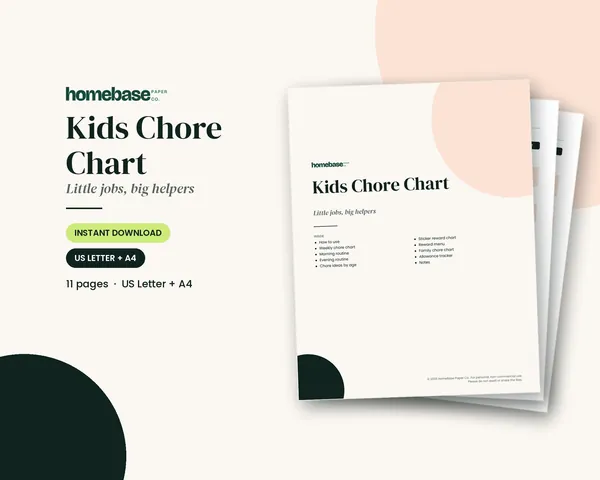
Kids Chore Chart
Weekly chore chart, morning and evening routines, chore ideas by age, a sticker reward chart and an allowance tracker.
 Save 48%
Bundles
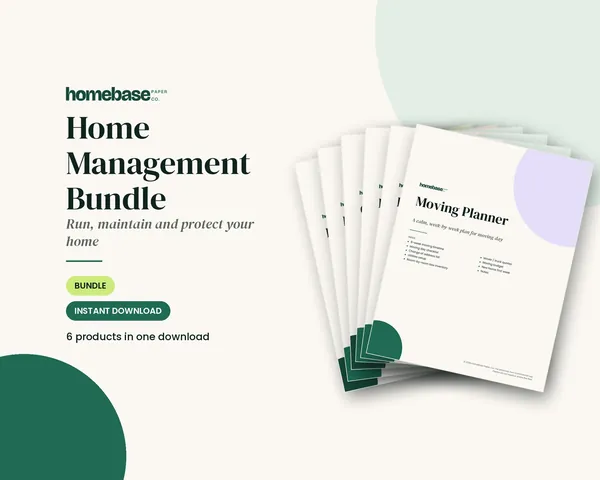
Home Management Bundle
Household binder, maintenance log, moving planner, cleaning schedule, home inventory and password log.
Free by email. Go to the free download, or read on for how to plan a full year without burning out.
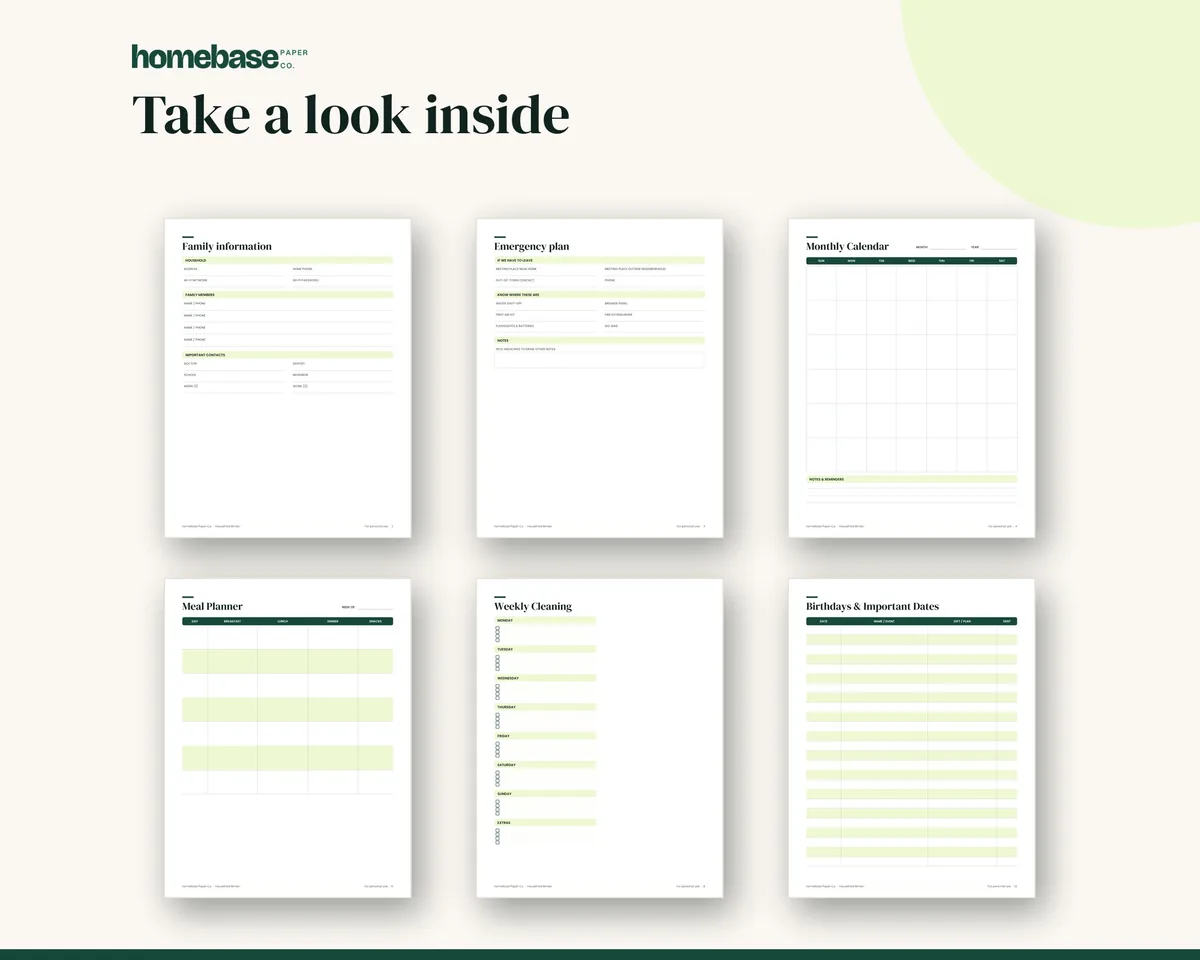
What's in the free homeschool planner
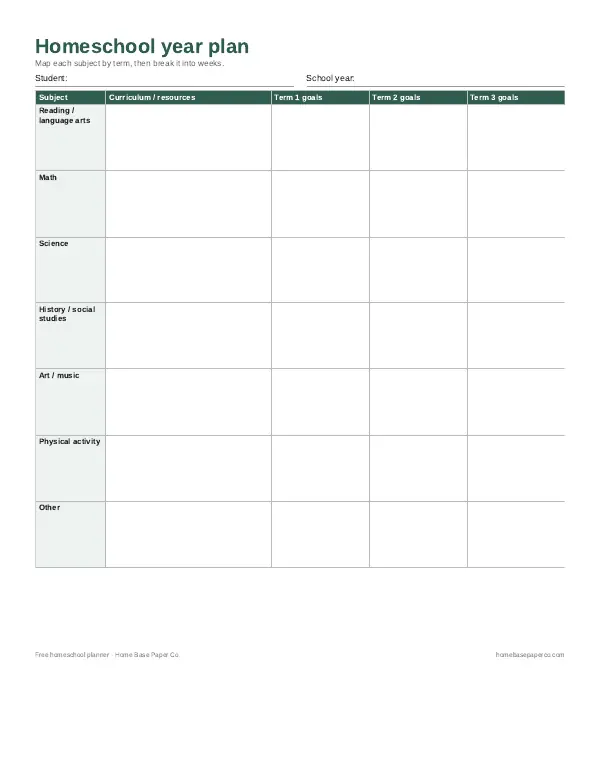
- Homeschool year plan. One row per subject with columns for curriculum and resources and goals for terms 1, 2 and 3.
- Weekly planner. Seven subject rows, from reading and math to art and physical activity, across Monday to Friday. One page per child per week.
- Attendance and hours log. A grid for every day of every month with a total column, plus a table for field trips and activities.
- Reading log and portfolio notes. Titles, authors, pages or minutes, and a checklist of work samples to save each term.
How to plan a homeschool year in five steps
- Check your state's rules. Requirements range from almost none to set days or hours, records, portfolios or tests. Know what you need to keep before you start.
- List subjects and curriculum. Write each child's subjects and the books, courses or resources you'll use on the year plan.
- Set term goals. Two or three goals per subject per term are enough. "Finish fractions unit" is clearer than "get better at math."
- Break it into weeks. Count your school weeks, including breaks, and divide each curriculum into weekly chunks. Write a few weeks at a time on the weekly pages.
- Track as you go. Mark attendance daily, log books on the reading page and drop a work sample in the binder each month.
Sample homeschool week
To time-block the week or set a class schedule by period, use our free schedule template.
| Subject | Mon | Tue | Wed | Thu | Fri |
|---|---|---|---|---|---|
| Reading / language arts | Lesson 12 + read 20 min | Spelling list | Lesson 13 | Write a paragraph | Library trip |
| Math | Lesson 31 | Lesson 32 | Practice page | Lesson 33 | Quiz + math game |
| Science | Plant experiment | Read ch. 4 | Journal | Nature walk | Review |
| History / social studies | Read aloud | Map work | Timeline | Read aloud | Project day |
| Art / music | Drawing | Free | Piano | Free | Craft |
Leave Friday lighter. It gives you a buffer to catch up anything that slipped during the week.
Homeschool planning tips that keep the year on track
- Plan a few weeks at a time. Detailed plans for a whole year rarely survive October. A term outline plus two to four weeks of detail is easier to adjust.
- Let kids check off their own work. A weekly page on the table builds independence and shows them the finish line.
- Combine subjects where you can. Siblings can share history, science and art at different depths.
- Build in breaks. Schedule lighter weeks around holidays and illness so the plan bends instead of breaking.
- Use time blocks. Simple time management habits from the University of Illinois Counseling Center, like listing tasks and doing the hardest first, work for kids too. For your own day, our tips on how to be more productive include a sample schedule.
Homeschooling is a choice many families make. The National Center for Education Statistics reports on how many students are homeschooled and why parents choose it, from concern about school environment to wanting to provide religious or moral instruction. Whatever your reason, a steady planning routine is what keeps the year moving.
Homeschool records worth keeping
Even if your state asks for very little, a small paper trail is useful. It shows progress to grandparents, helps if you move to a state with stricter rules, and makes it easier to return to school later if you choose. Each year, keep the year plan, the attendance and hours log, the reading log, and a handful of work samples per subject. Add any test scores or evaluations if your state requires them. Store everything in one folder or binder per child and label it with the school year. If you'd like more ways to keep family paperwork tidy, our guide to how to organize important documents walks through a simple filing system.
For co-op classes and group field trips, a simple sign in sheet tracks attendance, and a daily reading log records books and minutes read. For more on this topic, see our back-to-school hub.
Older students who manage their own work can use our free academic planner to track assignments, tests and grades by class.
Make room for home life too
School at home means the house is busy all day. A rotating cleaning schedule keeps chores from piling up, and a chore chart by age shows what kids can handle. Our free weekly planner covers family appointments, and the free teacher planner suits co-op or small-group teaching.
Want a home system that matches?
The Kids Chore Chart ($3.49) gives each child a printable chart for daily jobs, which pairs well with their weekly school page. The Household Binder ($6.99) holds the family calendar, meal planner, grocery list and bills, and the Home Management Bundle ($16.99) adds a cleaning schedule, home maintenance log, home inventory and more.
Teaching older kids to take their own notes? Our guide to Cornell notes breaks the method into simple steps with layout measurements and examples you can copy.
Household Binder
Family info, emergency plan, calendars, meals, groceries, cleaning, bills and sitter notes.
$6.99 · Instant download. Print at home or fill it in on screen. Or browse the full Home & Organizing collection.
Frequently asked questions
Is this homeschool planner free to print? Yes, this homeschool planner is free to print. The homeschool planner on this page is a free four-page PDF that we email to you. It includes a year plan, a weekly planner, an attendance and hours log and a reading log with portfolio notes. Print one weekly page per child per week, and as many copies of the other pages as your family needs.
What should a homeschool planner include? A practical homeschool planner covers a year plan for each subject, weekly lesson pages, attendance or hours records, a reading log and a place to note work samples. Families with several children often add a simple daily rhythm and a chore chart so school and household jobs fit together without constant reminders.
Do I have to keep homeschool attendance records? Sometimes: whether you have to keep homeschool attendance records depends on your state. Some states require a set number of days or hours, attendance records, portfolios or tests, while others ask for very little. Check your state's education department or homeschool law before you start the year, and keep the attendance and hours log even if it is optional, because it is easy proof of work.
How do I plan a homeschool year? List the subjects and curriculum for each child, then set two or three goals per subject for each term. Count the weeks you plan to school, including breaks, and divide each curriculum into weekly chunks. Write those chunks on the weekly pages a few weeks at a time so you can adjust as you go.
How many hours a day is homeschool? Homeschool days are often shorter than a school day because there is less waiting and transition time. Younger children may finish core lessons in two or three hours, and older students may need four to six. If your state counts hours, log them on the attendance page, including field trips, reading and hands-on projects.
Should I use one homeschool planner per child? Yes, use one weekly page per child so each student sees their own work and can check it off. A single year plan and attendance log per child also make records easier if your state asks for them. For family subjects taught together, like history or science, write them on each child's page. The weekly planner pages in the Household Binder can hold the family schedule around those lessons.
Is a paper or digital homeschool planner better? Neither is better for every family: paper is easier for kids and records, and digital is handier for reuse. Paper planners are easy for kids to use, need no screens and are simple to keep as records. Digital planners are handy for reusing plans with younger siblings and tracking many subjects. Plenty of families plan the year digitally and print weekly pages so children have a paper checklist on the table, alongside a paper chart like the Kids Chore Chart for routines.
What is a homeschool portfolio? A homeschool portfolio is a collection of work samples that shows progress over the year, such as writing, math tests, science projects, art and a reading list. Some states require one for review, and many families keep it anyway as a record. The reading log page has a checklist of samples to save each term.
How do I stay consistent with homeschool planning? Pick a set time each week, such as Sunday evening, to fill in the next week's pages. Keep the planner in one binder with all children's pages, and check off lessons each day. If a week goes off track, move the unfinished lessons forward rather than trying to catch up all at once.
Can I use a teacher planner for homeschooling? You can, but a classroom teacher planner is built around periods and a full class roster. A homeschool planner works better because it is organized by subject for one or a few students and includes attendance and portfolio pages. We also offer a free teacher planner if you teach a co-op class or a small group.
Free printable
Plan your homeschool year by subject and week
A year plan, weekly planner, attendance log and reading log. You'll also get our weekly HomeBase email with simple routines for kids, school days and family life.
Sources
- NCES Fast Facts: Homeschooling nces.ed.gov
- University of Illinois Counseling Center: Time management counselingcenter.illinois.edu