

The short answer: a reading log is a simple page where readers write down what they read and for how long. This free 4-page PDF works for school, summer reading and adults.
- Daily reading log
- Book log
- Monthly 20-minute chart
- Book response page
- Next step: Get the free reading log (we email it to you); want more? The Kids Chore Chart is $3.49.
Our picks for reading log
 Starter pick
Printables
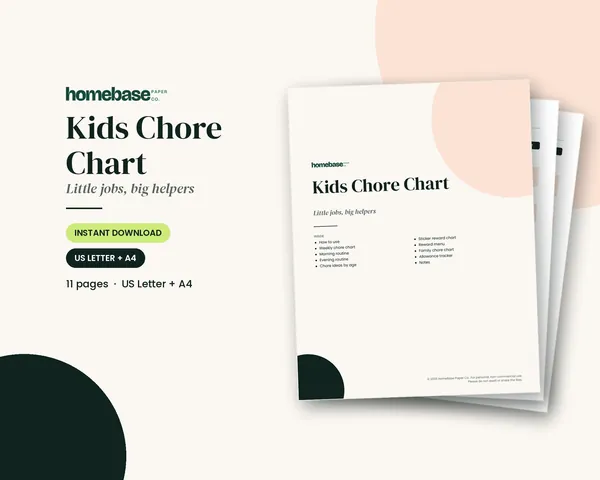
Kids Chore Chart
Weekly chore chart, morning and evening routines, chore ideas by age, a sticker reward chart and an allowance tracker.
Printables
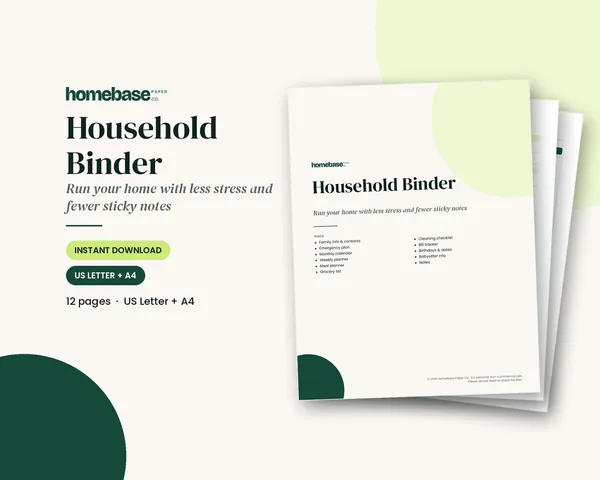
Household Binder
Family info, emergency plan, calendars, meals, groceries, cleaning, bills and sitter notes.
Printables
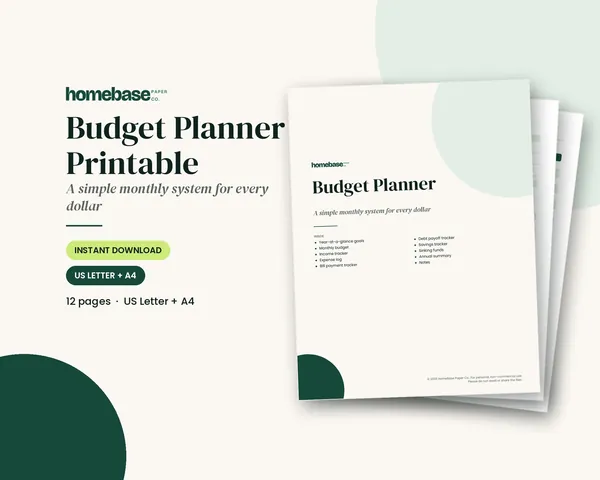
Budget Planner Printable
Twelve undated pages you can print every month: budget, bills, spending, savings and debt.
A reading log is a simple page where readers write down what they read and for how long. This free 4-page PDF has a daily reading log, a book log, a monthly 20-minute chart and a book response page, so it works for school assignments, summer reading and grown-up reading goals alike. Below is how to use each one and how to make daily reading stick.
What's in the free reading log
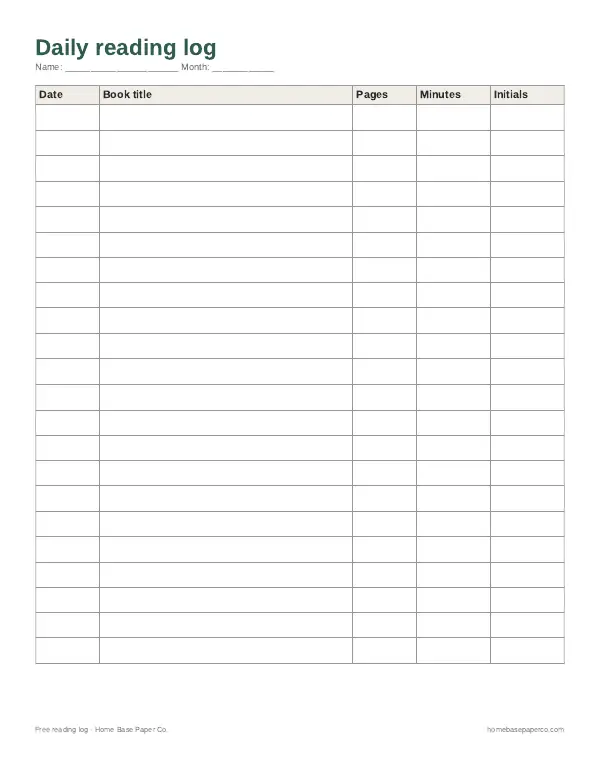
- Daily reading log. Date, book title, pages, minutes and initials, with 22 rows for a month of school nights.
- Book log. Title, author, start and finish dates and a 1–5 rating for each book.
- Monthly 20-minute chart. One box per day to write minutes, with a total at the bottom.
- Book response page. Characters, setting, problem, solution, favorite part and a new word.
Print a set for each reader in the family. It fits US Letter, and A4 with "fit to page."
Why 20 minutes a day?
Twenty minutes is the goal you'll see from schools and reading experts. The Nebraska Department of Education's Read-at-Home Plan tells families that by reading with your child 20 minutes per day and making a few simple things part of your daily routine, you can set your student on the path to proficiency. It also says reading with children outside of school is the best way to help them build strong early literacy, and that helping a child read on grade level by 3rd grade is an important task.
The University of Utah Reading Clinic's at-home guide recommends at least 20 minutes per day too. It explains that developing readers need what researchers call a "practice effect": improvement that comes from reading, reading and more reading. Its point is simple: limited practice leads to limited improvement.
A reading log makes that practice visible. You can see at a glance which days happened and which didn't.
Which reading log to use
| Reader | Best page | Why |
|---|---|---|
| Kids with a school log | Daily reading log | Minutes and parent initials in one row |
| Kids building a habit | Monthly 20-minute chart | One box a day is quick to fill |
| Book lovers of any age | Book log | A running list of finished books |
| Book reports and clubs | Book response page | Notes on characters, plot and favorite parts |
How to use the daily reading log
- Write the name and month at the top.
- Read first, then fill in the row while the book is still open.
- Write the title, the pages read and the minutes.
- Initial the row if your child's teacher asks for a parent signature.
- Keep the log with the books, so it's never lost.
- Bring it back to school on the day it's due.
Make the 20 minutes count
The University of Utah Reading Clinic is honest that home reading isn't always easy: it says many developing readers would rather clean a litter box than read at home. Its tips make the time go better:
- Put phones away and turn the TV off.
- Pick a topic your child finds interesting.
- Choose a book at the right level. More than 1 error in every 10 words means it's too hard.
- Take turns reading every other page.
- Stop now and then to talk about what's happening.
- Add some silent reading. After reading aloud, the clinic suggests another 15 minutes of silent reading with a question to answer, like "Why is the character so mad?"
Then fill in the reading log together. The clinic itself has students fill out a home reading chart and bring it back, which is what a reading log is for.
Reading logs for young children
For preschoolers and kindergartners, reading time means being read to. Count it. Let your child color in the box on the monthly chart or put a sticker on it. The point at this age is a happy daily habit. The Utah clinic says bringing children into the world of reading can and should be done joyfully, in a stress-free setting, and that children take their cues about reading from you.
Reading logs for older kids
Older kids can fill in the log on their own. Hand them the book log and the response page, and let them set a goal, like a book a week or 600 minutes a month. Check in once a week rather than every night. If the log becomes a fight, switch to the monthly chart, which takes about five seconds a day.
Summer reading log
Summer is when reading time slips most, because there's no homework to prompt it. Print one monthly chart for each summer month and set a family goal. Our winter break schedule for kids shows how to fit reading time into a school break.
Reading log ideas to keep it fun
A blank log can feel like homework. A few twists keep kids interested:
- Reading bingo. Make a grid of goals like "a book about animals," "a funny book" or "read to a pet," and mark each one off.
- A book chain. Add a paper link for every finished book and hang it across the room.
- Read-aloud night. One night a week, the whole family reads aloud from the same book.
- New places to read. Count reading in a blanket fort, on the porch or in the car on a long drive.
- Family totals. Add up everyone's minutes at the end of the month and pick a family treat.
- Word collecting. Write one new word from each book on the response page.
Paper or app reading log?
Both work. A paper reading log is easy for young kids, needs no screen and is what most teachers ask for. An app can add up minutes for you and is handy for adults with a long list of books. If you already ask kids to put phones away while they read, a paper log keeps the whole habit screen-free. You can always start on paper and add an app later.
When a reading log isn't working
If your child fights the log every night, step back. Ask whether the book is too hard, whether the time of day is wrong or whether the log itself has become the problem. Try a different book, a different time or the quicker monthly chart. If reading stays hard, ask your child's teacher. The Nebraska Department of Education's reading pages also note that the American Optometric Association recommends a comprehensive eye exam for students who aren't reading on grade level.
Reading logs for adults
Adults use reading logs too. The book log is a simple way to track a yearly goal, remember what you thought of a book, or keep notes for a book club. Fill in a row when you finish each book and give it a rating. At the end of the year you'll have a list of every book you read.
Build reading into the family routine
Reading sticks when it happens at the same time every day. Pick a slot: after school, after dinner or right before bed. Write it into the family schedule next to chores and homework.
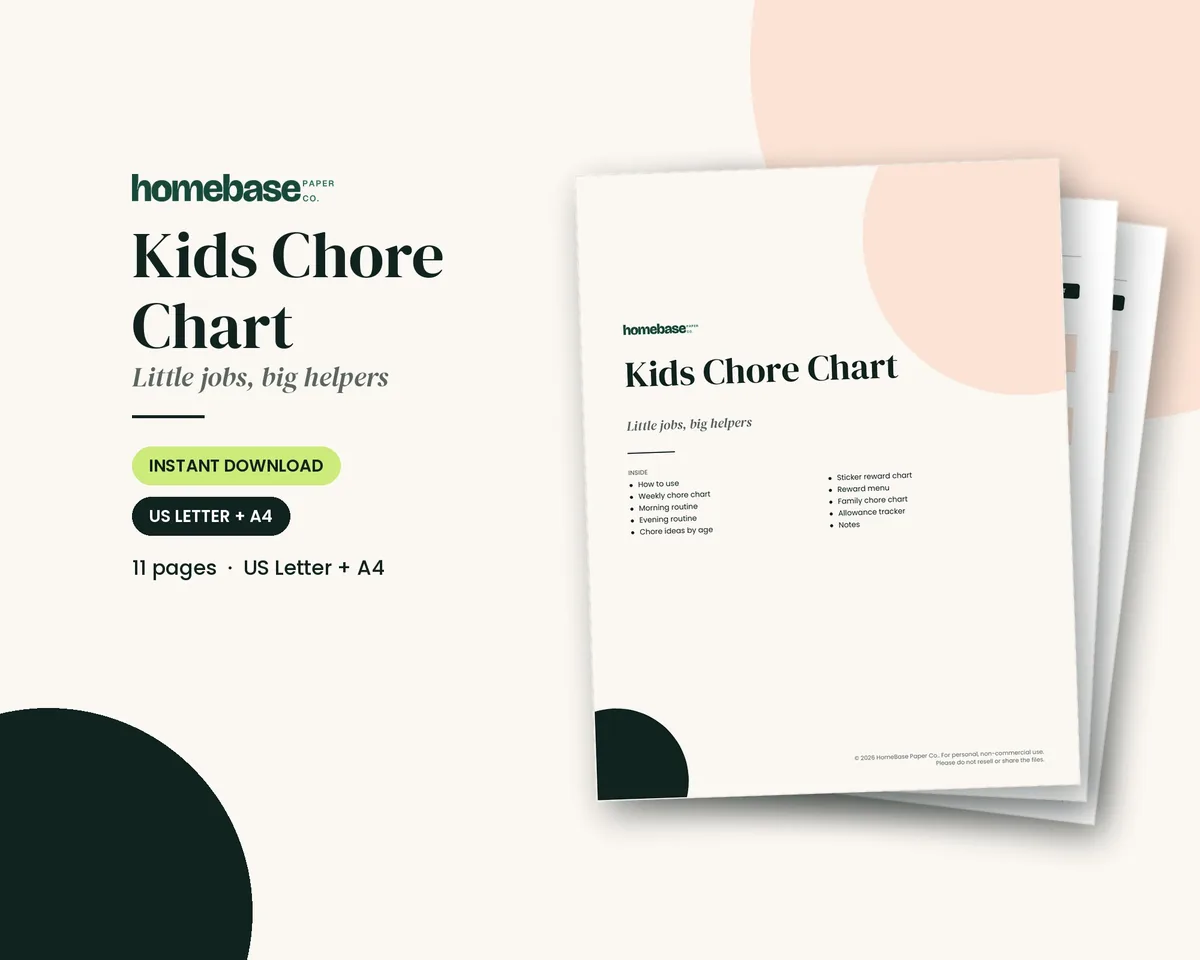
The Kids Chore Chart ($3.49) has a weekly chart, morning and evening routines and a sticker reward chart, so "read 20 minutes" can sit on the same chart as feeding the dog. For school papers, reading logs and the family calendar, the Household Binder ($6.99) keeps family info, calendars, meals and bills in one binder. If you're setting aside money for books, school fees or a library tote, the Budget Planner Printable ($5.99) has twelve undated pages for the budget, bills, spending, savings and debt.
Tips for a reading log that lasts
- Keep it by the books, not in a backpack.
- Fill it in right away, before you forget the minutes.
- Celebrate a full month with a trip to the library or a new book.
- Don't punish missed days. Just start again tomorrow.
- Let kids choose books as often as you can.
- Read where they can see you. Kids copy what you do.
More free printables for families
For school mornings, our back-to-school checklist covers supplies and routines. Our chore chart by age has age-by-age chore ideas, and our free checklist template works for kids' morning and evening lists. If you teach at home, the homeschool planner helps you plan lessons and reading time.
Get the kids helping without the nagging
Weekly chore chart, morning and evening routines, chore ideas by age, a sticker reward chart and an allowance tracker.
$3.49 · Instant download. Print at home or fill it in on screen. Or browse the full Family & Life Admin collection.
Frequently asked questions
Is this reading log free? Yes, this reading log is free. The reading log on this page is a free 4-page PDF that we email to you: a daily reading log, a book log, a monthly 20-minute chart and a book response page.
What is a reading log? A reading log is a simple record of what you read and how long you read it. Most reading logs have the date, the book title, pages or minutes read and a spot for a parent or teacher to initial.
How many minutes a day should kids read? About 20 minutes a day is the common goal. The Nebraska Department of Education recommends reading with your child 20 minutes per day, and the University of Utah Reading Clinic recommends at least 20 minutes of reading a day at home.
Which reading log should I use? The daily page of this free reading log is best for school assignments that ask for minutes and a parent signature. Use the book log to keep a list of finished books, the monthly chart for a 20-minute goal, and the response page for book reports.
Do reading logs help kids read more? Yes, for many kids they help by making practice visible. The University of Utah Reading Clinic says students won't make enough progress without reading more at school and at home. A log is a simple way to see whether that reading is happening.
How do I get my child to fill in a reading log? Make it part of the routine. Read at the same time each day, keep the log and a pen next to the books, and fill it in together right after reading. A small reward for a full month can help.
What should a reading log include? At minimum: the date, the book title and the minutes or pages read. For school, add a parent initials column. For older readers, add the author, start and finish dates and a rating, like our book log.
Can adults use a reading log? Yes, adults can use a reading log. The book log and monthly chart work for adults too. Many adults use a reading log to track a yearly reading goal or keep notes on books for a book club.
How do I know if a book is too hard for my child? Listen to them read a page aloud. The University of Utah Reading Clinic's rule of thumb is that more than 1 error in every 10 words means the text is too hard.
Can I use the reading log for summer reading? Yes, you can use the reading log for summer reading. The daily log and monthly chart work well for summer reading, when there are no school assignments to keep kids reading. Print one monthly chart for June, July and August.
Should reading log time include being read to? Yes, for young children it usually does. The Nebraska Department of Education says reading with children outside of school is the best way to help them build strong early literacy. Check your teacher's rules for school logs.
Can I print the reading log on A4 paper? Yes, you can print the reading log on A4 paper. The reading log is set up for US Letter, but it prints on A4 if you choose "fit to page" or "scale to fit" in your print settings.
Free printable
Make reading time a habit kids can see
A daily log, a book log, a 20-minute chart and a response page. You'll also get our weekly HomeBase email with simple routines for kids, school days and family life.
Sources
- University of Utah Reading Clinic: At home uurc.utah.edu
- Nebraska Department of Education: Read-at-Home Plan education.ne.gov