

The short answer: Choose a lullaby you can sing comfortably and repeat calmly. A familiar tune, a gentle hum or a short verse in your family's language can be enough. Use the song as one predictable part of bedtime rather than expecting it to make every child fall asleep immediately.
Our picks for lullabies
Printables
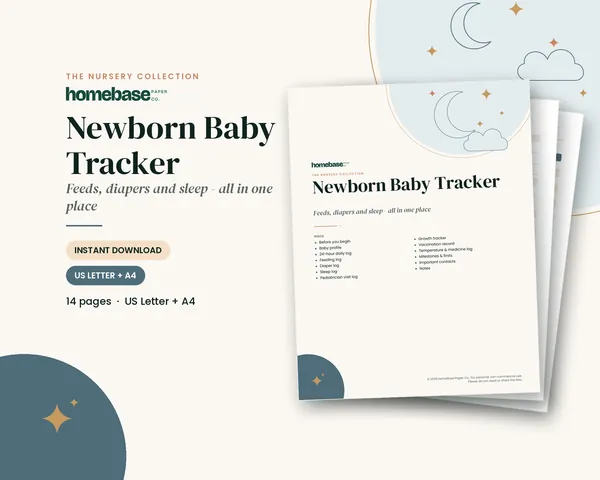
Newborn Baby Tracker
A 24-hour daily log plus feeding, diaper, sleep, growth and pediatrician-visit pages - easy to bring to checkups.
You do not need a trained singing voice or a long playlist. The useful starting point is a song the caregiver knows and the child is comfortable hearing. Read any unfamiliar lyrics first, especially when a traditional song contains a story you would rather not include at bedtime.
Familiar lullaby and quiet-song ideas
Twinkle, Twinkle, Little Star. A familiar melody can be an easy place to start if you already know it. Sing at a comfortable pitch, and use humming when you do not want to repeat the words.
Hush, Little Baby. Look through the version you plan to use before singing. Different versions vary, and you can choose another tune if its story does not feel right for your household.
Brahms' Lullaby. Consider the melody even if you do not know a set of lyrics. Humming avoids the pressure of remembering a particular translation or arrangement.
Rock-a-bye Baby. Some caregivers prefer another song because of the imagery in the words. A familiar title does not require you to use it; choose what feels comfortable for the people listening.
Frère Jacques. A short repeated tune can be easy to remember. Choose a language version familiar to your family and keep the pace quiet rather than turning it into an energetic round.
All Through the Night. This can be an option for someone who already knows the tune. Start with a small portion you can sing without straining rather than trying to perform a complete arrangement.
Sleep, Baby, Sleep. There are multiple versions of songs with this title. Choose the one you know and read the words before making it part of the routine.
A family song in another language. Ask a relative which tune they remember using. Learn it directly from someone who knows the words and meaning, and record the title in your routine notes.
These suggestions identify songs and approaches; this page does not reproduce commercial lyrics or provide audio recordings. A familiar melody can be useful without adding a new device or subscription to bedtime.
Three short original bedtime verses
The following verses were written for this guide. You can speak them softly or make up a simple melody with only a few notes. Change a word if it does not fit your family's language or routine.
The evening window
The window holds the evening sky,
The busy little day went by.
We leave tomorrow where it stays,
And rest beside the quiet days.
Try reading the verse once rather than extending it repeatedly. A spoken rhythm can be more comfortable than singing for a caregiver who is tired or unfamiliar with the tune.
Little cloud
Little cloud above the hill,
All the noisy roads grow still.
Nothing more to make or do,
Just a gentle song for you.
This verse gives you a short ending. Keep the last line the same when different caregivers use it so the transition does not require learning a whole new sequence.
The day is done
Here is a thought of something bright,
A small good thing to keep tonight.
The day is done, the stars can stay,
We meet again another day.
For an older child, invite one small good memory before the verse. Keep the invitation optional; bedtime does not need to become a test of whether the day was happy.
Put the lullaby in a predictable sequence
Decide where the song fits among the family's usual bedtime steps. You might read, sing one song and say the same goodnight phrase. Keep the sequence short enough that the adult responsible can follow it on an ordinary evening.
The American Academy of Pediatrics describes a steady bedtime routine as part of healthy sleep habits. That supports using a repeatable sequence, not a promise that one particular song treats a sleep problem.
Sesame Workshop includes familiar lullabies among its rest-routine resources. Choose a familiar cue rather than searching for a new song every night. Some children prefer humming or a quiet spoken verse; others would rather finish the story and say goodnight.
Make the routine usable for more than one caregiver
Write down the song title, the part you sing and the phrase that ends the routine. Share the notes with another caregiver so the sequence is understandable without a detailed explanation at the end of a tiring day.
For a baby, the Newborn Baby Tracker ($3.99) can hold routine observations alongside daily records. Browse Printables for paper planning options. The tracker is an organizational aid, not a sleep treatment or a substitute for care advice.
If the household already follows a night routine, put the song in the same place each evening rather than adding a lengthy new activity. A short, comfortable routine is easier to repeat than one that depends on ideal conditions.
Keep expectations realistic
Singing is an activity you can offer, not a requirement for a child to feel sleepy. Stop if the song is unwelcome, and avoid turning a request for another verse into a prolonged negotiation. You can keep the caring interaction while choosing a simpler ending.
Follow age-appropriate safe-sleep guidance and the child's clinician's advice. If sleep concerns persist, discuss them with a qualified professional rather than assuming a different playlist will solve them. A lullaby can belong to a calm routine without carrying responsibility for every part of sleep.
Newborn Baby Tracker
A 24-hour daily log plus feeding, diaper, sleep, growth and pediatrician-visit pages - easy to bring to checkups.
$3.99 · Instant download. Print at home or fill it in on screen. Or browse the full Family & Life Admin collection.
Frequently asked questions
Do I need a good singing voice to sing lullabies? A lullaby does not require a trained singing voice. Choose a comfortable pitch, hum a familiar tune or speak a short rhythmic verse. The routine should be manageable for the caregiver rather than a performance.
Which lullaby should I choose first? Choose a lullaby you already know and feel comfortable repeating. Read unfamiliar lyrics before using them, and try another song if the words or sound are unwelcome. A short family song can work as well as a long playlist.
Will a lullaby make my child fall asleep? A lullaby cannot guarantee that a child will fall asleep. It can be one predictable part of a bedtime routine. Persistent sleep concerns need appropriate professional advice rather than promises about a particular melody or recording.
Free printable
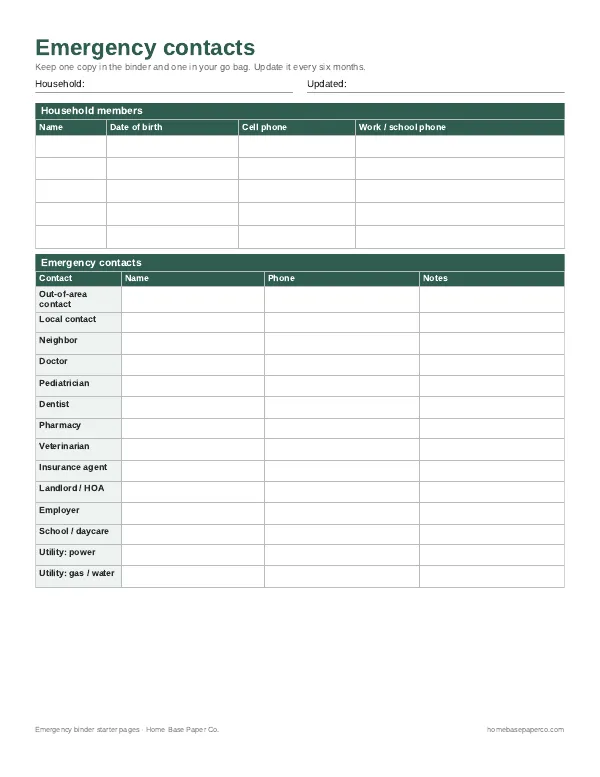
Have the important stuff in one place: get the free emergency binder pages
Printable starter pages for household members, emergency contacts, medical notes and where key documents live. You'll also get our weekly HomeBase email with simple ways to keep family records and important papers in order.
Sources
- American Academy of Pediatrics: A lullaby for good health healthychildren.org
- Sesame Workshop: Routines for rest and sleep sesameworkshop.org