

The short answer: a pantry inventory list is a simple record of the shelf-stable food you have, how much of each, and how much you want to keep on hand.
- Set it up once by category
- Give staples a par level
- Check it every week before you write your grocery list
- Use first in, first out and learn what pantry dates mean
- Next step: Plan it with the Meal Planner & Grocery List ($3.99).
Our picks for pantry inventory list
 Starter pick
Printables
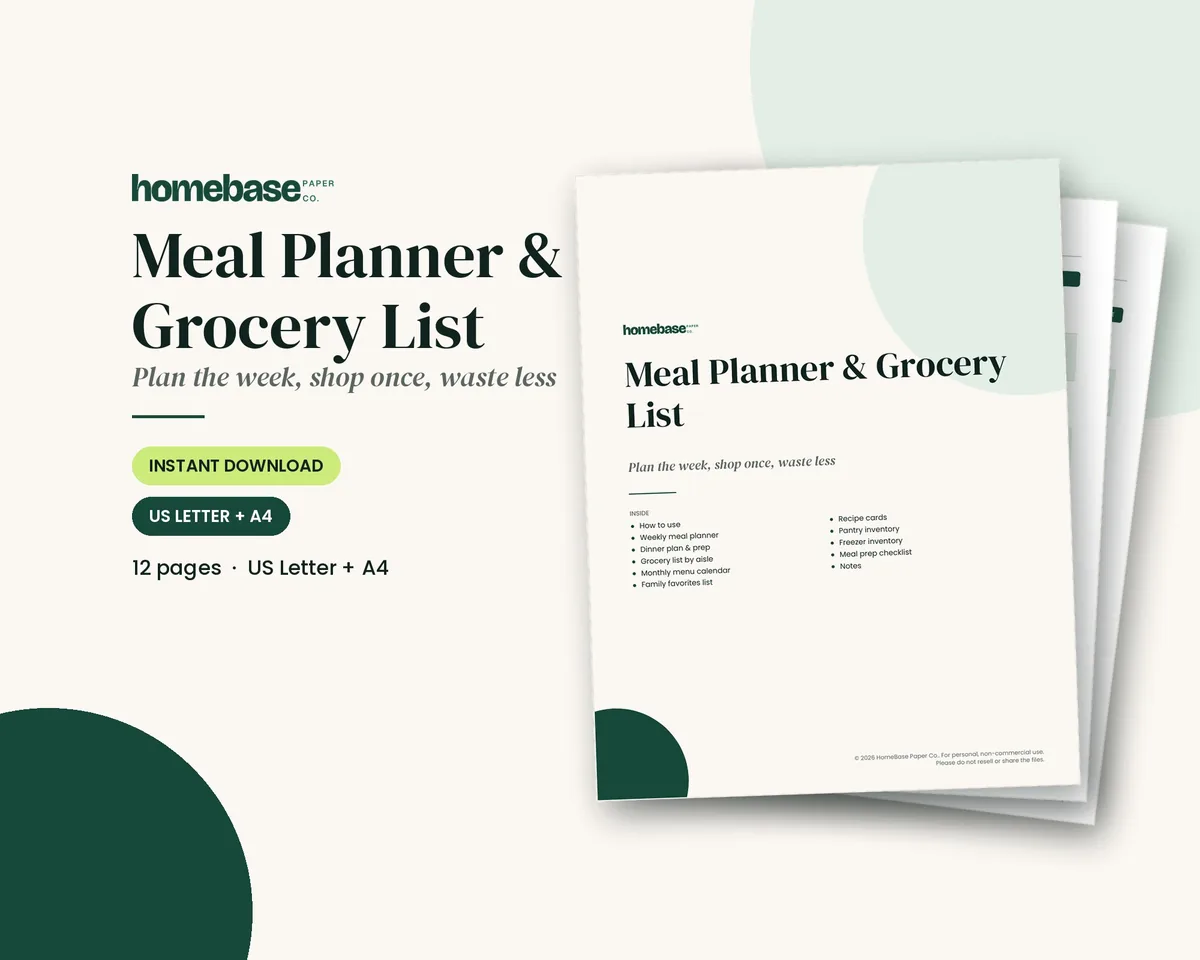
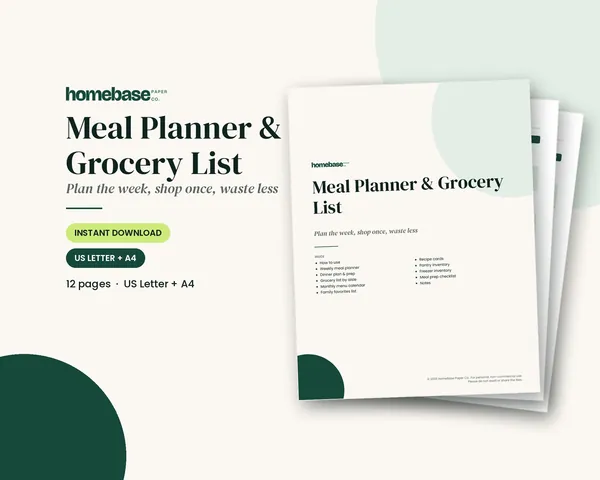
Meal Planner & Grocery List
Weekly meals, a grocery list sorted by aisle, and pantry and freezer inventories so you shop once and waste less.
 Save 38%
Bundles
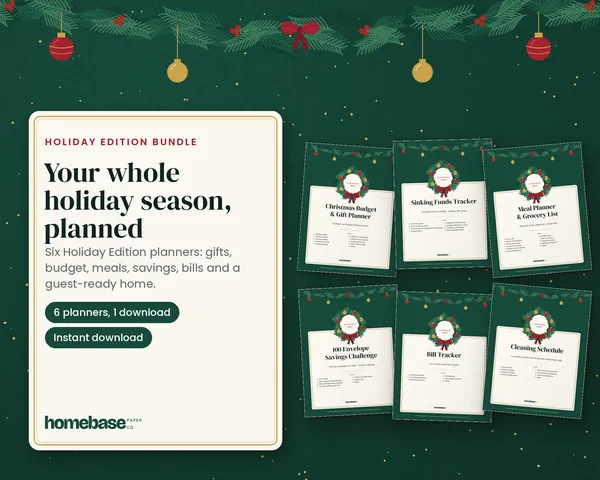
Holiday Season Bundle
Plan Christmas, save for it all year, and host without the January money hangover.
 Save 33%
Bundles
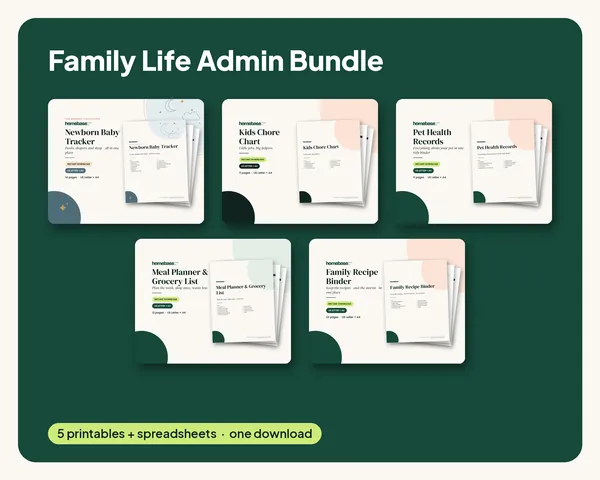
Family Life Admin Bundle
Baby logs, chore charts, pet records, meal plans and family recipes in one tidy set.
A pantry inventory list (or simply a pantry list) is a simple record of the shelf-stable food you have, how much of each, and how much you want to keep on hand. Set it up once by category, give your staples a "par level," and check it every week before you write your grocery list. You'll stop buying a fourth jar of cinnamon, use food before it goes stale and shop faster.
Want the page ready to print? The Meal Planner & Grocery List ($3.99) includes Pantry Inventory and Freezer Inventory pages, so your pantry list sits right next to the weekly meal plan and grocery list.
Here's how to set one up and keep it working.
What to put on a pantry inventory list
Use these columns. Skip the ones you don't need.
| Column | What to write |
|---|---|
| Item | Specific enough to shop from: "diced tomatoes, 14 oz" |
| On hand | Count or amount: 3 cans, half a bag |
| Par level | The minimum you want on hand |
| Need? | Check it when on hand drops below par |
| Notes | Brand, size or the recipe it's for |
The par level column is the secret. It turns your inventory into a shopping list without any extra thinking.
Pantry staples list by category
Group your list in the same order your shelves are arranged so counting is quick. A label maker makes shelf and bin labels that stay readable.
- Grains and pasta: rice, pasta, oats, quinoa, crackers
- Baking: flour, sugars, baking soda and powder, chocolate chips, vanilla, cornstarch
- Canned goods: tomatoes, beans, vegetables, fruit, soups, tuna and chicken
- Sauces and condiments: pasta sauce, broth, soy sauce, vinegar, oils
- Spices and seasonings: your everyday spices, plus seasonal ones
- Breakfast: cereal, pancake mix, syrup, peanut butter, coffee and tea
- Snacks: chips, nuts, dried fruit, granola bars
- Drinks: shelf-stable milk, juice boxes, hot chocolate mix
How to set up your pantry inventory
If the shelves need work first, start with our pantry organization guide: 8 steps from emptying and sorting to zones, containers and labels.
- Pull everything off one shelf at a time so the job stays manageable.
- Toss what's spoiled or damaged. The USDA says to discard cans that are dented, rusted or swollen.
- Combine duplicates. Three half-bags of brown sugar become one labeled container.
- Group by category and put older items in front.
- Write each item down with its count as it goes back.
- Set par levels for the 15 to 20 staples you use every week.
- Post the list inside the pantry door or keep it with your meal planner.
Use first in, first out (FIFO)
First in, first out means you always use the oldest item first. It's how grocery stores rotate stock, and it works at home too.
- When you unpack groceries, put new items behind what's already there.
- Keep a small "use first" basket for open packages and items near their date.
- Read the "use first" basket before you plan meals.
What pantry dates actually mean
Date labels confuse a lot of people, and confusion leads to throwing away good food. According to the USDA's guide to food product dating:
| Label | What it means |
|---|---|
| Best if Used By/Before | When the product is at best flavor or quality. Not a purchase or safety date. |
| Sell-By | Tells the store how long to display it. Not a safety date. |
| Use-By | The last date recommended for peak quality. Not a safety date, except on infant formula. |
| Can codes | Letters and numbers showing when it was canned, for tracking. Not meant to be read as a best-by date. |
For canned goods, the USDA says high-acid foods like tomatoes and fruit keep their best quality for 12 to 18 months, and low-acid foods like meat and vegetables for two to five years. Write the purchase month on cans with a marker if you buy in bulk.
Holiday baking staples to check now
The weeks before Thanksgiving and Christmas are when pantries run out at the worst moment. Check these before you write your holiday grocery list:
- All-purpose flour and any specialty flours
- Granulated, brown and powdered sugar
- Baking soda and baking powder (check dates: they lose strength)
- Pure vanilla extract
- Cinnamon, nutmeg, ginger, cloves and allspice
- Chocolate chips and baking chocolate
- Nuts (pecans and walnuts can go stale, so taste one)
- Cornstarch and evaporated or sweetened condensed milk
- Canned pumpkin and pie filling
- Chicken or turkey broth for gravy and stuffing
- Cranberry sauce and stuffing mix
- Hot chocolate mix and marshmallows
Our Christmas baking list and Thanksgiving grocery list build on this.
Keep it current in a few minutes a week
When something runs low, move it straight onto your grocery list template so it gets bought on the next trip.
- Cross off as you go. Keep a pen with the list.
- Check before you plan. Read the inventory and the "use first" basket, then pick meals that use them.
- Shop from the "Need?" column. That's your staples list, already done.
- Recount every month or two. It's quicker each time.
The EPA's tips for preventing wasted food at home recommend the same order: look in your refrigerator, freezer and pantry first, then plan meals and make a list so you only buy what you'll use.
Get a ready-made pantry inventory page
The Meal Planner & Grocery List ($3.99) is a 12-page printable in US Letter and A4 with a Pantry Inventory page and a Freezer Inventory page, plus a weekly meal planner, grocery list, monthly menu, family favorites and recipe cards. Check the pantry page, plan the week, and the grocery list is on the next page.
- Holiday Season Bundle ($15.99, vs. $25.94 bought separately): The Meal Planner & Grocery List plus the Christmas Budget & Gift Planner (with a holiday menu and holiday grocery list), Cleaning Schedule and savings trackers.
- Family Life Admin Bundle ($15.99, vs. $23.95 bought separately): The Meal Planner & Grocery List and Family Recipe Binder, plus the Kids Chore Chart, Pet Health Records and Newborn Baby Tracker.
See all printables or our home organizing printables.
Planning holiday spending too? The free Holiday Budget Starter Kit is 3 US Letter pages, emailed after you join our list.
Related guides
For the whole kitchen, see our 30 kitchen organization ideas, from drawer dividers to fridge zones.
Plan the week's meals and shop once
Weekly meals, a grocery list sorted by aisle, and pantry and freezer inventories so you shop once and waste less.
$3.99 · Instant download. Print at home or fill it in on screen. Or browse the full Home & Organizing collection.
Frequently asked questions
What is a pantry inventory list? It's a list of the shelf-stable food you keep at home, with how much you have and how much you want on hand. The Meal Planner & Grocery List includes a printable Pantry Inventory page, so you can check it while you plan meals and write the grocery list on the next page.
How do I start a pantry inventory? Empty one shelf at a time, toss anything spoiled or damaged, group what's left by category, and write each item down with its quantity as it goes back in. The first count takes the longest; after that, a weekly check takes only a few minutes.
What is a par level in a pantry? A par level is the amount of an item you always want on hand, such as two jars of pasta sauce or one spare bag of flour. When you drop below it, the item goes on your grocery list. Par levels turn your inventory into an automatic shopping list.
How often should I update my pantry inventory? Do a quick check once a week when you plan meals and a full recount every month or two. Cross items off as you use them during the week so the weekly check takes only a couple of minutes.
How long do canned goods last? Canned goods last 12 to 18 months for high-acid foods such as tomatoes and fruit, and two to five years for low-acid foods such as meat and vegetables, at their best quality according to the USDA. Throw away cans that are dented, rusted or swollen.
Is food safe after the best-by date? Yes, food is usually safe after the best-by date. The USDA says 'Best if Used By' dates describe quality, not safety, and foods should be safe after the date if handled properly until spoilage is evident. The exception is infant formula, which should not be used after its use-by date.
What's the best way to organize a pantry for inventory? Group items by category, put the same categories in the same order on your list, and use clear bins or labeled shelves. Put newer items behind older ones so you use the oldest first. If your list and your shelves match, counting takes minutes.
What should be on a pantry list? Your shelf-stable staples, grouped the way your shelves are: grains and pasta, baking supplies, canned goods, sauces and condiments, spices, breakfast items, snacks and drinks. For each item, note how much you have and the minimum you want on hand.
Free printable
Save the family favorites: get the free recipe book pages
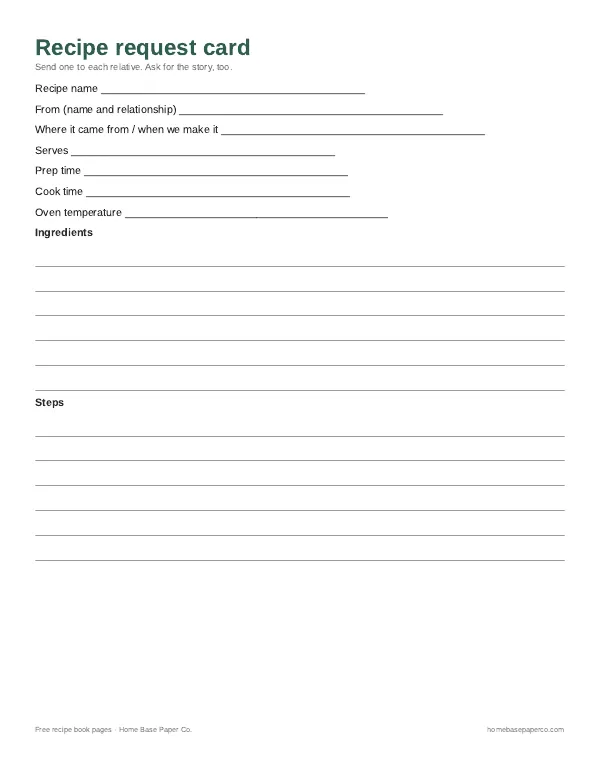
Printable recipe pages and a recipe request card to send to relatives, so the dishes everyone loves end up in one book. You'll also get our weekly HomeBase email with easy meal planning ideas and family recipe tips.
Sources
- Discard cans that are dented, rusted or swollen fsis.usda.gov
- Preventing wasted food at home epa.gov