The short answer: This guide shows how to clean a stainless steel sink with things you already have: dish soap, baking soda, white vinegar and a soft cloth.
Our picks for how to clean stainless steel sink
Printables
Cleaning Schedule
Daily, weekly, monthly and seasonal lists - plus a family chore chart.

Printables
Home Maintenance Log
Monthly, seasonal and annual checklists plus a record of every appliance and repair.
Rinse the sink, scrub it with baking soda along the grain, spray it with vinegar and let it fizz, rinse, then dry it and buff it with a drop of olive oil. Below you'll find a daily routine, a weekly deep clean, fixes for water spots, rust and scratches, and the cleaners that damage stainless steel.
A busy kitchen sink sees bottles, muddy cleats and a lot of dinner dishes. The ten-minute weekly routine below is the one that keeps it looking new.
What you need
| Supply | What it does | Swap |
|---|---|---|
| Dish soap | Cuts grease and food film | Any mild liquid soap |
| Baking soda | Gentle scrub for stains and odors | Bar Keepers Friend-style cleanser |
| White vinegar | Dissolves water spots and hard water | Lemon juice |
| Soft sponge or nylon brush | Scrubs without scratching | Non-scratch scrub pad |
| Microfiber cloths | Dries and polishes without lint | Soft cotton towel |
| Olive or mineral oil | Adds shine and repels water | Stainless steel polish |
| Old toothbrush | Cleans the drain, faucet base and seams | Small detail brush |
If you prefer store-bought cleaners, EPA's Safer Choice product list lets you search for certified kitchen and all-purpose cleaners made with safer ingredients.
How to clean a stainless steel sink, step by step
- Clear and rinse. Take out dishes, the drain basket and any mats, then rinse the basin with hot water.
- Wash with dish soap. Use a soft sponge and a few drops of soap to remove grease and food.
- Sprinkle baking soda. Cover the damp basin, including the sides and corners.
- Scrub with the grain. Look for the faint lines in the metal and scrub in that direction, never in circles.
- Spray vinegar. Mist white vinegar over the baking soda. It will fizz and lift stains and minerals.
- Clean the drain and faucet base. Use an old toothbrush around the drain, the faucet base and the seam at the counter.
- Rinse well. Rinse every bit of baking soda and vinegar away with warm water.
- Dry completely. Wipe the sink with a dry microfiber cloth so no water spots form.
- Buff with oil. Put a few drops of olive or mineral oil on a cloth and polish with the grain.
How to remove common stainless steel sink stains
| Problem | What causes it | How to fix it |
|---|---|---|
| Water spots | Minerals left when water dries | Vinegar spray, wait 5 minutes, wipe and dry |
| Hard water film | Buildup over weeks | Baking soda paste, then a vinegar rinse |
| Rust spots | Cast iron, steel wool, wet cans | Baking soda paste or an oxalic-acid cleanser |
| Coffee or tea stains | Tannins in the basin | Baking soda paste, left 10 minutes |
| Greasy film | Cooking oil and soap scum | Hot water and dish soap, then dry |
| Fine scratches | Normal wear | A stainless steel scratch pad, with the grain |
| Rainbow discoloration | Heat or overcleaning | Wipe with vinegar, rinse, dry and oil |
| Odor from the drain | Food in the trap or disposal | Baking soda and vinegar, then hot water |
Daily and weekly cleaning routine
Every day: rinse food out, wash the basin with a drop of dish soap, and wipe it dry. Hang the sponge to dry instead of leaving it in the sink.
Every week: do the full baking soda, vinegar and oil routine above, scrub the drain basket and freshen the disposal.
Every month: check under the sink for slow leaks, clean the faucet aerator and wipe the sprayer hose. A dripping faucet wastes more water than you'd think, and EPA's WaterSense program has tips on finding and fixing leaks at home.
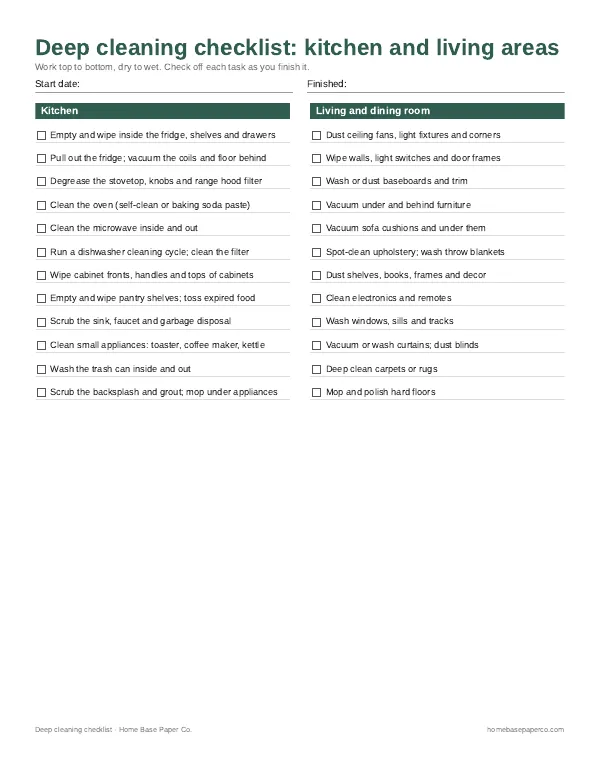
Put these jobs on a schedule so they actually happen. Our kitchen cleaning checklist and cleaning schedule template make it easy.
What not to use on a stainless steel sink
- Steel wool or wire brushes. They scratch the finish and leave bits of iron that rust.
- Chlorine bleach. It can pit and stain stainless steel. Never mix bleach with vinegar or ammonia.
- Oven cleaner and harsh powders. They dull and etch the surface.
- Rubber mats left wet. Trapped water can stain the basin underneath.
- Cast iron pans left to soak. They leave rust rings in a few hours.
Clean the rest of your stainless steel
The same rules work across the kitchen. For fridges, dishwashers and ranges, see how to clean stainless steel appliances. If the drain smells, follow our guide on how to clean a garbage disposal.
Keep up with cleaning and home care
- Cleaning Schedule, $4.49. Daily, weekly and monthly checklists, including the weekly sink scrub.
- Home Maintenance Log, $5.99. Track faucet repairs, disposal service and other jobs around the house.
A cleaning schedule you can actually keep
Daily, weekly, monthly and seasonal lists - plus a family chore chart.
$4.49 · Instant download. Print at home or fill it in on screen. Or browse the full Home & Organizing collection.
Frequently asked questions
What is the best way to clean a stainless steel sink? The best way to clean a stainless steel sink is to rinse it, sprinkle baking soda over the damp surface, scrub with a soft sponge following the grain, then spray white vinegar, let it fizz, and rinse. Dry it with a microfiber cloth and buff with a few drops of olive oil for shine. It takes about ten minutes.
How do you clean a stainless steel sink every day? For a daily clean, rinse out food, wash the basin with a few drops of dish soap and warm water on a soft sponge, rinse and wipe it dry with a microfiber towel. Drying is the step most people skip, and it's what keeps water spots and mineral film from building up on stainless steel.
How do I get water spots off a stainless steel sink? To get water spots off a stainless steel sink, spray undiluted white vinegar on the spots, wait five minutes so the acid loosens the minerals, then wipe with a soft cloth and rinse. For stubborn hard water rings, make a paste of baking soda and water, rub gently with the grain, rinse and dry completely.
How do I remove rust from a stainless steel sink? Small rust spots on a stainless steel sink usually come from cast iron pans, steel wool or wet cans left in the basin. Make a paste of baking soda and water, or sprinkle a cleanser made for stainless steel such as one with oxalic acid, rub with the grain using a soft cloth, rinse well and dry.
Can I use bleach on a stainless steel sink? Avoid using bleach on a stainless steel sink. Chlorine bleach and cleaners that contain it can pit, stain and dull stainless steel, especially if they sit on the surface. If you need to disinfect, use a product labeled safe for stainless steel, follow the label directions and rinse the sink thoroughly afterward.
Can I use vinegar on a stainless steel sink? Yes, white vinegar is safe on a stainless steel sink for short contact. It removes water spots, hard water film and soap residue. Spray it on, wait a few minutes, wipe and rinse with plain water. Don't leave vinegar sitting for hours, and never mix it with bleach, which releases harmful chlorine gas.
What should you not use on a stainless steel sink? Don't use steel wool, wire brushes, chlorine bleach, oven cleaner or harsh scouring powders on a stainless steel sink. They scratch the finish, leave rust-causing particles behind or pit the metal. Also avoid leaving wet sponges, rubber mats or cast iron pans in the sink for long periods, because trapped water can stain.
How do I make my stainless steel sink shine like new? To make a stainless steel sink shine, clean it with baking soda and vinegar, rinse and dry it completely, then put a few drops of olive oil or mineral oil on a microfiber cloth and buff the basin in the direction of the grain. The thin layer of oil adds shine and helps water bead off between cleanings.
How do I clean the drain and garbage disposal in a stainless steel sink? Pour half a cup of baking soda down the drain, follow with a cup of white vinegar, let it foam for ten minutes and flush with hot water. For a disposal, grind a few ice cubes with a little dish soap to scrub the blades, then a few citrus peels to freshen it. Scrub the drain basket with an old toothbrush.
How often should I deep clean a stainless steel sink? Deep clean a stainless steel sink about once a week if you cook most days, or every two weeks in a lighter-use kitchen. Wipe and dry it every day in between. A weekly scrub with baking soda, a vinegar rinse and an oil buff keeps stains, water spots and odors from building up.
Free printable
Clean the whole house in order: get the free deep cleaning checklist
A printable room-by-room deep cleaning checklist that tells you what to do first, so nothing gets cleaned twice. You'll also get our weekly HomeBase email with simple cleaning routines and chore ideas the whole family can help with.