

The short answer: A grocery price book is a simple list of what you pay for the things you buy most. It sounds old-fashioned, and that's why it works: after a few weeks, you know a real sale when you see one, which store is cheapest for each staple, and when to stock up. It takes a few minutes per trip and pays off every week after.
Our picks for grocery price book
 Starter pick
Printables
Meal Planner & Grocery List
Weekly meals, a grocery list sorted by aisle, and pantry and freezer inventories so you shop once and waste less.
Printables
Budget Planner Printable
Twelve undated pages you can print every month: budget, bills, spending, savings and debt.
 Thanksgiving Edition
Printables
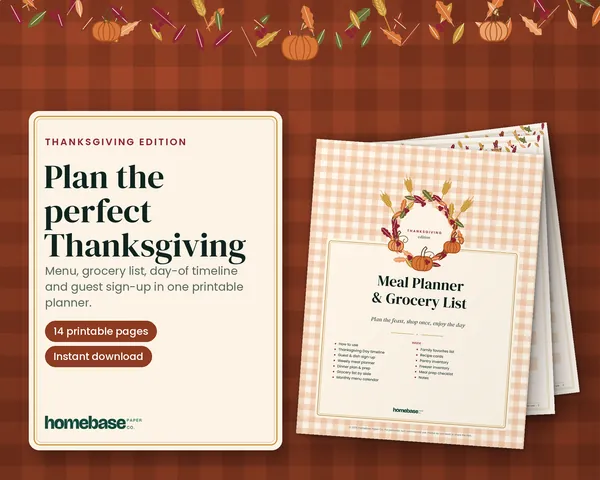
Meal Planner & Grocery List: Thanksgiving Edition
Plan the perfect Thanksgiving: our meal planner in a warm harvest design, with a Thanksgiving Day timeline, a guest & dish sign-up, an aisle-sorted grocery list and pantry and freezer trackers.
Why a price book helps right now
Grocery prices don't move together. In its October 2026 Food Price Outlook, USDA's Economic Research Service forecast food-at-home prices to rise 2.3% in 2026, but with huge swings by category: beef and veal were forecast to rise 8.7%, while egg prices were forecast to fall 29.3%. A general "groceries cost more" feeling doesn't help you shop. Your own price book does.
What to track
Start with the 20 to 30 items you buy every week or two: milk, eggs, bread, chicken, ground beef, rice, pasta, cereal, coffee, fruit, vegetables, cheese, snacks and household basics. To see how those prices add up per plate, our homemade pancakes guide compares scratch batter with boxed mix.
The grocery price book layout
| Item | Store | Date | Size | Price | Unit price | Usual price | Stock-up price |
|---|---|---|---|---|---|---|---|
| Ground beef | 1 lb | per lb | |||||
| Chicken thighs | per lb | ||||||
| Eggs | 12 ct | per egg | |||||
| Rice | per lb | ||||||
| Pasta | 16 oz | per oz | |||||
| Coffee | per oz | ||||||
| Cereal | per oz | ||||||
| Butter | per lb | ||||||
| Paper towels | per roll |
Print it, tape it inside a kitchen cabinet or keep it in your planner.
How to fill it in
- Save your receipts for a month or snap a photo of them.
- Write down each tracked item with the store, size and price.
- Calculate the unit price. Divide the price by the size: $4.50 for 18 ounces is 25 cents an ounce. Shelf tags often show it too.
- Note your usual price, the one you pay most often.
- Mark your stock-up price, the lowest price you've seen. When you see it again on something that keeps, buy extra.
Use it with your meal plan
A price book is most powerful next to a weekly meal plan. When chicken thighs hit your stock-up price, build two or three dinners around them and freeze a pack. When beef is high, lean on beans, eggs or pork that week. Our budget meal prep guide turns those stock-up buys into a 2-hour Sunday prep.
The Meal Planner & Grocery List ($3.99) gives you the rest of the system: a weekly meal planner, dinner plan and prep page, grocery list, monthly menu, family favorites, recipe cards, pantry and freezer inventories and a meal prep checklist.
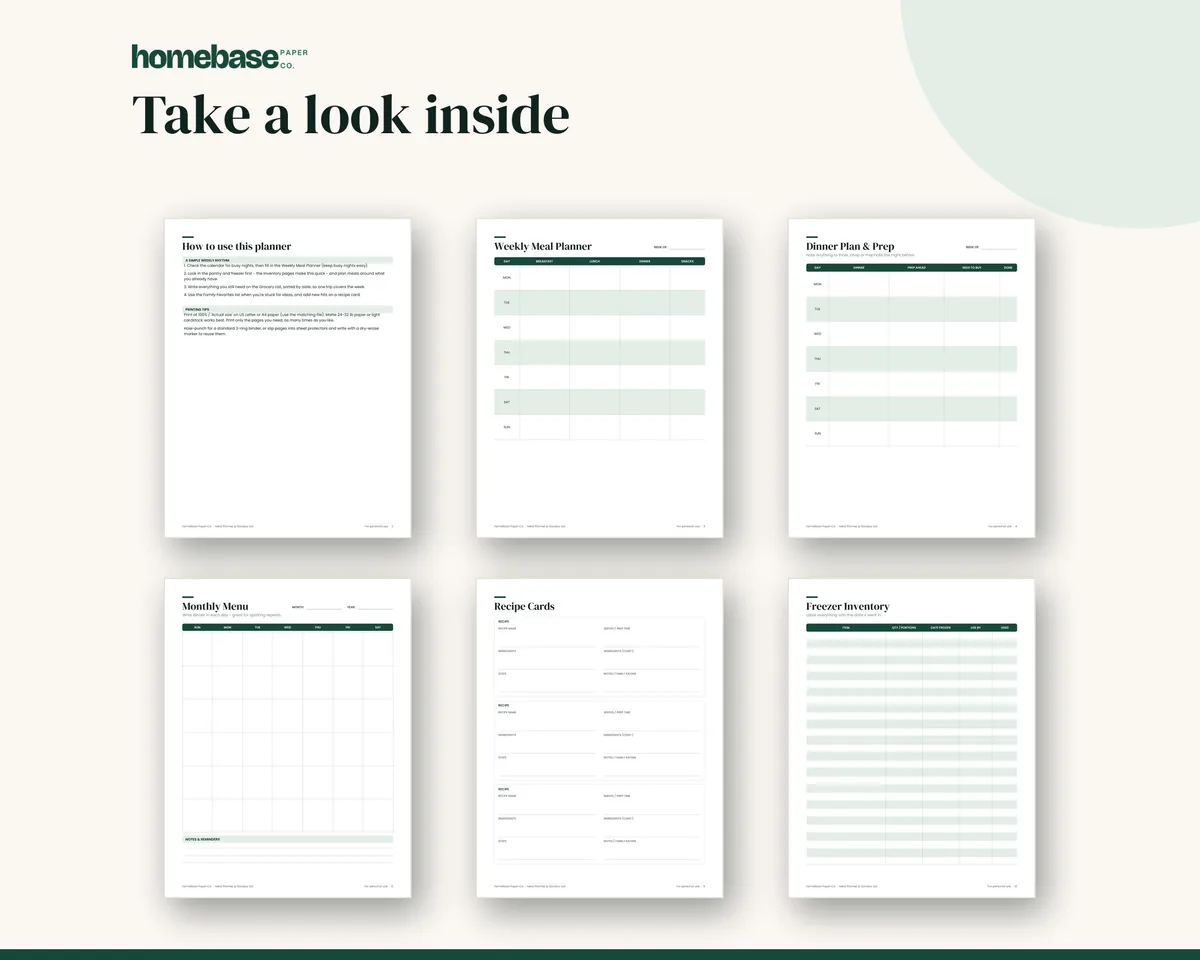
Check the pantry and freezer pages before you shop, so stock-up buys get used instead of forgotten. Our meal planning on a budget guide has more ways to stretch each week.
Know what a "normal" grocery budget looks like
Your price book tells you what each item costs. To check the overall budget, USDA publishes monthly food plan costs at four levels: Thrifty, Low-Cost, Moderate-Cost and Liberal. For September 2026, the Thrifty plan for a reference family of four (two adults and two children, ages 6 to 8 and 9 to 11) was $1,024 a month. Compare your actual spending to the plan levels to see where you land.
Tips for keeping it going
- Keep the list short. Twenty items you track beat 100 you don't.
- Track the same size, or always use the unit price, so comparisons are fair.
- Write down sales, but trust the unit price over the "sale" sign.
- Note the store brand. It's often the lowest unit price.
- Watch seasonal swings. Baking supplies and turkey often go on sale before the holidays; produce changes with the season.
Holiday stock-up
Fall is a good time to start a price book, because holiday staples like butter, flour, sugar and turkey go on sale before Thanksgiving and Christmas. If you're hosting, the Meal Planner: Thanksgiving Edition ($4.99) adds a Thanksgiving Day timeline, guest and dish sign-up and a grocery list for the big meal, and our Thanksgiving grocery list helps you buy early.
Put the savings somewhere
Once your grocery spending drops, give the difference a job. Write the new grocery number into your monthly budget worksheet, or track it with the Budget Planner Printable ($5.99), which has an expense log and savings tracker. For a bigger plan, see how to grocery shop once a month.
To summarize your own recorded spending rather than relying only on a national average, use the statistics calculator to compare the mean, median and range of consistent, same-unit observations.
Plan the week's meals and shop once
Weekly meals, a grocery list sorted by aisle, and pantry and freezer inventories so you shop once and waste less.
$3.99 · Instant download. Print at home or fill it in on screen. Or browse the full Home & Organizing collection.
Frequently asked questions
What is a grocery price book? A grocery price book is a list of the items you buy most, with the price per unit you paid at each store, so you know a real deal when you see one. Paired with the Meal Planner & Grocery List, it turns your weekly plan and shopping list into a lower grocery bill.
How do I start a grocery price book? Start a grocery price book by listing the 20 to 30 items you buy most, then writing down the store, size, price and unit price every time you buy them for a month. After a few weeks, you'll know your usual price and your 'buy now' price for each item.
What should I track in a grocery price book? Track the item, store, date, package size, total price and unit price (per ounce, pound or count). The unit price is the column that matters most, because it lets you compare different sizes and brands.
How do I calculate a unit price? Calculate a unit price by dividing the total price by the number of units: a $4.50 box with 18 ounces costs 25 cents per ounce. Many stores also print the unit price on the shelf tag.
Does a grocery price book really save money? A grocery price book saves money because you stop guessing which sales are real and stock up only when prices are at their low point. Most families notice the difference within the first month or two.
How many items should be in a price book? Keep your grocery price book to 20 to 30 items at first: the staples you buy every week or two. A short list is one you'll actually keep up.
Should my price book be on paper or my phone? Your price book can be on paper or your phone; either works. A printed page fits in your planner or on the fridge next to your meal plan; a phone note is handy in the store. Pick the one you'll update every trip.
How does a price book work with meal planning? A price book and a meal plan work together: you plan meals around items at their low price and buy only what the plan needs. The Meal Planner & Grocery List has weekly meal pages, a grocery list and pantry and freezer inventories to make that easy.
How often should I update my grocery price book? Update your grocery price book every time you shop for the first month, then whenever you see a new low price. Review it every few months, because prices change.
What is a stock-up price? A stock-up price is the low price that tells you to buy extra of a shelf-stable or freezable item. Write it next to each item in your price book so you can decide in the aisle.
Are grocery prices still going up? In its October 2026 forecast, USDA's Economic Research Service said food-at-home prices would rise 2.3% in 2026, with big differences by category. A price book shows how those changes hit your own cart.
Free printable
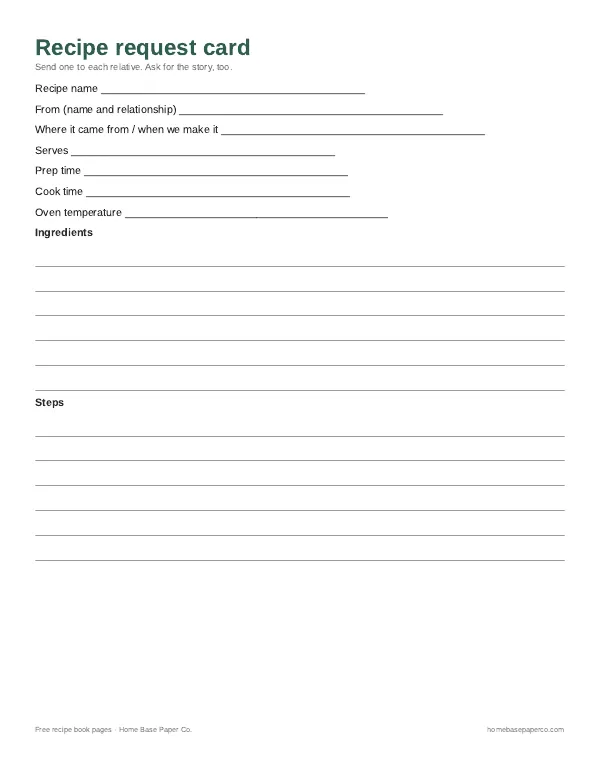
Save the family favorites: get the free recipe book pages
Printable recipe pages and a recipe request card to send to relatives, so the dishes everyone loves end up in one book. You'll also get our weekly HomeBase email with easy meal planning ideas and family recipe tips.
Sources
- Food Price Outlook ers.usda.gov
- Monthly food plan costs fna.usda.gov