

The short answer: to organize receipts, give every receipt one drop spot, sort them weekly into four piles (taxes, returns and warranties, business, and log-and-toss), record the amounts and photograph anything you'll need later.
- Time: about 10 minutes a week once it's set up
- Log and toss: groceries, gas and everyday shopping
- Keep: tax, warranty and business receipts, each for its own time
- Don't save everything forever or mix business and personal
- Next step: Plan it with the Business Income & Expense Tracker ($7.99).
To organize receipts, give every receipt one drop spot, sort them once a week into four piles (taxes, returns and warranties, business, and log-and-toss), record the amounts, and keep a photo backup of anything you'll need later. That's the whole system. It works for a household budget and a side hustle alike, and it takes about 10 minutes a week once it's set up.
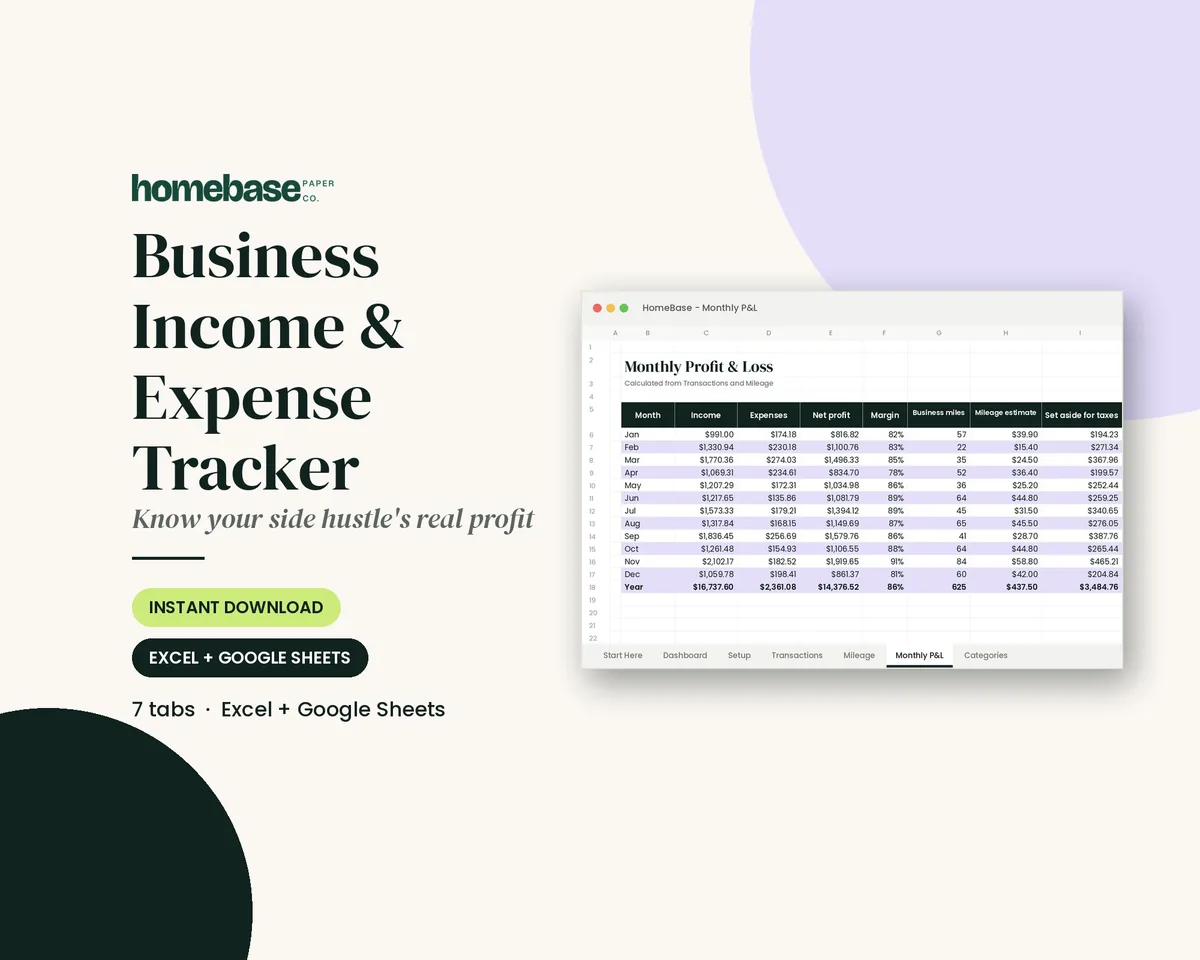
For the business pile, our Business Income & Expense Tracker has an income and expense log with a category dropdown and year and month totals by category for tax time.
Here's how to build it, plus a keep-or-toss chart so you know exactly what to save.
Why bother organizing receipts?
Receipts do three jobs: they prove what you paid (for returns, warranties and insurance), they show where the money went (for your budget), and they support what's on your tax return. The IRS recordkeeping guidance says good records help you keep track of deductible expenses, prepare your return and support the items on it. Business owners carry the burden of proof for their deductions, so a lost receipt can be a lost deduction.
Step 1: Pick one drop spot
Receipts scatter because they have no home. Create two:
- On the go: one envelope or zip pouch in your wallet or bag. Every receipt goes in, no sorting.
- At home: one tray, basket or folder near the door. Empty the pouch into it when you get home.
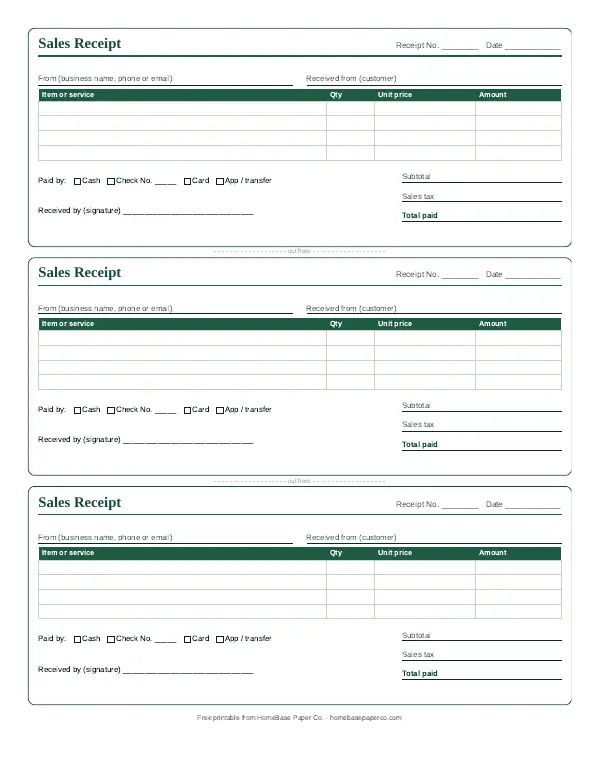
For email receipts, make one inbox folder or label called "Receipts" and move them there as they arrive. If you hand out receipts yourself (side-hustle sales, rent, cash jobs), our free receipt template gives you matching printable copies.
Step 2: Sort into four categories
Once a week, empty the tray and sort:
| Pile | What goes in it | What to do |
|---|---|---|
| Taxes | Donations, childcare, medical (if itemizing), education | File in this year's tax folder |
| Returns and warranties | Electronics, appliances, clothes you may return, big purchases | Staple to the manual or file by item |
| Business | Supplies, mileage-related costs, software, client meals | Log and file in the business folder |
| Log and toss | Groceries, gas, everyday shopping | Record in your budget, then shred |
Side-business owners can split the business pile further by expense type. Our small business tax deduction checklist shows the categories people commonly track.
Step 3: Log the numbers
A receipt in a folder isn't information until it's written down. Every week:
If you also bill customers, number every invoice with our free invoice template so your income records line up with your receipts.
For a business, total the log each month in a profit and loss statement template so you can see income, expenses and profit on one page.
- Household receipts: write each amount in an expense log by budget category. The Budget Planner Printable ($5.99) includes an expense log, a monthly budget page and a savings tracker, so you can see right away if a category is running hot.
- Business receipts: enter each one with the date, vendor, amount and category. The Business Income & Expense Tracker ($7.99) is a fillable Excel or Google Sheets file with an expense log, a category dropdown, monthly profit, a mileage log and category totals for tax time. Prefer a template walkthrough? See our small business expense tracker guide.
- Compare to your bank statement. Each logged receipt should match a charge. Anything that doesn't match is either a missing receipt or a charge to question.
If you drive for work, also keep a mileage log for taxes with the date, purpose and miles for each trip.
Step 4: Back up anything you'll need later
Many receipts are printed on thermal paper that fades. For anything in the taxes, returns or business piles:
- Snap a clear photo or scan right after sorting.
- Name the file with the date, store and amount (for example, 2026-10-25 office store 42.18).
- Save it in a folder by year and category, matching your paper folders.
The IRS says you may choose any recordkeeping system that clearly shows your income and expenses, so a clear, readable digital copy in an organized folder is a practical backup. Keep the paper too, until you're sure you don't need it.
Step 5: Know what to keep and what to toss
| Receipt type | How long to keep it |
|---|---|
| Everyday purchases (groceries, gas) | Until logged and matched to your statement |
| Clothing and returnable items | Until the return window closes |
| Electronics and appliances | As long as you own them (warranty and insurance) |
| Home improvements | As long as you own the home |
| Tax-related receipts | Until the period of limitations for that return runs out |
| Business expenses | Until the period of limitations runs out; employment tax records at least 4 years |
The IRS explains the time frames on how long to keep records: generally 3 years, and longer in some situations. Our guide on how long to keep tax records and other documents has a full household chart. When receipts are no longer needed, shred anything with card numbers or account details.
At filing time, our tax documents checklist lists the W-2s, 1099s and deduction records to gather.
Where to keep the receipts you save
- Tax receipts: one folder labeled with the year, stored with your other important documents.
- Warranty receipts: with the manual, or in one "warranties" folder. Big-ticket items also belong on a home inventory list for insurance.
- Business receipts: a separate folder or accordion file by month or category.
- Household papers: the Household Binder ($6.99) gives family paperwork, bills and calendars one home.
Common receipt mistakes
- Saving everything forever. It hides the receipts that matter. Log and toss everyday ones.
- Mixing business and personal. Use separate folders from day one, or tax time gets long.
- Relying on faded paper. Photograph important receipts the week you get them.
- Sorting once a year. A weekly 10-minute habit is faster than a weekend in April.
Make it part of your weekly money check
Receipts are easiest when they're part of a routine you already have. Pair the sort with your bill check from our guide on how to organize bills, and you've covered both in one sitting. Browse our printables and spreadsheets for more tools. Heading into holiday shopping? Gift receipts belong in the returns pile, and the free Holiday Budget Starter Kit is 3 US Letter pages, emailed after you join our list.
Make it easier
Tools for this
Spreadsheets
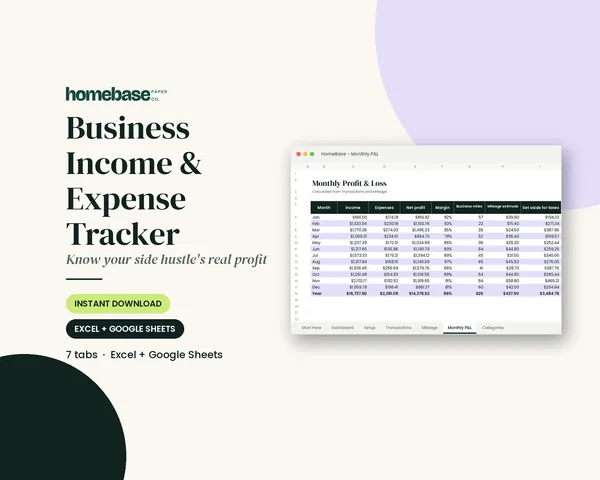
Business Income & Expense Tracker
Log sales, expenses and business miles - see your monthly profit, category totals for tax time and how much to set aside.
Printables
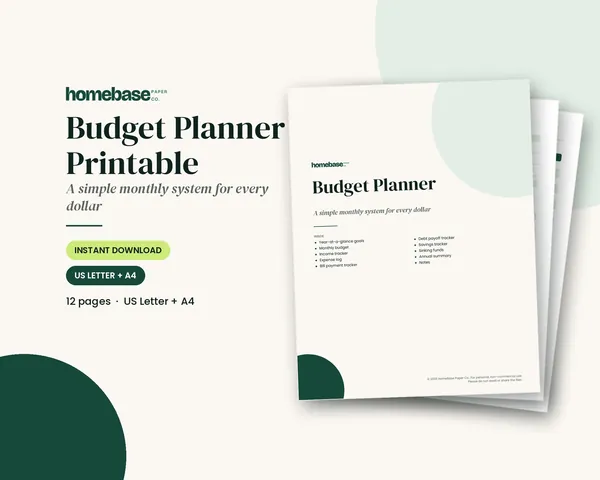
Budget Planner Printable
Twelve undated pages you can print every month: budget, bills, spending, savings and debt.
Printables
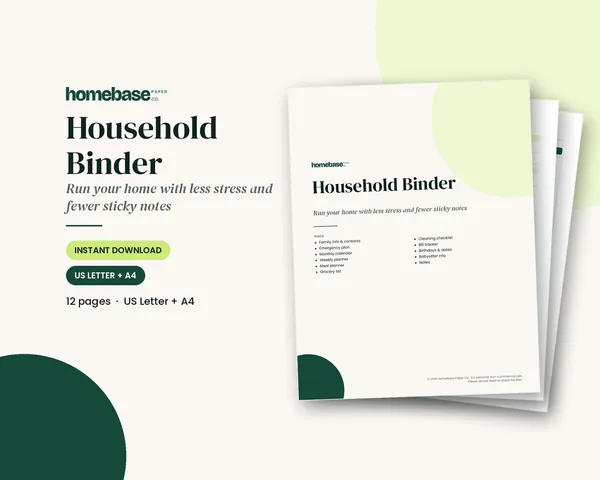
Household Binder
Family info, emergency plan, calendars, meals, groceries, cleaning, bills and sitter notes.
Frequently asked questions
What is the best way to organize receipts? The best way to organize receipts is one drop spot for every receipt, a quick sort into a few categories once a week, a log of the amounts and a photo backup. A weekly 10-minute habit beats a big annual sort, because receipts fade and pile up fast. For business receipts, the Business Income & Expense Tracker gives you a place to log each amount by category.
How do I organize receipts for taxes? Keep business, tax-deductible and personal receipts separate from day one, and record each business receipt in an income and expense log with a category. The Business Income & Expense Tracker ($7.99) has an expense log with a category dropdown and category totals for tax time, so the sorting is done before you file.
Should I keep paper receipts or digital copies? Keep digital copies of anything you'll need later, because thermal paper receipts can fade. The IRS says you can use any recordkeeping system that clearly shows your income and expenses, so a clear, readable scan in a labeled folder is a practical backup to the paper.
How long should I keep receipts? Everyday receipts can go once the purchase matches your bank statement and the return window has passed. Receipts that support a tax return should be kept until the period of limitations runs out, generally 3 years and longer in some cases. Keep receipts for warranties, big purchases and home improvements as long as you own the item.
How do I organize receipts for my household budget? Match each receipt to your budget once a week and write the amount in an expense log by category, then toss it unless it's needed for returns, warranties or taxes. The Budget Planner Printable ($5.99) includes an expense log and a monthly budget page for exactly this.
What categories should I sort receipts into? Four categories work for most families: keep for taxes, keep for returns and warranties, log and toss, and business. Side-business owners can split the business pile by expense type, like supplies, mileage, software and meals.
How do I stop receipts from piling up? Give them one home, like an envelope in your wallet and a single tray at the door, and empty both on the same day each week. When receipts have a fixed spot and a fixed day, they stop ending up in pockets, purses and cup holders.
More from HomeBase
You may also like
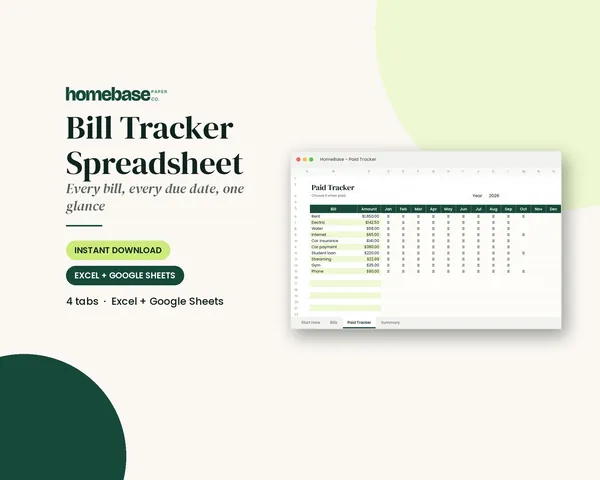
Spreadsheets
Bill Tracker Spreadsheet
Bills due in 3 days or less light up red, so nothing slips through.
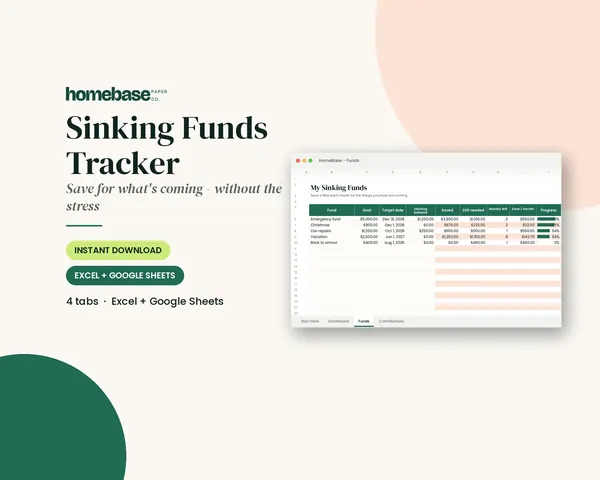
Spreadsheets
Sinking Funds Tracker
It does the math: how much to set aside each month to hit every goal on time.
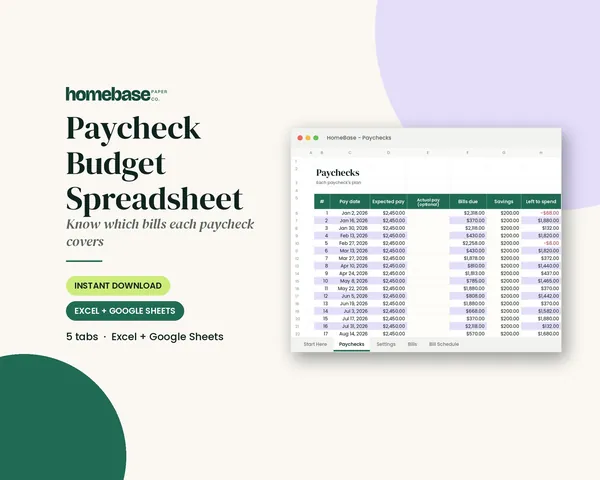
Spreadsheets
Paycheck Budget Spreadsheet
Enter your bills once. The sheet tells you which paycheck pays each one, all year.
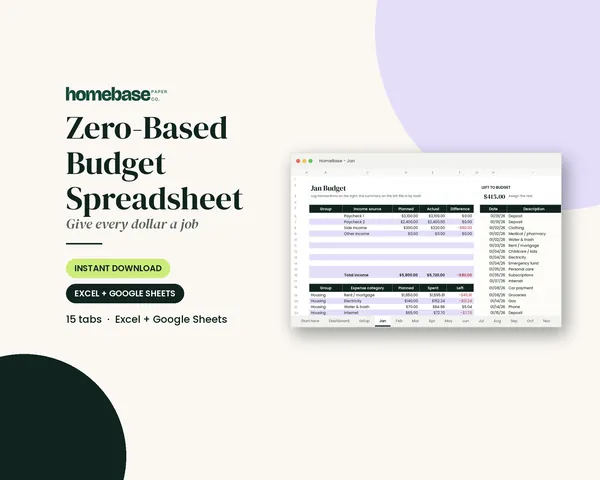
Spreadsheets
Zero-Based Budget Spreadsheet
The 'Left to budget' counter turns green when every dollar has a job.
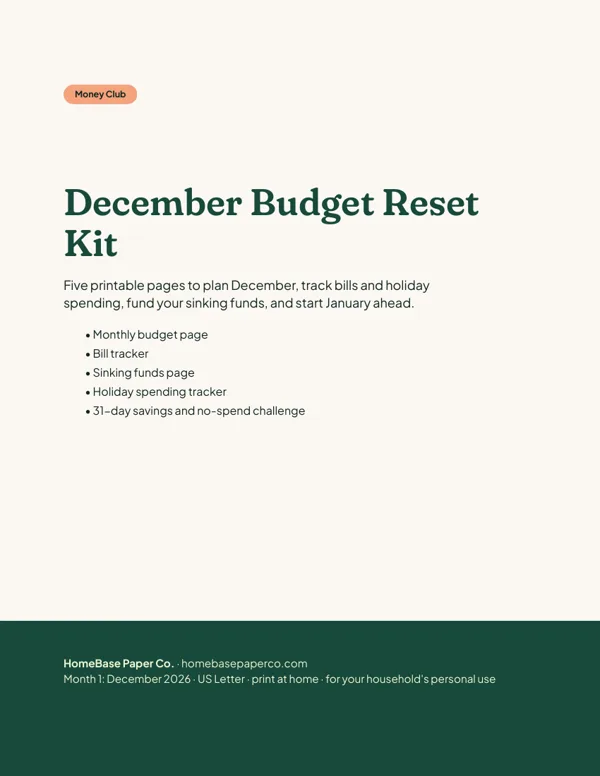 Club
Monthly club
Money Club
Anyone who wants a clear plan for the month's bills, holiday spending and savings.
Free printable
Give customers a proper receipt every time
Sales, rent and cash receipts with a cut line. You'll also get our weekly HomeBase email with simple small business paperwork and money tips.
Sources
- Recordkeeping guidance irs.gov
- How long to keep records irs.gov