

The short answer: financial planner vs financial advisor: a planner builds a plan for your whole money life, while "financial advisor" is a broader label that often means someone who manages investments. The services, pay model and registration matter more than the title.
- Planner's deliverable: a written plan with goals, dates and steps
- Advisor's focus: investment selection and portfolio management
- Ask: "Are you acting as a fiduciary for everything you recommend to me?"
- Also ask how they're paid and read the relationship summary
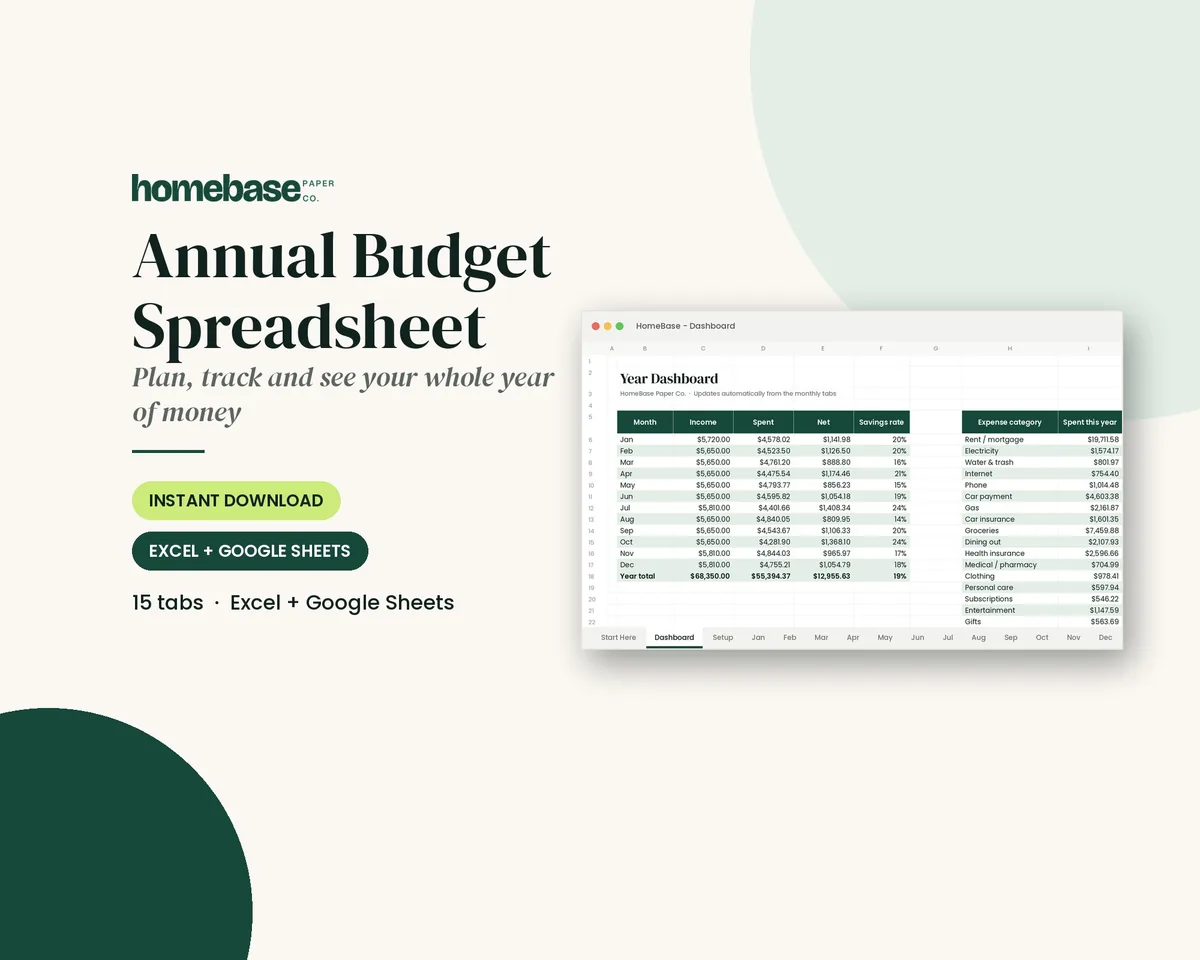
- Next step: Plan it with the Annual Budget Spreadsheet ($6.99).
What's the difference between a financial planner and a financial advisor? A financial planner builds a plan for your whole money life: budget, savings, debt, insurance, taxes, retirement and estate goals. "Financial advisor" is a broader label for anyone who gives money advice, and it often means someone who manages investments. The two overlap a lot. Many planners also give investment advice, and many advisors also do planning, so the title matters less than the services, the pay model and the registration behind it.
This guide puts the two side by side in plain language. You'll get a comparison table, what each one actually does, the credentials worth checking, which one fits common family situations and how to get your numbers ready before a first meeting. If you've already decided you want help and need to pick a person, our step-by-step guide on how to choose a financial advisor covers interviews and red flags. If cost is the question, financial advisor fees breaks down every pricing model in dollars.
Growing up as the oldest of three in Detroit, I learned early that a title on a door doesn't tell you what happens inside the room. You have to ask. That's the whole idea here. And whichever professional you pick, walking in with a clear picture of your income, spending and savings makes the meeting more useful. The Annual Budget Spreadsheet ($6.99) gives you that 12-month picture in Excel or Google Sheets.
Financial planner vs. financial advisor at a glance
Here's the short version. Read the table as "usually," not "always," because the services are what count.
| Financial planner | Financial advisor | |
|---|---|---|
| What the title usually means | Someone who prepares a financial plan for your whole financial life | A broad, everyday term for a money professional, often one who manages investments |
| Typical focus | Budget, cash flow, debt, savings goals, insurance, taxes, retirement, estate | Investment selection, portfolio management, retirement accounts |
| Main deliverable | A written plan with goals, dates and steps | Ongoing account management and investment recommendations |
| Common ways to pay | Flat fee or hourly fee for a plan, commissions, or a mix | A yearly percentage of the assets managed, plus other account costs |
| Legal term regulators use | None by itself; planners who give investment advice must register | "Investment adviser" (SEC or state registration) |
| Best first check | Credentials and registration | Registration, Form CRS and disciplinary history |
| Good fit for | A one-time roadmap or a big life change | Someone who wants a pro to run the investments |
The SEC's investor site describes a financial planner as someone who "typically prepares financial plans" and notes that the services planners offer "can vary widely." Some cover every part of your financial life. Others use the title but can only recommend a narrow range of products. That one sentence explains most of the confusion around these two words.
What is a financial planner?
A financial planner looks at the whole picture and helps you turn goals into a plan. According to Investor.gov, the most thorough planners assess saving, investments, insurance, taxes, retirement and estate planning, then help you build a detailed strategy for meeting your goals.
In practice, a planning engagement often looks like this:
- Gather the facts. Income, bills, debts, account balances, insurance policies and any workplace benefits.
- Set goals. An emergency fund, paying off a car, college savings, a home, retirement age.
- Spot the gaps. Too little insurance, high-interest debt, no will, savings that won't reach a goal in time.
- Write the plan. Specific steps, amounts and dates, often ranked by priority.
- Review it. Once a year or after a big life change, like a new baby, a move or a job change.
Some planners stop at the written plan and let you carry it out yourself. Others stay on to help with the steps, including managing investments.
Financial planners can come from many educational and professional backgrounds. That's why Investor.gov suggests asking about a planner's background and, if they list a credential, asking what it means and what they did to earn it.
What is a financial advisor?
"Financial advisor" is the umbrella term you'll see most often. Banks, brokerages, insurance companies and independent firms all use it. When people say "my financial advisor," they usually mean the person who manages their investments or retirement accounts.
The legal term regulators use is investment adviser (with an "e"). Investor.gov defines an investment adviser as a firm or person paid to give advice about investing in securities, such as stocks, bonds, mutual funds and ETFs. The same page says advisers typically give ongoing advice about buying, selling or holding investments, monitor your accounts, and are often paid based on the value of the assets in your account. Advisers may also offer financial planning services.
So a financial advisor might be:
- A registered investment adviser who manages your portfolio
- A broker who recommends and sells investments
- An insurance agent who sells annuities or life insurance
- A planner who also manages money
Each of those comes with a different job description and a different way of getting paid, which is why it's worth asking.
Where the two overlap
This is where most people get stuck. A financial planner who gives investment advice is also an investment adviser in the eyes of the law. Investor.gov says financial planners who give investment advice to clients must register with the SEC or the right state securities regulator.
Going the other way, many advisors who manage money also build financial plans. So the same person might fairly call themselves either one. Instead of picking a title, pick the services you need:
| What you need | Ask for | Likely pay model to look for |
|---|---|---|
| A full roadmap you'll carry out yourself | A one-time financial plan | Flat fee or hourly |
| Help with one decision (pension, home purchase, college) | A project or hourly session | Hourly or flat project fee |
| Someone to run your investments | Ongoing investment management | Percentage of assets or flat yearly fee |
| Both a plan and investment management | Comprehensive planning plus management | Percentage of assets, retainer, or a mix |
| A specific insurance or annuity product | An agent or broker, knowing they're paid on the sale | Commission |
Fiduciary duty and why it matters
A fiduciary has to put your interests first. Investor.gov states that investment advisers are required to act in your best interest and not put their interests ahead of yours. It also notes that the way advisers make money can still create conflicts, so you should ask about them.
Here's how to use that in real life:
- Ask, "Are you acting as a fiduciary for everything you recommend to me?" Get the answer in writing.
- Ask how they're paid. Investor.gov's financial planners page explains that some planners charge a fixed or hourly fee and don't sell products, some are paid by commissions on what they sell, and some use a mix.
- Read the relationship summary. Registered advisers and brokers must give retail investors a Form CRS that covers services, fees, conflicts of interest, the standard of conduct and any disciplinary history.
Our how to choose a financial advisor guide goes deeper on fee-only vs. fee-based and the exact questions to ask.
Credentials: CFP, CFA and other letters
Letters after a name can be impressive or almost meaningless. Investor.gov's page on working with an investment professional warns not to assume initials make someone more qualified. Some designations are hard-earned, some are easy to get, and some just mean the person can sell certain products.
| Credential | What it signals | How to check |
|---|---|---|
| CFP (Certified Financial Planner) | Broad planning training; issued by the CFP Board | Look the person up with the CFP Board and confirm the certification is current |
| CFA (Chartered Financial Analyst) | Deep investment analysis training | Confirm with the issuing organization |
| Registration with the SEC or a state | The person or firm is allowed to give investment advice | Use the free search tool on Investor.gov |
| Other designations | Varies widely | Ask who issued it and what it took to earn it |
Investor.gov suggests finding out which organization issued a credential, then contacting that organization to confirm the person earned it and is still in good standing. For a CFP, that's the Certified Financial Planner Board of Standards.
Which one do you need? Common family situations
You don't need either one to get started with money basics. A budget, an emergency fund and a debt plan come first, and you can build those yourself. Professional help earns its keep when the decisions get bigger or more tangled.
| Your situation | Often the better fit | Why |
|---|---|---|
| New baby, new house or new job and you want a roadmap | Financial planner (one-time plan) | You need the whole picture tied together, not just investments |
| You're paying off debt and building savings | Usually DIY first, then a planner later | Budgeting and debt payoff don't require paid advice |
| You inherited money or got a large payout | Planner first, then decide on management | Taxes, debt and goals should shape the investment choice |
| Retirement is 5 to 10 years away | Planner or advisor who does both | Income, Social Security timing and withdrawals all connect |
| You want someone else to handle investing | Investment adviser | Ongoing management is the core service |
| You own a small business | Planner who works with business owners | Business and household money overlap |
If you're not sure, a one-time plan from a flat-fee or hourly planner is a low-commitment way to see what you'd actually use. You can always add investment management later.
How to get ready before you meet either one
The first meeting goes further when you bring real numbers. You'll be asked about them anyway, and you'll pay for less time if you've done the gathering yourself.
- List your monthly income after taxes, for every earner.
- List your spending by category for the last two to three months.
- List every debt with its balance, interest rate and minimum payment.
- List your savings and accounts, including workplace retirement plans and any employer match.
- Write down three goals with a rough date and dollar amount for each.
- Gather insurance details: life, disability, health and home or renters.
- Write your questions down so you don't forget them in the moment.

The Annual Budget Spreadsheet ($6.99) handles steps 1 and 2. It has a setup tab for your categories, 12 monthly tabs, planned vs. actual by category and a year dashboard, and it works in Excel and Google Sheets. If you're saving up for a one-time planning fee, the Sinking Funds Tracker ($4.99) shows how much to set aside each month to hit that goal by your date.
Want everything in one download? The Ultimate Budget Bundle ($19.99, regularly $46.42 when bought separately) includes all six budget spreadsheets plus the Budget Planner and Bill Tracker printables. Browse every option in Spreadsheets. These templates help you organize your own numbers. They aren't financial advice.
Questions to ask either professional
Whatever title is on the card, these questions get to what matters:
- What services will you provide, and what won't you do?
- How are you paid, in dollars, for what I'm asking you to do?
- Are you a fiduciary for all of your recommendations to me?
- Are you registered with the SEC or my state? May I have your Form CRS?
- What credentials do you hold, and who issued them?
- Can you recommend any investment, or only certain products?
- What does a typical client in my situation look like?
Investor.gov's investment advisers page lists similar questions, including whether the firm or person has ever been disciplined by a regulator and whether they're limited to a certain set of products.
When you might skip both for now
If your monthly budget doesn't balance yet, a planner will tell you to fix that first. You can save the fee and start there. Our financial planning guide walks through a simple 9-step plan you can do yourself, and how to set financial goals helps you put dates and dollar amounts on what you want. Once you have an emergency fund started and high-interest debt under control, paid advice can help you make the bigger moves with more confidence.
Make it easier
Tools for this
Spreadsheets
Annual Budget Spreadsheet
See exactly where your money goes every month - without complicated software.

Spreadsheets
Sinking Funds Tracker
It does the math: how much to set aside each month to hit every goal on time.
 Save 57%
Bundles
Ultimate Budget Bundle
All 6 spreadsheets + both printable planners - for less than half the price of buying them separately.
Frequently asked questions
What is the difference between a financial planner and a financial advisor? The main difference is scope: a financial planner builds a plan for your whole money life, while a financial advisor is a broader term that often means someone who manages your investments. The two overlap, since many planners give investment advice and many advisors build plans. Compare the services and pay model, not just the title.
Is a financial planner the same as a financial advisor? A financial planner and a financial advisor are not exactly the same, but one person can be both. Investor.gov says planners who give investment advice must register with the SEC or a state regulator, which makes them investment advisers too. Ask each professional which services they actually provide.
What does a financial planner do? A financial planner helps you turn goals into a written plan that covers budgeting, savings, debt, insurance, taxes, retirement and estate planning. The most thorough planners look at every part of your financial life. Others focus on a narrow set of products, so ask what the plan will include before you pay.
What does a financial advisor do? A financial advisor usually gives ongoing investment advice, recommends what to buy, sell or hold, and monitors your accounts. Many advisors also offer financial planning services. The legal term regulators use is investment adviser, and advisers are often paid a percentage of the assets they manage.
Which is better, a financial planner or a financial advisor? Neither is better in general; the right choice depends on what you need. A planner is often the better fit for a one-time roadmap or a big life change, and an investment adviser fits if you want someone to run your investments. Many families start with a flat-fee plan and add management later.
Do I need a financial planner or an advisor? You may not need either one yet if you're still balancing your budget, building an emergency fund or paying off high-interest debt. Those steps are free to do yourself with a tool like the Annual Budget Spreadsheet ($6.99). Paid advice helps most with bigger decisions like retirement timing, an inheritance or a business.
Is a financial planner a fiduciary? A financial planner is not automatically a fiduciary just because of the title. Investment advisers are required to act in your best interest, so a planner who is a registered investment adviser has that duty for advisory services. Ask, in writing, whether they act as a fiduciary for everything they recommend to you.
How do financial planners get paid? Financial planners get paid in a few different ways: a fixed fee or hourly fee for building a plan, commissions on products they sell, or a mix of fees and commissions. Investor.gov describes all three. Our financial advisor fees guide shows what each model costs in dollars, so you can compare quotes.
What is a CFP? A CFP is a Certified Financial Planner, a planning credential issued by the Certified Financial Planner Board of Standards. It signals broad training in financial planning. Investor.gov suggests checking with the issuing organization that the person really earned the credential and is still in good standing.
Is a CFP better than a financial advisor? A CFP is a credential, not a separate type of professional, so a financial advisor can also be a CFP. The credential shows planning training, but it doesn't replace checking registration, the pay model and any disciplinary history. Look at all four before deciding who to hire.
How do I check if a financial planner or advisor is legit? You can check a financial planner or advisor for free with the search tool on Investor.gov, which shows registration and any disciplinary history. Also ask for the firm's Form CRS relationship summary. For a CFP, confirm the certification with the CFP Board.
What should I bring to my first meeting with a financial planner? Bring your monthly income, spending by category, every debt with its rate and minimum payment, account balances, insurance details and three written goals. The Annual Budget Spreadsheet ($6.99) puts income and spending in one 12-month view, which saves paid meeting time on gathering numbers.
Can I do my own financial planning? Yes, you can do your own financial planning, especially for the basics like a budget, an emergency fund and a debt payoff plan. A simple written plan with goals, amounts and dates goes a long way. Many people bring in a professional later for one complex decision instead of paying for ongoing help.
Should I use a financial planner for a new baby or a new house? A financial planner can be a good fit for a big life change like a new baby or a new house, because those decisions touch your budget, savings, insurance and long-term goals at once. A one-time plan from a flat-fee or hourly planner gives you a roadmap without an ongoing fee.
More from HomeBase
You may also like

Printables
Budget Planner Printable
Twelve undated pages you can print every month: budget, bills, spending, savings and debt.

Spreadsheets
Bill Tracker Spreadsheet
Bills due in 3 days or less light up red, so nothing slips through.

Spreadsheets
Paycheck Budget Spreadsheet
Enter your bills once. The sheet tells you which paycheck pays each one, all year.

Spreadsheets
Zero-Based Budget Spreadsheet
The 'Left to budget' counter turns green when every dollar has a job.
 Club
Monthly club
Money Club
Anyone who wants a clear plan for the month's bills, holiday spending and savings.
Free printable
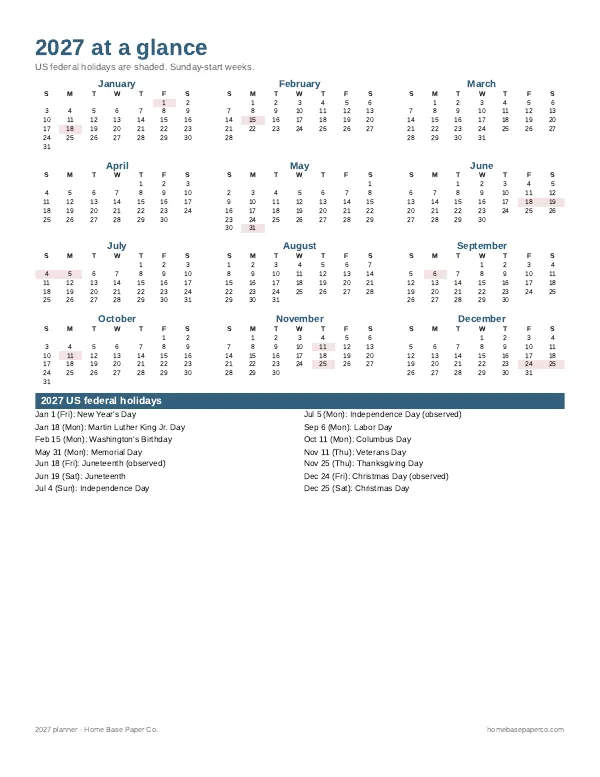
Get organized for the new year: get the free 2027 planner
A 16-page printable 2027 planner with a year-at-a-glance page and monthly calendars with US holidays marked. You'll also get our weekly HomeBase email with simple planning and home organization tips.
Sources
- Financial Planners (Investor.gov, SEC) investor.gov
- Investment Advisers (Investor.gov, SEC) investor.gov
- Working with an Investment Professional (Investor.gov, SEC) investor.gov