

The short answer: what is a good credit score? On models running from 300 to 850, about 670 or higher is good, and 740 or higher opens the door to the best rates on many loans and cards.
- 800 to 850: exceptional
- 580 to 669: fair, with approval possible at higher rates
- What goes in: payment history, amounts owed, length of history, new credit and credit mix
- Myth: checking your own score hurts it
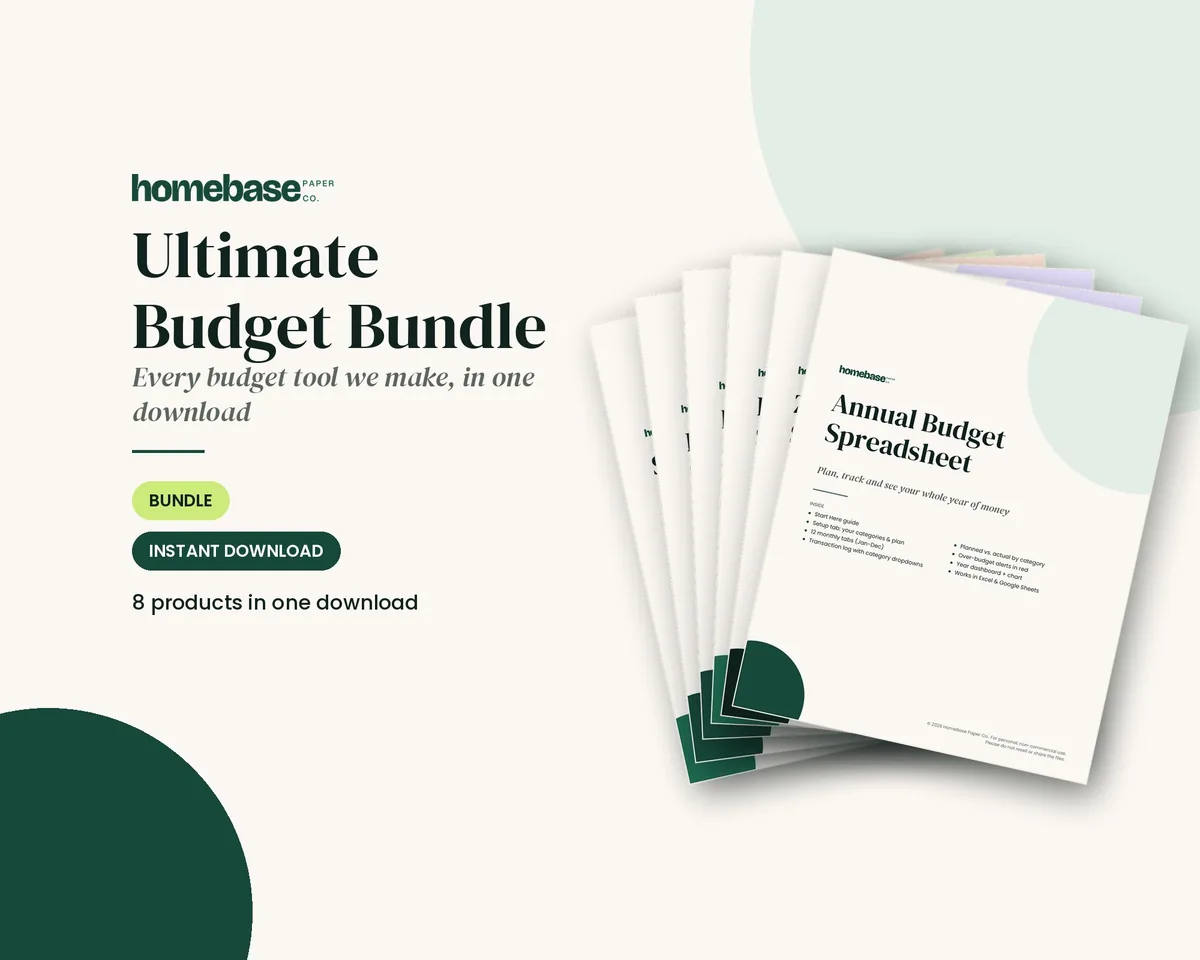
- Next step: Plan it with the Ultimate Budget Bundle ($19.99).
What is a good credit score? On the most common scoring models, which run from 300 to 850, a score of about 670 or higher is considered good, and 740 or higher opens the door to the best rates on many loans and credit cards. But a "good" score is only part of the story. This guide explains credit score ranges, what goes into a score, how lenders use it and the habits that raise it over time.
This page is general education, not financial advice. The easiest way to improve a score is to pay every bill on time and keep balances low. The Ultimate Budget Bundle includes bill and budget trackers to help, and the Debt Payoff Planner maps out paying down balances.
What is a credit score?
A credit score is a three-digit number that summarizes the information in your credit reports and predicts how likely you are to repay borrowed money. The Consumer Financial Protection Bureau explains that lenders use scores to decide whether to approve you and what interest rate to charge, and that scores can also be used for tenant screening and insurance. You don't have just one score. Different companies, such as FICO and VantageScore, use different models, and each of the three national credit bureaus may have slightly different information about you.
Credit score ranges
| FICO score | Rating | What it usually means |
|---|---|---|
| 800 to 850 | Exceptional | Best rates and terms on most products |
| 740 to 799 | Very good | Strong approvals and low rates |
| 670 to 739 | Good | Approved for most loans and cards |
| 580 to 669 | Fair | Approval possible, at higher rates |
| 300 to 579 | Poor | Hard to qualify; consider secured cards |
VantageScore uses the same 300 to 850 range but slightly different bands, with roughly 661 to 780 counted as good and 781 and up as excellent. These ranges are guides. Each lender sets its own cutoffs, and a mortgage lender may want a higher score than a store credit card issuer.
What goes into your score
FICO, the score most lenders use, weighs five categories. According to myFICO's breakdown of what's in your credit score, payment history counts for about 35%, amounts owed for about 30%, length of credit history for about 15%, and new credit and credit mix for about 10% each.
Payment history is the biggest factor. Even one payment that is 30 or more days late can drop a score noticeably and stay on your report for years.
Amounts owed looks at how much of your available credit you use, often called credit utilization. Keeping balances under about 30% of your limits helps, and lower is better. Our page on credit utilization explains how to calculate it.
Length of history rewards older accounts, so think twice before closing your oldest card.
New credit counts recent applications. Several hard inquiries in a short time can lower your score a little.
Credit mix gives a small boost for handling different types of credit, such as a card and an installment loan, but it's never worth taking on debt just to improve your mix.
Why a good credit score matters
A higher score can save real money. On a car loan or mortgage, the difference between a fair score and a very good one can mean a much lower interest rate, which adds up to thousands of dollars over the life of the loan. Good credit can also mean lower security deposits on utilities and apartments and easier approval for a rental. Insurance companies in many states use credit-based insurance scores to help set premiums, too. A stronger score also helps if you're looking at rent to own or a conventional mortgage.
How to raise your credit score
The CFPB's advice on getting and keeping a good score comes down to a few steady habits:
- Pay every bill on time. Set up autopay for at least the minimum so you never miss a due date.
- Keep credit card balances low compared with your limits. Paying before the statement closes can lower the balance that gets reported.
- Apply for new credit only when you need it.
- Keep older accounts open if they have no annual fee.
- Check your credit reports for errors and dispute anything wrong. See our guide on how to check your credit report.
If you're starting from scratch, our guide on how to build credit covers secured cards, credit-builder loans and becoming an authorized user. For more on this topic, see our credit score guides.
How long it takes to improve a score
Small changes, like paying down a card balance, can show up within a month or two because utilization is recalculated each time your balances are reported. Late payments and collections take longer to fade. Most negative items can stay on a credit report for up to seven years, though their effect on your score shrinks over time as you add positive history. Patience and consistency matter more than any trick.
Common credit score myths
Checking your own score hurts it. It doesn't. Checking your own score or report is a soft inquiry.
You need to carry a balance to build credit. You don't. Paying your card in full every month builds credit and avoids interest.
Income affects your score. Income isn't part of a credit score, although lenders may ask about it separately.
Closing cards always helps. Closing a card can raise your utilization and shorten your history, which may lower your score.
Where to see your score for free
Many banks and credit card issuers show a free score in their app or on your monthly statement. Some credit counseling agencies and nonprofit housing counselors can also review your score with you. Remember that your free score may be a different model from the one a lender uses, so focus on the trend rather than the exact number.
Putting it together
A good credit score is built on boring habits: paying on time, using only a small slice of your available credit and borrowing only when you need to. If you have debt to pay down, list each balance and rate and pick a method, such as the debt snowball or avalanche. Track your progress monthly. Within a year of steady habits, most people see a meaningful improvement, and that better score can lower the cost of almost everything you borrow.
Make it easier
Tools for this
 Save 57%
Bundles
Ultimate Budget Bundle
All 6 spreadsheets + both printable planners - for less than half the price of buying them separately.

Spreadsheets
Debt Payoff Planner
Pick snowball or avalanche, add any extra payment, and get your debt-free month instantly.
Frequently asked questions
What is a good credit score? On the common FICO scale of 300 to 850, a good credit score is generally 670 to 739, very good is 740 to 799 and 800 or higher is exceptional. VantageScore uses the same 300 to 850 range and treats roughly 661 to 780 as good. Lenders set their own cutoffs, so a good score for a credit card may differ from a good score for a mortgage.
What are the credit score ranges? Typical FICO credit score ranges are: below 580 poor, 580 to 669 fair, 670 to 739 good, 740 to 799 very good and 800 to 850 exceptional. These bands are guides rather than rules, and each lender decides what score it needs for approval and which interest rate it will offer you.
What is a credit score and how is it calculated? A credit score is a three-digit number that predicts how likely you are to repay borrowed money, based on the information in your credit reports. FICO weighs payment history most heavily, followed by amounts owed, length of credit history, new credit and credit mix. Paying on time and keeping balances low have the biggest effect.
Does checking my own credit score lower it? No, checking your own credit score or credit report is a soft inquiry and does not lower your score. Only hard inquiries, which happen when you apply for new credit such as a loan or a credit card, can cause a small, temporary dip, and several rate-shopping inquiries for one loan type are often counted as one.
Free printable
Never miss a payment: get the free bill calendar
A printable monthly bill calendar with room for due dates, amounts and paydays, so every payment has a plan before the month starts. You'll also get our weekly HomeBase email with simple budgeting and bill-paying tips.

Sources
- CFPB: What is a credit score? consumerfinance.gov
- CFPB: How do I get and keep a good credit score? consumerfinance.gov
- MyFICO: What's in my FICO Scores? myfico.com