

The short answer: your annual credit report is free from all three bureaus at AnnualCreditReport.com, the only official source under federal law. Check every section and dispute any errors.
- Check: personal information, accounts, payment history, inquiries and collections
- Steps: go to the official site, verify your identity, choose your bureaus, download and save
- How often: free weekly reports are available; check before any big application
- Found a mistake? Dispute it with the bureau
- Next step: Plan it with the Ultimate Budget Bundle ($19.99).
Your annual credit report is free, and checking it is one of the best money habits you can build. Your credit report shows the accounts in your name, your balances, your payment history and who has looked at your credit. Lenders, landlords and insurers use it to make decisions about you, so errors can cost you money. This guide shows how to check your credit report from all three bureaus, what to look for and how to fix mistakes.
This page is general education, not financial advice. Once you've reviewed your report, a simple plan for bills and balances keeps it healthy. The Ultimate Budget Bundle tracks bills and budgets, and the Debt Payoff Planner helps you pay down what you owe.
Where to get your free credit report
The only official source for free reports under federal law is AnnualCreditReport.com. The FTC explains that you can get free reports from each of the three national bureaus, Equifax, Experian and TransUnion, and that free weekly reports are now available permanently. You can also request reports by phone at 1-877-322-8228 or by mail.
Be careful with look-alike sites. Some sites with similar names offer "free" reports that come with paid subscriptions. Type the address directly instead of clicking ads. The CFPB's guide to free credit reports also explains your rights to extra free reports, for example if you were denied credit based on your report.
How to check your credit report, step by step
- Go to the official site. Visit AnnualCreditReport.com directly or call the official number.
- Verify your identity. You'll enter your name, address, date of birth and Social Security number, then answer a few security questions.
- Choose your bureaus. You can request all three at once or spread them out during the year.
- Download and save. Save a copy of each report so you can compare it with future reports.
- Review each section carefully. Use the checklist below.
What's on a credit report
| Section | What it shows | What to check |
|---|---|---|
| Personal information | Name, addresses, employers | Spelling and addresses you've lived at |
| Accounts | Cards, loans, mortgages | Every account is yours; balances are right |
| Payment history | On-time and late payments | No late marks you don't recognize |
| Inquiries | Who has pulled your credit | Hard inquiries you authorized |
| Collections | Debts sent to collectors | Amounts and dates are accurate |
| Public records | Bankruptcies | Correct dates and status |
What a credit report doesn't include
Your credit report doesn't list your income, bank account balances, race, religion or medical history, and it usually doesn't include a credit score. Your score is calculated from the report, and you can often see one free through your bank or card issuer. To learn how scores work, see what is a good credit score.
How to dispute an error
If something is wrong, dispute it. The CFPB's dispute guide recommends contacting both the credit bureau that shows the error and the company that reported it. Explain the problem clearly, include copies of any proof, such as statements or letters, and keep copies of everything you send. Under the Fair Credit Reporting Act, bureaus generally have 30 days to investigate, and they must fix or delete information they can't verify. You'll get the results in writing, plus a free updated report if anything changed.
Common errors include accounts that belong to someone with a similar name, old addresses you never lived at, a paid debt still showing a balance, or a closed account shown as open.
How long information stays on your report
Most negative information, such as late payments and collections, can stay on your report for up to seven years. Some bankruptcies can stay for up to ten years, according to the CFPB. Positive information, such as accounts paid on time, can stay much longer, which helps your credit history over time.
How often to check
With free weekly reports available, many people check at least once every few months and before any big application, like a mortgage, car loan or apartment. Another simple approach is to check one bureau every four months so you're always looking at fresh information. If you see accounts you don't recognize, consider a credit freeze, which is free and blocks most new accounts from being opened in your name.
What to do after you check
If your report is clean, keep building good habits: pay on time, keep balances low and open new credit only when you need it. If you find old debts, make a plan to pay them down using the debt snowball or avalanche method, and read our guide on how to build credit. If a mistake is dragging down your report, dispute it right away; fixing an error is often the fastest way to improve your credit.
Keep your reports organized
After you pull each report, save a copy in a private folder and note the date you checked it. Write down anything you plan to dispute, the date you sent the dispute and the date the bureau responded. Comparing this year's annual credit report with last year's makes it much easier to spot a new account, a changed address or a late payment that doesn't belong to you. A simple tracker also reminds you when your next check is due.
The bottom line
Checking your credit report is free, quick and doesn't hurt your score. Use the official site, review each section carefully, dispute anything wrong and repeat a few times a year. A few minutes of attention can save you from higher interest rates and catch accounts you didn't open early.
Make it easier
Tools for this
 Save 57%
Bundles
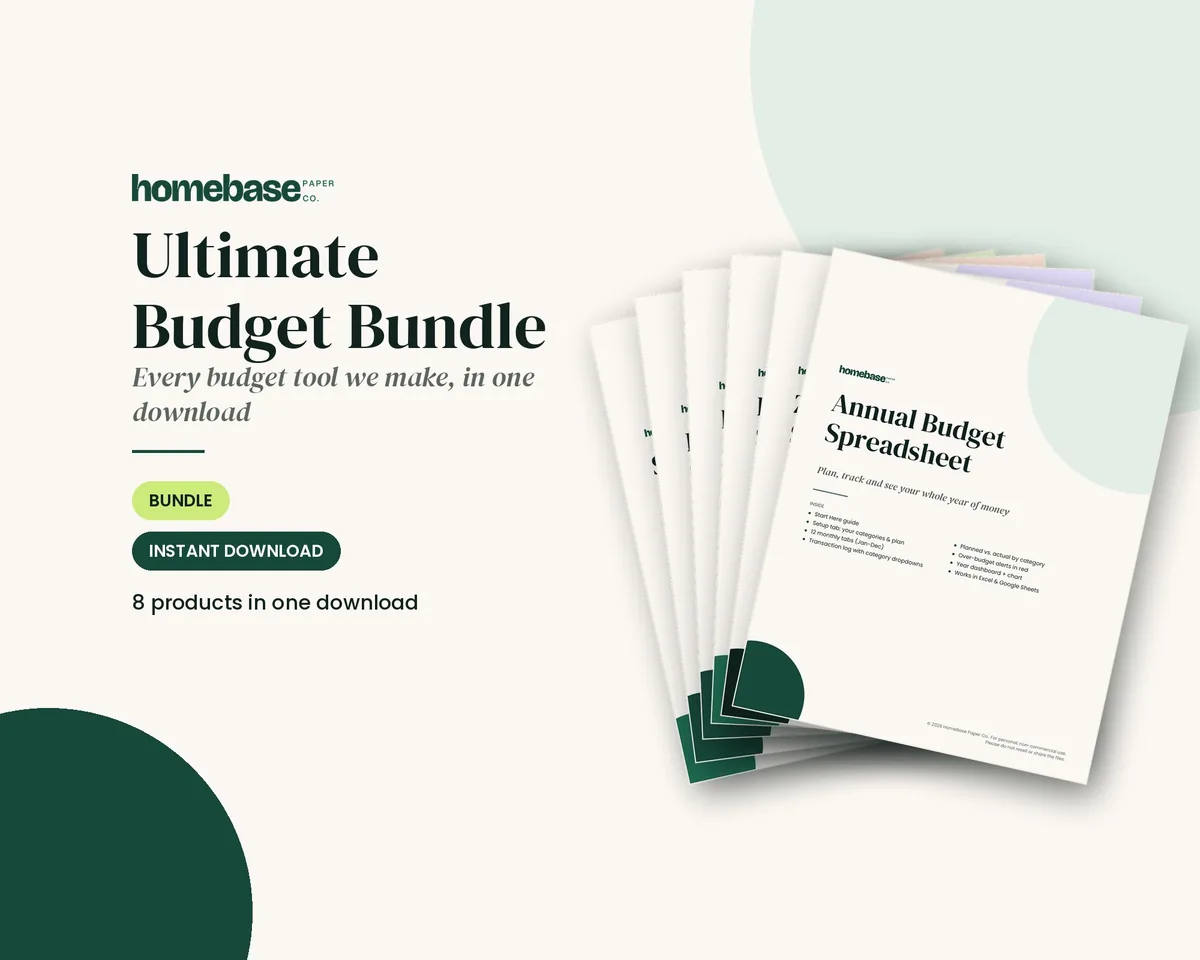
Ultimate Budget Bundle
All 6 spreadsheets + both printable planners - for less than half the price of buying them separately.

Spreadsheets
Debt Payoff Planner
Pick snowball or avalanche, add any extra payment, and get your debt-free month instantly.
Frequently asked questions
How do I check my credit report for free? You can check your credit report for free at AnnualCreditReport.com, the only site authorized by federal law to provide free reports from Equifax, Experian and TransUnion. You can now get a free report from each bureau every week. You can also call 1-877-322-8228 or request reports by mail, and checking your own report never lowers your credit score.
What is the difference between a credit report and a credit score? A credit report is a detailed record of your credit accounts, balances, payment history, inquiries and some public records. A credit score is a number calculated from the information in that report. Your free annual credit report does not usually include a score, but you can often see a free score through your bank or credit card issuer.
What should I look for on my credit report? Check that your name, addresses and employers are correct, that every account belongs to you, that balances and payment history are accurate, and that you recognize every hard inquiry. Accounts you never opened or late payments you did not make are errors you can dispute with the credit bureau and the company that reported them.
How do I dispute an error on my credit report? Dispute an error by contacting the credit bureau that shows it, online, by phone or by mail, and explaining what is wrong with copies of any proof. Also contact the company that supplied the information. The bureau usually has 30 days to investigate, and it must correct or remove information it cannot verify.
More from HomeBase
You may also like

Printables
Budget Planner Printable
Twelve undated pages you can print every month: budget, bills, spending, savings and debt.

Spreadsheets
Bill Tracker Spreadsheet
Bills due in 3 days or less light up red, so nothing slips through.

Spreadsheets
Sinking Funds Tracker
It does the math: how much to set aside each month to hit every goal on time.

Spreadsheets
Paycheck Budget Spreadsheet
Enter your bills once. The sheet tells you which paycheck pays each one, all year.
 Club
Monthly club
Money Club
Anyone who wants a clear plan for the month's bills, holiday spending and savings.
Free printable
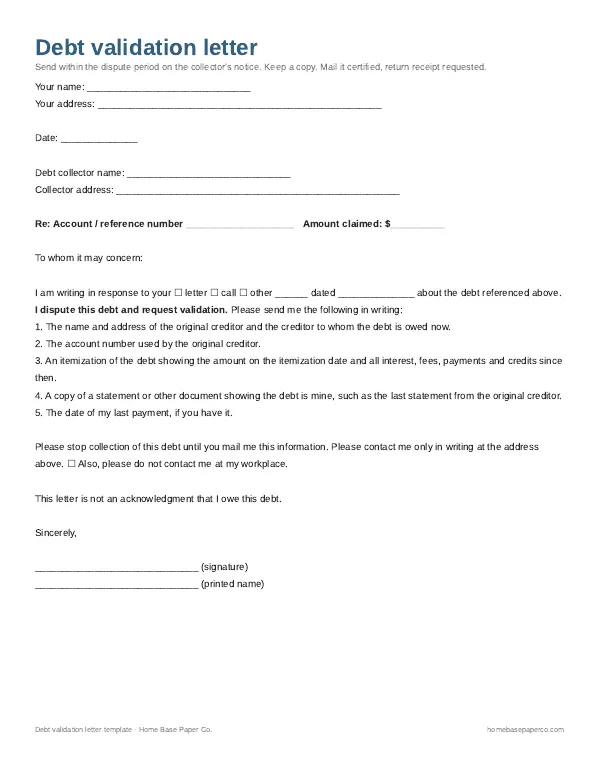
Get the free debt validation letter template
A fill-in letter asking a collector to verify a debt, with a short checklist for sending it and keeping records. You'll also get our weekly HomeBase email with simple budgeting and bill-paying tips.
Sources
- FTC: Free credit reports consumer.ftc.gov
- CFPB: How do I get a free copy of my credit reports? consumerfinance.gov
- CFPB: How do I dispute an error on my credit report? consumerfinance.gov
- CFPB: How long does information stay on my credit report? consumerfinance.gov
- 15 U.S.C. 1681i, Procedure in case of disputed accuracy (Cornell Law School LII) law.cornell.edu