

The short answer: how to save money is less about willpower and more about a simple system: know where your money goes, set one clear goal, pay yourself first, cut one big cost and review monthly.
- Biggest impact: automate a transfer on payday to a separate savings account
- Next: cut your biggest fixed bill and plan meals with a list
- Cancel or rotate subscriptions and pay down high-interest debt
- 25 ways to save and a 30-day plan below
- Next step: Plan it with the Budget Planner Printable ($5.99).
Learning how to save money is less about willpower and more about a simple system. This guide gives you a five-step plan, 25 practical ways to cut costs, and a few tools to keep your savings growing even when money is tight.
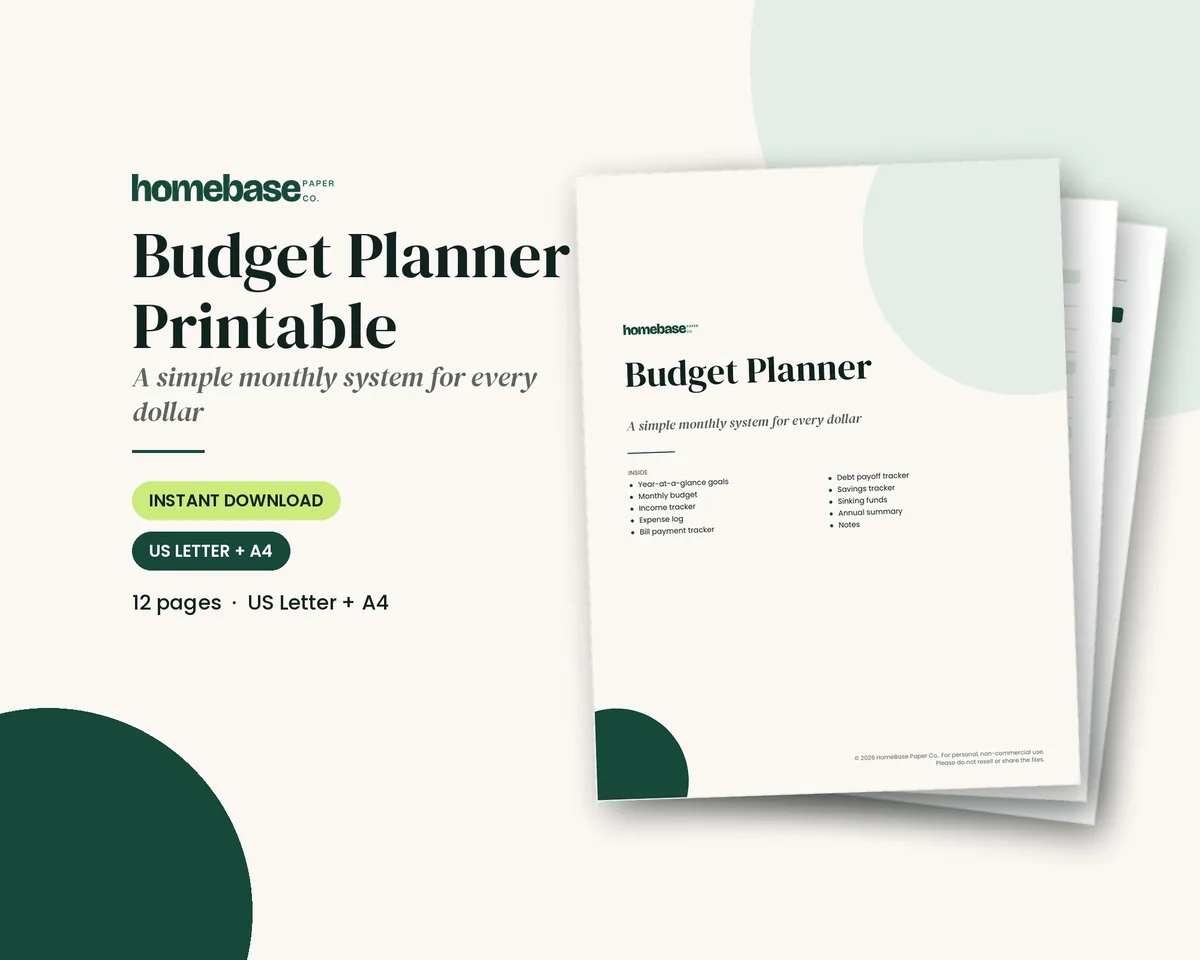
To see where your money goes each month, our Budget Planner Printable has twelve undated pages for your budget, bills, spending, savings and debt.
Why saving feels hard
Most families aren't bad with money. Prices are high and paychecks are stretched. The Federal Reserve's annual survey of household economic well-being tracks how many adults could cover a small surprise expense with cash, and many still can't.
That's why a plan matters. When saving is automatic and the goal is clear, it gets done.
A 5-step plan to save money
Wondering how much of my paycheck should I save? Our guide explains the 20% guideline, what to do if you can only start with 1% and where each dollar should go.
- Know where your money goes. Track every purchase for 30 days. Bank statements help.
- Set one clear goal. For example, "$1,000 emergency fund by March."
- Pay yourself first. Set an automatic transfer to savings on payday.
- Cut one big cost. Housing, transportation and food are the largest shares of most budgets, according to Bureau of Labor Statistics spending data.
- Review monthly. Check progress and raise your savings amount when you can.
If you've never made a budget before, our budgeting for beginners guide covers the basics in plain words. The 50/30/20 budget is a simple way to decide how much to save.
How to save money fast: a 30-day plan
If you need cash quickly, for a car repair, a deposit or the holidays, slow-and-steady tips won't feel like enough. This 30-day plan focuses on the moves that free up the most money in the shortest time. Do the first week all at once; the rest builds on it.
Week 1: Stop the leaks
- Open a separate savings account (or a second account at your bank) and name it after the goal. Every dollar you free up this month goes there the same day.
- Cancel or pause subscriptions you haven't used in the last month. Check your bank and card statements line by line; small charges are easy to miss.
- Do a 30-day pause on non-essential spending. Groceries, gas, bills and medicine are in. Clothes, décor, takeout and impulse buys are out. Our no-spend challenge guide has rules and a tracker idea.
- Delete saved cards from shopping apps so every purchase takes an extra step.
Week 2: Cut the big variable costs
- Eat from the pantry and freezer first. Plan a week of dinners around what you already have, then shop only for the gaps. A "pantry week" is often the single biggest quick win for families.
- Cook every dinner at home and pack lunches. Plan one easy backup meal for tired nights so takeout isn't the default.
- Combine errands into one trip to save gas.
Week 3: Lower your bills
- Call your phone, internet and insurance providers and ask what lower-priced plans or discounts are available. Have a competitor's price ready.
- Shop your car insurance. Getting quotes takes about an hour and can lower a bill you pay every month.
- Check for late fees and interest you can avoid by setting up autopay for at least the minimum.
Week 4: Bring in extra cash
- Sell things you don't use: kids' gear they've outgrown, furniture, electronics, tools and clothes with tags still on.
- Pick up extra hours or a short-term side job if you can, and send every extra dollar straight to the goal.
- Return recent purchases you haven't used that are still inside the return window.
How much can you save in 30 days?
That depends on your income and bills, so don't trust anyone who promises a number. A better way to find yours: list what you spent last month on takeout, subscriptions, shopping and other flexible categories, then add what you could get from selling items you no longer use. The total of the cuts you can stick with for 30 days is your realistic fast-savings target.
Want a visual way to stay motivated? The 100 Envelope Savings Challenge turns saving into a game, and our 52-week savings challenge guide shows a slower, steady option for after the 30 days. Track each move in the Budget Planner Printable ($5.99) so you can see exactly where the freed-up money came from.
Start with an emergency fund
An emergency fund keeps a surprise bill from turning into debt. Start with $500 or $1,000, then build toward three to six months of essential costs. The CFPB's guide to building an emergency fund recommends saving automatically and starting small.
Keep it in an insured account that pays interest. Our guide explains what is a high-yield savings account and what the national average rate is.
Keep it in a separate savings account, so it's not mixed with spending money.
25 ways to save money
Food and groceries
- Plan a week of meals before you shop.
- Shop with a list, and eat before you go.
- Buy store brands for staples.
- Cook in batches and freeze extras.
- Pack lunch four days a week.
Our guides to grocery shopping on a budget and meal planning on a budget show how to cut the food bill without eating rice every night.
Bills and subscriptions
- Cancel subscriptions you haven't used in a month.
- Call your phone and internet provider and ask for a lower plan.
- Shop car and home insurance every year.
- Switch to LED bulbs and unplug devices you don't use.
- Set bills on autopay to avoid late fees.
Shopping and spending
- Wait 48 hours before any non-essential purchase over $50.
- Unsubscribe from store emails.
- Buy used for kids' clothes, furniture and tools.
- Use cash envelopes for spending categories that run over.
- Remove saved cards from shopping apps.
The cash envelope system is a simple way to stop overspending in tricky categories.
Big costs
- Refinance high-interest debt if you qualify.
- Keep your car longer and do basic maintenance.
- Compare prices on big purchases at three stores.
- Plan holidays and birthdays ahead with sinking funds.
- Pay off the highest-interest debt first to cut interest costs.
Habits that keep it going
- Save any raise, bonus or tax refund before you spend it.
- Round up every purchase into savings.
- Try a savings challenge.
- Review your budget once a month.
- Celebrate small milestones, cheaply.
Best ways to save money, ranked by impact
Not every money tip is worth the same. The best ways to save money are the ones that lower a big monthly cost or happen automatically, so you only make the decision once. Here they are, from biggest typical impact to smallest:
| Rank | Way to save | Why it works | Do it this week |
|---|---|---|---|
| 1 | Automate a transfer on payday | Money is saved before you can spend it | Set a recurring transfer to a separate savings account |
| 2 | Cut your biggest fixed bill | One call saves every month after | Shop car insurance or call your internet provider |
| 3 | Plan meals and shop with a list | Food is one of the largest flexible costs for families | Write five dinners and one grocery list |
| 4 | Cancel or rotate subscriptions | Small charges add up across a year | List every recurring charge from last month's statement |
| 5 | Pay down high-interest debt | Interest is money you get nothing back for | Pick one card and add $25 to its payment |
| 6 | Use sinking funds for yearly costs | Stops surprise bills going on a card | Divide each yearly bill by 12 and save that monthly |
| 7 | Wait 48 hours on unplanned buys | Most impulse wants fade | Put the item in a cart and walk away |
| 8 | Buy used or borrow first | Kids' gear, tools and furniture lose value fast | Check a library, buy-nothing group or resale app |
The FDIC's free Money Smart program has lessons on saving, spending plans and building a cushion if you want to go deeper. For food, the USDA publishes monthly cost-of-food reports for different family sizes and budget levels, which can help you set a realistic grocery target.
Money saving tips for families
- Make one meal plan for everyone and build in a leftovers night. Our meal planning on a budget guide shows the routine.
- Give kids a set amount for school events and treats instead of saying yes one at a time.
- Plan holidays and birthdays early so they're paid from savings, not a card.
- Hold a monthly money date to look at the numbers together for 20 minutes.
Easy ways to save money if you've tried before
If budgets haven't stuck, start smaller. Save one fixed amount every payday, even $10, and leave everything else the same for a month. Once that feels normal, add one more change from the table. Small, automatic steps tend to outlast big plans.
Make saving visible
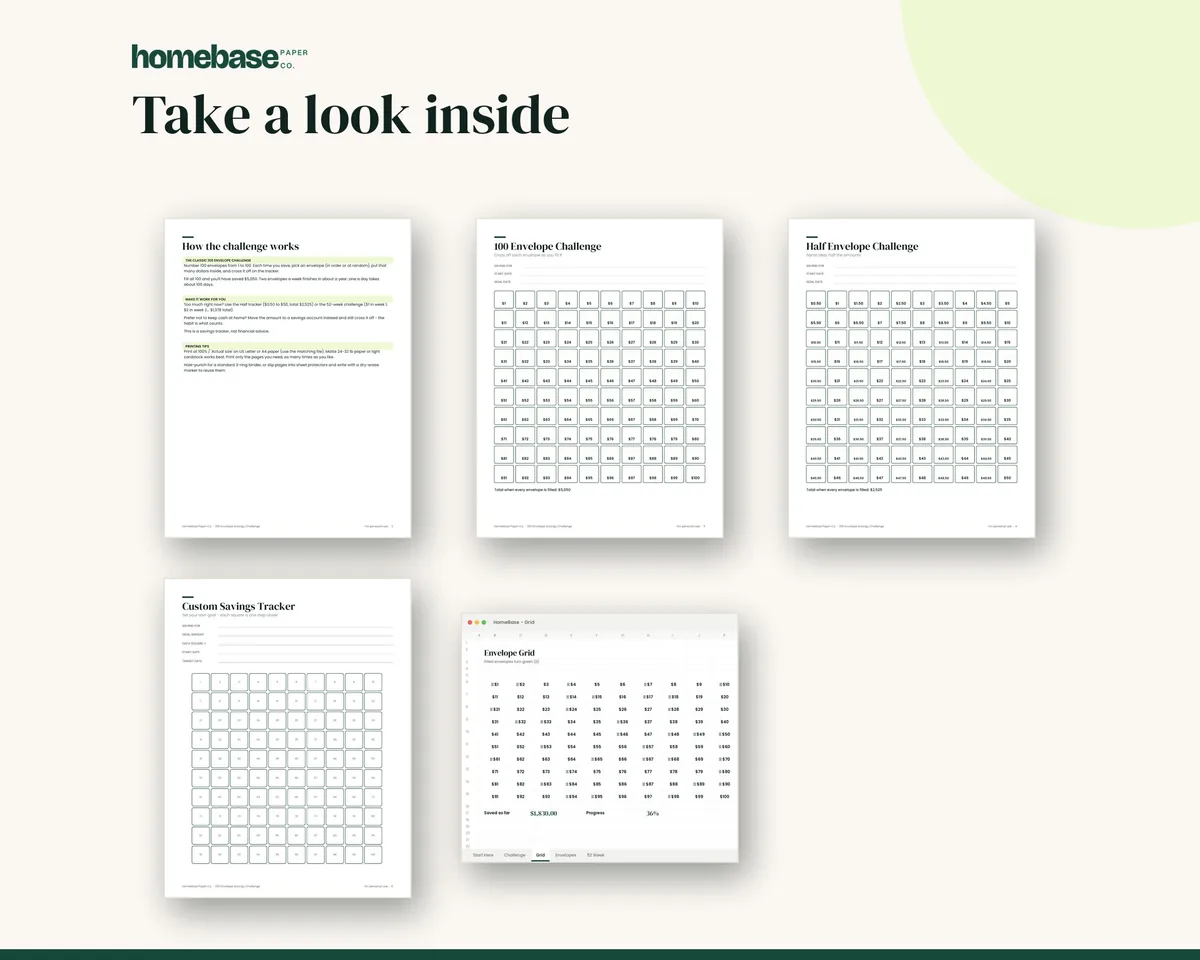
People save more when they can see progress. Color in a tracker, tick off envelopes or watch a number climb in a spreadsheet.
The 100 Envelope Savings Challenge ($3.99) includes the classic, half and 52-week challenges plus a tracking spreadsheet. The Budget Planner Printable ($5.99) gives you twelve undated pages for budget, bills, spending, savings and debt.
Save for big costs before they arrive
Christmas, car repairs and back-to-school shopping aren't surprises. They just feel like it. Sinking funds split each cost into monthly amounts, so the money is ready when the bill comes. The Sinking Funds Tracker ($4.99) does the math for every goal.
For goals more than a year away, some savers use bonds. Our guide to what is a savings bond covers I bonds, EE bonds and when you can cash them. For more on this topic, see our ways to save money hub.
For holidays, our guide on how to save money for Christmas shows how to start in any month.
If you have debt
Saving and paying down debt work together. Keep a small emergency fund, then put extra money toward high-interest balances. Our free debt payoff calculator shows how much faster you'll be debt-free with an extra payment each month.
Common saving mistakes to avoid
The first mistake is saving whatever is left at the end of the month. There's rarely anything left. Move the money on payday instead, before you have a chance to spend it.
The second is cutting too much at once. A plan with no fun money tends to fall apart by week three. Keep a small amount for treats, and you'll be far more likely to stick with it.
The third is keeping savings in your checking account. It's too easy to dip into. A separate account, even at the same bank, adds a small pause that protects the money.
Finally, don't wait for a perfect plan. A rough budget you use beats a perfect one you never start. Pick one tip from the list above, do it this week, and add another next week.
Saving money as a couple or family
Talk about goals together before you change anything. One person might want a vacation, the other a bigger emergency fund. Agree on a shared goal and a monthly amount, then let each person keep a little personal spending money. Our guide on how to budget as a couple has tips for that first money talk. Kids can help too: let them pick a family goal, like a trip to the zoo, and track the savings jar together.
Keep it going
When saving feels hard, our guide to savings motivation has goals, trackers and mantras to keep you going.
- Revisit your goals every few months.
- Raise your automatic transfer by $10 when you can.
- Use our tips on how to stick to a budget when motivation fades.
Saving money is a habit, not a single choice. Start with one step this week, and let it build. One easy win: claim free birthday stuff from restaurants and shops you already visit.
Make it easier
Tools for this
Printables
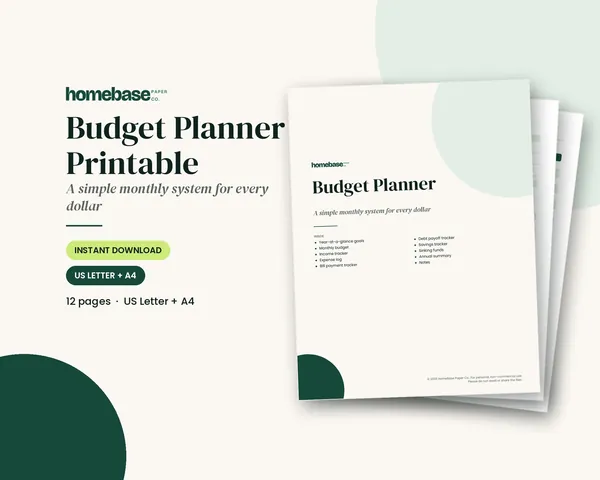
Budget Planner Printable
Twelve undated pages you can print every month: budget, bills, spending, savings and debt.
 Starter pick
Printables
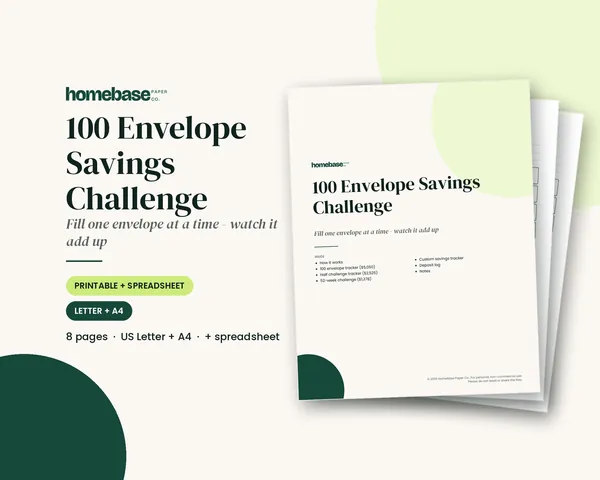
100 Envelope Savings Challenge
Classic, half and 52-week challenges to print, plus a spreadsheet that tracks every envelope and tells you how much to save each week.
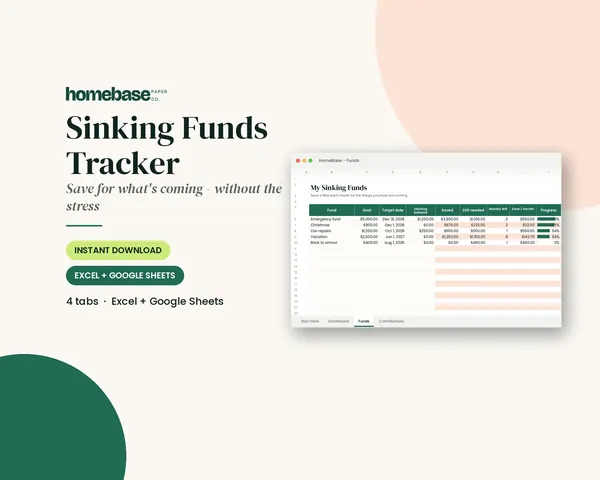
Spreadsheets
Sinking Funds Tracker
It does the math: how much to set aside each month to hit every goal on time.
Frequently asked questions
What is the best way to save money? The best way to save money is to make it automatic. Decide on an amount, set up a transfer to a separate savings account on payday, and treat it like a bill. Then cut one or two big costs, like groceries or subscriptions, rather than dozens of tiny ones. Small, steady amounts beat big plans you can't keep.
How much money should I save each month? A common target is 20% of take-home pay for savings and debt payoff, from the 50/30/20 budget. If that's not possible, start with any fixed amount, even $10 or $25 a paycheck, and raise it when you get a raise or pay off a bill. The habit matters more than the size at first.
How do I start saving money with no money? You can start saving money with no money by setting aside tiny amounts. Save $1 a day, round up purchases, or save every $5 bill you get. Look for one cost you can cut, like a subscription or delivery fees, and move that exact amount to savings. Selling unused items can jump-start an emergency fund, and the 100 envelope challenge makes it a game.
How much should I have in an emergency fund? Many experts suggest three to six months of essential expenses. That can feel huge, so set a first goal of $500 or $1,000 to cover a car repair or medical bill. The CFPB's guide to building an emergency fund suggests starting small and saving automatically until it grows.
What are the easiest ways to save money on groceries? Plan meals before you shop, make a list and stick to it. Buy store brands, shop sales, use what's in the pantry first and cook in batches. Eat leftovers for lunch instead of buying it. Our guide to grocery shopping on a budget covers each step with examples.
How can I save money fast? For quick savings, pause all non-essential spending for 30 days, cancel unused subscriptions, sell things you don't use, and cook every meal at home. Call your phone, internet and insurance providers to ask for a lower rate. Put every dollar you save straight into a separate account so it doesn't get spent.
How can I save $1,000 fast? To save $1,000 fast, combine cuts with extra cash: pause non-essential spending for 30 days, cancel unused subscriptions, cook every meal from the pantry first, call providers for lower rates and sell items you don't use. Move every freed-up dollar to a separate account the same day. How fast you reach $1,000 depends on your income and bills, so add up your realistic cuts first.
What is the fastest way to save money each week? The fastest weekly wins are usually food and impulse spending. Plan dinners around what's already in your pantry and freezer, pack lunches, skip takeout and stop non-essential shopping for the week. Then transfer the amount you didn't spend into savings every Friday, so the money doesn't quietly get used somewhere else. The Budget Planner Printable ($5.99) has an expense log and savings tracker to record each week's total.
Is it better to save money or pay off debt? Most people do both: they save a little and pay off debt at the same time. Build a small emergency fund of about $1,000 first, so a surprise bill doesn't go on a credit card. Then put extra money toward high-interest debt while still saving a little each month. Once the debt is gone, move those payments into savings.
Where should I keep my savings? Keep emergency savings in a separate, federally insured savings account that's easy to reach but not linked to your debit card. High-yield savings accounts at online banks often pay more interest. For long-term goals like retirement, look at workplace plans or IRAs, which are designed for that.
How do I save money when I live paycheck to paycheck? Start by tracking every dollar for one month to see where it goes. Then plan each paycheck in advance, with bills and a small savings amount listed first. Even $5 a week adds up to $260 a year. Our paycheck budgeting tools help you plan which check pays each bill.
What are sinking funds and how do they help me save money? Sinking funds are small savings pots for known costs, like Christmas, car repairs or back-to-school. You divide the cost by the months until you need it and save that amount each month. When the bill arrives, the money is already there, so it doesn't land on a credit card.
What are the best money saving tips? Start with the tips that save every month: set an automatic transfer to savings on payday, cancel subscriptions you haven't used in a month, plan a week of meals before you shop and put bills on autopay to avoid late fees. Track them in our Budget Planner Printable so you can see the money you've freed up.
What are the best ways to save money? The best ways to save money are the ones that happen automatically or lower a big bill: set up an automatic transfer on payday, shop your car insurance and internet, plan meals and shop with a list, cancel subscriptions you don't use and pay down high-interest debt. Each one saves money every month after you make the decision once.
How can a family save money on groceries? Plan dinners for the week before you shop, check what you already have, buy from a list, choose store brands and plan one leftovers night. The USDA's cost-of-food reports give a monthly guide for your family size, which helps you set a realistic grocery budget to track against.
How much of my paycheck should I save? A common starting point is 20% of take-home pay, from the 50/30/20 budget, but any amount you can save every payday is a good start. If 20% isn't possible yet, save a small fixed amount automatically and raise it each time a bill is paid off or your income goes up.
More from HomeBase
You may also like
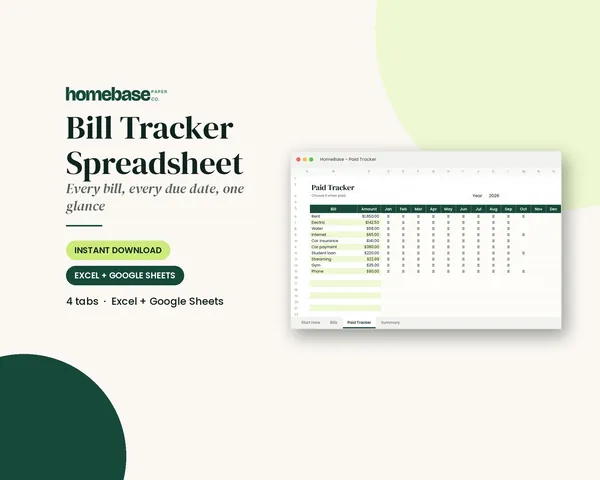
Spreadsheets
Bill Tracker Spreadsheet
Bills due in 3 days or less light up red, so nothing slips through.
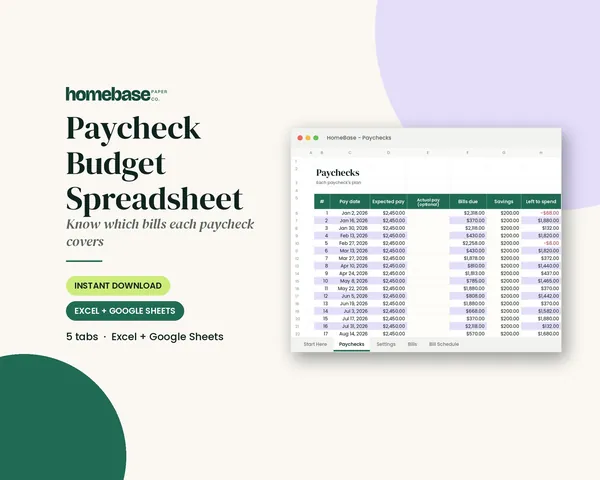
Spreadsheets
Paycheck Budget Spreadsheet
Enter your bills once. The sheet tells you which paycheck pays each one, all year.
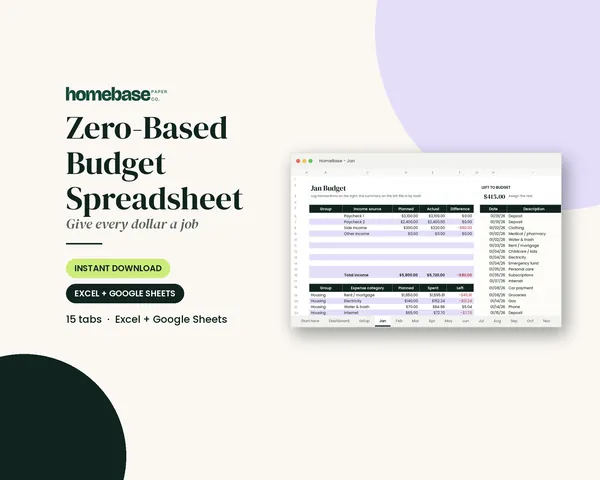
Spreadsheets
Zero-Based Budget Spreadsheet
The 'Left to budget' counter turns green when every dollar has a job.
 Save 57%
Bundles
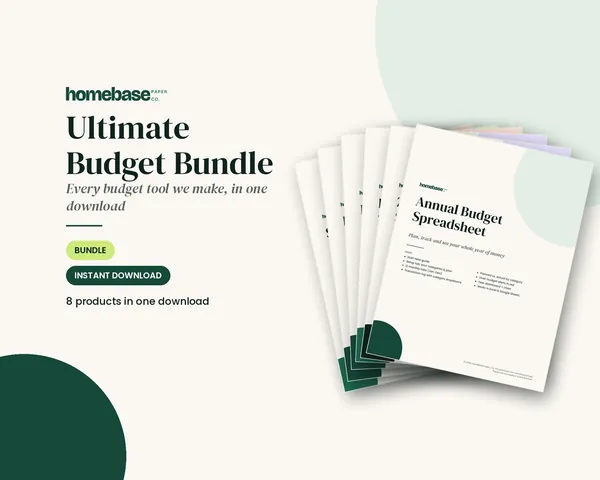
Ultimate Budget Bundle
All 6 spreadsheets + both printable planners - for less than half the price of buying them separately.
 Club
Monthly club
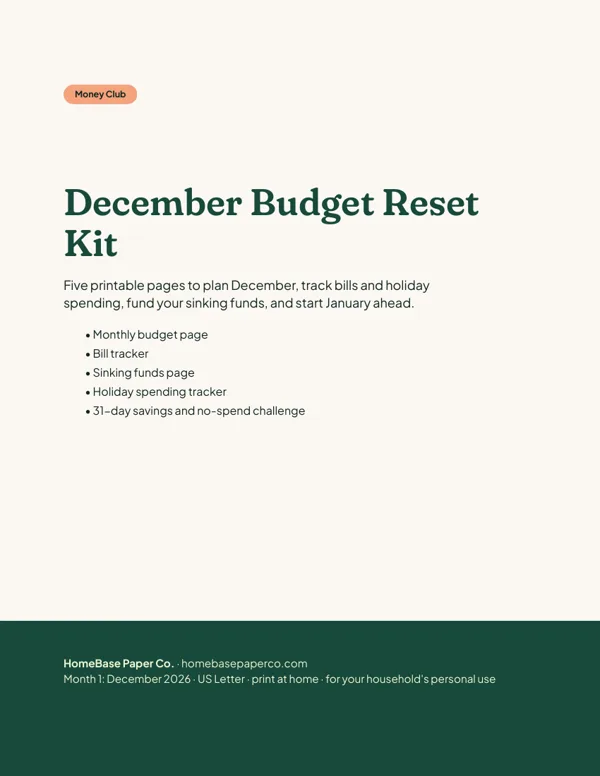
Money Club
Anyone who wants a clear plan for the month's bills, holiday spending and savings.
Free printable
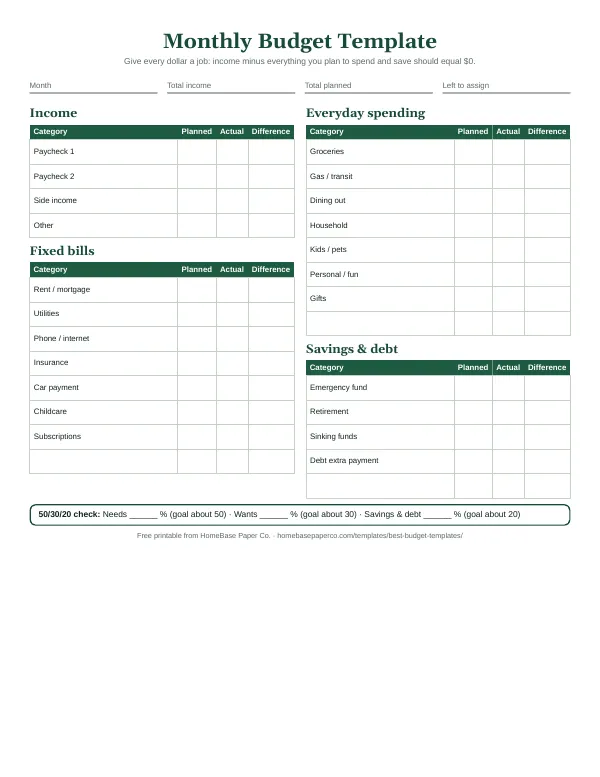
Give every dollar a job: get the free monthly budget template
A printable zero-based monthly budget: income, bills, everyday spending and savings on one page, with a planned vs. actual column. You'll also get our weekly HomeBase email with simple budgeting and bill-paying tips.
Sources
- Federal Reserve: Economic Well-Being of U.S. Households federalreserve.gov
- CFPB: An essential guide to building an emergency fund consumerfinance.gov
- U.S. Bureau of Labor Statistics: Consumer Expenditures bls.gov
- Money Smart program fdic.gov
- Monthly cost-of-food reports fns.usda.gov