The short answer: teaching kids about money works best in small, regular moments that match your child's age. You don't need to be a money expert, just a few clear routines and room for small mistakes.
- Ages 3–5: a clear coin jar and handing over cash at the store
- Ages 6–8: a small weekly allowance split into save, spend and give
- Ages 13–15: a monthly budget for clothes or activities
- 7 steps to start this week below
- Next step: Plan it with the Kids Chore Chart ($3.49).
Teaching kids about money works best in small, regular moments that match your child's age: let a preschooler pay at the register, give a school-age child a simple allowance to split into save, spend and give, and hand a teenager a real budget for something they care about. You don't need to be a money expert. You need a few clear routines, honest talk about choices, and room for your child to make small mistakes while the stakes are still low.
This guide walks you through what to teach at each age, how to set up an allowance that teaches instead of just paying out, seven simple steps to start this week, and the mistakes most families run into. Every dollar amount below is an example, so adjust it to fit your own budget.
Why teaching kids about money matters early
Kids learn about money whether you teach them or not. They watch you tap a card, hear you sigh at a bill and notice when you say "we can't afford that." The Consumer Financial Protection Bureau makes this point plainly in its Money as You Grow guide for parents and caregivers: your children are constantly watching and listening, so they may absorb more than you think, and you're teaching about money "on purpose or not."
That's actually good news. It means the everyday things you already do (shopping, planning a birthday, paying bills) are teaching moments. The goal is just to make those moments a little more intentional.
Before I started HomeBase Paper Co., I worked as an ABA technician with children with special needs. The lesson I lean on most from that work is that big changes come from small, repeatable steps, and from making the next step obvious. You celebrate progress, you don't shame setbacks, and you keep showing up. Money lessons for kids work exactly the same way.
What to teach kids about money at each age
The CFPB groups its Money as You Grow advice into three stages: young children (about 3 to 5), school-age children to preteens (6 to 12), and teens to young adults. Here's a practical version you can use at home.
| Age | What they can understand | Try this | Skill it builds |
|---|---|---|---|
| 3–5 | Money buys things; you earn it by working; sometimes you wait | Clear jar for coins, let them hand over cash at the store, sort "need" and "want" pictures | Patience and persistence |
| 6–8 | Choices have trade-offs; saving gets you something bigger later | Small weekly allowance split into save, spend and give | Delayed gratification |
| 9–12 | Comparing prices, setting a goal, what interest means | A savings goal chart, comparing two products at the store, a simple savings account | Planning and comparing |
| 13–15 | Budgeting for real expenses, keeping personal info private | A monthly budget for clothes or activities, tracking spending | Independent decisions |
| 16–18 | Paychecks, taxes, credit, debit vs. credit cards | Reading a pay stub together, a checking account, pricing a first car | Real-world money management |
Ages 3 to 5: money is real and you have to wait
The CFPB notes that children this age are usually too young to understand abstract financial concepts, but they're building a foundation. Keep it physical. Coins in a clear jar let them see savings grow. Paying at the register shows that things cost money. And when they want something, "Let's save up for it" teaches waiting better than any lecture.
Simple phrases from the CFPB's young-children page work well here: "You need money to buy things, and you earn money by working," and "There's a difference between things you need and things you want." If you want a deeper version of that second idea, our guide on needs vs. wants has easy examples.
Ages 6 to 12: habits, choices and a first allowance
The CFPB describes ages 6 to 12 as the years to help children absorb rules to live by and day-to-day habits that shape how they earn, save and shop. This is the sweet spot for a first allowance, a first savings goal and a first "I spent it all and now I can't buy the thing" lesson.
One of my favorite tips from the CFPB is to think out loud. When you compare two cereal prices, say why you picked one. When you skip a purchase, explain the trade-off. Kids draw their own conclusions from what you do, and thinking out loud makes sure they draw the right ones.
Around ages 9 to 12, add a written savings goal. A visual chart where they color in each dollar saved makes progress feel real. Our savings goal tracker ideas show a few easy formats.
Ages 13 to 18: real budgets and real decisions
Teenagers start earning money and making decisions on their own. Give them responsibility for a category you already pay for, like clothes, school lunches or activities, and let them manage it for a month. They'll learn more from running out of clothing money in week three than from any talk. For ideas that fit younger teens, see our list of jobs for 14 year olds.
This is also the age to cover paychecks, taxes, credit scores and the difference between a debit card and a credit card. The FDIC's free Money Smart for Young People curriculum is organized by grade band (PreK–2, 3–5, 6–8 and 9–12), and its Grades 9–12 lessons cover topics like managing a paycheck, credit and credit cards. It also includes Parent/Caregiver Guides with activities and conversation starters you can use at home.
How to set up an allowance for kids that actually teaches
An allowance is the single most useful money tool for school-age kids, because it gives them real money to make real choices with. There's no one right amount. Pick a number your budget can handle every single week, because consistency matters more than size.
Three common allowance models
| Model | How it works | Pros | Watch out for |
|---|---|---|---|
| Flat allowance | Same amount every week, no strings | Teaches budgeting; simple to run | Doesn't connect money to work |
| Chore-based (commission) | Paid per chore or for a full week of chores | Connects earning to effort | Kids may refuse unpaid chores |
| Hybrid | Base chores are expected for free; extra jobs earn money | Teaches both family teamwork and earning | Needs a clear list of what's paid |
Many families like the hybrid model. Everyday tasks like making the bed or clearing your own plate are part of being in a family. Bigger jobs like washing the car or weeding the garden earn money. Whatever you pick, write it down so nobody argues about it later. Our chore chart by age guide lists age-appropriate chores, so you can decide which ones are expected and which ones are paid.
Split every dollar: save, spend, give
Have your child divide each allowance into three jars or envelopes: save, spend and give. A simple starting split is 50% spend, 40% save and 10% give, but let your family's values decide. The point is that every dollar gets a job, which is the same idea behind a grown-up budget and the cash envelope system.
Let the spend jar truly be theirs. If they spend it on something you think is silly, let them. Regret over a $3 toy is a cheap lesson compared with regret over a bigger purchase later.
Track it on paper
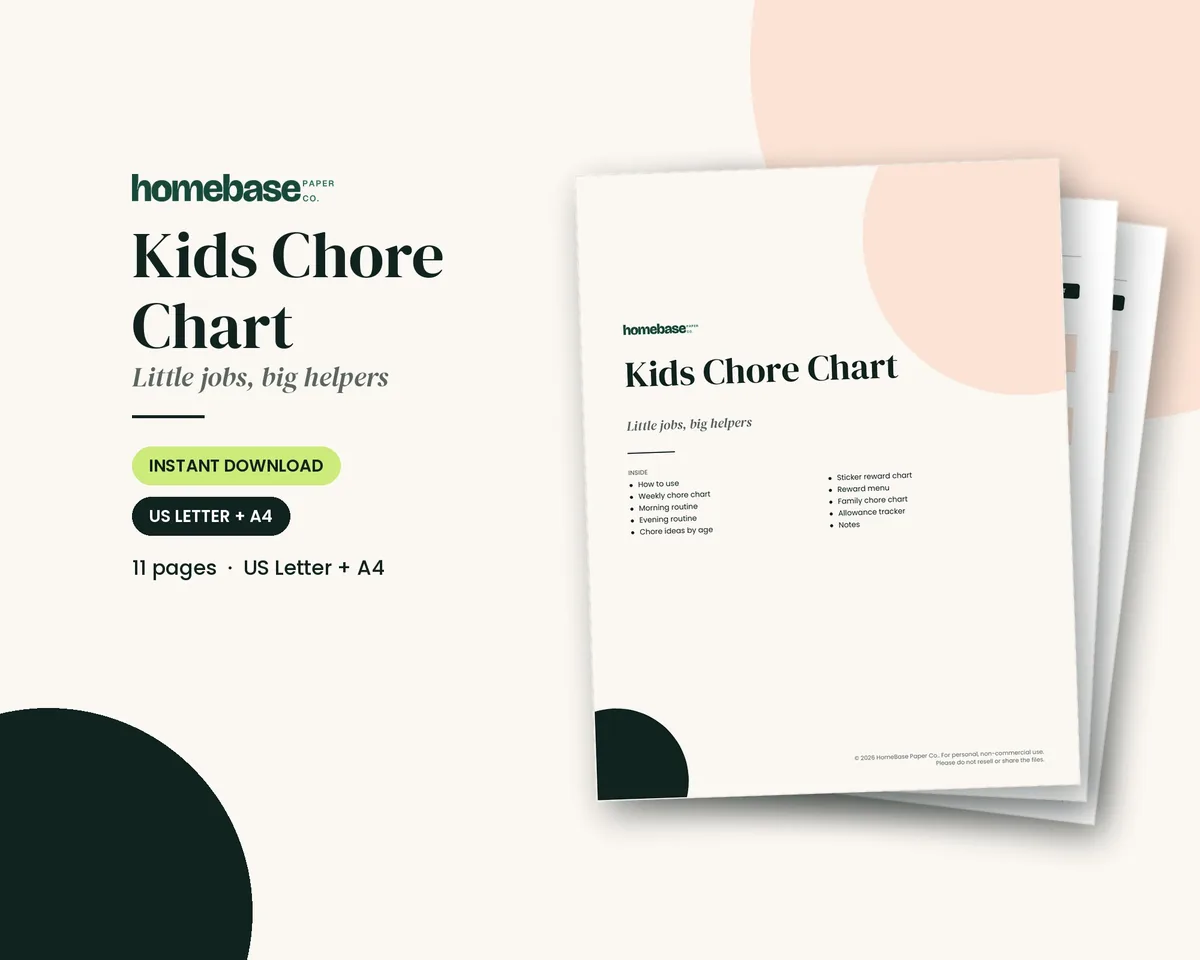
Kids love seeing their progress. A printed allowance tracker on the fridge shows what they earned, what they saved and what they spent each week. The Kids Chore Chart printable ($3.49) includes a weekly chore chart, chore ideas by age, a sticker reward chart, a reward menu and an allowance tracker, so the jobs and the money live on one page.
7 steps to start teaching kids about money this week
- Pick one age-appropriate goal. Use the table above. For a 5-year-old, it might just be "wait and save for one toy."
- Set up three jars. Label them save, spend and give. Clear jars work best for young kids.
- Decide on an allowance model. Flat, chore-based or hybrid. Write down the amount and payday.
- Make a chore and allowance chart. List expected chores and paid jobs, then post it where everyone can see it. Our chore chart with allowance guide has pay ranges by age and a sample week.
- Set a savings goal with a picture. Tape a photo of the goal to the save jar and track progress with a chart. For more on this topic, see our kids hub. Browse related guides in our kids chores hub.
- Talk money at one family moment a week. Sunday dinner or payday works. Our family budget meeting guide has a simple agenda with a section on involving kids.
- Review and adjust monthly. Raise the allowance as you hand over more responsibility, and celebrate goals they reach.
Fun ways to make money lessons stick
- Grocery store challenge. Give your child a small budget and a short list. They have to compare prices and stay under the limit.
- Savings challenges. Older kids and teens can try a scaled-down version of a savings challenge. The 100 Envelope Savings Challenge ($3.99) includes a half-size version and a 52-week challenge, plus a tracker that does the math, so a teen can pick a goal that fits their allowance or job.
- Read money stories together. The CFPB's Money as You Grow Bookshelf is designed for ages 4 to 10 and helps you weave money ideas into reading time.
- Holiday budgets. Give your child a set amount for gifts and let them plan the list. Our guide to teaching kids to budget for Christmas gifts walks through it step by step.
- Open a real savings account. Visiting the bank together makes money feel official. Read what a savings account is first, and check that the bank is FDIC-insured. The FDIC explains in Understanding Deposit Insurance that the standard insurance amount is $250,000 per depositor, per insured bank, for each account ownership category.
Common mistakes when teaching kids about money
- Rescuing them every time. If they spend all their money and you buy the thing anyway, the lesson disappears. Be kind, and hold the line.
- Making money a secret. You don't have to share your salary, but "we're choosing to save for a trip instead" teaches far more than "we can't afford it."
- Inconsistent paydays. A forgotten allowance teaches that money is unreliable. Set a reminder.
- Only talking about saving. Spending wisely and giving matter too. A child who never gets to spend never learns to choose.
- Waiting until they're teens. It's never too early or too late. The CFPB says exactly that about money conversations, and a 4-year-old with a coin jar is a fine place to start.
Why I care about this
I grew up the oldest of three, and I was the one my brother and sister brought their worries to. I learned early that the most helpful thing you can do for someone is listen first, then help them take the next small step. That's how I think about money lessons for kids. Listen to what your child wants, help them make a plan, and let them feel the win when they get there.
Start with one chart
If you want an easy way to begin, the Kids Chore Chart printable ($3.49) gives you the chore chart, reward menu and allowance tracker in one instant download, in US Letter and A4. If you're also organizing the rest of the household paperwork, it's included in the Family Life Admin Bundle, five tools for $15.99 instead of $23.95 bought separately. You can browse every printable on our printables page too.
Pick one jar, one chart and one weekly money talk. Small, repeatable steps add up, for kids and for grown-ups.
Grown-ups can brush up too. Our guide to financial literacy covers the six core money skills.
Curious what raising a child costs from birth to 18? Our cost of raising a child guide breaks it down by age and category.
Ready to go beyond a piggy bank? Our guide to investing for kids explains custodial accounts and how to start small.
Make it easier
Tools for this
 Starter pick
Printables
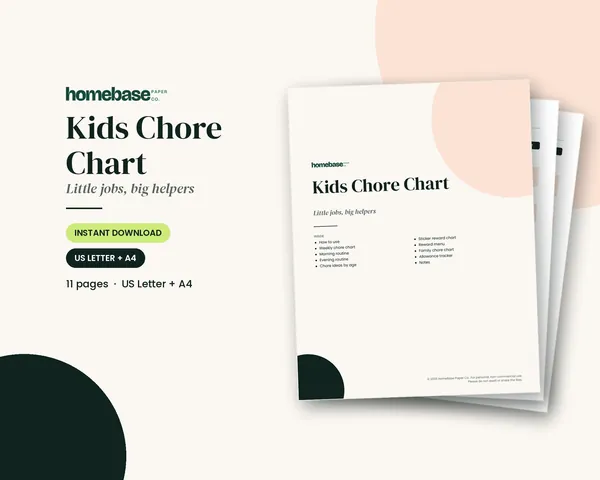
Kids Chore Chart
Weekly chore chart, morning and evening routines, chore ideas by age, a sticker reward chart and an allowance tracker.
 Starter pick
Printables
100 Envelope Savings Challenge
Classic, half and 52-week challenges to print, plus a spreadsheet that tracks every envelope and tells you how much to save each week.
 Save 33%
Bundles
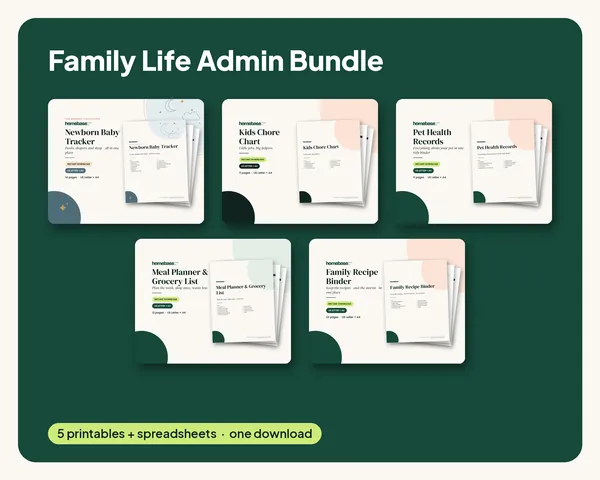
Family Life Admin Bundle
Baby logs, chore charts, pet records, meal plans and family recipes in one tidy set.
Frequently asked questions
How do I start teaching kids about money? The Kids Chore Chart printable ($3.49) makes it easy to start, because the chores, reward menu and allowance tracker sit on one page your child can see every day. Begin with one age-appropriate goal, three jars labeled save, spend and give, and a regular payday. Then talk about one money choice a week, out loud, so your child hears how you decide.
What age should you start teaching kids about money? A simple printable like the Kids Chore Chart ($3.49) works from preschool on, because its sticker chart and reward menu are visual enough for young children. The CFPB's Money as You Grow guide starts at ages 3 to 5, when kids can learn that money buys things, that you earn it by working, and that sometimes you have to wait and save. It's never too late to start, either.
How much allowance should a child get? The allowance tracker in the Kids Chore Chart ($3.49) helps you test an amount for a few weeks and see whether it works for your family. There's no official number. Pick an amount your budget can pay every single week, because consistency teaches more than size, and raise it as you hand over more responsibility, like school lunches or clothes.
Should allowance be tied to chores? The Kids Chore Chart ($3.49) supports any approach, because it separates the weekly chore chart from the allowance tracker. Many families use a hybrid: everyday tasks like making the bed are expected for free as part of the family, while bigger extra jobs like washing the car earn money. Write down which chores are paid so nobody argues later.
What is the save, spend, give method? The 100 Envelope Savings Challenge ($3.99) pairs well with the save, spend, give method, because its half-size and 52-week versions give the save jar a clear target. The method itself is simple: each time your child gets money, they split it into three jars. A common starting split is 50% spend, 40% save and 10% give, but your family's values should decide.
What should a 5-year-old know about money? A visual chart like the sticker reward chart in the Kids Chore Chart ($3.49) helps a 5-year-old see that effort leads to rewards. At this age, kids can learn that money buys things, that people earn money by working, that needs and wants are different, and that waiting and saving can get you something you want. Keep it physical with coins and a clear jar.
What should a 10-year-old know about money? The 100 Envelope Savings Challenge ($3.99) gives a 10-year-old a fun, trackable savings goal, especially the half-size version. By about 10, kids can compare prices, set a savings goal, understand that choices have trade-offs, and learn the basic idea of interest. It's a great age to open a savings account together.
How do I teach my teenager about money? The 100 Envelope Savings Challenge ($3.99) gives teens a structured goal with a tracker that does the math for them. Beyond that, hand your teen a real budget for one category, like clothes or activities, and let them manage it for a month. Cover paychecks, taxes, credit scores and debit vs. credit cards before they leave home. The FDIC's free Money Smart for Young People lessons help.
What are the best ways to teach financial literacy for kids? The Kids Chore Chart ($3.49) covers the earning side of financial literacy, because it connects chores to an allowance your child tracks. Pair it with saving jars, a written goal, a grocery store price challenge, money-themed books, and a weekly family money talk. Free government resources like the CFPB's Money as You Grow and the FDIC's Money Smart for Young People are also excellent.
Should kids have a savings account? The 100 Envelope Savings Challenge ($3.99) is a good warm-up before a bank account, because it builds the saving habit at home first. A real savings account makes money feel official and shows how interest works. Choose an FDIC-insured bank; the FDIC says standard coverage is $250,000 per depositor, per insured bank, for each account ownership category.
What if my child spends all their money right away? The allowance tracker in the Kids Chore Chart ($3.49) makes the result visible, so your child can see where the money went and plan differently next week. Don't rescue them by buying the item anyway. Be kind, explain that the next payday is coming, and let a small regret today prevent a bigger one later.
How do I teach kids about money if I'm not good with money myself? The Family Life Admin Bundle ($15.99, five tools, save 33%) helps you get your own household organized while you teach, so you learn alongside your kids. The CFPB says you don't need to be a money expert. Use the strengths you already have, think out loud about your choices, and be honest that you're learning too.
Should I talk to my kids about our family budget? A shared tool like the Kids Chore Chart ($3.49) gives kids their own small budget to manage, which makes the bigger family budget easier to understand. You don't need to share your salary. Saying 'we're choosing to save for a trip instead' teaches far more than 'we can't afford it,' and a short weekly family money meeting keeps it calm.
More from HomeBase
You may also like

Printables
Budget Planner Printable
Twelve undated pages you can print every month: budget, bills, spending, savings and debt.

Spreadsheets
Bill Tracker Spreadsheet
Bills due in 3 days or less light up red, so nothing slips through.

Spreadsheets
Sinking Funds Tracker
It does the math: how much to set aside each month to hit every goal on time.

Spreadsheets
Paycheck Budget Spreadsheet
Enter your bills once. The sheet tells you which paycheck pays each one, all year.
 Club
Monthly club
Money Club
Anyone who wants a clear plan for the month's bills, holiday spending and savings.
Free printable
Have the important stuff in one place: get the free emergency binder pages
Printable starter pages for household members, emergency contacts, medical notes and where key documents live. You'll also get our weekly HomeBase email with simple ways to keep family records and important papers in order.