
 The Holiday Collection

The short answer: teaching kids to budget for Christmas gifts shows them the whole money cycle in a few weeks: earning or saving, making a list, choosing what fits, spending and feeling proud when they give something they planned.
- Decide where the gift money comes from
- Make the gift list together and make the money visible
- Example: four gifts for $20, including a homemade card and photo frame
- Age-by-age guide and sibling gift ideas below
- Next step: Plan it with the Christmas Budget & Gift Planner ($4.99).
Christmas is one of the best money lessons of the year, which makes it a natural time for teaching kids to budget for Christmas gifts. Kids can see the whole cycle in a few weeks: earning or saving, making a list, choosing what fits, spending and feeling proud when they give something they planned for.
For the list-making step, our Christmas Budget & Gift Planner has printable gift list pages and a spreadsheet that sets a budget for every person and shows what's left.
This guide shows you how to turn gift-giving into a hands-on budgeting lesson, with age-by-age steps and simple tools you can set up this weekend.
All dollar amounts below are examples. Choose amounts that fit your family's budget and values.
Why Christmas is a great time to teach budgeting
Money lessons stick best when they're real. Christmas gives kids:
- A clear goal. They want to give gifts to people they love.
- A deadline. The date doesn't move, which makes planning feel urgent in a good way.
- Real trade-offs. If they spend more on one gift, there's less for another.
- A good feeling at the end. Giving something they budgeted for builds confidence.
The Consumer Financial Protection Bureau's Money as You Grow program offers age-based money milestones, activities and conversation starters for young children, school-age children to preteens, and teens to young adults. It's a great free companion to the ideas below.
Step 1: decide where the gift money comes from
Before kids can budget, they need a budget. There are a few common approaches, and each teaches something different.
Option 1: parents provide a set gift amount
You give each child a fixed amount for Christmas gifts. This teaches planning and choosing within a limit.
Example: Each child gets $20 to divide among their gift list.
Option 2: kids earn their gift money
Kids earn money through extra chores or small jobs. This connects work and money in a concrete way. A kids' chore chart with an allowance tracker makes earnings easy to see.
Example: A child earns $2 for each extra job, like folding a load of laundry or raking a section of the yard, starting in early November.
Option 3: a mix of both
You provide part of the budget and kids earn the rest, or you match what they save. Matching can be a powerful motivator.
Example: For every dollar a child saves for gifts, you add 50 cents.
Option 4: no-money gifts
For younger kids or tight years, the budget can be time and creativity instead of dollars. Homemade gifts, coupons for help and handwritten cards all count.
Step 2: make the gift list together
Sit down with each child and write down who they want to give to. Encourage them to think it through:
- Who is most important to give a gift to this year?
- Are there people who would love a homemade card instead of a store-bought gift?
- Are there group gifts, like one gift from all the siblings to Grandma?
Then help them assign an amount to each person. This is where the real budgeting happens.
Example kid's gift budget
Here's an example for a child with a $20 budget:
| Person | Gift Idea | Budget | Spent |
|---|---|---|---|
| Little brother | Small toy | $6 | |
| Big sister | Hair accessories | $5 | |
| Grandma | Homemade card and photo frame | $4 | |
| Best friend | Pack of gel pens | $5 | |
| Total | $20 |
The Free Holiday Budget Kit includes a gift list with spending limits that works well for older kids. Younger kids can draw their own list on paper.
Step 3: make the money visible
Kids understand money better when they can see and touch it.
The envelope method
Give each child an envelope for each person on their list, with that person's budget inside. When the envelope is empty, that gift's budget is spent. This is the same idea grown-ups use with cash envelope budgeting.
A savings jar
For kids earning their gift money, a clear jar shows progress. Mark a line on the jar for their goal.
A savings chart
Older kids might enjoy a savings challenge chart. The 100 Envelope Savings Challenge is designed for adults, but its fill-in-as-you-save style can inspire a kid-sized version.
Step 4: shop (or make) the gifts together
This is where the lesson comes alive.
Compare before buying
Show kids how to compare prices on two similar items. For older kids, point out the unit price on a shelf tag.
Let them make choices (and small mistakes)
If they want to spend most of their budget on one gift, let them think it through. Ask, "What will that leave for everyone else?" A small mistake with a small budget is a valuable lesson.
Keep receipts
Have kids write down what they spent and compare it to their plan. This is the "budget vs. actual" habit in kid form. For more on this topic, see our Christmas gifts hub.
Don't forget the extras
Wrapping paper, tape and gift bags cost money, too. Older kids can include them in their budget, or you can supply them.
Step 5: talk about giving, not just spending
Budgeting for gifts is also a chance to talk about generosity and gratitude.
- Talk about why you give gifts in your family.
- Discuss how a thoughtful, low-cost gift can mean just as much as an expensive one.
- Consider including a giving line in their budget, such as a toy for a donation drive or an adopt-a-family Christmas program.
- After Christmas, help them write thank-you notes for gifts they received.
The per-person math kids can do themselves
Once the total is set, have your child divide it by the number of people on the list. That gives every gift a limit before shopping starts.
| Child's gift budget | People on the list | Budget per person |
|---|---|---|
| $30 | 5 | $6.00 |
| $50 | 6 | $8.33 |
| $75 | 8 | $9.38 |
| $100 | 10 | $10.00 |
If the number feels too small, that is the lesson. Kids can shorten the list, earn more, or make a gift by hand. Remember that a handmade gift still costs supplies and time, so budget for the materials too. Setting aside a small share of the total for a donation or toy drive gift builds the giving habit alongside the spending one. The Christmas budget planner shows a grown-up version you can model for them.
Age-by-age guide to budgeting for Christmas gifts
Every child is different, so use these as a starting point and adjust for your child.
Ages 3 to 5: simple choices
- Offer two gift choices for each person and let them pick.
- Use real coins and bills so they can hand money to the cashier.
- Focus on homemade gifts: drawings, handprint art or decorated cookies.
- Keep the list short, like parents, siblings and grandparents. Our gifts for grandparents list has easy ideas.
Ages 6 to 9: a real budget
- Give a fixed amount or let them earn it with a chore chart (see our chore chart by age for what fits each age).
- Use the envelope method for each person.
- Let them compare two items and choose within budget.
- Have them write their list and budget on paper.
Ages 10 to 12: planning and tracking
- Let them build the whole gift list and budget.
- Encourage earning through chores, pet care or helping neighbors (with your supervision).
- Have them track spending against their plan.
- Talk about online shopping, shipping costs and sales.
Teens: real-world budgeting
- Teens with a job or allowance can budget from their own income. Our guide to summer jobs for 14 year olds lists first-job options and the rules that apply.
- Introduce a simple spreadsheet or app to track gifts.
- Talk about how debit cards work and why a budget matters before swiping.
- Discuss how buy now, pay later offers work. The CFPB explains what a buy now, pay later loan is, which is a useful read to do together.
Sibling gift ideas on a kid's budget
Sibling gifts are often the most fun to plan. Here are a few low-cost examples:
- A homemade coupon book ("one free chore," "pick the movie")
- A drawing or comic book about the two of them
- A small toy or book they know their sibling wants
- A playlist or video message (for older kids)
- A "sibling date" plan, like baking cookies together
Make it a family habit
Hold a quick family money meeting
A short family meeting is a great time to talk about holiday plans, gift budgets and goals. Our guide to a family budget meeting shows how to keep it kid-friendly. Deciding how many gifts each child gets? See how many Christmas gifts per child for the 4 gift rule and other approaches.
Start early next year
If your child enjoyed earning gift money, encourage them to save a little each month for next Christmas. This is the kid version of a Christmas sinking fund.
Model it yourself
Kids learn by watching. Let them see you plan your own holiday budget. The Christmas Budget & Gift Planner has per-person budgets and a purchase log you can walk through together. For guidance on what you spend on your kids, see how much to spend on Christmas per child.
Your next step
This weekend, sit down with your kids and make their gift lists together. Decide where the money comes from, set up a few envelopes and let them take the lead. By Christmas morning, they'll have given more than gifts. They'll have practiced a skill they'll use for life.
See also: cheap family Christmas traditions, unwanted gifts and gift cards and Christmas budget by income.

The Holiday Collection
Give every person a limit and watch what's left
The Christmas Budget & Gift Planner adds up every list for you: a budget for each person, a log of each purchase and the amount left to spend, plus printable gift, card, menu and to-do pages.
- Spreadsheet for Excel and Google Sheets
- 11 printable pages, US Letter + A4
- Instant download, 14-day fix-or-refund promise
Planning the whole season? See the holiday sets from $7, with early prices through Cyber Monday
Make it easier
Tools for this
 Starter pick
Printables
Kids Chore Chart
Weekly chore chart, morning and evening routines, chore ideas by age, a sticker reward chart and an allowance tracker.
Printables
Christmas Budget & Gift Planner
Set a budget for every person, log each purchase, and watch what's left - plus printable gift, card, menu and to-do pages.
 Starter pick
Printables
100 Envelope Savings Challenge
Classic, half and 52-week challenges to print, plus a spreadsheet that tracks every envelope and tells you how much to save each week.
Frequently asked questions
At what age can kids start budgeting for Christmas gifts? Even preschoolers can start with simple choices, like picking between two gifts or handing coins to a cashier. By early elementary school, many kids can handle a small budget split among a few people.
Should I give my kids money for Christmas gifts or have them earn it? Either works, and each teaches something different. A set amount teaches planning within limits. Earning connects work and money. Many families combine the two or match what kids save.
How much money should kids spend on Christmas gifts? Pick one total that fits your family's budget, and focus on the lesson rather than the amount; there's no set number. Homemade and low-cost gifts can be just as meaningful.
What if my child goes over budget? Use it as a teaching moment. Talk about what they could change, such as choosing a different gift, making something instead or moving money from another person's envelope. Avoid simply covering the difference, so the lesson sticks.
How do I teach my kids about money at Christmas without making it stressful? Keep it positive and hands-on. Focus on the fun of choosing and giving, use visual tools like envelopes and jars, and celebrate their planning when the gifts are given. The CFPB's Money as You Grow has age-based activities that can help.
What are good homemade gifts kids can give? Drawings, handprint art, decorated cookies, coupon books, photo frames they decorate and handwritten cards are all popular ideas that cost little.
How do I make gift money visible for kids? Use envelopes: give each child an envelope for each person on their list, with that person's budget inside, and when the envelope is empty that gift's budget is spent. Kids earning their gift money can use a clear jar with a goal line marked on it. For the grown-up side of the plan, our Christmas Budget & Gift Planner sets a budget for every person and shows what's left.
How much should a child spend on Christmas gifts? A child should spend an amount their family sets in advance, often from allowance, chore earnings or a fixed gift fund. Divide that total by the number of people on the list: for example, $50 for six people is about $8.33 per person. Let the child decide how to adjust the list or the gifts to fit.
More from HomeBase
You may also like
 Thanksgiving Edition
Printables
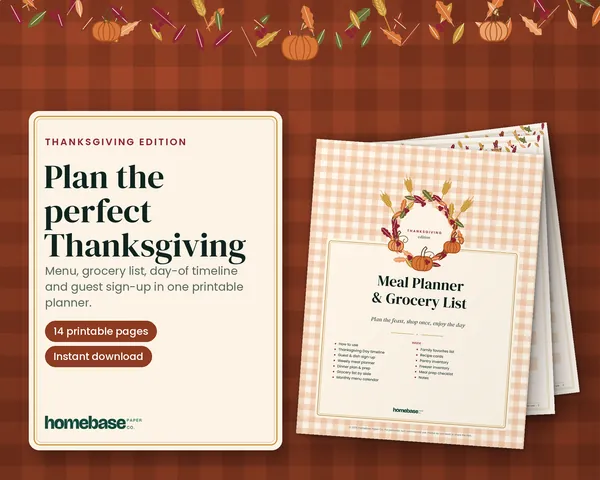
Meal Planner & Grocery List: Thanksgiving Edition
Plan the perfect Thanksgiving: our meal planner in a warm harvest design, with a Thanksgiving Day timeline, a guest & dish sign-up, an aisle-sorted grocery list and pantry and freezer trackers.
Spreadsheets
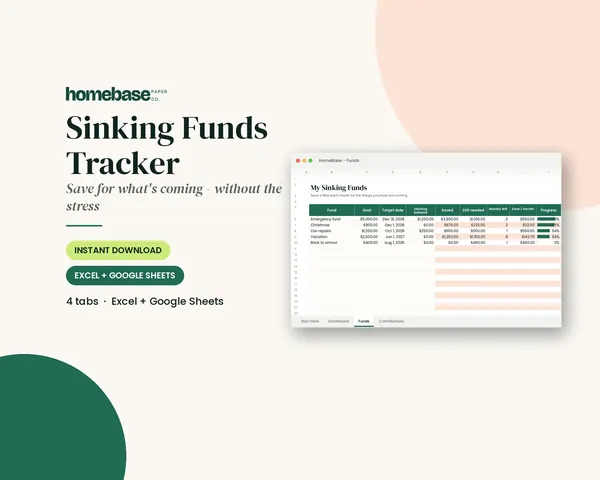
Sinking Funds Tracker
It does the math: how much to set aside each month to hit every goal on time.
 Save 38%
Bundles
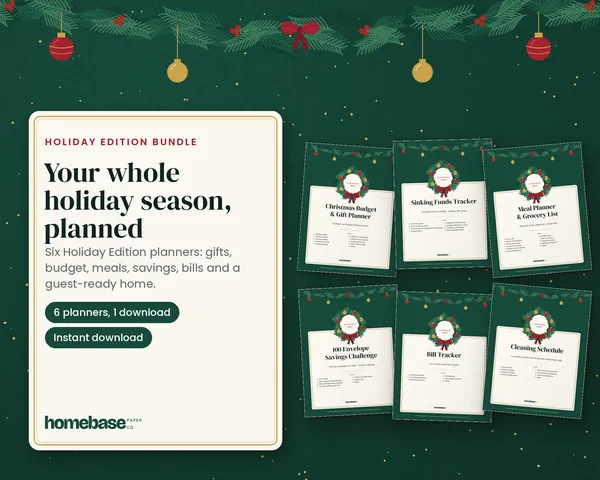
Holiday Season Bundle
Plan Christmas, save for it all year, and host without the January money hangover.
Printables
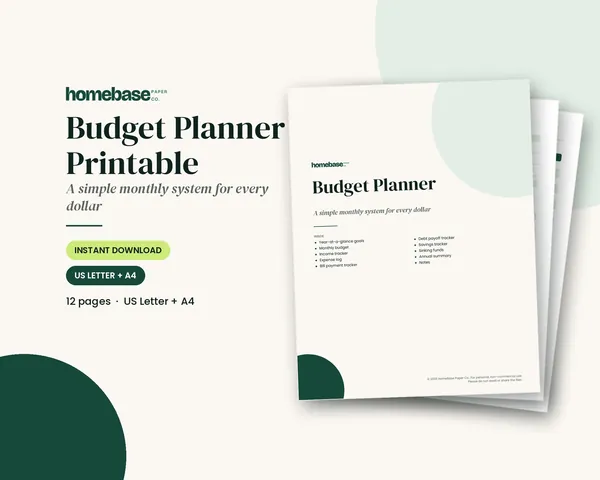
Budget Planner Printable
Twelve undated pages you can print every month: budget, bills, spending, savings and debt.
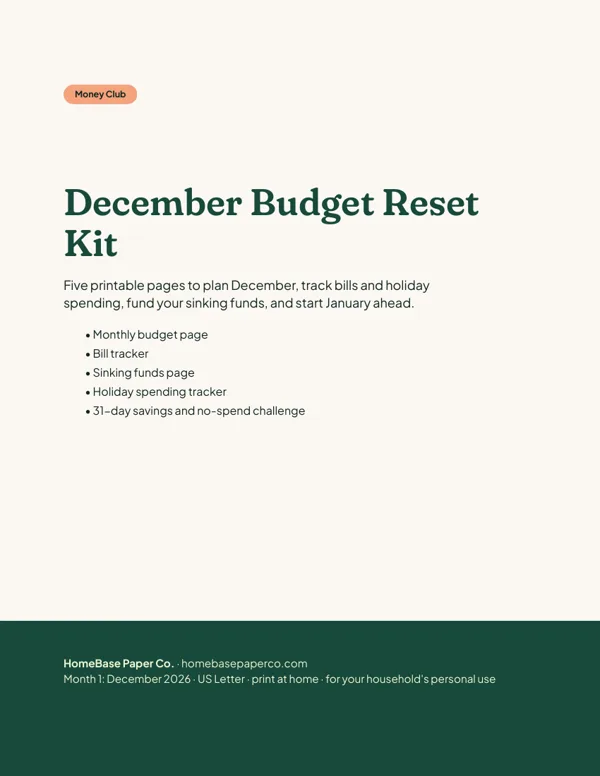 Club
Monthly club
Money Club
Anyone who wants a clear plan for the month's bills, holiday spending and savings.
Free printable
Get the free Holiday Budget Starter Kit
A one-page holiday budget, a gift list with a spending limit for every person, and a 6-week countdown so December stays calm and paid for. You'll also get our weekly HomeBase email with simple holiday planning, budgeting and hosting tips.

Sources
- Money as You Grow consumerfinance.gov
- What a buy now, pay later loan is consumerfinance.gov