
 The Holiday Collection

The short answer: to save money for Christmas, pick a target, divide it by the paychecks left before you shop and move that amount into a separate account on payday. If time is short, pause subscriptions, trim a few bills and shrink the plan itself.
- $600 target: $150 a paycheck with 4 left, $100 with 6, $75 with 8
- Free up cash: do a pantry-first month and sell what you don't use
- Don't dip in for non-holiday costs
- Start next year's fund in January
- Free tool: the holiday budget calculator shows the weekly savings you need to hit your total
- Next step: Plan it with the Bill Tracker Spreadsheet ($4.99).
The simplest answer to how to save money for Christmas is to pick a target, divide it by the number of paychecks left before you shop, and move that amount into a separate account on payday. If time is short, free up cash by pausing subscriptions, trimming a few bills and cutting the holiday plan itself. Then start next year's fund in January so it's easier.
Here's the method, a table for every timeline, and ideas that work in the last few weeks. Check how many weeks are left in the year and divide your goal by that number.
Step 1: Set a target you can reach
Start with your rough Christmas plan: gifts, food, travel, decorations and a 10% buffer. Then compare it with what you can realistically save. If the plan is bigger than the savings, shrink the plan now rather than reaching for a credit card in December. To size the plan to your paycheck first, see how to set a Christmas budget based on income. A savings challenge such as the 52-week challenge can help cover gifts by December.
For a reality check on typical spending, the National Retail Federation publishes holiday spending data and forecasts each year.
Step 2: Divide by the paychecks you have left
Count the paychecks between today and the week you'll do most of your shopping. Divide the target by that number.
| Target | 4 paychecks | 6 paychecks | 8 paychecks |
|---|---|---|---|
| $300 | $75 | $50 | $38 |
| $600 | $150 | $100 | $75 |
| $900 | $225 | $150 | $113 |
| $1,200 | $300 | $200 | $150 |
If the number per paycheck is too high, either lower the target or find extra money with the steps below.
How to save $1,000 by Christmas: week by week
A round $1,000 is a common goal. Here's what it takes depending on when you start:
| Start date | Weeks left | Per week | Per biweekly paycheck |
|---|---|---|---|
| October 22 | 9 | $112 | $225 |
| November 1 | 8 | $125 | $250 |
| November 15 | 6 | $167 | $334 |
| December 1 | 3 | $334 | $667 |
Every week you wait raises the weekly target, so the best day to start is this payday. To reach $112 a week, combine several small sources rather than one big cut: pausing subscriptions (often around $40 a week), a no-spend week each month, trimming groceries by planning around the pantry, and putting windfalls and anything you sell straight into the fund. The 100 envelope challenge works here too: envelopes 1 to 44 add up to $990.
Step 3: Keep the money separate
Money left in your main checking account gets spent. Open a free separate savings account or a Christmas club account, or use your bank's "bucket" or "vault" feature, and name it "Christmas". Set an automatic transfer for payday, which is paying yourself first for the holidays. Cash savers can use a labeled envelope kept somewhere out of the way.
A separate savings account at an insured bank keeps the fund safe as well as out of sight: FDIC deposit insurance covers deposits up to at least $250,000 per bank.
Step 4: Free up cash in the weeks before
Short on time? These moves can add up quickly:
- Cancel or pause subscriptions you won't use in November and December. Streaming services can be restarted later.
- Check your bills. Call your phone, internet or insurance provider and ask about a cheaper plan.
- Do a pantry-first month. Plan meals around food you already have and shrink the grocery bill.
- Sell what you don't use. Outgrown kids' gear, unused gadgets and furniture often sell well before the holidays.
- Hold a no-spend weekend each week until Christmas, and move what you'd have spent into the fund.
- Use rewards and gift cards you already have. Check old cards for leftover balances.
A bill tracker makes step 2 easy because you can see every recurring charge on one page. Our Bill Tracker Spreadsheet lists bills with due dates and categories, so the ones to cut stand out.
Step 5: Shrink the plan, not the joy
Some of the biggest savings come from changing the plan rather than finding more money:
- Draw names for adults instead of buying for everyone.
- Set a per-person gift limit and stick to it.
- Ask guests to bring a dish to Christmas dinner.
- Make or bake gifts for neighbors and teachers.
- Pick one or two traditions that matter most and drop the rest this year.
Earn a little extra before December
If cutting costs isn't enough, a short burst of extra income can close the gap. Ideas that fit around a family schedule:
- Pick up seasonal shifts. Retail, warehouse and delivery work often adds hours from November.
- Offer holiday help to neighbors: gift wrapping, pet sitting while people travel, putting up lights, or house cleaning before guests arrive.
- Bake or craft to order for a few friends and colleagues, if your local rules allow home food sales.
- Clear out the garage and sell tools, sports gear or baby items in one weekend.
Put every dollar of extra income straight into the Christmas account the day it arrives, before it blends into regular spending.
Mistakes that drain a Christmas fund
- Dipping in for non-holiday costs. If an emergency hits, note what you took and add a catch-up amount to the next few paychecks.
- Forgetting the small categories. Wrapping paper, postage, batteries and party contributions add up. Give them a line.
- Saving without a target. A number gives each transfer a purpose and tells you when you're done.
- Spending the fund early. Keep it untouched until your gift list and limits are written.
Try a savings challenge
If saving a fixed amount feels dull, a challenge makes it a game. The 100 envelope challenge (numbered envelopes from $1 to $100, filled in random order) saves $5,050 over the full set, and many people do a shorter version over a few months. The 52-week challenge starts at $1 and adds $1 each week.
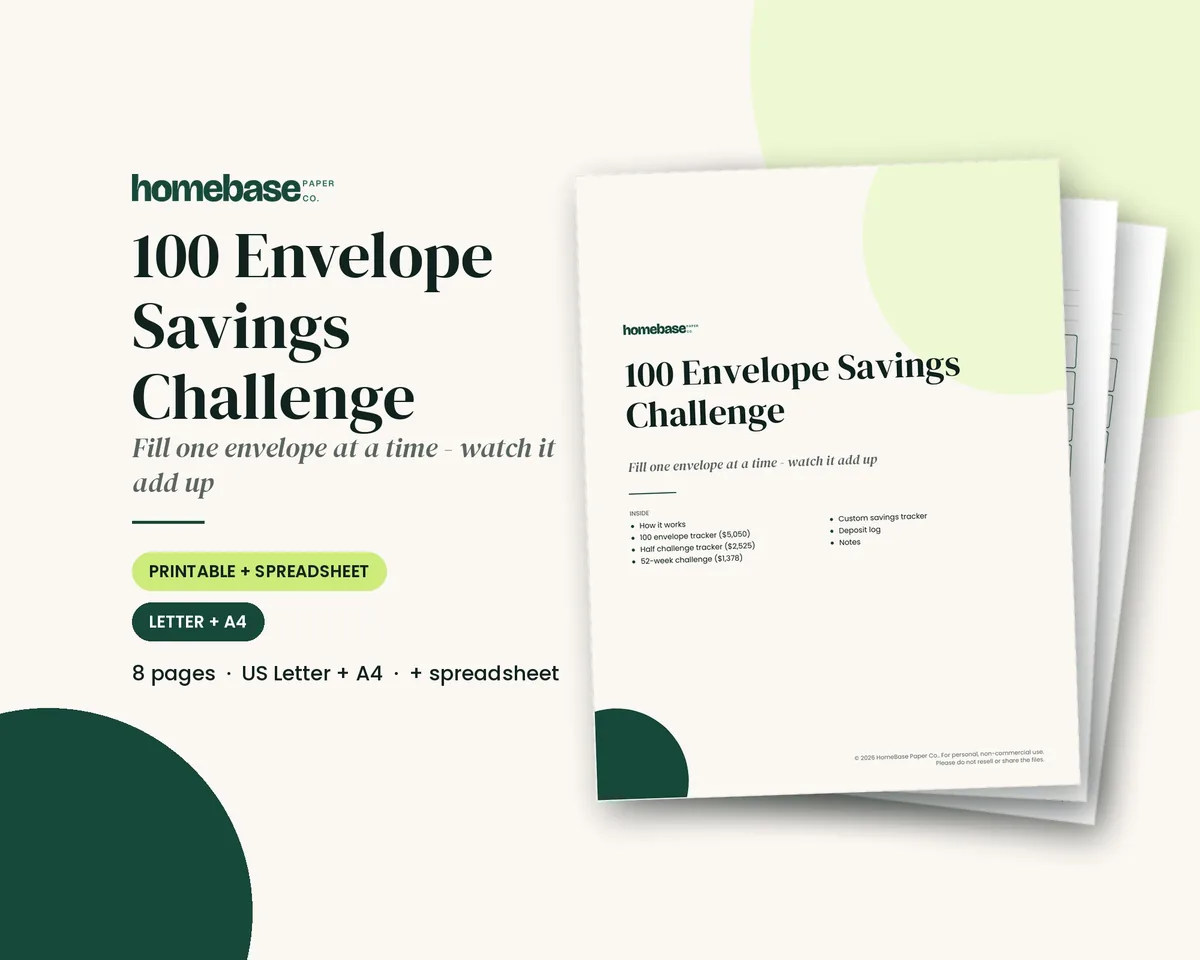
Our 100 Envelope Savings Challenge ($3.99) includes the 100 envelope chart, a half version, a 52-week challenge, a custom savings tracker and a deposit log, plus a spreadsheet version. Our guide to the 100 envelope vs 52-week challenge compares them.
Step 6: Start next year's Christmas fund in January
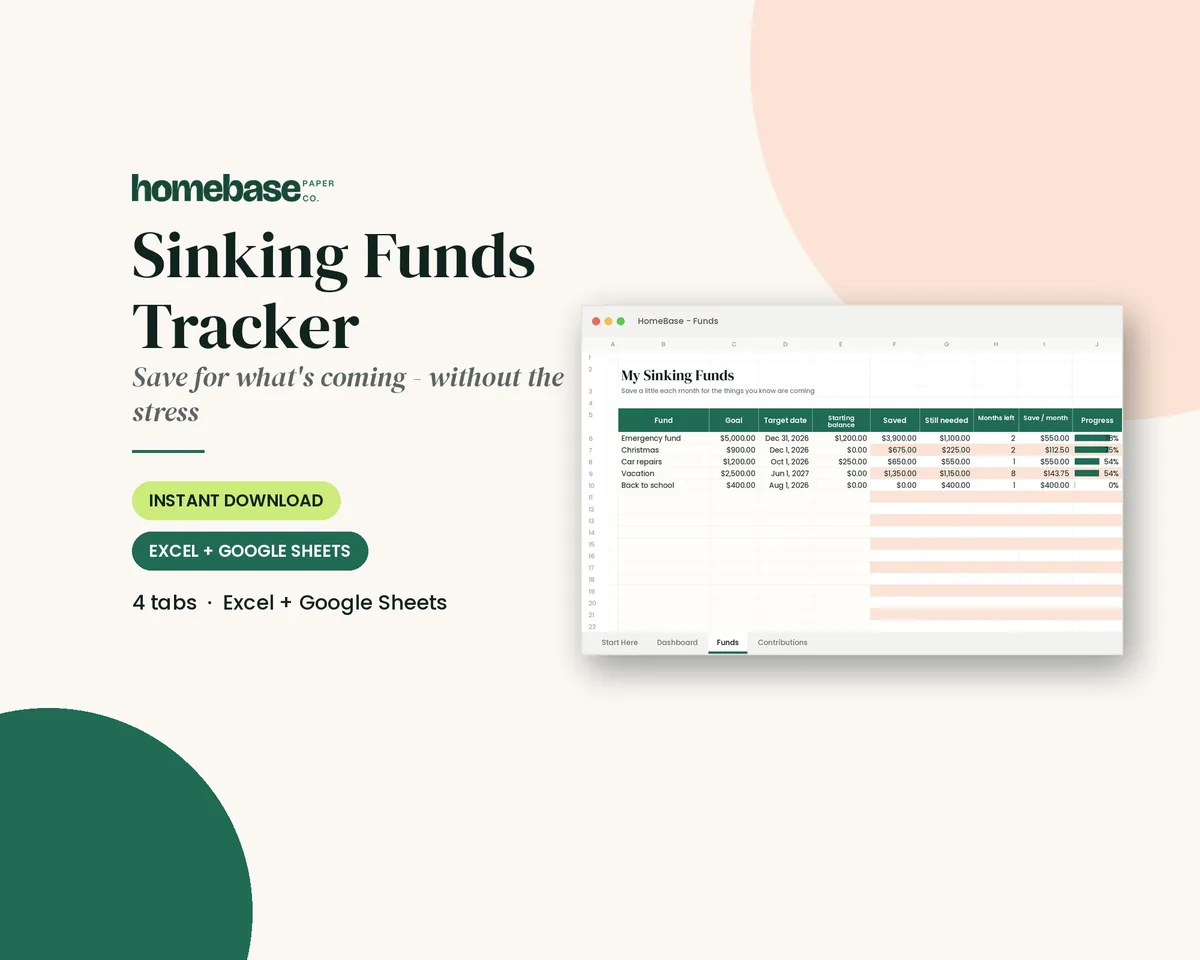
The easiest Christmas is the one you saved for all year. In January, total what you spent this season, divide it by 11, and save that amount every month. That's a sinking fund. The Sinking Funds Tracker ($4.99) works out the monthly amount for each goal and shows progress bars, so you can track Christmas next to car repairs, birthdays and vacations.
If you plan to shop the after-Christmas sales for next year, set a list and a limit first. Our guide has a timing table and a 6-step budget.
A Christmas sinking fund, worked example
A Christmas sinking fund is just Step 6 with real numbers. Start by pulling last November and December's bank and card statements and adding up everything holiday-related, not just gifts:
| Category | Often forgotten? | Example |
|---|---|---|
| Gifts | No | $500 |
| Stockings | Yes | $100 |
| Food and hosting | Yes | $180 |
| Travel and outings | Yes | $120 |
| Wrapping, cards, decor | Yes | $60 |
| Teacher and work gifts | Yes | $40 |
| Total | $1,000 |
That total is what the fund should cover. Then divide it by the time you have before shopping starts, usually mid-November:
- Starting in January: $1,000 ÷ 11 months ≈ $91 a month.
- Paid every two weeks from January: about $43 per paycheck.
- Starting in October: about $112 a week until Christmas.
Not every family needs $1,000. A $300 Christmas is $25 a month from January (gifts for a small family, a simple dinner and stockings), $600 is $50 a month, and $1,200 is $100 a month. Add 5 to 10 percent each year for rising prices, and if money is left on December 26, roll it into next year's fund so the monthly amount drops. Our sinking funds guide covers running several funds side by side.
Track spending once you start shopping
Saving is half the job. The other half is not overspending once the money is ready. The Christmas Budget & Gift Planner ($4.99) sets a limit per person and logs every purchase, so the money you saved actually covers the season. For a quick split of your total, try the free holiday budget calculator, and read our holiday budget guide for more.

The Holiday Collection
Give every person a limit and watch what's left
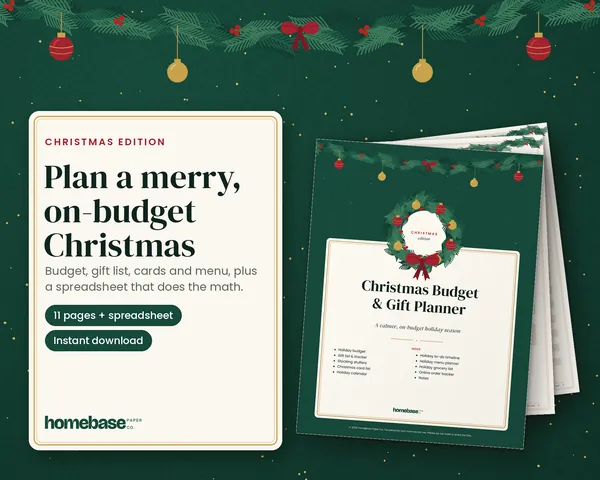
The Christmas Budget & Gift Planner adds up every list for you: a budget for each person, a log of each purchase and the amount left to spend, plus printable gift, card, menu and to-do pages.
- Spreadsheet for Excel and Google Sheets
- 11 printable pages, US Letter + A4
- Instant download, 14-day fix-or-refund promise
Planning the whole season? See the holiday sets from $7, with early prices through Cyber Monday
Make it easier
Tools for this

Spreadsheets
Sinking Funds Tracker
It does the math: how much to set aside each month to hit every goal on time.
 Starter pick
Printables
100 Envelope Savings Challenge
Classic, half and 52-week challenges to print, plus a spreadsheet that tracks every envelope and tells you how much to save each week.
Printables
Christmas Budget & Gift Planner
Set a budget for every person, log each purchase, and watch what's left - plus printable gift, card, menu and to-do pages.
Frequently asked questions
How do I save $1,000 by Christmas? Divide $1,000 by the weeks left. From late October that's about nine weeks, so roughly $112 a week or $225 per biweekly paycheck. Automate the transfer the day after payday and fill any gap by pausing subscriptions, running no-spend weeks and selling a few unused items.
How can I save money for Christmas fast? Divide your target by the paychecks left and move that amount to a separate account each payday. To find extra money quickly, pause subscriptions, call providers about cheaper plans, cook from the pantry, sell unused items and hold no-spend weekends until Christmas.
How much should I save each month for Christmas? Take what you expect to spend for the whole season and divide it by the months left. Saving from January, a $1,100 Christmas works out to $100 a month over 11 months. Starting in October, the same total needs about $367 a month.
Where should I keep my Christmas savings? Keep it apart from everyday spending: a separate free savings account, a named savings bucket in your banking app, or labeled cash envelopes. Automatic transfers on payday make it harder to skip a deposit.
What is a Christmas sinking fund? It's money you set aside a little at a time all year for a known future cost, in this case Christmas. Divide last year's holiday spending by the months until December and save that each month, so the season is paid for before it starts.
More from HomeBase
You may also like
 Thanksgiving Edition
Printables
Meal Planner & Grocery List: Thanksgiving Edition
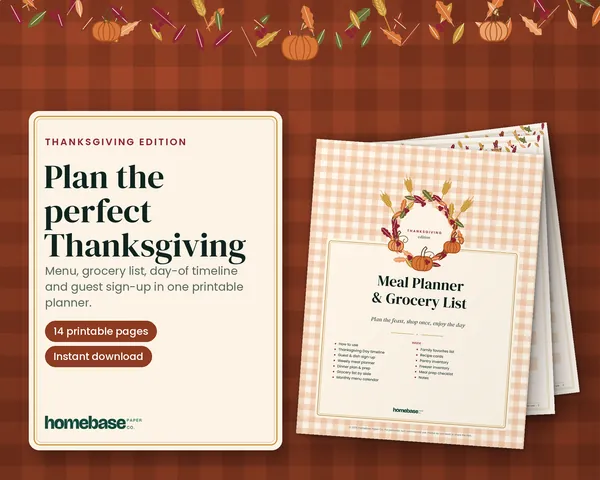
Plan the perfect Thanksgiving: our meal planner in a warm harvest design, with a Thanksgiving Day timeline, a guest & dish sign-up, an aisle-sorted grocery list and pantry and freezer trackers.
 Save 38%
Bundles
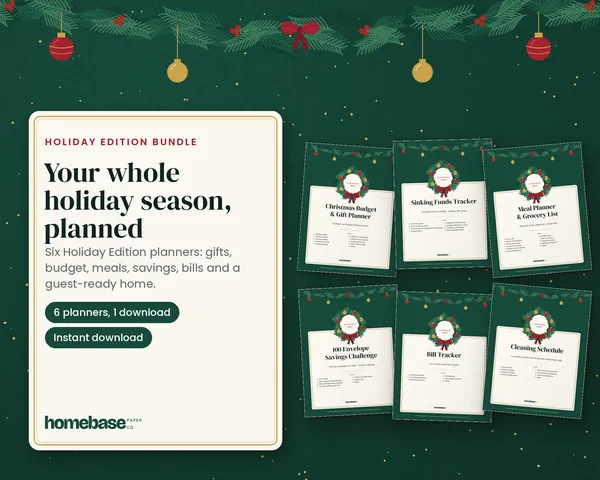
Holiday Season Bundle
Plan Christmas, save for it all year, and host without the January money hangover.

Printables
Budget Planner Printable
Twelve undated pages you can print every month: budget, bills, spending, savings and debt.
Printables
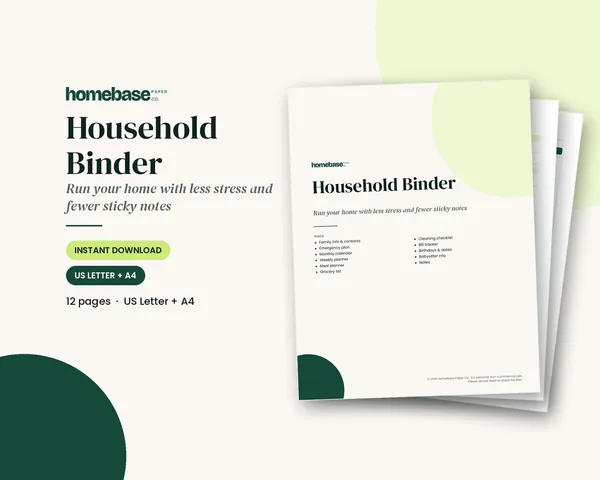
Household Binder
Family info, emergency plan, calendars, meals, groceries, cleaning, bills and sitter notes.
 Club
Monthly club
Money Club
Anyone who wants a clear plan for the month's bills, holiday spending and savings.
Free printable
Get the free Holiday Budget Starter Kit
A one-page holiday budget, a gift list with a spending limit for every person, and a 6-week countdown so December stays calm and paid for. You'll also get our weekly HomeBase email with simple holiday planning, budgeting and hosting tips.

Sources
- Holiday spending data and forecasts nrf.com
- FDIC deposit insurance fdic.gov