
 The Holiday Collection

The short answer: after-Christmas sales start December 26 and run into January. They're the best time to buy wrap, cards, ornaments and lights for next year, but only from a list, with money you already have.
- Best selection: Dec 26 to 28 for decor, wrap, cards and gift sets
- Deeper markdowns: the last days of December and the first weeks of January, with less to choose from
- Skip: things you wouldn't buy at full price, big decor you have no room for, trendy toys a year out
- Budget rules: pay for Christmas first, shop with a cap and check the return policy
- Next step: Plan it with the Christmas Budget & Gift Planner ($4.99).
After-Christmas sales start on December 26 and usually run into the first weeks of January. They're the best time of year to buy wrapping paper, cards, ornaments, lights and other holiday items for next year, because stores are clearing seasonal stock. They're worth it only if you shop from a list, with money you already have, after this Christmas is fully paid for. This guide covers when the markdowns come, what's worth buying and what to skip, how to set a budget, and how to make a January purchase count toward next December instead of becoming clutter.
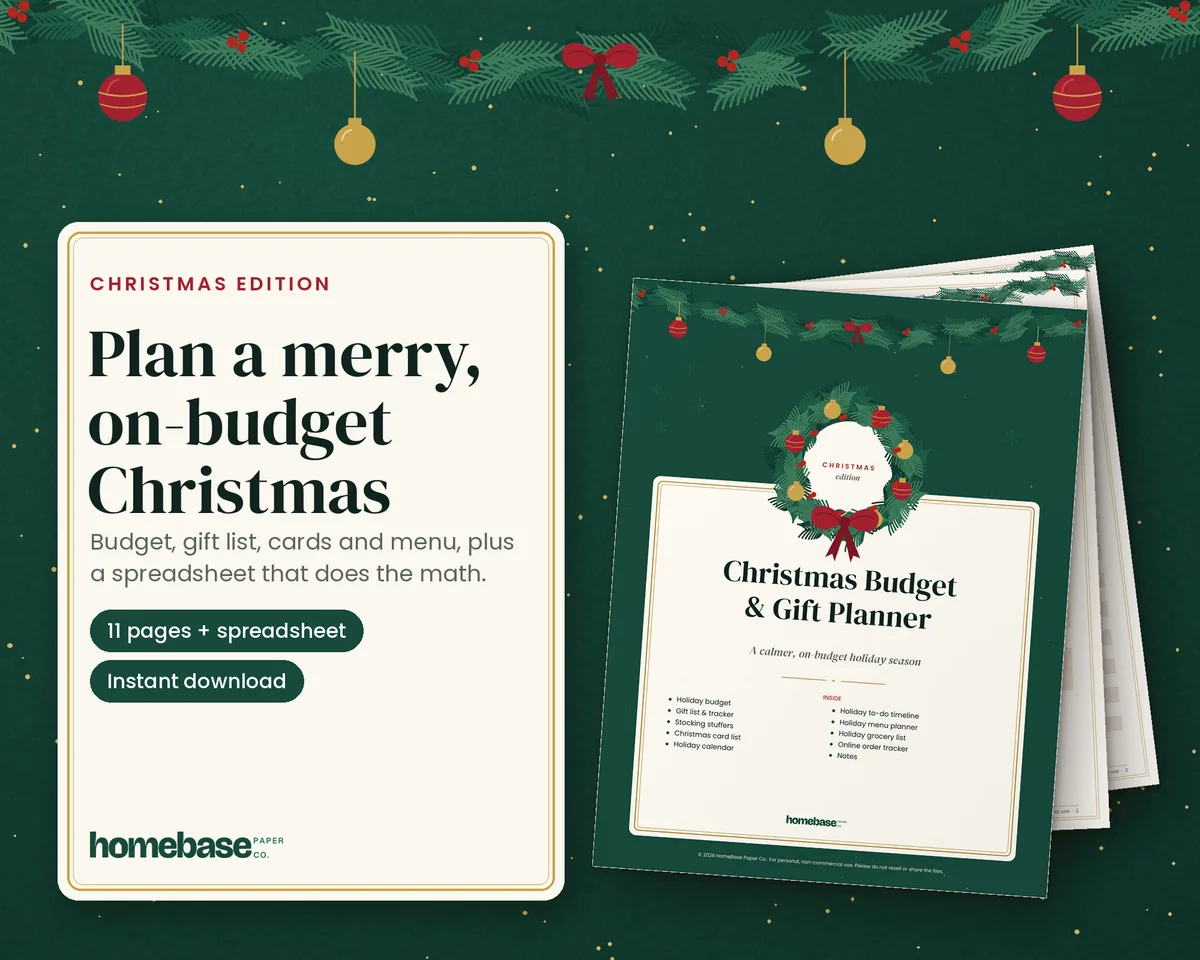
Our Christmas Budget & Gift Planner spreadsheet sets a budget for every person and logs each purchase, so you can see what's left before you shop the sales.
The short version:
- Pay for Christmas first. Close out your holiday budget before you spend another dollar.
- Shop with a cap. Use leftover holiday money and gift cards, not a new balance on a card.
- Buy for next year only from a list. Wrap, cards, decor you know you need, and gifts for specific people.
- Check the return policy. Lots of clearance is final sale.
- Write down what you bought and where you put it, so you can find it next November.
When do after-Christmas sales start and end?
Most stores start after-Christmas sales on December 26, and many post online deals on Christmas Day. After that, markdowns come in waves. Stores set their own dates every year, so treat this table as a typical pattern, not a promise:
| Window | What usually happens | How to shop it |
|---|---|---|
| Christmas Day (online) | Some retailers post their after-Christmas deals early | Browse and compare, but don't buy just because it's live |
| Dec 26 to 28 | Best selection on holiday decor, wrap, cards and gift sets; the biggest crowds | Buy the must-haves on your list first |
| Last days of December | Markdowns often go deeper as stock shrinks; gift card shoppers are out | Use gift cards on planned needs |
| First weeks of January | Leftover holiday items may drop further; winter clothing and home goods go on sale | Fill in nice-to-haves if they're still on the list |
| Mid to late January | Whatever is left is picked over | Only buy if it's still exactly what you wanted |
The tradeoff is simple: wait longer and prices usually go down, but so does the selection. If you need a specific item, like a replacement strand of lights in the same color, buy it early. If it's a nice-to-have, waiting is fine.
What to buy after Christmas
The best after-Christmas buys are seasonal items you'll certainly use next year. Stores would rather sell them cheap than pack them up, so that's where markdowns tend to be deepest.
| Category | Why it's often marked down | Buy it if | Skip it if |
|---|---|---|---|
| Wrapping paper, gift bags, tissue, tape, tags | Seasonal stock stores don't want to store | You ran low this year and have room to store it | You already have a bin of rolls |
| Boxed Christmas cards | Next year's designs replace them | You send cards every year | You're moving to digital greetings |
| Ornaments, lights, wreaths, garland | Holiday decor is the classic clearance aisle | Something broke or there's a real gap in your setup | You're buying a new theme on impulse |
| Storage bins and ornament boxes | Stores push them as decorations come down | Your decor is in broken boxes or bags | You'd just add more stuff to store |
| Gift sets (bath, candles, sweets) | Holiday packaging goes out of date | You keep a small gift closet for birthdays and thank-yous | No one specific comes to mind |
| Baking supplies and holiday candy | Seasonal colors and shapes | You'll use it within weeks, or it keeps well | It's perishable and you won't use it soon |
| Winter coats, boots, gloves | Winter clearance often starts in January | You know the size and still need it this winter | Kids' clothing a full year ahead |
| Party goods (plates, napkins, cups) | Holiday prints | You host every year | Your hosting plans are uncertain |
Wrap and cards are the easiest wins. They don't go out of style, they store flat, and you'll use them all again. If you buy a lot of wrap, see how to store wrapping paper so the rolls stay neat until next year.
What not to buy after Christmas
A clearance tag doesn't make something useful. These are the after-Christmas buys people regret most:
- Things you wouldn't buy at full price. If you wouldn't pay $20 for it in November, it isn't a deal at $6 in December.
- Big decor you have no room for. A giant inflatable at 70% off still takes up shelf space for 11 months.
- Trendy toys and gifts for kids a year out. Interests change fast.
- Sized clothing for growing kids next winter. You're guessing their size a year ahead.
- Perishables you can't finish. Candy and baking mixes have dates.
- "Doorbuster" electronics you didn't plan for. Compare the price to recent sales first. Our guide on how to tell if a Black Friday deal is real works in January too.
If you're still deciding about November buys, what not to buy on Black Friday explains which items are usually cheaper after the holidays.
How to budget for after-Christmas sales: a 6-step plan
Step 1: Close out this year's Christmas budget
Before you look at a single sale, total what you spent on Christmas this year and compare it to your plan. Include the things people forget: shipping, batteries, extra groceries, last-minute hostess gifts. Our list of hidden holiday expenses is a good checklist.
If you used the Christmas Budget & Gift Planner this season, this step takes a few minutes, because every purchase is logged against the budget for each person. If you went over, your after-Christmas budget is $0, and that's fine. Skip ahead to Step 6 and start next year's fund instead.
Step 2: Find your real after-Christmas number
Your after-Christmas budget is:
Leftover holiday money + gift cards you received - January bills already coming = what you can spend
January brings its own costs: the December credit card statement, heating bills, and any subscriptions that renew on January 1. Count those first. If the number is small, shop small.
Step 3: Make a buy-ahead list while the decorations are still up
The best list gets written before you pack Christmas away. Walk through your setup and note:
- Lights that are out or flickering
- Ornaments or decorations that broke
- Wrap, tape, tags and cards you ran out of
- Storage that's falling apart
- People you'll need gifts for before next December (birthdays, teachers, hosts)
Take a photo of your tree and mantel, too. In January it's easy to forget what you already own.
Step 4: Set a cap for each category
Split your number across the list. Here's how a $120 after-Christmas budget might look:
| Category | Cap | Example buys |
|---|---|---|
| Wrap, tags, tape | $25 | Two rolls, a pack of gift bags, tape |
| Christmas cards | $15 | Two boxes of cards for next year |
| Decor replacements | $35 | One strand of lights, ornament storage box |
| Gift closet | $30 | Two small gift sets for birthdays or thank-yous |
| Buffer | $15 | Something on the list that costs more than expected |
| Total | $120 |
When a category's cap is used up, that category is done, even if you see something cute.
Step 5: Read the return policy before you pay
Clearance is often final sale. The FTC's guidance on holiday gift returns points out that return and exchange policies vary by store, that many stores won't accept returns after a set time such as 30 or 90 days, and that a return without a receipt often gets store credit at the lowest sale price. Before you check out, ask:
- Is this final sale?
- How many days do I have to return it?
- Who pays return shipping if I order online?
Keep receipts and order emails together. If you need to return a gift you received, our guide on what to do with unwanted gifts and gift cards walks through it.
Step 6: Log what you bought and start next year's fund
Every after-Christmas purchase is really part of next year's Christmas. Write it down: item, who it's for, what you paid, and where it's stored. Then subtract it from next year's budget so you don't buy the same thing twice.
This is also the moment to start a Christmas savings fund. Divide next year's planned Christmas budget by the months until December and set that amount aside each month. The Sinking Funds Tracker ($4.99, Excel and Google Sheets) does that math for up to 20 savings goals. How to save money for Christmas and our sinking funds guide explain the method.
Gift cards and after-Christmas sales
Lots of people get gift cards for Christmas, and the after-Christmas sales are a good time to use them on something you actually need. You don't have to rush, though. The Consumer Financial Protection Bureau explains that gift card funds must be good for at least five years under federal law, and inactivity fees can only start after 12 months without use. Some states give you even more time.
A few habits help:
- Write each card's balance on your list. It's money, and it's easy to lose track of.
- Use it on a planned need first, like boots in the right size or a replacement for something that broke.
- Don't add your own money to make a "deal" work unless the item was already on your list.
Don't let a sale become January debt
A discount only saves you money if you pay for the item right away. The Federal Reserve's consumer credit report puts the average credit card rate at 21.19% APR across all accounts in August 2026, and 22.36% on accounts that were charged interest.
Here's what that means for a clearance haul. Put $300 on a card at 22.36% and pay $30 a month, and it takes about 12 months to pay off, with roughly $35 in interest. You'd still be paying for this year's clearance when next year's sales start.
If December already left a balance, start there. How to pay off holiday debt has a plan for it, and any after-Christmas shopping can wait until that's handled.
Boxing Day sales: what they mean in the US
Boxing Day is December 26. It's a public holiday in the UK, Canada, Australia and other Commonwealth countries, and a big shopping day there. In the US it isn't a holiday, but many American stores hold their own after-Christmas sales the same day, and some online shops borrow the Boxing Day name. For US shoppers, a "Boxing Day sale" and an "after-Christmas sale" are usually the same thing, and the same plan applies: list, cap, return policy, log.
After-Christmas clearance: in store vs. online
| In store | Online | |
|---|---|---|
| Selection | What's on the shelf at your store | Often wider, but sells out fast |
| Price | Sometimes extra markdowns on the floor | Easy to compare across stores |
| Returns | Usually simpler, but check for final sale | Watch for return shipping costs |
| Impulse risk | High: end caps and carts | High: "only 2 left" banners |
| Best for | Lights, ornaments, wrap you want to see | Specific items you already know you want |
Whichever you choose, shop with your list open. A cart full of clearance you didn't plan for is how a $120 budget becomes $250.
How to store after-Christmas buys so you can find them
Buying ahead only works if you can find things next November. Keep it simple:
- One "bought ahead" bin for gifts, labeled with the year.
- Wrap and cards with your wrapping supplies, not in a random closet.
- Decor packed with the rest of your Christmas things. Our guide to organizing Christmas decorations has a system.
- A written list of what's in each bin, kept with your Christmas planner.
If January is also your decluttering month, finish that first. The January decluttering checklist helps you see what you have before you add more.
A note from Malaysia
I grew up in Detroit as the oldest of three, in a working family that had to rebuild after 2008. I was the family coordinator, the one who kept track of things. That's a big part of why I believe a sale only helps if the money is really there to spend. I love Christmas, and I love giving and receiving cards, so boxed cards and wrap are the after-Christmas buys I'd point anyone to first. They're useful, they get used, and they make next December a little easier. My faith teaches me to be a good steward of what I have, and for me that means buying what's on the list, logging it, and leaving the rest on the shelf. I'm uncomfortable with hype, and the after-Christmas aisle has plenty of it. A plan is how you get past it.
Plan next Christmas while it's on sale
If you want a ready-made system for this:
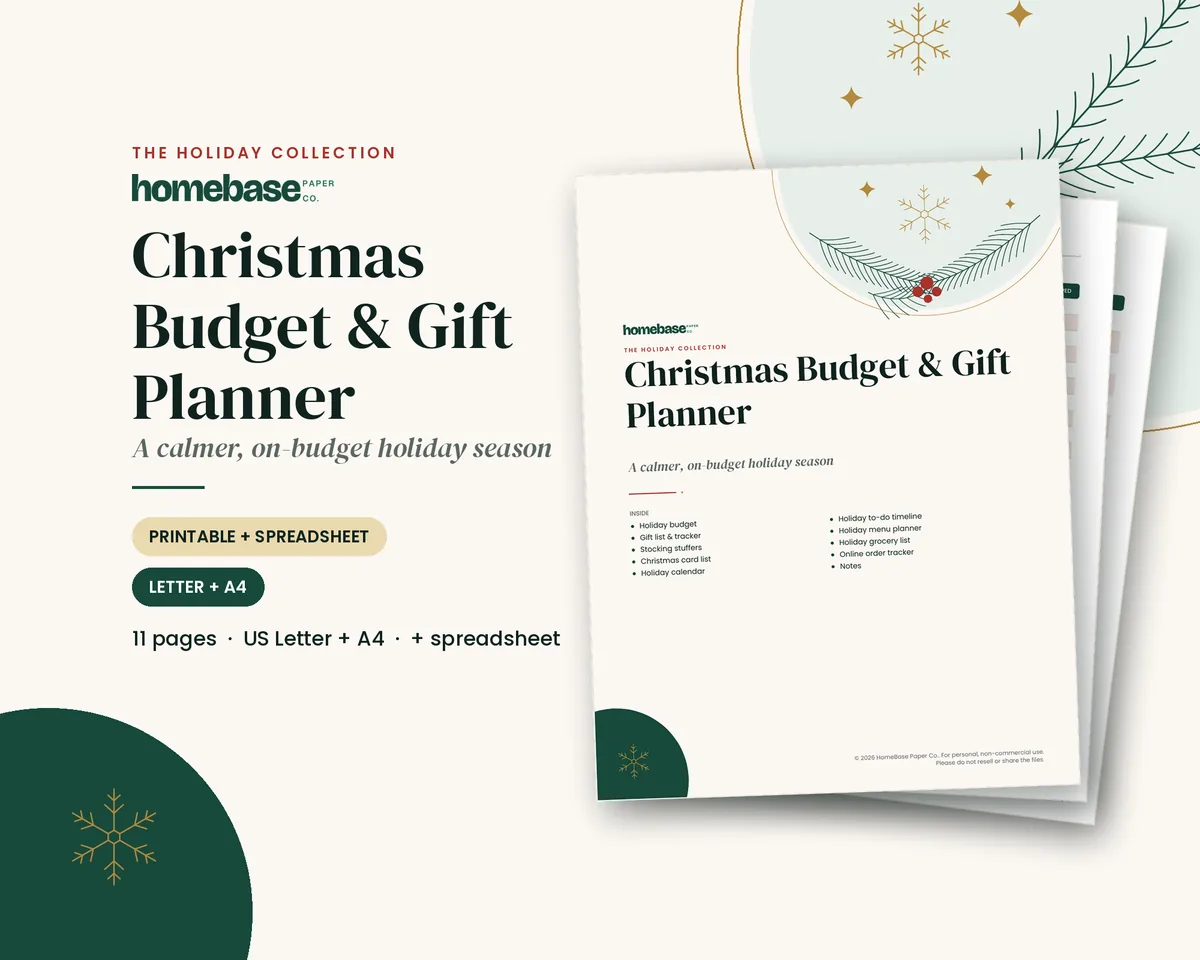
- The Christmas Budget & Gift Planner ($4.99) has a budget for each person, a gift list, a card list and a purchase log, as an 11-page printable plus a spreadsheet. Log January buys against next year.
- The Sinking Funds Tracker ($4.99) works out how much to set aside each month for next Christmas.
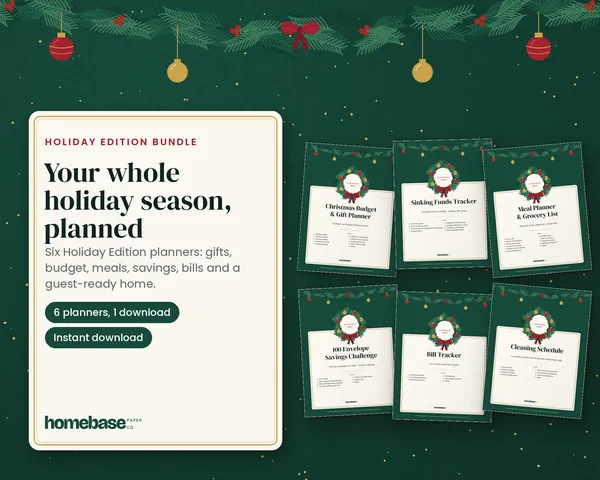
- The Holiday Season Bundle ($15.99, $25.94 bought separately) includes both, plus the Meal Planner & Grocery List, 100 Envelope Savings Challenge, Bill Tracker Printable and Cleaning Schedule.
You can browse all our printable planners, bundles and the holiday shop. If you're just getting started, the free Holiday Budget Starter Kit is 3 US Letter pages emailed to you after you join our list.
Wondering where the after-Christmas sales tradition comes from? Read about Boxing Day, what it means and when Boxing Day 2026 is observed.

The Holiday Collection
Give every person a limit and watch what's left
The Christmas Budget & Gift Planner adds up every list for you: a budget for each person, a log of each purchase and the amount left to spend, plus printable gift, card, menu and to-do pages.
- Spreadsheet for Excel and Google Sheets
- 11 printable pages, US Letter + A4
- Instant download, 14-day fix-or-refund promise
Planning the whole season? See the holiday sets from $7, with early prices through Cyber Monday
Make it easier
Tools for this
Printables
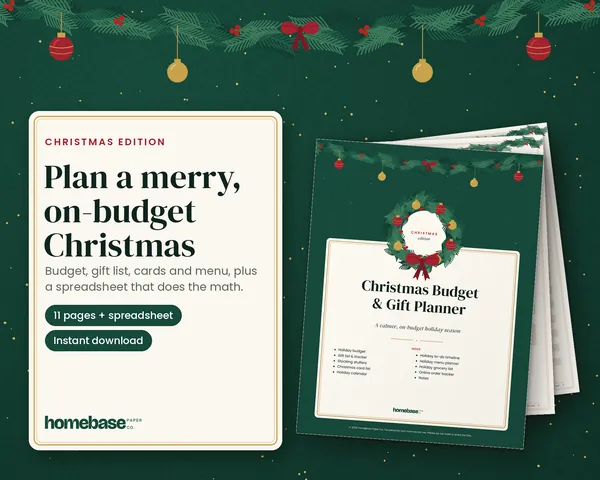
Christmas Budget & Gift Planner
Set a budget for every person, log each purchase, and watch what's left - plus printable gift, card, menu and to-do pages.
Spreadsheets
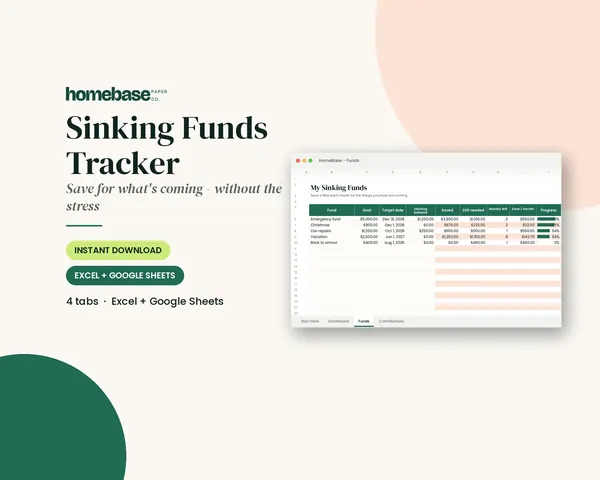
Sinking Funds Tracker
It does the math: how much to set aside each month to hit every goal on time.
 Save 38%
Bundles
Holiday Season Bundle
Plan Christmas, save for it all year, and host without the January money hangover.
Frequently asked questions
When do after-Christmas sales start? After-Christmas sales usually start on December 26, and some stores post online deals on Christmas Day itself. Markdowns tend to come in waves: the best selection is in the first few days, and prices on leftover holiday items often keep dropping into early and mid-January. Check each store's own ad for exact dates, because they change every year.
What is the best thing to buy after Christmas? The best things to buy after Christmas are items you will definitely use next season: wrapping paper, gift bags, tape, boxed Christmas cards, ornaments, lights and storage bins. Stores want that seasonal stock gone, so it is usually where the deepest markdowns show up. Winter clothing, bedding, small gifts for a gift closet and baking supplies are also common after-Christmas buys.
How much should I budget for after-Christmas sales? Budget only what is left after Christmas is paid for. The Christmas Budget & Gift Planner ($4.99) shows what you planned, what you spent and what remains on one page, so you know your real after-Christmas number before you shop. A simple cap is any unspent holiday money plus gift cards you received, minus the January bills that are already coming.
Are after-Christmas sales better than Black Friday? They are better for some things and worse for others. Black Friday usually has the stronger deals on electronics, toys and gifts you still need to buy before December 25. After-Christmas sales are usually better for holiday decor, wrap, cards and seasonal items, because stores are clearing what didn't sell. Our Black Friday vs. Cyber Monday guide covers the November side of the calendar.
Is it smart to buy next year's Christmas gifts after Christmas? It can be, if you buy from a written list for specific people and store the gifts where you will find them. The Christmas Budget & Gift Planner has a gift list with a limit for each person, so a January purchase gets logged against next year's budget instead of being forgotten in a closet. Skip trendy toys and sized clothing, since kids' interests and sizes change in a year.
Can I return items bought on after-Christmas clearance? Sometimes, but many clearance items are marked final sale. The FTC notes that return policies vary by store and many stores won't accept returns after a set time, such as 30 or 90 days. Read the receipt and the store's policy before you buy, and keep the receipt or order email with your planner.
Should I use gift cards during after-Christmas sales? Yes, the after-Christmas sales are a good time to use gift cards on something you actually need. Under federal law, gift card funds must be good for at least five years, so there is no rush to spend them on clearance you don't want. Write each card's balance on your list so it gets used instead of lost.
What should I not buy after Christmas? Don't buy anything you wouldn't have bought at full price, and be careful with electronics and big appliances. Clearance doesn't make an item useful, and a pile of 70%-off decor you have no space for is still money spent. Also skip perishable food you can't use soon and sized clothing for growing kids a year out.
What is Boxing Day, and do US stores have Boxing Day sales? Boxing Day is December 26, a public holiday in the UK, Canada, Australia and other Commonwealth countries, where it is a big shopping day. In the US it is not a holiday, but many stores run their own day-after-Christmas sales the same day, and some online stores use the Boxing Day name.
How do I keep after-Christmas sales from turning into January debt? Shop with cash you already have, not a card you can't pay off this month. The Sinking Funds Tracker ($4.99) lets you set up a Christmas fund for next year, so the money you save in January is the money you shop with next fall. The Federal Reserve reports average credit card rates above 21% APR, which can erase a clearance discount fast.
How do I store after-Christmas purchases so I don't forget them? Give every purchase a labeled home and write it down. Keep a 'bought ahead' list with the item, who it's for, what you paid and where it is stored. The Holiday Season Bundle ($15.99) pairs the Christmas Budget & Gift Planner with the Sinking Funds Tracker and four other planners, so next year's gifts, budget and savings sit in one place.
Is buying Christmas decorations after Christmas worth it? Yes, buying Christmas decorations after Christmas is worth it when you replace something that broke or buy something on a list you made while the decorations were still up. Lights, ornaments, wreaths and storage tubs are classic after-Christmas markdowns. Take a quick photo of your setup before you pack it away, and buy only to fill real gaps.
How long do after-Christmas sales last? Most after-Christmas sales run from December 26 into the first weeks of January, and leftover clearance can linger longer. Selection shrinks as markdowns deepen, so buy must-have items early and wait on nice-to-haves. Each store sets its own dates.
More from HomeBase
You may also like
 Thanksgiving Edition
Printables
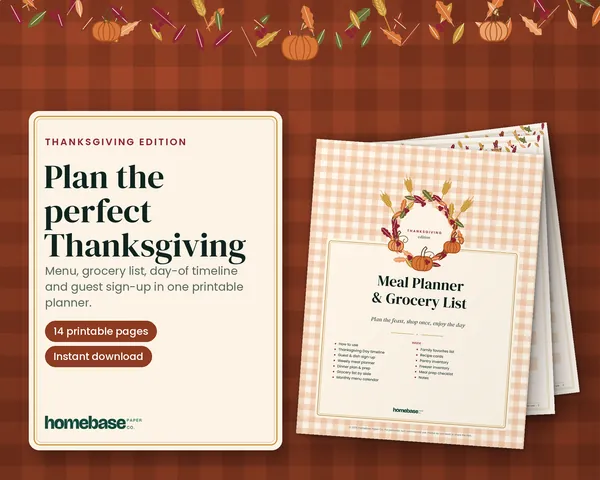
Meal Planner & Grocery List: Thanksgiving Edition
Plan the perfect Thanksgiving: our meal planner in a warm harvest design, with a Thanksgiving Day timeline, a guest & dish sign-up, an aisle-sorted grocery list and pantry and freezer trackers.
 Starter pick
Printables
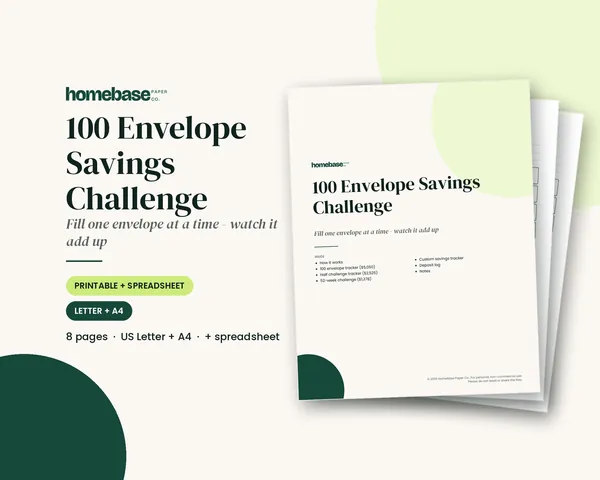
100 Envelope Savings Challenge
Classic, half and 52-week challenges to print, plus a spreadsheet that tracks every envelope and tells you how much to save each week.

Printables
Budget Planner Printable
Twelve undated pages you can print every month: budget, bills, spending, savings and debt.

Printables
Household Binder
Family info, emergency plan, calendars, meals, groceries, cleaning, bills and sitter notes.
 Club
Monthly club
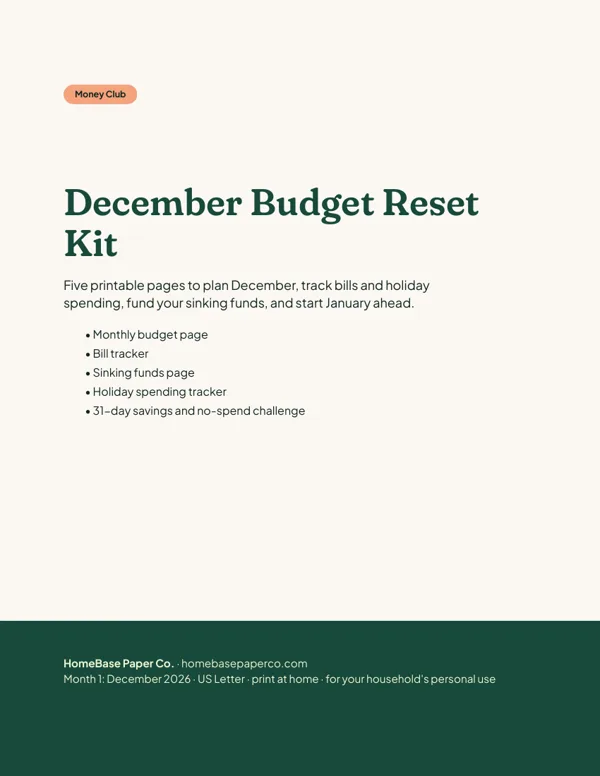
Money Club
Anyone who wants a clear plan for the month's bills, holiday spending and savings.
Free printable
Get the free Holiday Budget Starter Kit
A one-page holiday budget, a gift list with a spending limit for every person, and a 6-week countdown so December stays calm and paid for. You'll also get our weekly HomeBase email with simple holiday planning, budgeting and hosting tips.

Sources
- What to know about holiday gift returns (FTC Consumer Advice) consumer.ftc.gov
- If my prepaid card expires, do I lose my money? (Consumer Financial Protection Bureau) consumerfinance.gov
- Consumer Credit - G.19 (Federal Reserve Board) federalreserve.gov