
 The Holiday Collection

The short answer: paying off holiday debt: list every balance with its rate and minimum, pick one payoff order (smallest balance or highest rate first) and put every spare dollar toward that debt. Start a Christmas sinking fund in January so next year is paid in cash.
- Debt snowball: smallest balance first, for quick wins
- Debt avalanche: highest rate first, usually the least interest
- Find extra money: return unwanted gifts, cancel free trials, use any tax refund
- Celebrate each paid-off balance
- Next step: Plan it with the Zero-Based Budget Spreadsheet ($6.99).
To pay off holiday debt, list every balance with its interest rate and minimum payment, choose one payoff order (smallest balance first or highest rate first), and put every spare dollar toward that one debt while paying minimums on the rest. Once you're paying off holiday debt, start a Christmas sinking fund in January so next year is paid for in cash.
Here's the full plan, with a worked example and ways to find extra money in the first months of the year.
Step 1: Gather the real numbers
Wait for December statements to arrive, then write every holiday-related balance in one place:
To see how your total compares, read our guide to average credit card debt, with 2025 Federal Reserve figures and what different payments cost.
- Credit cards
- Store cards and "buy now, pay later" plans
- Overdraft or personal loans
- Money borrowed from family
For each, note the balance, interest rate (APR), minimum payment and due date. Buy-now-pay-later plans often have fixed installment dates, and missed ones can bring fees, so put those dates on your calendar.
Look up each card's APR on your statement. The CFPB explains that a card's interest rate is stated as an annual percentage rate (APR) and that on most cards you avoid interest on purchases by paying the full balance by the due date.
Step 2: Stop adding to it
It sounds obvious, but January sales, returns-then-rebuys and gift-card top-ups keep balances creeping up. Take the cards out of your phone's wallet and your browser's saved payments until the debt is gone. A no spend January is a natural way to do this.
That includes the after-Christmas sales. If you shop them, use cash you already have and a written list.
Step 3: Choose your payoff order
There are two common methods:
If the balances are too large to handle on your own, a debt management plan from a nonprofit credit counselor is one option to compare.
| Method | Pay extra on | Strength |
|---|---|---|
| Debt snowball | Smallest balance first | Quick wins keep you motivated |
| Debt avalanche | Highest interest rate first | Usually costs the least interest |
When one debt is paid, roll its whole payment onto the next. Our guide to debt snowball vs. avalanche explains the trade-off in detail.
The CFPB describes both approaches in How to reduce your debt: the highest-interest-rate method saves the most interest, and the snowball method pays off the smallest balance first.
A worked example
Say the holidays left three balances:
| Debt | Balance | APR | Minimum |
|---|---|---|---|
| Store card | $400 | 29% | $35 |
| Buy-now-pay-later | $600 | 0% (4 payments) | $150 |
| Credit card | $1,800 | 24% | $55 |
The buy-now-pay-later plan has fixed payments, so you simply make them. With $250 a month extra on top of minimums, the store card is gone in about two months. Its $35 then rolls onto the credit card along with the $150 freed up when the installment plan ends. The credit card balance falls fast from spring onward. A payoff spreadsheet shows the exact month each debt ends.
Step 4: Find extra money for January to March
- Return unwanted gifts for refunds to the card used, rather than store credit.
- Sell duplicates and unused gifts.
- Cancel the free trials that started over the holidays before they convert.
- Cut one big category for 90 days, such as eating out or clothes.
- Use any tax refund that arrives in February or March.
- Ask your card issuer about a lower rate. It doesn't always work, but a polite call costs nothing.
A balance transfer card with a 0% introductory period can help if you can pay the balance before the promotion ends, but check the transfer fee and the rate afterward before you apply. Make sure you won't add new spending to the old card.
Step 5: Put it in a budget
Debt payoff only works if the extra payment is built into every month. Use a zero-based budget so the payment is assigned on payday, not after everything else. The Zero-Based Budget Spreadsheet ($6.99) has a "left to budget" counter that shows when every dollar has a job, including the extra debt payment.
Track the payoff

Our debt tracker guide shows the columns to use so every card, balance and payment is on one page.
The Debt Payoff Planner ($6.99) handles up to 10 debts with a snowball or avalanche switch. It builds the month-by-month schedule, rolls extra payments automatically, and shows the payoff month for every debt, your debt-free date and the interest saved compared with minimums. It works in Excel and Google Sheets.
Step 6: Make next Christmas a cash Christmas
Once you know what this season cost, divide it by 11 and save that amount every month starting in February. That's a Christmas sinking fund. If you get a year-end bonus, our guide on what to do with a Christmas bonus can help you split it. If your holiday spending was $1,320, that's $120 a month. The Sinking Funds Tracker ($4.99) calculates the monthly amount for each goal and shows progress bars.
Next November, plan the season with a limit per person. The Christmas Budget & Gift Planner ($4.99) keeps the gift list, budget and online orders in one place so you know the total before you check out.
Keep motivation up until it's gone
Holiday debt feels urgent in January and easy to ignore by April. A few habits keep the plan going:
- Make the progress visible. Color in a payoff chart on the fridge, or watch the balance column shrink in a spreadsheet.
- Celebrate each paid-off balance with something free or cheap, like a favorite home-cooked meal.
- Check in weekly, at the same time you review the budget. Five minutes is enough to log payments.
- Automate the payment for the day after payday, so it happens before the money is spent elsewhere.
- Tell someone. A partner or friend who knows the goal makes it more likely you'll finish.
Talk about it as a family
If the debt came from a household Christmas, the fix is a household job. Share the plan with your partner and, in simple terms, with older kids: "We spent more than we planned, so this spring we're eating out less and paying it back." Children learn a lot from seeing a plan carried out calmly. It also makes next year's conversation about gift limits easier.
When to get help
If minimum payments take up more than you can manage, or you're borrowing to pay other debts, contact a nonprofit credit counseling agency. In the US, the Federal Trade Commission has guidance on choosing a reputable one. Beware of companies that charge large upfront fees or promise to erase debt.
If an account has gone to collections, the CFPB's debt collection resources explain your rights, including the information a collector must give you about the debt.
Carrying balances on several cards? Learn how debt consolidation works and when it actually saves money.

The Holiday Collection
Give every person a limit and watch what's left
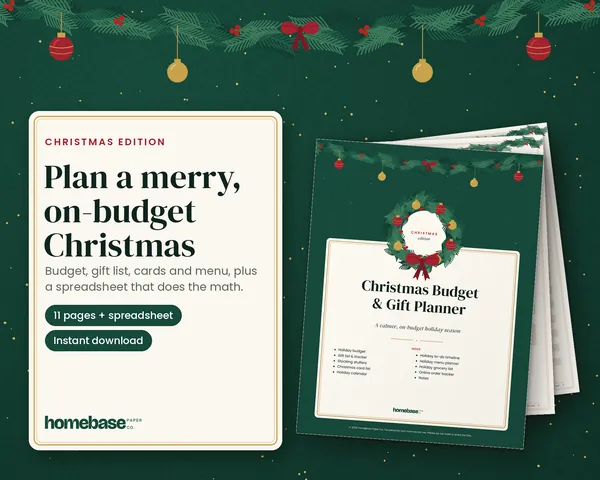
The Christmas Budget & Gift Planner adds up every list for you: a budget for each person, a log of each purchase and the amount left to spend, plus printable gift, card, menu and to-do pages.
- Spreadsheet for Excel and Google Sheets
- 11 printable pages, US Letter + A4
- Instant download, 14-day fix-or-refund promise
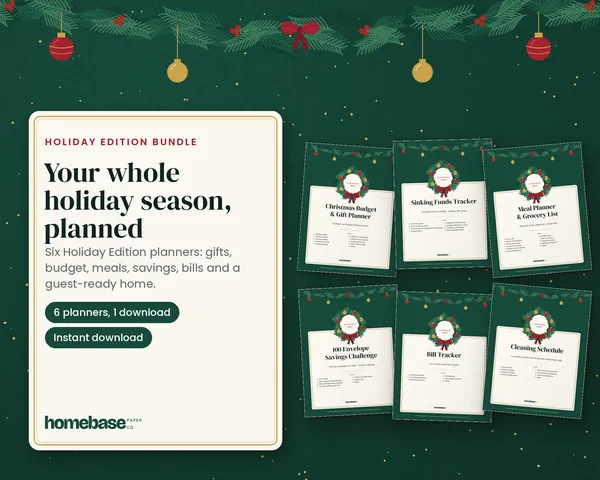
Planning the whole season? See the holiday sets from $7, with early prices through Cyber Monday
Make it easier
Tools for this

Spreadsheets
Debt Payoff Planner
Pick snowball or avalanche, add any extra payment, and get your debt-free month instantly.

Spreadsheets
Zero-Based Budget Spreadsheet
The 'Left to budget' counter turns green when every dollar has a job.

Spreadsheets
Sinking Funds Tracker
It does the math: how much to set aside each month to hit every goal on time.
Frequently asked questions
How do I pay off holiday debt quickly? List every balance with its rate and minimum, stop adding new charges, choose snowball or avalanche, and put all extra money toward one debt at a time. Returning unwanted gifts for card refunds and using a tax refund can speed up paying off holiday debt in the first months of the year.
Should I use the debt snowball or avalanche for holiday debt? The avalanche, highest rate first, usually saves the most interest. The snowball, smallest balance first, gives quicker wins that help many people stay motivated. With small holiday balances the difference is often modest, so pick the one you'll stick with.
Is a balance transfer a good idea for Christmas debt? It can help if you can repay the whole balance before the 0% introductory period ends and the transfer fee is lower than the interest you'd pay. Check the rate that applies afterward, and don't add new spending to the old card.
How do I avoid holiday debt next year? Divide this year's holiday spending by the months until next December and save that amount monthly in a separate Christmas fund. Then plan the season with a per-person limit and track purchases as you go.
More from HomeBase
You may also like

Printables
Budget Planner Printable
Twelve undated pages you can print every month: budget, bills, spending, savings and debt.

Spreadsheets
Bill Tracker Spreadsheet
Bills due in 3 days or less light up red, so nothing slips through.

Spreadsheets
Paycheck Budget Spreadsheet
Enter your bills once. The sheet tells you which paycheck pays each one, all year.
 Save 57%
Bundles
Ultimate Budget Bundle
All 6 spreadsheets + both printable planners - for less than half the price of buying them separately.
 Club
Monthly club
Money Club
Anyone who wants a clear plan for the month's bills, holiday spending and savings.
Free printable
Never miss a payment: get the free bill calendar
A printable monthly bill calendar with room for due dates, amounts and paydays, so every payment has a plan before the month starts. You'll also get our weekly HomeBase email with simple budgeting and bill-paying tips.

Sources
- Interest rate is stated as an annual percentage rate (APR) consumerfinance.gov
- How to reduce your debt consumerfinance.gov
- Debt collection resources consumerfinance.gov