
 The Holiday Collection


The short answer: what to do with a Christmas bonus: decide where every dollar goes before it arrives, and expect it to look smaller after taxes.
- Order: planned holiday costs, high-interest debt, emergency fund
- Then: next year's known costs, retirement and a planned treat
- Sample $1,500 split: $300 holidays, $525 debt, $300 emergency fund, $225 sinking funds, $150 treat
- Moves to make before December 31
- Next step: Plan it with the Debt Payoff Planner ($6.99).
The best thing to do with a Christmas bonus is to decide where every dollar goes before it arrives. A good order for most households: cover the holiday costs you've already planned, pay down high-interest debt, build or top up your emergency fund, save for next year's known expenses, add to retirement, and keep a small, planned share for something you enjoy.
First, know how much you'll actually receive. Then use the six steps below and the sample split to make the money count.
Why your bonus looks smaller than you expected
Bonuses count as supplemental wages. Under IRS Publication 15, many employers withhold federal income tax on them at a flat 22%, or 37% on supplemental wages over $1 million in a year. Social Security and Medicare taxes, plus any state taxes, also come out.
That withholding is an estimate, not your final tax. Your actual tax on the bonus is settled when you file your return. Plan around the net amount on your pay stub, not the gross number in the announcement email.
Example: how much of a $2,000 Christmas bonus do you keep?
This is an illustration using the flat 22% federal withholding rate above, plus the 6.2% Social Security and 1.45% Medicare taxes. Your state tax, benefit deductions and real tax bill will differ.
| Line | Amount |
|---|---|
| Gross bonus | $2,000 |
| Federal withholding at 22% | -$440 |
| Social Security at 6.2% | -$124 |
| Medicare at 1.45% | -$29 |
| Estimated net before state tax | about $1,407 |
Use the net number to plan, and set aside any extra for taxes if you expect to owe at filing time.
A 6-step plan for your Christmas bonus
- Cover the holidays you've already planned. If gifts, travel or hosting would otherwise land on a credit card, use part of the bonus so you start January without a new balance. Our holiday budget guide helps you add up the season.
- Pay down high-interest debt. The average rate on credit card accounts that were charged interest was 22.36% in August 2026, according to the Federal Reserve's G.19 report. Paying down a balance at that rate is a guaranteed return you won't easily get anywhere else.
- Build or refill your emergency fund. The CFPB's guide to building an emergency fund explains why even a small cushion keeps a surprise bill from becoming new debt.
- Fund next year's known costs. Car registration, insurance premiums, birthdays and next Christmas all show up every year. A bonus is a great way to seed those sinking funds. Here's how sinking funds work.
- Add to retirement. For 2026, the IRS limits are $24,500 for employee 401(k) contributions and $7,500 for IRAs, with higher catch-up amounts at 50 and older. If your plan allows deferrals from bonuses, update your election before payday. New to IRAs? Our guide to the Roth IRA explains the 2026 limits and how to open one.
- Keep a planned treat. Pick an amount and spend it without guilt. A planned treat is part of the budget, not a failure.
Sample split: $1,500 net bonus
Use this as a starting point and adjust for your own debts and goals.
| Job | Share | Amount | Why |
|---|---|---|---|
| Planned holiday costs | 20% | $300 | Keeps gifts off the credit card |
| High-interest debt | 35% | $525 | Cuts interest right away |
| Emergency fund | 20% | $300 | Covers the next surprise |
| Next year's sinking funds | 15% | $225 | Christmas, car, birthdays |
| Planned treat | 10% | $150 | Guilt-free fun |
No high-interest debt? Move that 35% into your emergency fund until it reaches your goal, then into retirement or other savings.
If your bonus is small
A $300 bonus can still do a lot. Try one of these:
- All to one job. Put it all toward your highest-rate card, or all into a starter emergency fund. One clear win is easier to see than five tiny ones.
- Two-way split. $200 toward debt or savings, $100 for the holidays or a treat.
- Seed next Christmas. $25 a month for 12 months is $300, so a $300 bonus pre-funds a year of a small Christmas sinking fund in one move.
If you're behind on bills
Catch up on essentials first: housing, utilities, insurance, car payment and minimum debt payments. Late fees and shutoff costs eat a bonus fast. List every bill with its due date so you can see what's past due and what's coming next, then fund extra debt payments and savings with whatever is left.
Bonus moves to make before December 31
Some choices are tied to the calendar year, so check them before the year ends:
- Retirement deferral. If you want part of the bonus to go into your 401(k), your election usually needs to be in place before the bonus is paid. Ask payroll, and check the current 401(k) contribution limits.
- Emergency fund. If your cushion is thin, a guide to building an emergency fund shows how much to aim for.
- FSA balances. If you have a flexible spending account, check your plan's deadline and any grace period so you don't lose unused money.
- Charitable giving. If you give, decide on the amount now. Our guide to budgeting for charitable giving helps you plan it.
Mistakes to avoid
- Spending it before it arrives. Treat the announced amount as unknown until you see the net deposit.
- Letting it sit in checking. Unassigned money tends to disappear into everyday spending. Move each piece to its job the day the deposit clears.
- Counting on it for next year. Bonuses can change or disappear. Base your holiday plan on regular income, and our Christmas budget by income guide shows what that looks like at different income levels.
- Ignoring taxes on side or contract income. If your "bonus" is a payment from a client, no taxes may have been withheld at all. Set some aside.
Tools to put your bonus to work
The Debt Payoff Planner ($6.99) lets you enter up to 10 debts, choose snowball or avalanche, and add an extra payment, then shows your new debt-free date and the interest you'll save compared with paying minimums. It's an easy way to see what a lump sum is worth.
The Sinking Funds Tracker ($4.99) tracks up to 20 savings goals, including an emergency fund, and calculates the monthly amount needed to reach each one by its date.
If you want a full reset for the new year, the Ultimate Budget Bundle ($19.99, compared with $46.42 for the items bought separately) puts our core budget, bill, debt and savings tools in one download. Browse all money tools or see our bundles.
Before the year closes, our year-end financial checklist covers the other money tasks worth finishing by December 31.

The Holiday Collection
Give every person a limit and watch what's left
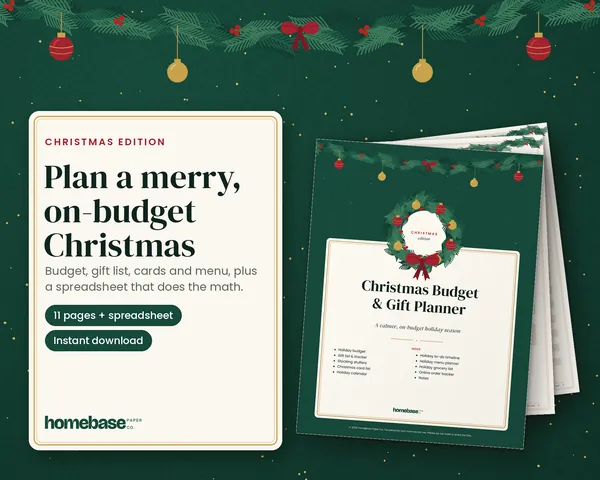
The Christmas Budget & Gift Planner adds up every list for you: a budget for each person, a log of each purchase and the amount left to spend, plus printable gift, card, menu and to-do pages.
- Spreadsheet for Excel and Google Sheets
- 11 printable pages, US Letter + A4
- Instant download, 14-day fix-or-refund promise
Planning the whole season? See the holiday sets from $7, with early prices through Cyber Monday
Make it easier
Tools for this

Spreadsheets
Debt Payoff Planner
Pick snowball or avalanche, add any extra payment, and get your debt-free month instantly.

Spreadsheets
Sinking Funds Tracker
It does the math: how much to set aside each month to hit every goal on time.
 Save 57%
Bundles
Ultimate Budget Bundle
All 6 spreadsheets + both printable planners - for less than half the price of buying them separately.
Frequently asked questions
What is the smartest thing to do with a Christmas bonus? Give every dollar a job before it hits your account. Cover holiday costs you've already planned so you don't put them on a card, then pay down high-interest debt, build your emergency fund and save for next year's known costs. Keep a small, planned amount for something you enjoy.
How much of a $2,000 Christmas bonus will I keep? On a $2,000 Christmas bonus you would keep roughly $1,407 before state tax if your employer withholds 22% federal tax ($440), 6.2% Social Security ($124) and 1.45% Medicare ($29). Your state tax and final tax bill can change that, so plan around the net amount on your pay stub.
Why is my Christmas bonus taxed so much? Bonuses count as supplemental wages, and many employers withhold federal income tax at a flat 22% (37% on supplemental wages over $1 million in a year), according to IRS Publication 15. Social Security, Medicare and any state taxes may also come out. Withholding isn't your final tax bill, so the real tax on the bonus is settled when you file your return.
Should I use my bonus to pay off debt or save? If you don't have an emergency cushion yet, start a small one, then put the next dollars toward high-interest debt. The Debt Payoff Planner ($6.99) shows how a lump-sum payment moves your debt-free date, so you can see what the bonus actually buys you.
Can I put my bonus into my 401(k)? Often yes, if your plan allows deferrals from bonuses. You'd need to update your election before the bonus is paid. For 2026, the IRS limit on employee 401(k) contributions is $24,500, plus catch-up amounts if you're 50 or older. Ask your HR or payroll team how bonuses are handled.
How much of a bonus should I spend? Pick a share you're comfortable with before the money arrives. Some people use 10% to 20% for a treat and plan the rest. Writing the split down ahead of time keeps the fun part guilt-free and keeps the rest from disappearing into everyday spending.
What if I don't get a holiday bonus this year? Plan your holidays around your regular pay and treat any bonus as a bonus. Our Christmas budget by income guide shows budgets that work at different income levels, and a sinking fund started in January spreads next year's costs out.
More from HomeBase
You may also like
Printables
Christmas Budget & Gift Planner
Set a budget for every person, log each purchase, and watch what's left - plus printable gift, card, menu and to-do pages.
 Thanksgiving Edition
Printables
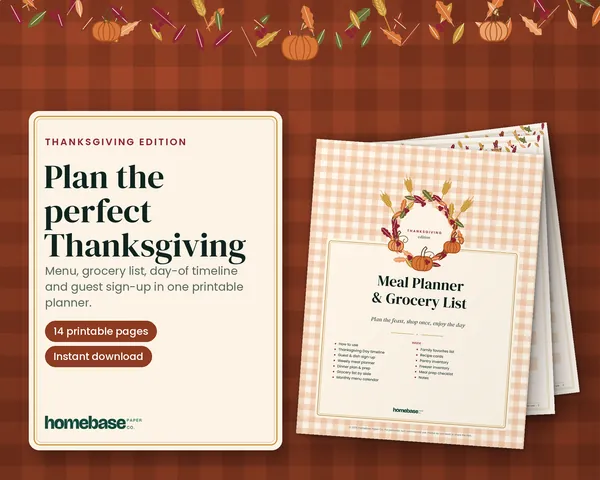
Meal Planner & Grocery List: Thanksgiving Edition
Plan the perfect Thanksgiving: our meal planner in a warm harvest design, with a Thanksgiving Day timeline, a guest & dish sign-up, an aisle-sorted grocery list and pantry and freezer trackers.
 Starter pick
Printables
100 Envelope Savings Challenge
Classic, half and 52-week challenges to print, plus a spreadsheet that tracks every envelope and tells you how much to save each week.
 Save 38%
Bundles
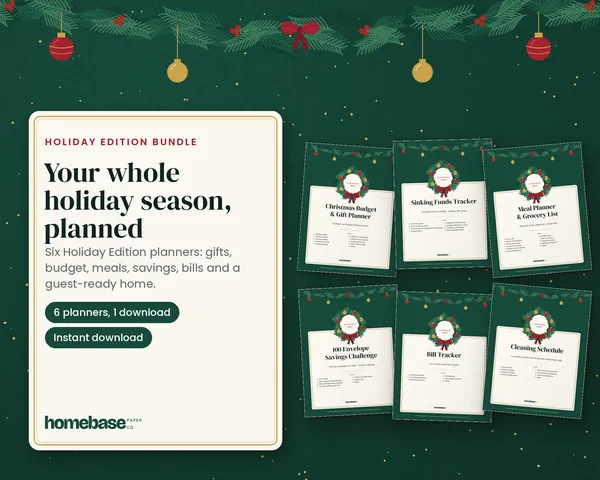
Holiday Season Bundle
Plan Christmas, save for it all year, and host without the January money hangover.
 Club
Monthly club
Money Club
Anyone who wants a clear plan for the month's bills, holiday spending and savings.
Free printable
Get the free Holiday Budget Starter Kit
A one-page holiday budget, a gift list with a spending limit for every person, and a 6-week countdown so December stays calm and paid for. You'll also get our weekly HomeBase email with simple holiday planning, budgeting and hosting tips.

Sources
- IRS Publication 15 irs.gov
- Federal Reserve's G.19 report federalreserve.gov
- Guide to building an emergency fund consumerfinance.gov
- IRS limits irs.gov